

measurement methods in ABA: Why Measurement is the Foundation of ABA
Objective measurement methods in ABA form the bedrock of effective behavior analysis. Without precise data collection, we cannot define behaviors clearly, evaluate interventions accurately, or meet ethical standards for evidence-based practice. Measurement transforms subjective observations into quantifiable information that drives clinical decisions.
Table of Contents
- measurement methods in ABA: Why Measurement is the Foundation of ABA
- Core Measurement Methods for the BCBA Exam
- Applying Measurement: Worked Examples from ABC to Data
- Measurement on the BCBA Exam: Common Traps and Tips
- Quick Checklist: Selecting a Measurement Method
- Summary and Next Steps for Mastery
This systematic approach makes behavior analysis both applied and analytic, allowing practitioners to demonstrate meaningful change through reliable data rather than anecdotal reports.
Defining Behavior and Data: The Starting Point
Every measurement process begins with a clear operational definition of the target behavior. This definition must be objective, measurable, and complete, specifying exactly what constitutes an occurrence. The choice of measurement method flows directly from this definition, as different behaviors require different measurement approaches.
For example, a behavior defined as “aggression” might be measured differently than one defined as “task engagement.” The operational definition determines whether we count instances, measure time, or sample behavior at intervals.
Core Measurement Methods for the BCBA Exam
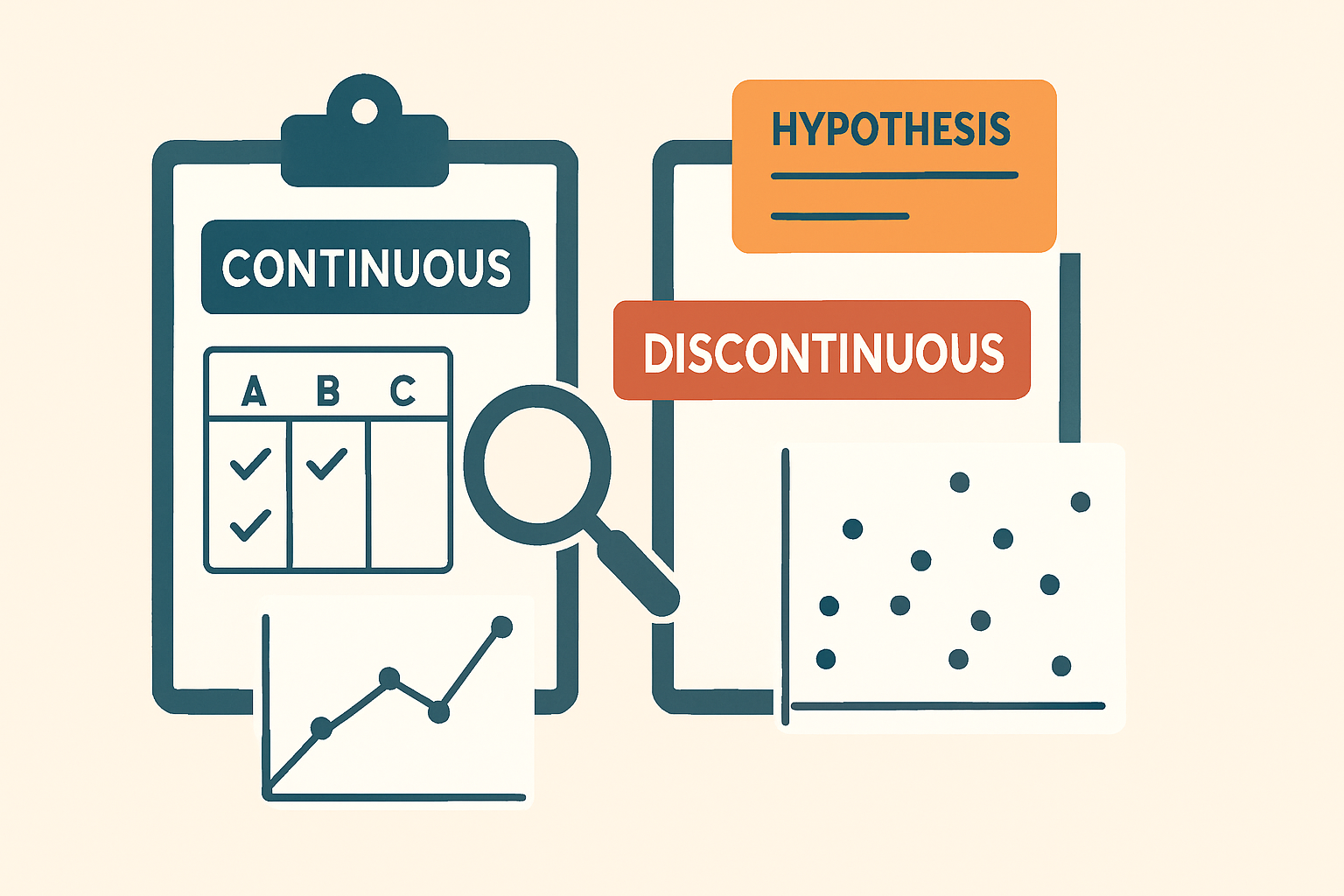
Understanding measurement methods requires distinguishing between two main categories: continuous and discontinuous measurement. Each serves specific purposes and has distinct advantages for different clinical situations.
Continuous Measurement: Capturing Every Instance
Continuous measurement involves recording every occurrence of a behavior during an observation period. This approach provides the most accurate data but requires constant attention from the observer.
- Frequency/Rate: Counts the number of occurrences. Rate adds the dimension of time (e.g., 5 instances per hour). Ideal for discrete behaviors with clear beginnings and endings.
- Duration: Measures how long a behavior lasts from start to finish. Essential for behaviors where time engaged matters more than frequency.
- Latency: Records the time between a stimulus and the initiation of a response. Crucial for measuring prompt dependency or response time.
- Interresponse Time (IRT): Measures the time between two consecutive responses. Useful for analyzing pacing or fluency of behavior.
Discontinuous Measurement: Sampling Behavior
Discontinuous measurement involves sampling behavior at specific intervals rather than recording continuously. While less accurate, it’s more practical when continuous observation isn’t feasible.
- Whole Interval Recording: Behavior must occur throughout the entire interval to be scored. This method tends to underestimate actual occurrence.
- Partial Interval Recording: Behavior is scored if it occurs at any point during the interval. This method tends to overestimate actual occurrence.
- Momentary Time Sampling: Behavior is scored only if it occurs at the exact moment the interval ends. Provides a good estimate for high-frequency behaviors.
Permanent Product Recording and Other Key Methods
Permanent product recording involves measuring the tangible results or byproducts of behavior rather than the behavior itself. This method is highly reliable since the products exist independently of observation.
Other important methods include percent of occurrence (calculating the percentage of opportunities where behavior occurred) and trials-to-criterion (counting how many trials are needed to reach mastery). Each method has specific applications and limitations that BCBA candidates must understand.
Applying Measurement: Worked Examples from ABC to Data
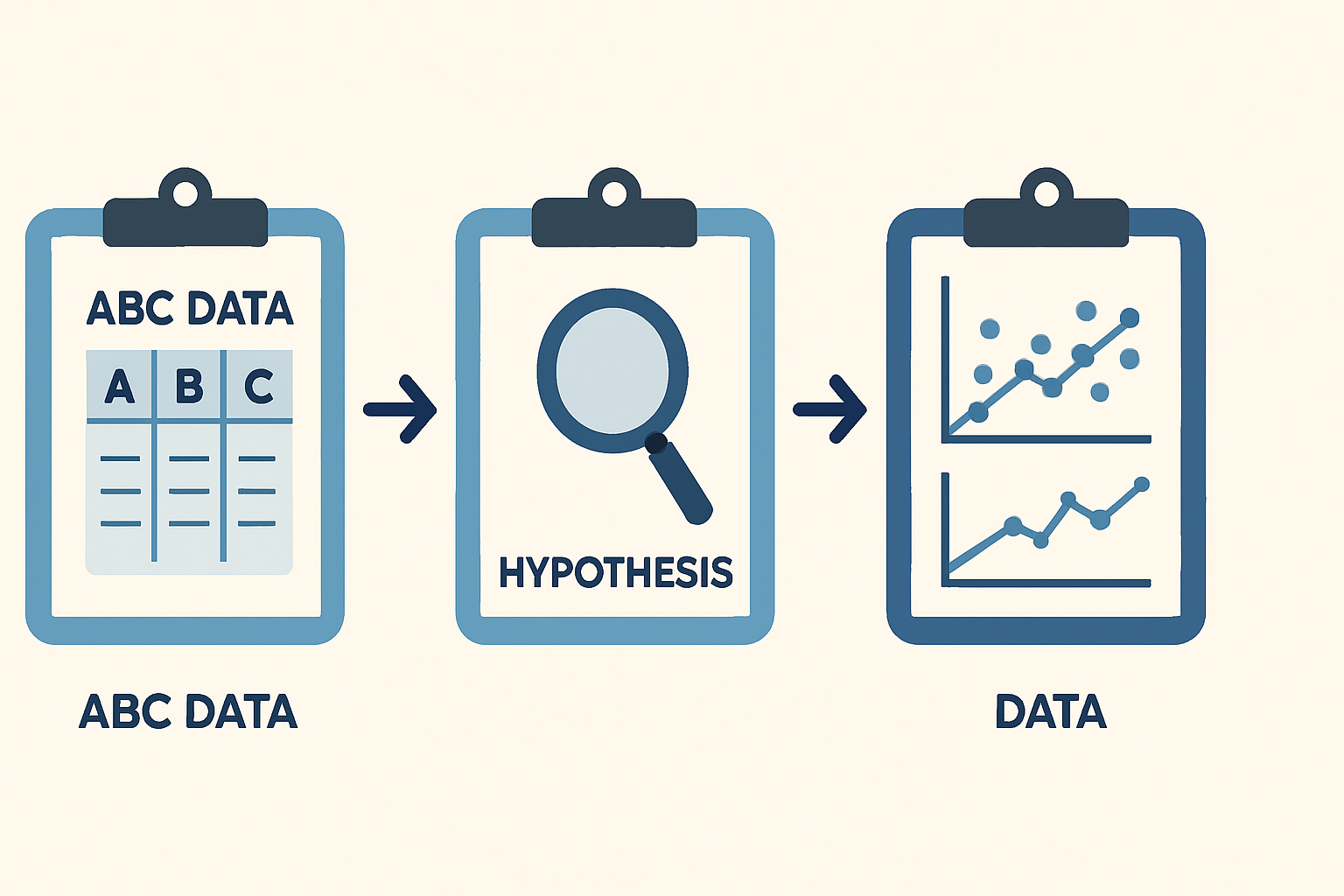
Let’s examine how measurement methods apply in real clinical scenarios. The choice depends on the behavior’s topography, hypothesized function, and practical constraints of the setting.
Example 1: Measuring Elopement (Escape-Maintained)
Scenario: A child frequently leaves the instructional area during difficult tasks. The hypothesized function is escape from demands.
Measurement considerations: Since the concern is how long the child is away from instruction, duration would be appropriate. Alternatively, latency could measure how quickly the child returns after being prompted. Frequency alone wouldn’t capture the clinical concern effectively.
Sample data might show: “Average elopement duration decreased from 8.5 minutes to 2.3 minutes over four weeks of intervention.”
Example 2: Measuring Hand Raising (Attention-Seeking)
Scenario: A student calls out answers instead of raising their hand. The hypothesized function is adult attention.
Measurement considerations: For the desired behavior (hand raising), frequency/rate would be ideal. For the problem behavior (calling out), partial interval recording might be used if continuous observation isn’t possible during group instruction.
This approach allows measurement of both the increase in appropriate behavior and decrease in problem behavior simultaneously.
Measurement on the BCBA Exam: Common Traps and Tips
BCBA exam questions often test subtle distinctions between measurement methods. Understanding these common traps can prevent costly mistakes on test day.
Trap 1: Confusing Interval Recording Methods
The critical distinction lies in when behavior is scored. Remember this mnemonic: “Whole = Whole time, Partial = Any time, Momentary = Moment in time.” Whole interval requires behavior throughout the interval, partial scores any occurrence, and momentary only scores at the interval’s end.
Exam questions often present scenarios where one method would clearly overestimate or underestimate compared to others. Always consider which method aligns with the behavior definition and practical constraints.
Trap 2: Overestimating from Discontinuous Data
Partial interval recording consistently overestimates actual occurrence because a single brief instance scores the entire interval. This can lead to misinterpretation of intervention effectiveness if not accounted for properly.
When exam questions ask about data interpretation, consider whether the measurement method might be inflating or deflating the actual behavior rate. This understanding is crucial for accurate visual analysis of data.
The Golden Rule: Match the Method to the Question
Always ask three key questions: What is the behavior’s operational definition? What practical constraints exist in the setting? What dimension of behavior (count, time, intensity) matters most clinically?
The BACB’s Ethics Code emphasizes selecting measurement methods that provide valid data for decision-making. This ethical consideration often appears in exam scenarios.
Quick Checklist: Selecting a Measurement Method
Use this practical guide when choosing measurement methods in clinical practice or answering exam questions:
- Start with the operational definition – What exactly are you measuring?
- Consider behavior dimensions – Does frequency, duration, or latency matter most?
- Evaluate practical constraints – Can you observe continuously or need sampling?
- Match to behavior function – What maintains the behavior (attention, escape, etc.)?
- Check for permanent products – Can you measure results rather than process?
- Plan for reliability – How will you ensure consistent measurement across observers?
- Consider social validity – Will stakeholders understand and value this data?
Summary and Next Steps for Mastery
Measurement methods in ABA exist on a continuum from most to least accurate: permanent products > continuous measurement > discontinuous measurement. While continuous methods provide the most precise data, practical constraints often require discontinuous approaches.
To master these concepts for the BCBA exam, practice applying measurement methods to diverse scenarios. Work through mock exam questions that test your ability to select appropriate methods based on behavior definitions, clinical goals, and practical considerations.
Remember that effective measurement is not just about data collection but about gathering information that leads to meaningful behavior change. As you study, focus on understanding when and why to use each method, not just memorizing definitions. This conceptual understanding will serve you well both on the exam and in clinical practice.


