

Maturation in ABA: What is Maturation in Behavior Analysis?
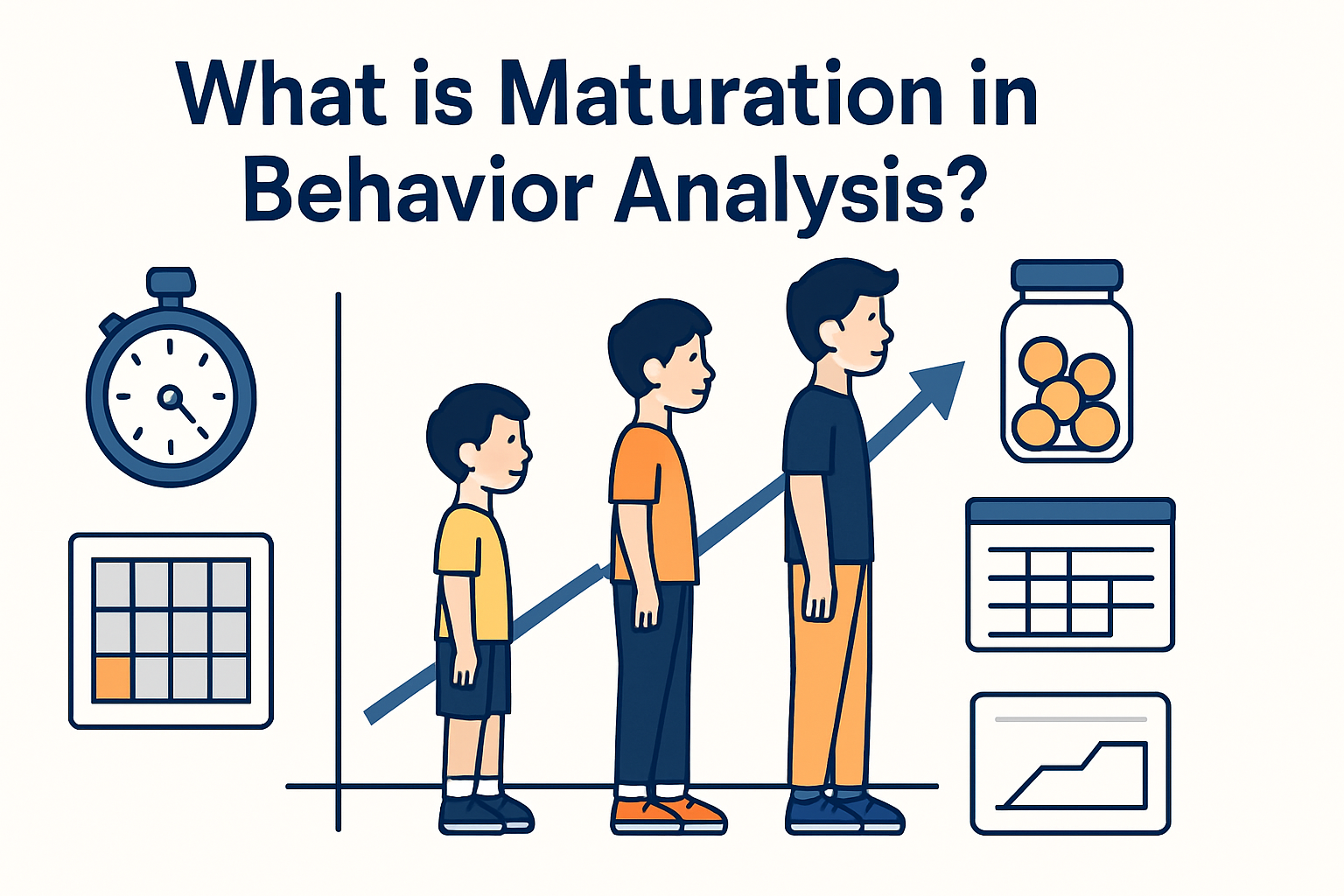
In applied behavior analysis, maturation refers to changes in a subject that occur naturally over time, independent of any intervention. These changes can include physical growth, cognitive development, emotional maturation, or even fatigue patterns that develop as time passes.
Table of Contents
- maturation in ABA: What is Maturation in Behavior Analysis?
- Maturation in Practice: Worked ABA Examples
- Maturation on the BCBA® Exam: Common Traps and Tips
- Quick Checklist: Ruling Out Maturation in Your Practice
- Summary and Key Takeaways
This concept is particularly important because it represents a threat to internal validity. When maturation effects are mistaken for treatment effects, practitioners may incorrectly attribute behavior change to their interventions.
The Official Definition and Key Characteristics
The BACB Task List identifies maturation as one of several threats to internal validity. It specifically involves changes due to the passage of time that could affect the dependent variable being measured.
Key characteristics include:
- Time-dependent changes: Effects that occur naturally as time passes
- Developmental progression: Improvements or declines related to aging or growth
- Non-intervention related: Changes that would occur without any treatment
- Gradual progression: Typically occurs over weeks, months, or years
Why Maturation Matters for Internal Validity
Maturation matters because it can confound experimental results. When behavior changes over an extended intervention period, it’s crucial to determine whether the change resulted from the intervention or would have occurred naturally.
This distinction is essential for ethical practice and accurate data interpretation. Without proper controls, practitioners might continue ineffective interventions or discontinue effective ones based on misinterpreted data.
Maturation in Practice: Worked ABA Examples
Understanding maturation requires seeing it in realistic scenarios. These examples demonstrate how maturation can be mistaken for treatment effects.
Example 1: The ‘Outgrowing’ Tantrum
A 3-year-old child receives functional communication training for tantrums occurring 15 times daily. Over six months, tantrums decrease to 2 times daily. The intervention appears successful, but consider maturation factors.
The child naturally develops expressive language skills, emotional regulation, and frustration tolerance during this period. These developmental changes could explain the reduction independently of the intervention.
To rule out maturation, a practitioner might use a reversal design or multiple baseline design across settings. These single-subject experimental designs help demonstrate experimental control by showing changes only when the intervention is applied.
Example 2: Skill Acquisition in Early Intervention
A 2-year-old in early intervention shows rapid gains in motor imitation skills during discrete trial training. The team celebrates progress, but neurological maturation during this developmental window could be driving the improvement.
Children naturally develop imitative abilities between 18-36 months. Without proper baseline data and control conditions, it’s difficult to separate intervention effects from typical development.
Best practice involves collecting extended baseline data and comparing progress to developmental norms. This helps determine whether gains exceed what would be expected from maturation alone.
Example 3: Adolescent Self-Management
A 14-year-old’s self-injurious behavior decreases during a self-monitoring intervention. Over the 9-month intervention, the adolescent shows improved emotional regulation and reduced target behaviors.
However, adolescence brings natural cognitive maturation, increased peer influence, and developing coping strategies. These maturation factors could independently reduce self-injurious behavior.
A comprehensive approach includes ongoing functional analysis and comparison with typical adolescent development patterns. This ensures intervention effects aren’t confused with natural developmental progression.
Maturation on the BCBA® Exam: Common Traps and Tips
The BCBA exam frequently tests your ability to identify maturation as a confounding variable. Understanding common question patterns helps you avoid exam traps.

Spotting Maturation in Vignettes
Exam questions often include subtle cues indicating maturation. Look for these key phrases:
- ‘Over several months/years of intervention’
- ‘As the child grew older’ or ‘with age’
- ‘During a period of rapid development’
- ‘Natural progression’ or ‘typical development’
Differentiate maturation from history effects (specific external events) and testing effects (practice with assessment tools). Maturation involves internal, time-based changes rather than external events.
Choosing the Right Research Design to Control for It
Different experimental designs offer varying levels of protection against maturation threats:
- Reversal designs: Demonstrate effect disappears when IV withdrawn
- Multiple baseline designs: Stagger introduction across behaviors/settings/participants
- Control groups: In group designs, compare to untreated group
- Changing criterion designs: Show behavior changes only when criterion changes
Understanding these designs is crucial for both exam success and ethical practice in ABA.
Practice Prompts and Answer Rationales
Consider this sample question: ‘A 4-year-old’s social initiations increase from 2 to 10 per hour over 8 months of social skills training. What threat to validity should the BCBA consider?’
The correct answer is maturation. Rationale: The extended time period (8 months) and young age suggest natural social development could explain the increase.
Another example: ‘A teenager’s homework completion improves during a token economy implemented for 3 weeks. What is the primary validity concern?’
Answer: Not maturation. Rationale: Three weeks is too short for significant maturation effects in adolescents. Other threats like history or testing are more relevant.
Quick Checklist: Ruling Out Maturation in Your Practice
Use this practical checklist to identify and control for maturation effects in your ABA practice:
- Consider developmental stage: Is the client in a period of rapid natural development?
- Review timeframes: Has the intervention spanned months or years where maturation could occur?
- Collect baseline data: Establish stable patterns before intervention begins
- Use appropriate designs: Select experimental designs that control for time-based changes
- Compare to norms: Reference typical developmental trajectories for the client’s age
- Monitor continuously: Track whether changes align with intervention phases
- Document systematically: Record both intervention data and developmental observations
Summary and Key Takeaways
Maturation represents a significant challenge in behavior analysis practice and research. Mastering this concept requires understanding both theoretical principles and practical applications.
Key points to remember:
- Maturation involves time-dependent changes independent of intervention
- It threatens internal validity by potentially confounding treatment effects
- Young children and adolescents are particularly susceptible to maturation effects
- Proper experimental design is essential for ruling out maturation
- Exam questions often test your ability to distinguish maturation from other validity threats
- Ethical practice requires considering maturation when interpreting intervention data
For more on related concepts, explore our guide to independent and dependent variables in ABA. Understanding these fundamental concepts strengthens your ability to identify and control for confounding variables like maturation.
Remember that the BACB Task List emphasizes understanding threats to validity as part of competent practice. Always consider maturation when designing interventions and interpreting data over extended periods.


