

instrumentation in ABA: What Instrumentation Means in Applied Behavior Analysis
In Applied Behavior Analysis, instrumentation refers to the specific tools, devices, and procedures used to measure behavior systematically. This concept is fundamental to accurate data collection and forms the backbone of evidence-based practice.
Table of Contents
- instrumentation in ABA: What Instrumentation Means in Applied Behavior Analysis
- Practical Applications: Instrumentation Examples for Behavior Analysts
- Instrumentation on the BCBA Exam: Relevance and Common Traps
- Quick-Review Checklist for Instrumentation
- Summary and Key Takeaways
Understanding instrumentation in ABA helps behavior analysts select appropriate measurement tools based on the target behavior’s characteristics and the intervention’s goals.
Core Definition and Key Components
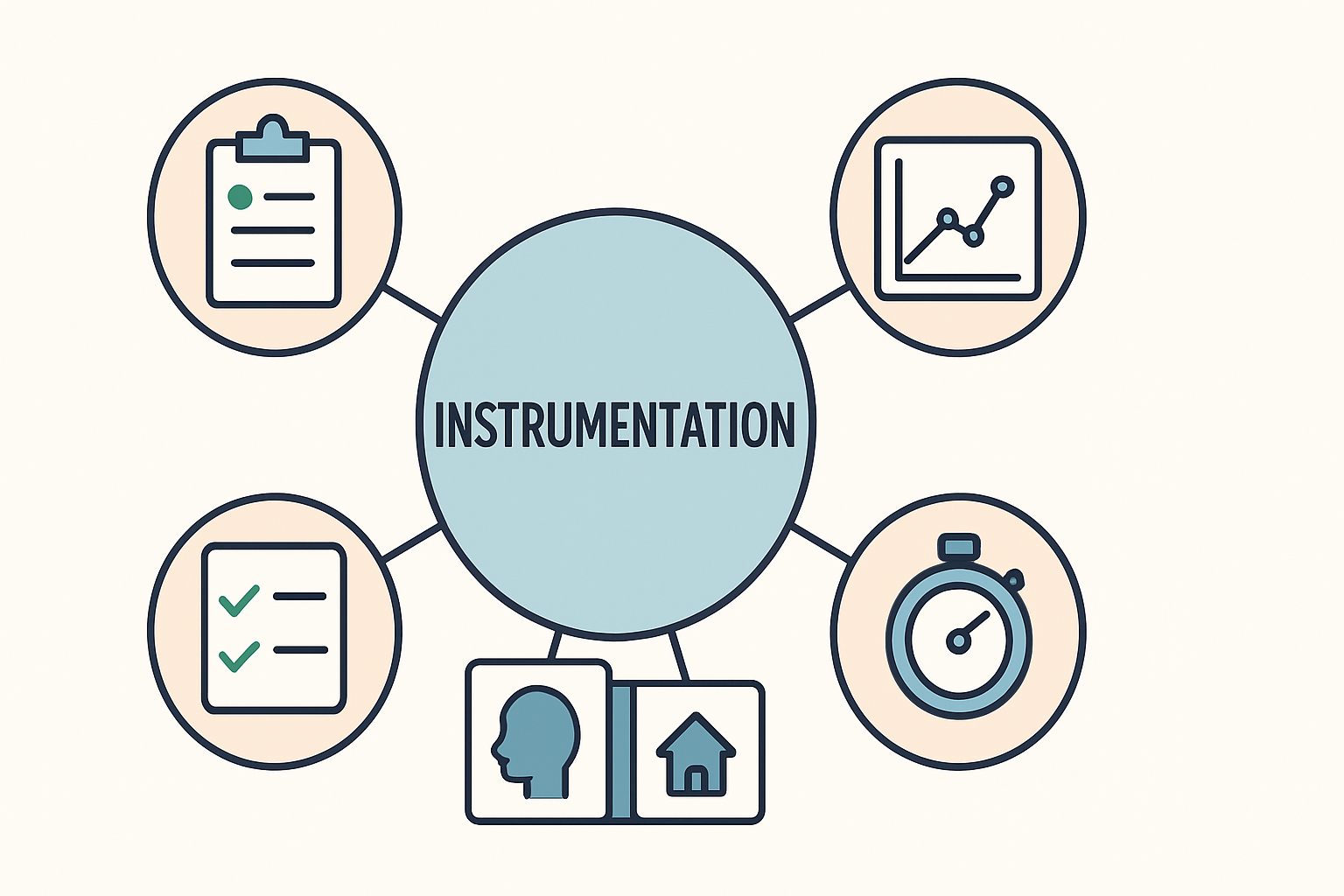
Instrumentation encompasses both physical devices and structured procedures designed to capture behavioral data. The key components include measurement tools like timers, clickers, apps, and standardized checklists.
- Physical devices: Stopwatches, tally counters, digital apps, and specialized equipment
- Structured procedures: Standardized data sheets, observation protocols, and systematic recording methods
- Calibration requirements: Ensuring tools provide consistent, accurate measurements across observers
- Training protocols: Procedures for teaching staff to use instrumentation correctly
Differentiating Instrumentation from Measurement
A common source of confusion arises between instrumentation and measurement. While measurement refers to the process of quantifying behavior, instrumentation represents the specific apparatus that enables this quantification.
Think of measurement as the ‘what’ (duration, frequency, latency) and instrumentation as the ‘how’ (stopwatch, clicker, data sheet). This distinction becomes particularly important when studying for the BCBA exam where questions often test this conceptual understanding.
Practical Applications: Instrumentation Examples for Behavior Analysts
Effective instrumentation selection depends on the behavior’s topography, the measurement dimension, and practical constraints. Here are three common scenarios demonstrating appropriate tool selection.
Measuring Elopement Duration and Latency
Consider a child who elopes from their work area. ABC data suggests an escape function, making duration and latency critical measurement dimensions.
- Primary instrumentation: Digital stopwatch for precise timing
- Supporting tools: Structured data sheet with time columns
- Why not simple count: Frequency alone misses important temporal information about how long elopement lasts and how quickly it begins
- Data recording: Start timer when elopement begins, stop when child returns, record both duration and latency to elopement
Tracking Mand Frequency with a Clicker
For increasing mands in a child with limited vocal speech, where ABC analysis shows a tangible function, frequency becomes the primary measurement dimension.
- Primary instrumentation: Hand-held tally counter (clicker) for real-time counting
- Recording method: Interval data sheet divided into session segments
- Advantages over paper: Reduces counting errors, allows observer to maintain visual contact with client
- Session structure: Record mands per 5-minute interval to track patterns across the session
Using Standardized Checklists for Skill Acquisition
When assessing daily living skills like tooth brushing or dressing, task analysis checklists provide structured instrumentation.
- Instrumentation type: Validated task analysis checklist with specific steps
- Reliability benefits: Standardized format improves interobserver agreement
- Measurement focus: Steps completed independently versus with prompts
- Progress tracking: Allows systematic documentation of skill acquisition over time
Instrumentation on the BCBA Exam: Relevance and Common Traps
Understanding instrumentation is tested across multiple BCBA exam domains, particularly in measurement and experimental design sections. Questions often present scenarios requiring appropriate tool selection.
How Exam Questions Are Framed
Exam questions typically ask candidates to identify the most appropriate instrumentation given specific measurement goals. These questions test both conceptual understanding and practical application skills.
- Scenario-based questions: ‘Which instrumentation would be most appropriate for measuring…’
- Tool identification: ‘The behavior analyst used a stopwatch to measure duration. This is an example of…’
- Comparative questions: Asking why one tool is better than another for a specific purpose
- Embedded details: Scenarios may include irrelevant information to test discrimination skills
Frequent Missteps and How to Avoid Them
Several common errors appear when candidates encounter instrumentation questions. Being aware of these traps can improve exam performance.
- Confusing instrumentation with dependent variable: Remember, instrumentation measures the dependent variable but isn’t the variable itself
- Overcomplicating tool selection: Choosing complex electronic systems when simple tools suffice
- Ignoring calibration needs: Forgetting that some instruments require regular checking for accuracy
- Missing observer training requirements: Overlooking that staff must be trained to use specific instrumentation correctly
Quick-Review Checklist for Instrumentation
Use this checklist to ensure you’ve mastered instrumentation concepts for both practice and exam preparation.
- Define instrumentation as the specific tools and procedures for measurement
- Differentiate instrumentation from the measurement process itself
- Match tools to dimensions: Timers for duration/latency, counters for frequency
- Consider reliability: Standardized tools improve interobserver agreement
- Evaluate practicality: Choose tools that staff can use accurately in natural settings
- Plan for training: Include instrumentation training in staff development protocols
- Check calibration: Regularly verify that measurement tools provide accurate data
- Document procedures: Clearly describe instrumentation in behavior plans and research protocols
Summary and Key Takeaways
Instrumentation represents a critical component of evidence-based practice in behavior analysis. The specific tools and procedures used for measurement directly impact data quality and intervention effectiveness.
Key points to remember include the distinction between measurement (the process) and instrumentation (the tools), the importance of matching tools to measurement dimensions, and the need for proper training and calibration. For comprehensive measurement strategies, review our guide on data collection in ABA.
When preparing for certification, practice identifying appropriate instrumentation in various scenarios and understand why certain tools are preferred over others. This knowledge supports both exam success and effective clinical practice. For additional study resources, the BACB Task List provides detailed measurement requirements.


