
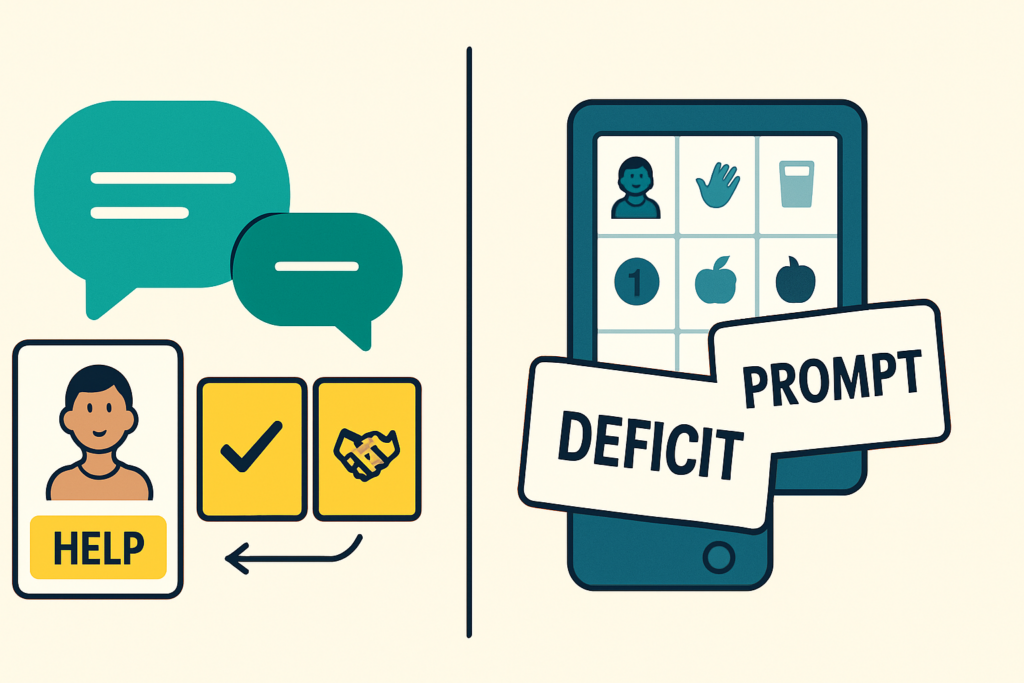
inclusive language vs clinical deficit terms: Defining the Terms: What BCBA Candidates Nee
For BCBA candidates, understanding the distinction between inclusive language and clinical deficit terms represents a critical ethical competency. This distinction directly connects to the BACB Ethics Code and reflects our commitment to person-centered practice. The choice of language shapes how we perceive behavior, design interventions, and ultimately impacts client dignity.
Table of Contents
- inclusive language vs clinical deficit terms: Defining the Terms: What BCBA Candidates Nee
- From Theory to Practice: Worked Examples for the BCBA Exam
- Exam Relevance and Common Traps
- Quick Checklist for Ethical and Inclusive Communication
- Final Summary and Next Steps
What Are Clinical Deficit Terms?
Clinical deficit terms are value-laden labels that focus exclusively on perceived shortcomings or problems. These terms often describe individuals rather than behaviors, using judgmental language that can lead to stigmatization and negative bias. Common examples include ‘non-compliant,’ ‘aggressive,’ ‘low-functioning,’ or ‘disruptive.’
These terms violate Code 1.01 (Reliance on Scientific Knowledge) because they lack operational precision and fail to provide measurable, observable descriptions. When we label a child as ‘non-compliant,’ we’re making an inference about their character rather than describing specific behaviors in context.
The Framework of Inclusive Language in ABA
Inclusive language in applied behavior analysis encompasses three key approaches: person-first language, strength-based descriptions, and operational terminology. Person-first language emphasizes the individual before any diagnosis (e.g., ‘child with autism’ rather than ‘autistic child’).
Strength-based descriptions focus on existing competencies and potential for growth, while operational terminology uses precise, measurable descriptions of behavior. This approach aligns with Code 2.09 (Protecting Confidentiality) and Code 4.07 (Environmental Conditions that Interfere) by maintaining professional respect and focusing on environmental factors rather than personal deficits.
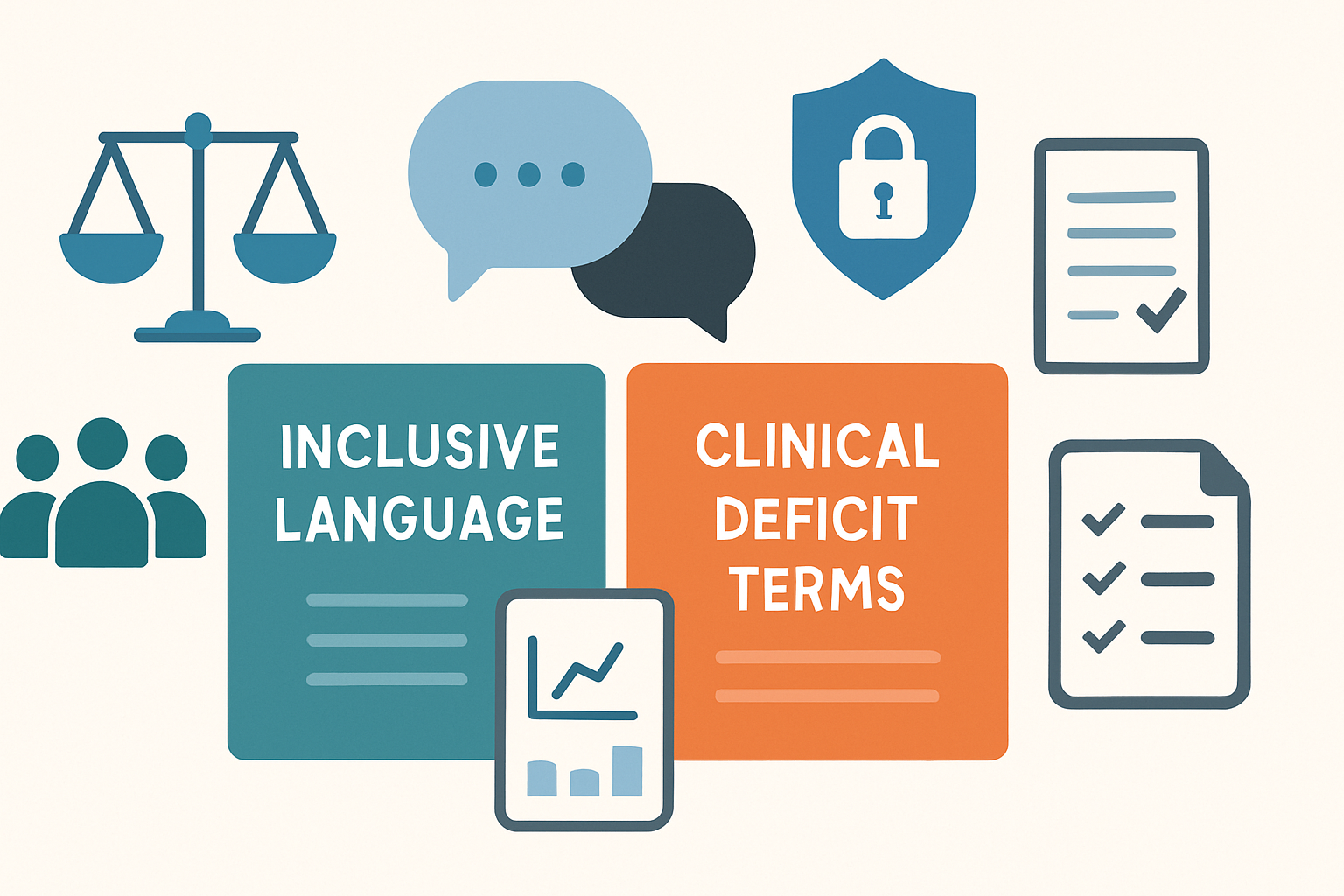
From Theory to Practice: Worked Examples for the BCBA Exam
Translating ethical principles into practical application is essential for BCBA exam success. These examples demonstrate how language choice directly impacts functional assessment and intervention planning.
Example 1: Reframing ‘Non-Compliance’ in a School Setting
Consider a scenario where a student frequently doesn’t follow teacher instructions. The deficit term ‘non-compliant’ provides no useful information for intervention. An inclusive, operational analysis using an ABC model reveals:
- Antecedent: Complex multi-step demand presented verbally
- Behavior: Sitting quietly without initiating task
- Consequence: Teacher removes task after 30 seconds
The hypothesized function becomes escape from difficult demands, suggesting potential skill deficits in task initiation or multi-step processing. This analysis directly informs exam questions about operational definitions and functional assessment procedures.
Example 2: Moving Beyond ‘Aggression’ in a Clinical Report
When a client hits during transitions, labeling this as ‘aggressive’ creates barriers to effective intervention. An operational description using precise terminology changes the analysis:
- Antecedent: Unpredictable schedule change without warning
- Behavior: Open-hand strike on caregiver’s arm with moderate force
- Consequence: Transition delayed by 2-3 minutes
The function appears to be protest/escape from unpredictability, suggesting interventions focused on transition supports and predictability strategies. This approach reflects the ethical responsibility in descriptive assessment and report writing required by the BACB Ethics Code.
Exam Relevance and Common Traps
Understanding how inclusive language vs clinical deficit terms appears on the BCBA exam is crucial for success. This topic integrates across multiple Task List domains and represents a common area where candidates make avoidable errors.
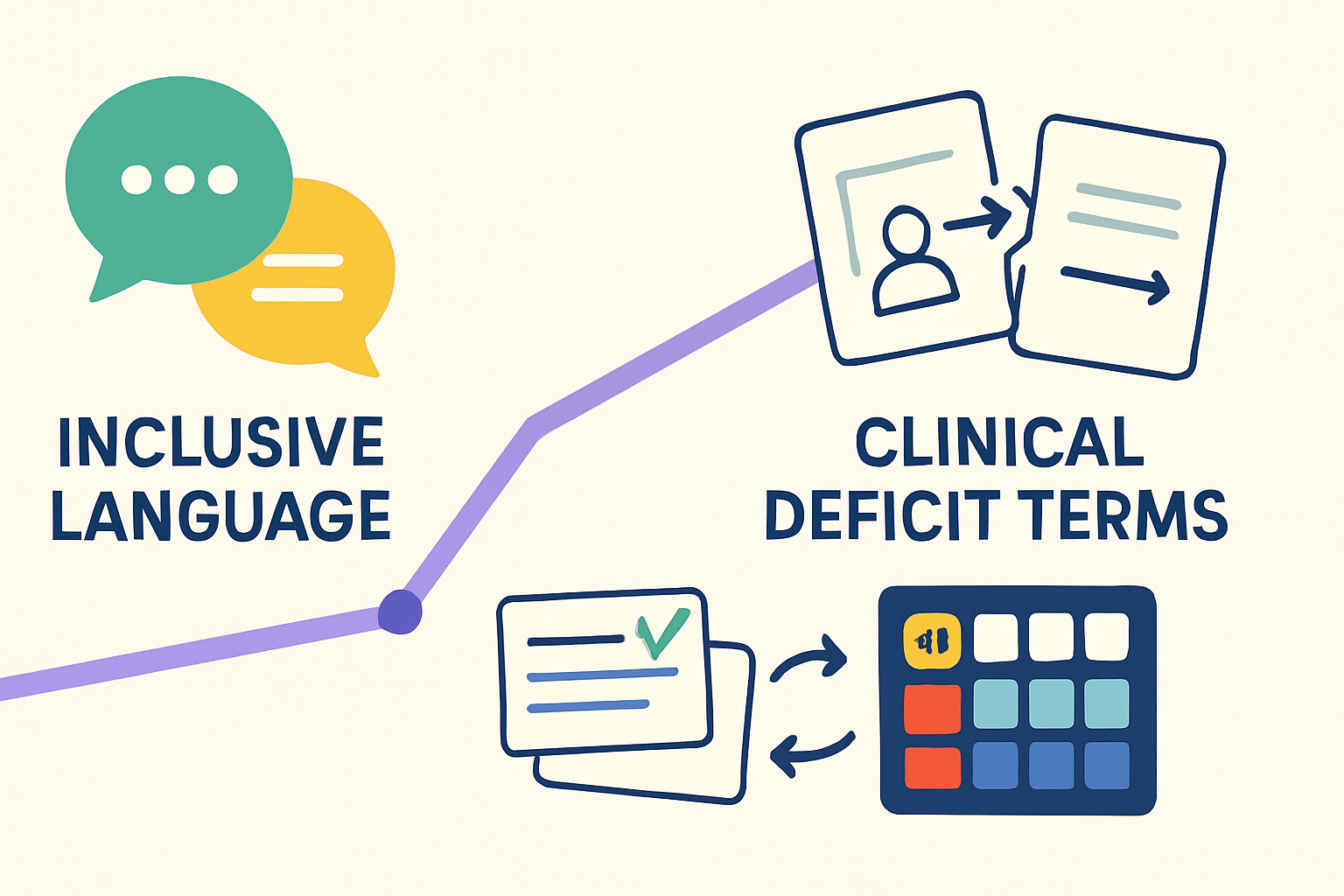
Linking to the BCBA Task List
This content connects directly to several key Task List sections:
- B-1: Define behavior in observable and measurable terms
- E-1: Ethical responsibilities as a BACB certificant
- G-20: Use communication skills effectively with stakeholders
- F-3: Identify and prioritize socially significant behavior change targets
These connections demonstrate how language choice impacts assessment accuracy, intervention effectiveness, and professional relationships.
Three Frequent Exam Mistakes to Avoid
BCBA candidates often stumble on questions related to language ethics. Watch for these common traps:
- Confusing operational description with a label: Selecting ‘non-compliant’ instead of ‘did not initiate task within 10 seconds of instruction’
- Choosing interventions based on deficit labels: Implementing consequence-based strategies for ‘aggression’ rather than antecedent modifications for escape-maintained behavior
- Overlooking ethical mandates: Failing to recognize that respectful language applies to all professional conduct, including data collection, report writing, and team communication
These mistakes often appear in scenario-based questions that test both conceptual understanding and practical application.
Quick Checklist for Ethical and Inclusive Communication
Use this practical tool to audit your language in study notes, mock exam answers, and hypothetical scenarios. This checklist helps ensure your communication aligns with ethical standards and best practices.
- Use person-first language consistently (e.g., ‘individual with disabilities’ not ‘disabled individual’)
- Describe behaviors operationally with measurable dimensions (frequency, duration, intensity)
- Focus on environmental factors and contextual variables rather than personal characteristics
- Identify potential functions rather than assigning judgmental labels
- Consider cultural variables and individual preferences in language choice
- Review written materials for deficit terminology before submission
- Model inclusive language in supervision and team meetings
- Seek client and family input on preferred terminology and descriptions
Final Summary and Next Steps
Mastering the distinction between inclusive language and clinical deficit terms represents more than exam preparation—it’s foundational to ethical practice. This competency ensures that our language reflects our scientific approach while maintaining human dignity.
For further study, review the official BACB Ethics Code and explore resources on compassionate care in ABA practice. Practice applying these principles to case scenarios and mock exam questions to build fluency. Remember that language shapes perception, and our words should always reflect our commitment to evidence-based, person-centered care.
As you prepare for the BCBA exam, integrate these concepts into your study framework and practice applications. The ability to use precise, respectful language demonstrates both technical competence and ethical awareness—qualities essential for successful behavior analysts.


