
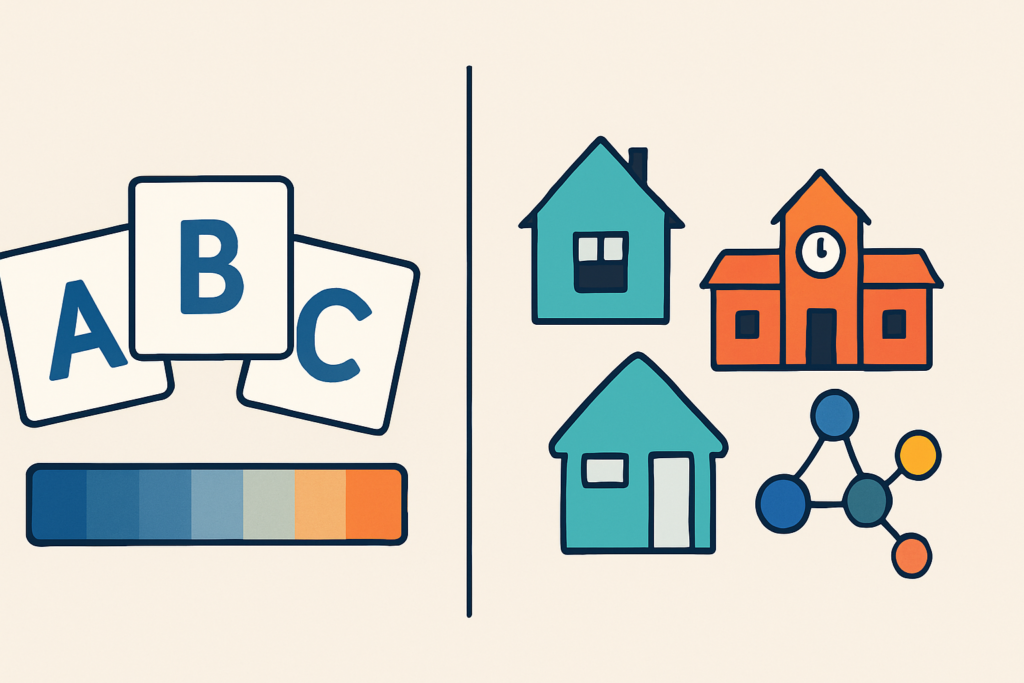
Generalization strategies are essential for ensuring that skills learned in therapy sessions transfer to real-world settings. This critical concept in applied behavior analysis determines whether interventions produce lasting, meaningful change. Understanding how to promote generalization separates effective practitioners from those whose interventions remain confined to clinical environments.
Table of Contents
- What is Generalization in ABA? Key Definitions for the Exam
- Applying Generalization Strategies: Worked Examples
- Generalization on the BCBA Exam: Common Traps and How to Avoid Them
- Your Generalization Planning Checklist
- Summary and Key Takeaways
- References
What is Generalization in ABA? Key Definitions for the Exam
Generalization refers to the transfer of learned behavior across different conditions. It occurs when a skill demonstrated in one context appears in other contexts without additional teaching. This fundamental principle ensures that behavior change is not limited to specific training situations.
Stimulus Generalization vs. Response Generalization
These two types of generalization represent different aspects of skill transfer. Stimulus generalization occurs when a behavior learned in the presence of one stimulus occurs in the presence of different, but similar, stimuli. For example, a child who learns to say ‘hello’ to their therapist might then say ‘hello’ to other adults.
Response generalization involves variations of a behavior that serve the same function. If a child learns to ask for a break by saying ‘break,’ they might later use phrases like ‘I need a rest’ or ‘Can I stop?’ to achieve the same outcome. Both types are essential for functional independence.
The Role of Maintenance
Generalization and maintenance are related but distinct concepts often tested together. While generalization focuses on transfer across settings, people, or materials, maintenance refers to the persistence of behavior over time after intervention has ended. A skill that generalizes but doesn’t maintain lacks long-term value.
Effective programming addresses both dimensions. Consider reading our guide on generalization and maintenance for more detailed strategies.
Applying Generalization Strategies: Worked Examples
Moving from theory to practice requires concrete planning. These examples demonstrate how to apply generalization strategies systematically.
Example 1: Promoting Requesting Across People and Settings
Scenario: A child learns to mand for a break with one therapist during discrete trial training. The current ABC data shows: Antecedent – difficult academic task, Behavior – saying ‘break,’ Consequence – 2-minute break. The hypothesized function is escape from demands.
Generalization plan:
- Train multiple exemplars: Teach the mand with different therapists, in various rooms, and during different types of tasks
- Introduce naturally maintaining contingencies: Gradually thin reinforcement to match natural schedules
- Program common stimuli: Use the same break area across settings
- Teach loosely: Vary instructional materials and response requirements
Example 2: Generalizing Social Skills from Role-Play to the Playground
Scenario: A learner practices initiating play during structured sessions. ABC data: Antecedent – peer playing alone, Behavior – ‘Can I play?’, Consequence – peer says ‘yes.’ Function is social interaction/access.
Generalization strategies:
- Use indiscriminable contingencies: Sometimes provide immediate reinforcement, sometimes delayed (matching natural play)
- Program sufficient exemplars: Practice with multiple peers in various play contexts
- Mediate generalization: Teach self-monitoring skills for social initiation
- Train to generalize: Conduct sessions in natural playground settings
Generalization on the BCBA Exam: Common Traps and How to Avoid Them
Exam questions often test your ability to distinguish generalization from related concepts and select appropriate strategies.
Trap 1: Confusing Generalization with Other Concepts
Many candidates confuse generalization with maintenance, fluency, or mastery. Remember these distinctions:
- Maintenance = persistence over time
- Generalization = transfer across settings/people
- Fluency = speed and accuracy of performance
- Mastery = meeting acquisition criteria
When in doubt, ask: ‘Is this about transfer to new conditions (generalization) or persistence over time (maintenance)?’
Trap 2: Selecting the Least Effective or Inappropriate Strategy
Exam questions may include plausible but ineffective options. Avoid these pitfalls:
- Train and hope: Assuming generalization will occur without planning
- Overusing artificial reinforcers in natural settings
- Failing to program response generalization when needed
- Using only one exemplar during training
For more on related concepts, see our guide to stimulus and response generalization.
Your Generalization Planning Checklist
Use this practical checklist when designing interventions to ensure generalization is systematically addressed.
- Identify target settings where the skill should ultimately occur
- Select multiple exemplars for training (people, materials, contexts)
- Program common stimuli between training and natural environments
- Teach loosely by varying instructional conditions
- Use indiscriminable contingencies to match natural reinforcement
- Include sufficient exemplars in training sessions
- Mediate generalization through self-management strategies
- Train to generalize by conducting sessions in natural settings
- Monitor and measure generalization across all relevant dimensions
- Adjust programming based on generalization data
This systematic approach ensures skills transfer beyond the therapy room. For comprehensive behavior planning, review our behavior intervention plan guide.
Summary and Key Takeaways
Generalization strategies are not optional additions but essential components of effective ABA programming. Remember these critical points:
- Generalization involves transfer of behavior across different conditions
- Stimulus generalization = same behavior to different stimuli
- Response generalization = different behaviors serving same function
- Plan generalization systematically from the start
- Use multiple strategies rather than relying on single approaches
- Measure generalization directly and frequently
- Distinguish generalization from maintenance on exam questions
Effective generalization programming requires thoughtful planning, systematic implementation, and ongoing assessment. By incorporating these strategies into your practice, you ensure that skills learned in therapy create meaningful, lasting change in clients’ lives.


