
When a learner masters a skill in the therapy room but fails to use it at home or school, the intervention hasn’t achieved its ultimate purpose. This is where generalization in ABA becomes critical—the process of transferring learned behaviors to new, untrained situations. For BCBA candidates, understanding generalization isn’t just academic; it’s essential for creating interventions that produce meaningful, lasting change.
Table of Contents
- What is Generalization in ABA? Beyond the Discrete Trial
- Generalization in Action: Worked Examples for BCBA Candidates
- Generalization on the BCBA Exam: Common Traps and How to Avoid Them
- Your Generalization Programming Checklist
- Key Takeaways for Exam and Practice
What is Generalization in ABA? Beyond the Discrete Trial
Generalization refers to the occurrence of a trained behavior under conditions different from the original teaching environment. Unlike maintenance, which focuses on behavior persisting over time, generalization emphasizes behavior occurring across varied stimuli, settings, or people. Without effective generalization, skills remain confined to the therapy room, limiting their functional value.
A Formal Definition and the Goal of Lasting Change
In technical terms, generalization describes when a behavior trained under specific conditions occurs in the presence of novel stimuli or across different contexts. The goal is to ensure skills become functional and useful in the learner’s natural environment, not just during structured sessions. This concept is fundamental to the seven dimensions of ABA, particularly the dimension of generality.
Stimulus vs. Response Generalization: Knowing the Difference
Two primary types of generalization appear frequently on the BCBA exam. Stimulus generalization occurs when the same response is emitted in the presence of similar but untrained stimuli. For example, a child taught to say “dog” when shown a picture of a golden retriever says “dog” when seeing a poodle.
Response generalization involves variations within a response class when the same stimulus is present. If taught to open a door by turning a knob, response generalization might include pushing the door or using a key. Understanding this distinction is crucial for both exam success and effective programming.
Generalization in Action: Worked Examples for BCBA Candidates
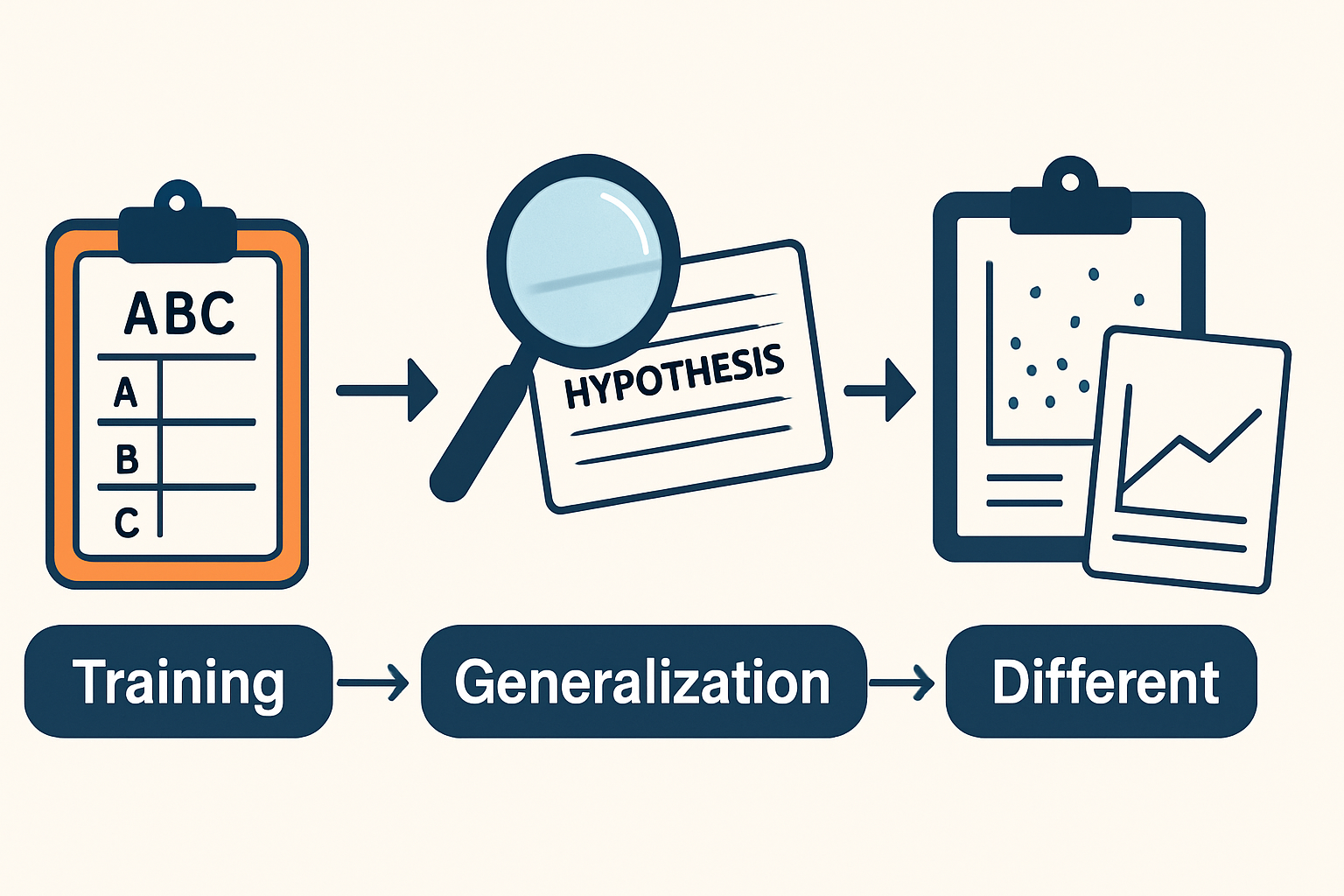
Concrete examples help solidify these abstract concepts. Let’s examine two scenarios using the ABC format and hypothesized functions to demonstrate how generalization manifests in practice.
Example 1: Greeting Skills Across People (Stimulus Generalization)
A learner is taught to respond “hi” when their therapist says “hello” during discrete trial training. The ABC analysis shows: Antecedent: Therapist says “hello,” Behavior: Learner says “hi,” Consequence: Social praise from therapist. The hypothesized function is social reinforcement.
Generalization occurs when the learner spontaneously says “hi” to their parent, a peer, or a store clerk without specific training for those individuals. The behavior has transferred across different people—a clear example of stimulus generalization where the response remains the same but the antecedent person varies.
Example 2: Problem-Solving with a New Puzzle (Response Generalization)
A child learns to complete a specific shape sorter by matching circle to circle hole. During training: Antecedent: Circle shape presented, Behavior: Places circle in matching hole, Consequence: Puzzle piece fits (automatic reinforcement).
Response generalization appears when presented with a novel, differently shaped puzzle. The child applies the learned “try different orientations” strategy to fit a star shape, even though this specific response wasn’t trained. This demonstrates response variation within the problem-solving response class.
Generalization on the BCBA Exam: Common Traps and How to Avoid Them
Exam questions about generalization often include distractors that confuse related concepts. Recognizing these patterns helps you select the correct answer more efficiently.
Trap 1: Confusing Generalization with Maintenance or Fluency
Many candidates mistakenly select “maintenance” when the question describes behavior occurring across different conditions. Remember these key distinctions:
- Generalization: Behavior occurs across different stimuli, settings, or people
- Maintenance: Behavior persists over time under similar conditions
- Fluency: Behavior occurs with appropriate rate and accuracy
- Acquisition: Initial learning of the behavior
When a question mentions “untrained settings” or “different materials,” think generalization, not maintenance.
Trap 2: Overlooking the Need for Planned Programming
Another common error is assuming generalization occurs automatically. The BACB emphasizes that generalization often requires active programming. Exam questions may ask which strategy would best promote generalization, with correct answers including:
- Training with multiple exemplars
- Using natural contingencies of reinforcement
- Incorporating common stimuli across settings
- Employing indiscriminable contingencies
- Teaching loosely rather than rigidly
These strategies align with research showing generalization must often be programmed, not assumed. For more on related concepts, see our guide on stimulus equivalence.
Your Generalization Programming Checklist
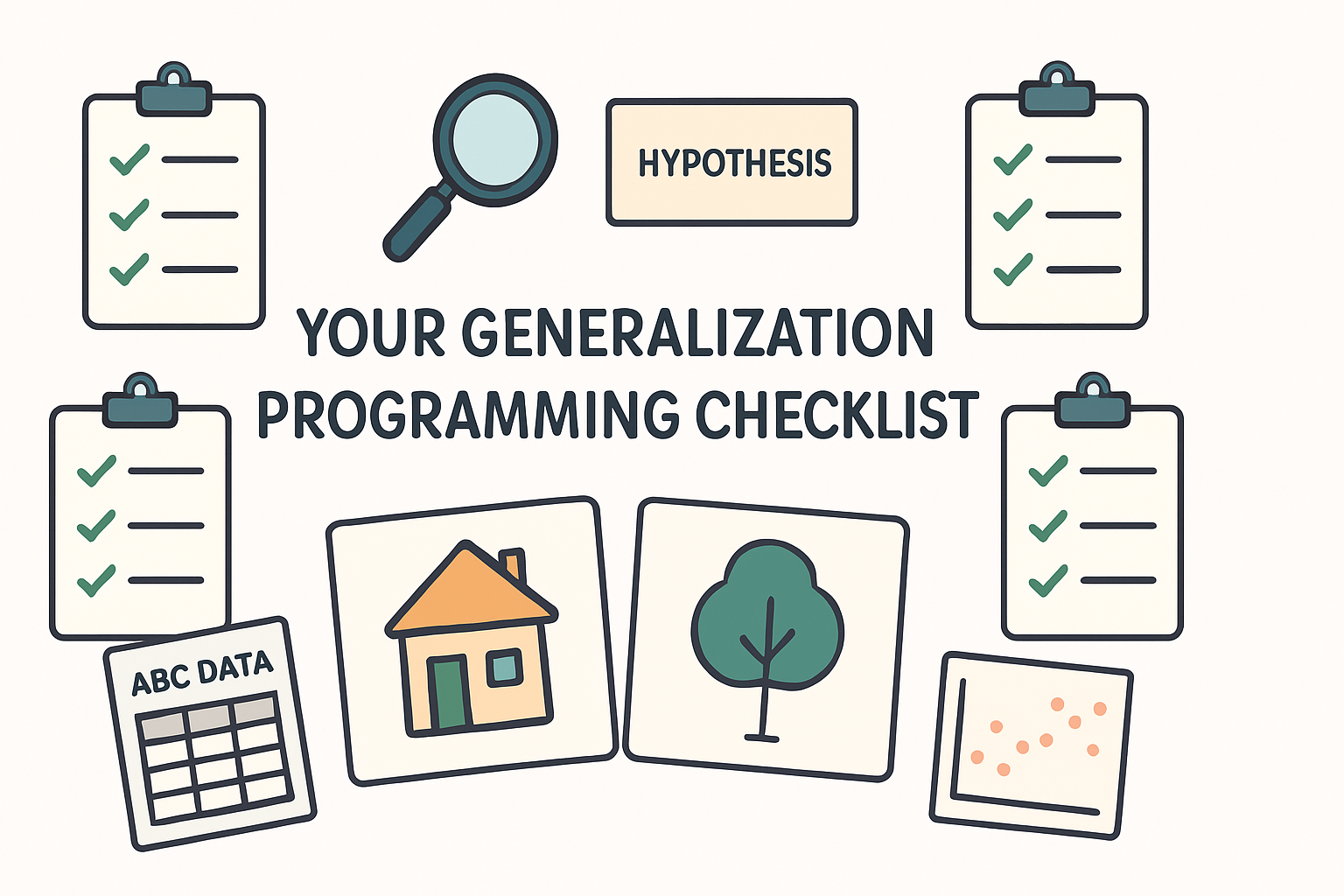
Use this practical checklist when designing interventions to ensure skills transfer effectively:
- Identify target environments where the skill should ultimately occur
- Program multiple exemplars during teaching (different materials, people, settings)
- Use natural reinforcement contingencies whenever possible
- Incorporate common stimuli that bridge teaching and natural environments
- Teach sufficient exemplars to establish generalized responding
- Program indiscriminable contingencies to mimic real-world reinforcement schedules
- Monitor generalization probes regularly across untrained conditions
- Modify programming based on generalization data
This systematic approach ensures skills become functional across the learner’s natural environment. For additional programming strategies, the BACB Ethics Code emphasizes the importance of effective, generalizable interventions.
Key Takeaways for Exam and Practice
Generalization represents the ultimate test of intervention effectiveness. Remember these critical points:
- Generalization means behavior occurs under untrained conditions—different stimuli, settings, or people
- Distinguish between stimulus generalization (same response to similar stimuli) and response generalization (varied responses to same stimulus)
- Generalization often requires active programming using evidence-based strategies
- On the exam, watch for distractors confusing generalization with maintenance, fluency, or acquisition
- Effective programming includes multiple exemplars, natural reinforcement, and common stimuli
- Without generalization, skills lack functional utility in the learner’s natural environment
Mastering these concepts ensures you can both pass exam questions and design interventions that produce meaningful, lasting change. For comprehensive exam preparation, explore our BCBA exam prep guide covering all essential domains.


