

Understanding functional assessment is essential for both effective ABA practice and success on the BCBA exam. This systematic process helps identify why behaviors occur, forming the foundation for ethical, function-based interventions.
Table of Contents
- What is a Functional Assessment? Definition and Core Purpose
- Conducting a Functional Assessment: From ABC Data to Hypothesis
- Functional Assessment on the BCBA Exam: Common Traps and How to Avoid Them
- Your Functional Assessment Quick-Reference Checklist
- Summary and Next Steps for Mastery
What is a Functional Assessment? Definition and Core Purpose
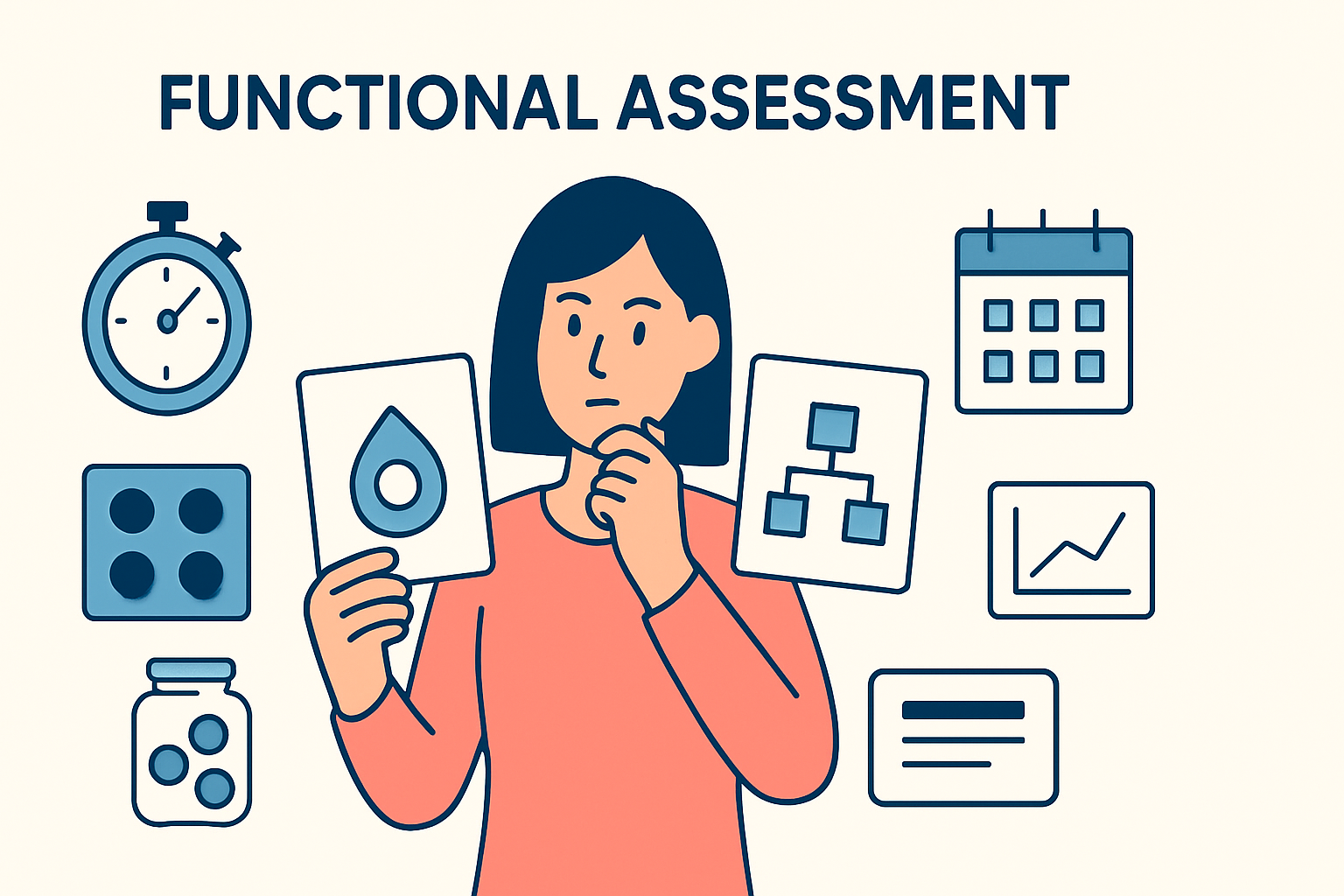
A functional assessment, often called a functional behavior assessment (FBA), is a systematic process for identifying the environmental variables that maintain problem behavior. Its primary goal is to determine the function or purpose that a behavior serves for an individual.
The Official Definition and Its Key Components
The BACB defines functional assessment as a collection of methods for gathering information about antecedents, behaviors, and consequences to determine the function of behavior. The process typically identifies one of four common functions, often remembered by the acronym SEAT:
- Sensory/Automatic Reinforcement: The behavior produces its own reinforcement through internal stimulation
- Escape/Avoidance: The behavior allows escape from or avoidance of an aversive stimulus
- Attention: The behavior produces access to social attention from others
- Tangible/Access: The behavior produces access to preferred items or activities
Functional Assessment vs. Functional Analysis: A Critical Exam Distinction
This distinction frequently appears on the BCBA exam and is crucial for ethical practice. A functional assessment refers to indirect and descriptive methods of gathering information, while a functional analysis involves experimental manipulation of variables to test hypotheses.
- Functional Assessment Methods: Interviews, rating scales, ABC data collection, scatter plots
- Functional Analysis Methods: Experimental conditions where antecedents and consequences are systematically manipulated to confirm behavioral function
- Key Difference: Assessment gathers information; analysis tests hypotheses through controlled experimentation
Conducting a Functional Assessment: From ABC Data to Hypothesis
The assessment process follows a logical sequence from data collection to hypothesis development. Each step builds toward identifying the maintaining variables of behavior.
Example 1: Escape-Maintained Behavior in a Classroom
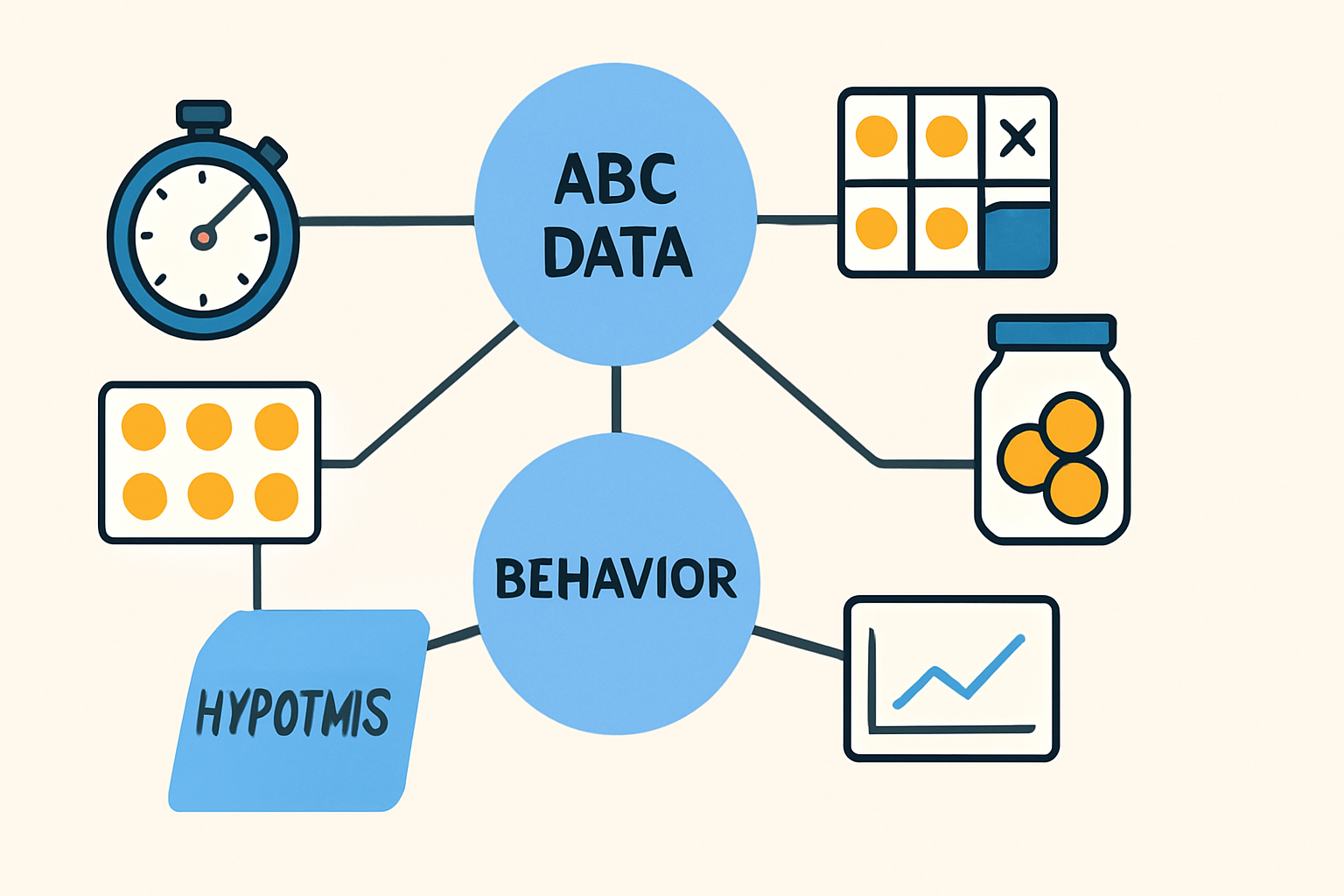
Consider a student who engages in disruptive behavior during math instruction. The ABC data reveals a consistent pattern:
- Antecedent: Teacher presents difficult math worksheet
- Behavior: Student throws materials, yells “I hate math!”
- Consequence: Teacher sends student to hallway for 5 minutes
After multiple observations, the hypothesis emerges: The behavior is maintained by negative reinforcement in the form of escape from the difficult task. The student learns that disruptive behavior leads to removal from the aversive math situation.
Example 2: Attention-Seeking Behavior During Social Play
A child hits peers during free play time. The collected data shows this pattern:
- Antecedent: Peers playing together without including the child
- Behavior: Child hits nearest peer
- Consequence: Teacher immediately intervenes with verbal reprimand and peers react
The consistent consequence of immediate adult attention suggests the behavior serves a social positive reinforcement function. The hitting reliably produces attention from both the teacher and peers.
Example 3: Tangible-Maintained Behavior at Home
A parent reports tantrums at the grocery store checkout. The ABC data collection reveals:
- Antecedent: Parent says “no” to candy request at checkout line
- Behavior: Child screams, cries, and drops to floor
- Consequence: Parent gives candy to stop the tantrum
This pattern demonstrates positive reinforcement through access to tangible items. The tantrum behavior is strengthened because it consistently produces the desired candy. For more on reinforcement principles, see our guide on reinforcement in ABA.
Functional Assessment on the BCBA Exam: Common Traps and How to Avoid Them
The exam tests your ability to apply functional assessment principles correctly. Recognizing these common traps can improve your exam performance.
Trap 1: Confusing Topography with Function
Two behaviors that look identical can serve completely different functions. The exam will present scenarios where you must identify the maintaining variable, not just describe what the behavior looks like.
- Example Trap: Assuming all hitting serves an attention function
- Reality: Hitting could serve escape, attention, tangible, or automatic functions depending on the individual and context
- Solution: Always analyze the ABC data patterns, not just the behavior’s appearance
Trap 2: Overlooking Setting Events and Motivating Operations
Exam questions often include subtle details about setting events or motivating operations that influence behavior. Missing these can lead to incorrect function identification.
- Common Oversight: Failing to consider how sleep deprivation (setting event) might increase escape-maintained behavior
- Exam Strategy: Look for information about recent events, deprivation states, or environmental changes that might serve as establishing operations
- Key Concept: An EO makes a consequence more valuable and the behavior that produces it more likely
Trap 3: Jumping to Intervention Before Confirming Function
Ethical practice requires function-based interventions. A common wrong answer selects an intervention that seems plausible but isn’t matched to the identified function.
- Ethical Principle: Interventions must be based on assessment data
- Exam Pattern: Questions may ask “What should you do first?” with tempting intervention options
- Correct Approach: Complete the assessment process before implementing interventions
Your Functional Assessment Quick-Reference Checklist
Use this practical checklist to ensure you’re conducting comprehensive functional assessments in clinical practice and preparing effectively for exam questions.
- Gather indirect information through interviews and rating scales
- Collect direct ABC data across multiple settings and times
- Identify patterns in antecedents and consequences
- Formulate hypotheses about behavioral function
- Consider setting events and motivating operations
- Test hypotheses through functional analysis when needed
- Develop function-based interventions matched to assessment results
- Monitor effectiveness and adjust as needed
For more detailed assessment strategies, explore our comprehensive guide on assessment in ABA.
Summary and Next Steps for Mastery
Mastering functional assessment requires understanding both the theoretical framework and practical application. Remember that the process identifies why behaviors occur, not just what they look like.
To deepen your understanding, practice analyzing ABC data from various scenarios and consider how different functions would lead to different intervention approaches. The Behavior Analyst Certification Board provides additional resources on ethical assessment practices.
For exam preparation, focus on distinguishing between assessment methods, identifying functions from data patterns, and recognizing when additional assessment is needed before intervention. Consistent practice with scenario-based questions will build the analytical skills needed for both the exam and clinical practice.


