

What is a Functional Analytical Approach?
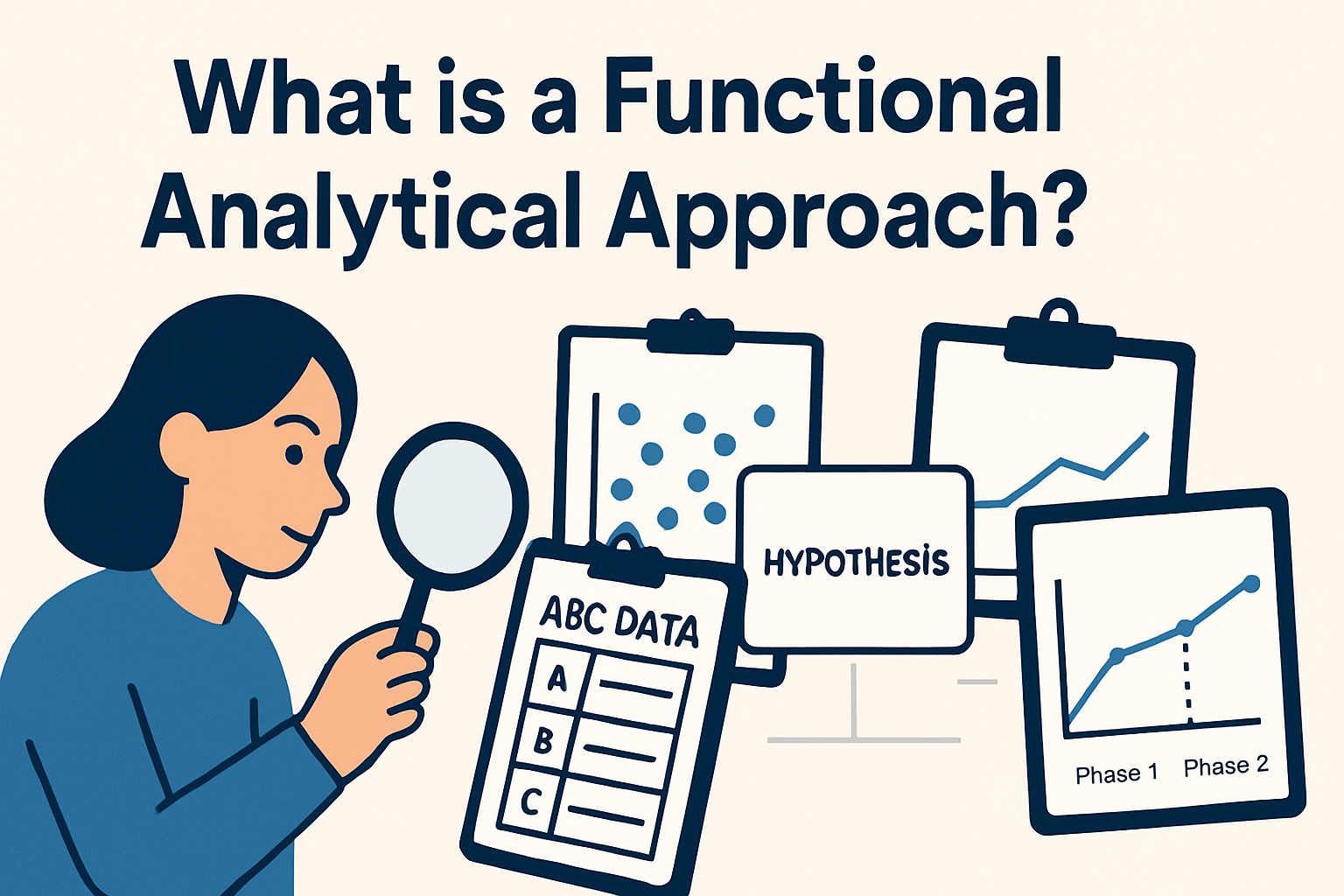
The functional analytical approach represents the core methodology of applied behavior analysis, focusing on understanding why behaviors occur rather than simply describing what they look like. This systematic process involves identifying the environmental variables that maintain behavior through careful observation and analysis.
Table of Contents
- What is a Functional Analytical Approach?
- Applying the Functional Analytical Framework: Worked Examples
- Functional Analysis on the BCBA Exam: What to Know
- Your Functional Analysis Checklist
- Summary and Key Takeaways
At its essence, this approach moves beyond topographical descriptions to uncover the maintaining contingencies that drive behavior patterns.
Beyond Topography: Understanding Function
Descriptive assessment documents what behavior looks like—its form, frequency, and intensity. In contrast, functional assessment seeks to understand why behavior occurs by examining antecedent conditions and consequent events. The critical distinction lies in recognizing that the same behavior topography can serve different functions for different individuals or even for the same person in different contexts.
For example, screaming might function as escape from demands in one situation but as attention-seeking in another. Effective intervention depends on correctly identifying these maintaining variables rather than merely addressing the behavior’s appearance.
The Ethical Imperative of Functional Analysis
The BACB Ethics Code explicitly requires behavior analysts to conduct functional assessments before implementing interventions. Section 2.13 mandates that assessments be sufficient in scope to identify variables affecting behavior, while Section 2.14 emphasizes using assessment methods that are appropriate to the situation.
Implementing interventions without a functional hypothesis violates ethical standards and can lead to ineffective or even harmful outcomes. This approach ensures interventions are tailored to the specific maintaining variables rather than applying generic strategies.
Applying the Functional Analytical Framework: Worked Examples
Let’s examine how this approach works in practice through three common scenarios. Each example demonstrates the process from data collection to hypothesis development.
Example 1: Escape-Maintained Behavior in a Learning Context
Scenario: A 7-year-old student engages in task refusal during difficult math assignments. ABC data reveals a consistent pattern: when presented with challenging worksheets (antecedent), the student pushes materials away (behavior), resulting in the teacher removing the task (consequence).
The hypothesized function is escape from demands. Intervention would focus on modifying task difficulty, providing choices, and teaching appropriate request for breaks as a replacement behavior. This approach aligns with understanding negative reinforcement processes.
Example 2: Attention-Seeking Behavior in a Social Setting
Scenario: A teenager makes inappropriate comments during group activities. Data collection shows the behavior occurs most frequently when peers are engaged in conversations that don’t include the individual.
The pattern suggests an attention function, with the behavior serving to gain social interaction. Intervention strategies might include scheduled attention, teaching appropriate initiation skills, and reinforcing alternative social behaviors. Understanding social reinforcement dynamics is crucial here.
Example 3: Automatic Reinforcement (Sensory)
Scenario: Hand flapping occurs across multiple environments with no clear social antecedents or consequences. The behavior persists even when the individual is alone and continues regardless of social responses.
This pattern suggests automatic reinforcement, likely serving a sensory function. Assessment would include preference assessments to identify alternative sensory inputs, and intervention would focus on providing appropriate sensory alternatives that serve similar functions. For more on this topic, see our guide on automatic reinforcement.
Functional Analysis on the BCBA Exam: What to Know
The BCBA exam extensively tests your understanding of functional assessment methodologies and their application. Mastery requires both conceptual knowledge and practical application skills.
Key Terms and Definitions You Must Master
- Functional Analysis (FA): Experimental manipulation of variables to identify maintaining contingencies
- Functional Behavioral Assessment (FBA): Comprehensive process including indirect, descriptive, and functional analysis components
- Descriptive Assessment: Direct observation and recording of behavior in natural contexts
- Indirect Assessment: Interviews, checklists, and rating scales completed by informants
- Hypothesized Function: Testable prediction about variables maintaining behavior
- Establishing Operation: Environmental event that increases the effectiveness of a reinforcer
- Motivating Operation: Variables that alter the value of consequences and the frequency of behavior

Common Exam Traps and How to Avoid Them
Many candidates lose points on functional analysis questions due to predictable errors. Recognizing these patterns can improve your exam performance.
- Confusing topography with function: Remember that identical behaviors can serve different functions
- Selecting punishment-based interventions first: Always consider function-based interventions before punishment
- Misidentifying automatic reinforcement: Look for behaviors that persist without social mediation
- Overlooking client dignity: Assessment procedures should respect individual preferences and rights
Sample Practice Prompts
Test your understanding with these exam-style questions:
1. A child engages in property destruction when asked to complete homework. Data show the behavior occurs only during difficult assignments and stops when work is removed. What is the most likely function?
2. During a functional analysis, you observe that hand mouthing increases during alone conditions and decreases during attention conditions. What does this pattern suggest about the maintaining variables?
3. When should you conduct a functional analysis versus using descriptive assessment methods?
Your Functional Analysis Checklist
Use this practical checklist to ensure comprehensive assessment and ethical practice:
- Conduct indirect assessment through interviews and record reviews
- Collect descriptive data using ABC recording in natural settings
- Develop testable hypotheses about maintaining variables
- Design brief functional analysis conditions when appropriate and safe
- Analyze data patterns across assessment conditions
- Validate hypotheses through intervention implementation
- Monitor treatment integrity and social validity throughout
- Modify interventions based on ongoing data analysis
Summary and Key Takeaways
The functional analytical approach forms the foundation of ethical and effective ABA practice. This methodology emphasizes understanding behavior through systematic assessment of environmental variables rather than relying on assumptions or surface-level observations.
Key principles include distinguishing between topography and function, conducting comprehensive assessments before intervention, and developing function-based treatment plans. For BCBA exam preparation, focus on mastering assessment methodologies, recognizing common functions, and understanding ethical implementation requirements.
Remember that this approach aligns with the seven dimensions of ABA, particularly the dimensions of being analytical, conceptually systematic, and effective. Continued practice with functional analysis scenarios will build both your clinical skills and exam readiness.
For additional study resources, explore our guide on functional analysis vs. descriptive assessment and review the BACB Ethics Code for specific requirements regarding assessment practices.


