
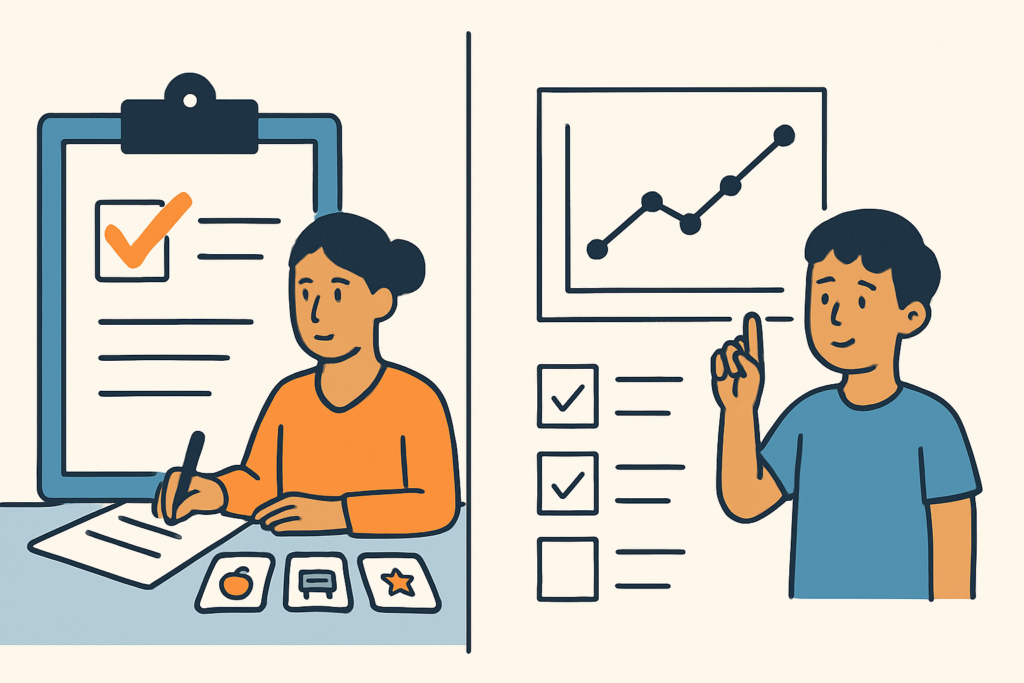
frequency recording ABA: What is Frequency Recording in ABA?
Frequency recording is a fundamental measurement procedure in applied behavior analysis that involves counting each occurrence of a target behavior during an observation period. This method provides a simple, objective count of how many times a specific behavior happens.
Table of Contents
- frequency recording ABA: What is Frequency Recording in ABA?
- Applying Frequency Recording: Worked ABA Examples
- Frequency Recording on the BCBA Exam
- Your Frequency Recording Implementation Checklist
- Summary and Key Takeaways
It’s particularly useful for discrete behaviors with clear beginnings and endings. When you need to know exactly how often something occurs, frequency recording gives you that raw count data.
The Core Definition: Counting Behaviors
At its essence, frequency recording measures behavior count without considering time. You simply tally each instance as it happens. This approach works best for behaviors that are brief, have distinct onset and offset, and occur at moderate rates.
Common examples include hand raises, vocal requests, or specific motor movements. The key is that each occurrence can be clearly identified and counted separately.
Frequency vs. Rate: A Critical Exam Distinction
Many BCBA exam questions test your understanding of this crucial difference. Frequency is the raw count of behaviors, while rate divides that count by time (e.g., behaviors per minute).
For example, if a student raises their hand 15 times during a 30-minute class, the frequency is 15, but the rate is 0.5 per minute. On the exam, you’ll need to recognize when a question asks for frequency versus rate calculations.
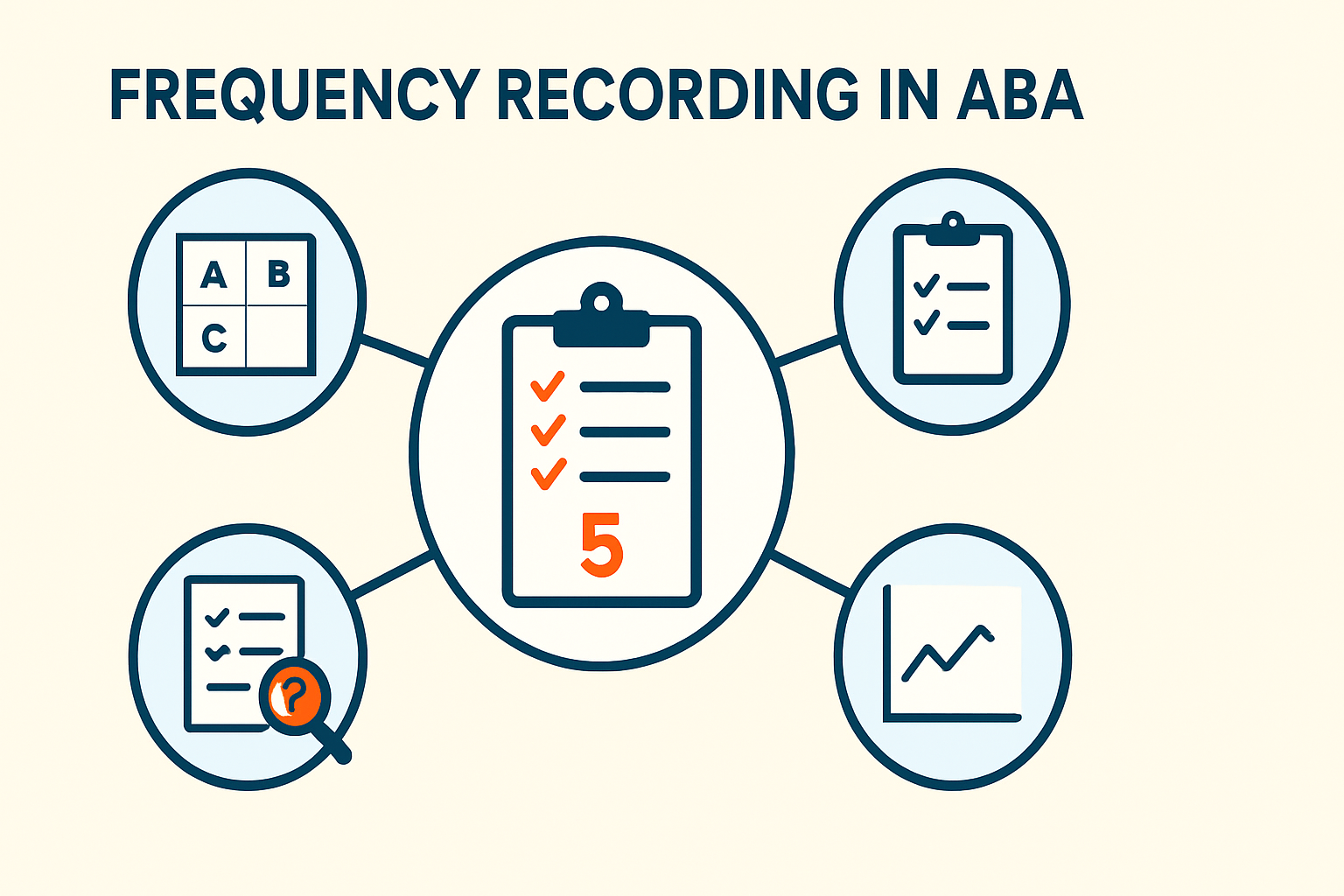
Applying Frequency Recording: Worked ABA Examples
Let’s examine three practical scenarios where frequency recording would be appropriate. Each example includes ABC data (antecedent-behavior-consequence) and hypothesized function to integrate measurement with functional assessment.
Example 1: Hand Raising in a Classroom Setting
Scenario: A student raises their hand to answer teacher questions during a 45-minute math lesson.
- Antecedent: Teacher poses a question to the class
- Behavior: Student raises hand (counted each occurrence)
- Consequence: Teacher calls on student, provides attention
- Hypothesized function: Access to adult attention and opportunity to answer
Data collection: Simple tally marks on a data sheet. After 45 minutes, the count shows 22 hand raises. This frequency data helps determine if the behavior is increasing or decreasing over time.
Example 2: Vocal Stereotypy During Independent Work
Scenario: A client engages in non-contextual vocalizations (humming, repeating phrases) during 20-minute independent work sessions.
- Antecedent: Alone at desk, presented with difficult worksheet
- Behavior: Vocal stereotypy (each vocalization counted)
- Consequence: No direct social consequence; likely automatic reinforcement
- Hypothesized function: Automatic reinforcement (sensory stimulation)
Frequency recording works here if each vocalization has similar duration. The count helps establish a baseline measure before intervention implementation.
Example 3: Requesting a Break with a Communication Card
Scenario: A client uses a ‘break’ card to escape work demands during therapy sessions.
- Antecedent: Therapist presents work demand or difficult task
- Behavior: Client hands break card to therapist (counted)
- Consequence: Work removed, break provided for 2 minutes
- Hypothesized function: Escape from demands
This is a behavior to increase (functional communication). Frequency recording tracks how often the appropriate alternative behavior occurs, helping measure intervention effectiveness.
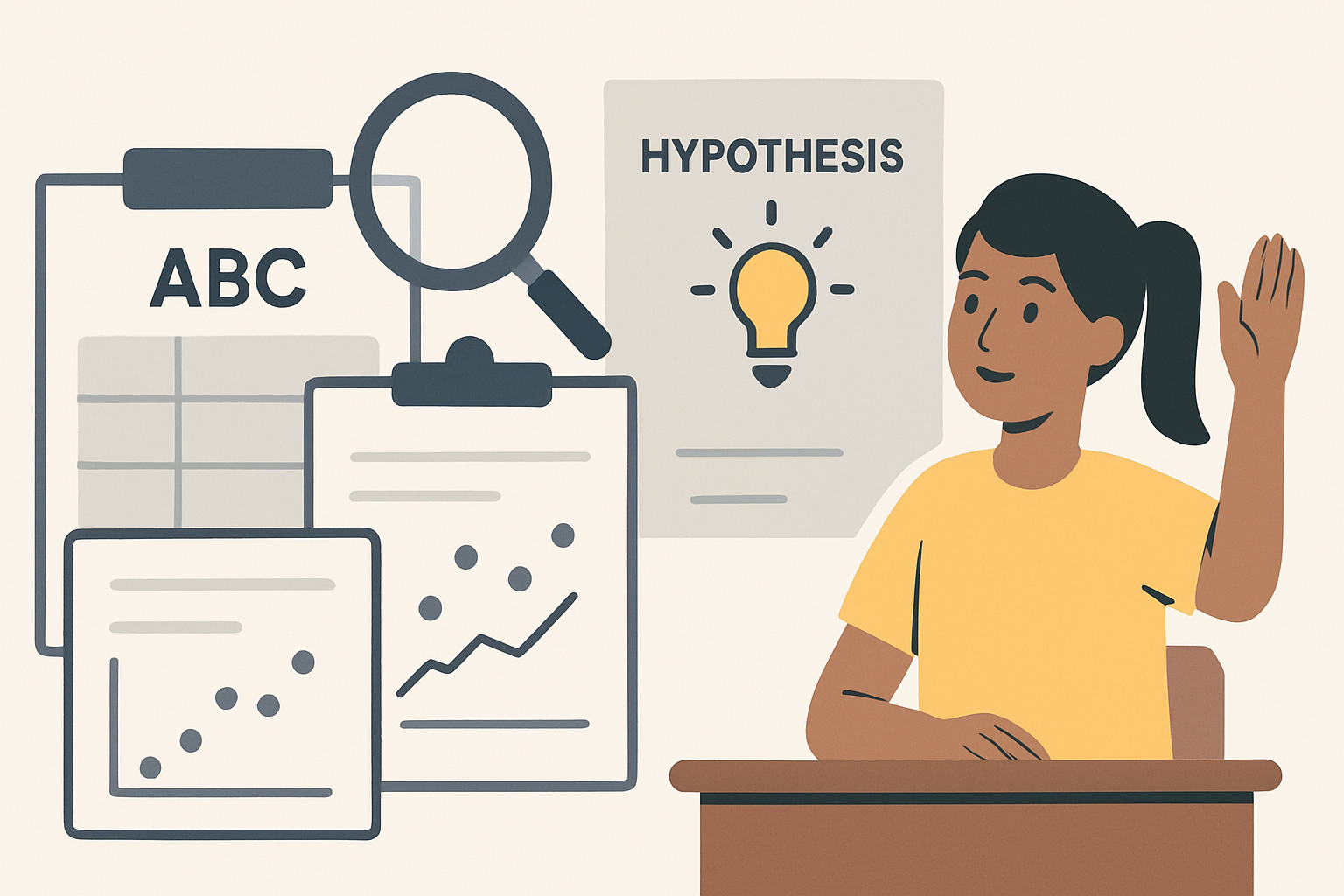
Frequency Recording on the BCBA Exam
Exam questions often test your ability to select appropriate measurement procedures. Understanding when to use frequency recording versus other methods is crucial for success.
Common Exam Traps and How to Avoid Them
Watch for these frequent mistakes on BCBA exam questions:
- Confusing frequency with rate: Remember that frequency is count only, while rate includes time
- Using frequency for continuous behaviors: Avoid frequency for behaviors without clear onset/offset
- Choosing frequency when duration matters: If how long a behavior lasts is important, use duration recording instead
- Forgetting the observation period: Always report the time frame alongside the count
- Overlooking environmental constraints: Consider whether you can actually observe and count every occurrence
Practice Identifying the Right Measurement Procedure
Test your understanding with these exam-style scenarios:
Scenario 1: A teacher wants to know how many times a student leaves their seat during a 60-minute class. Which measurement procedure?
Answer: Frequency recording – each instance of leaving the seat is discrete and countable.
Scenario 2: A therapist needs to measure how long a child engages in tantrum behavior. Which measurement procedure?
Answer: Duration recording – the length of behavior matters more than count.
Scenario 3: You want to track how quickly a student begins work after an instruction. Which measurement procedure?
Answer: Latency recording – measures time between instruction and behavior initiation.
Your Frequency Recording Implementation Checklist
Use this practical checklist when implementing frequency recording in clinical practice or studying for the exam:
- Define the target behavior operationally with clear onset/offset criteria
- Ensure behavior is discrete and countable (not continuous)
- Prepare data collection materials – tally sheet, clicker, or digital counter
- Establish observation period and record start/end times
- Train observers on behavior definition and counting procedures
- Collect interobserver agreement data to ensure reliability
- Record raw count without converting to rate unless specified
- Note environmental factors that might affect behavior occurrence
- Graph data regularly to visualize trends over time
- Review and adjust measurement procedures as needed
Summary and Key Takeaways
Frequency recording remains one of the most straightforward measurement procedures in ABA. Remember these essential points for both clinical practice and exam preparation:
- Frequency measures behavior count, not rate or duration
- Use for discrete behaviors with clear beginnings and endings
- Always record the observation period alongside the count
- On the BCBA exam, distinguish carefully between frequency and rate questions
- Consider environmental constraints when selecting measurement procedures
- Combine with other data collection methods like ABC data collection for comprehensive assessment
For more information on measurement procedures, refer to the BACB Content Outline and consider practicing with BCBA mock exam questions to strengthen your understanding of when to use frequency recording versus other measurement approaches.


