
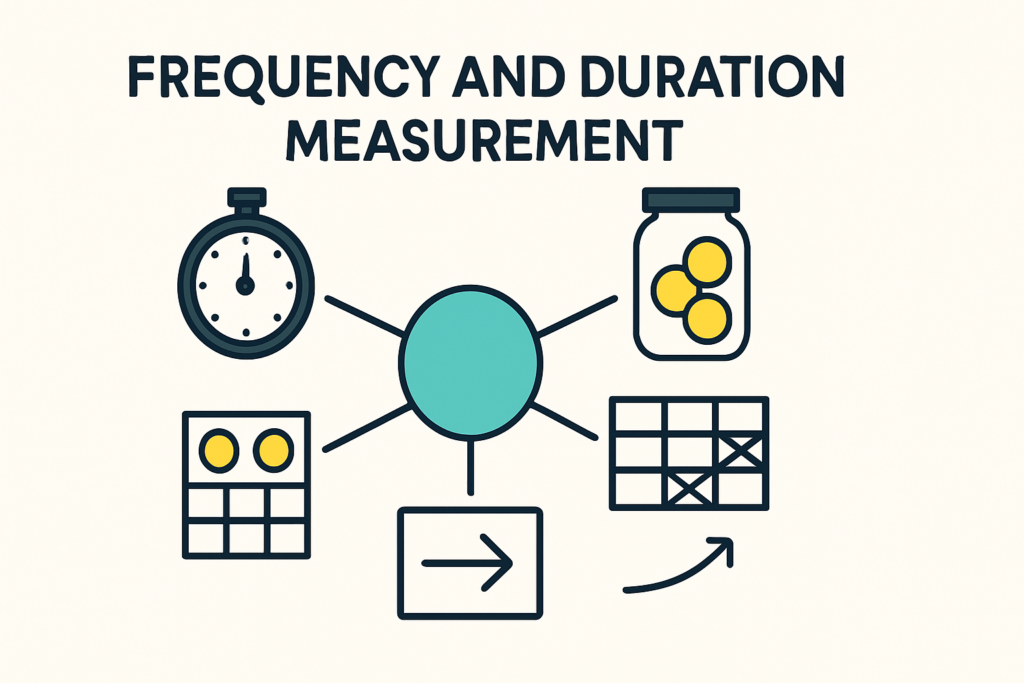
frequency and duration measurement: Defining Frequency and Duration in Behavioral Measurem
Mastering behavioral measurement requires understanding when to use frequency versus duration data. These fundamental measurement dimensions answer different clinical questions and serve distinct purposes in applied behavior analysis.
Table of Contents
- frequency and duration measurement: Defining Frequency and Duration in Behavioral Measurem
- Applied Examples: Choosing the Right Measure
- BCBA Exam Relevance and Common Traps
- Quick Checklist for Measurement Selection
- Summary and Key Takeaways
What is Frequency (Count)?
Frequency measurement involves counting the number of times a behavior occurs within a specified observation period. This method is ideal for discrete behaviors with clear beginnings and endings. When you convert frequency to rate by dividing count by time, you create a standardized measure that allows comparison across different observation sessions.
Common examples include counting hand raises, correct responses, or specific vocalizations. The simplicity of frequency recording makes it practical for many clinical settings, but it only tells you how many times something happened, not how long it lasted.
What is Duration?
Duration measurement tracks the total time a behavior lasts, either as total duration (cumulative time across an observation period) or duration per occurrence (average time per instance). This method is essential when the temporal dimension of behavior is clinically significant.
You might measure duration for behaviors like tantrums, on-task engagement, or social interactions. The key distinction is that duration answers how long rather than how many times. Understanding when to use each measure forms the foundation of effective data collection in ABA.
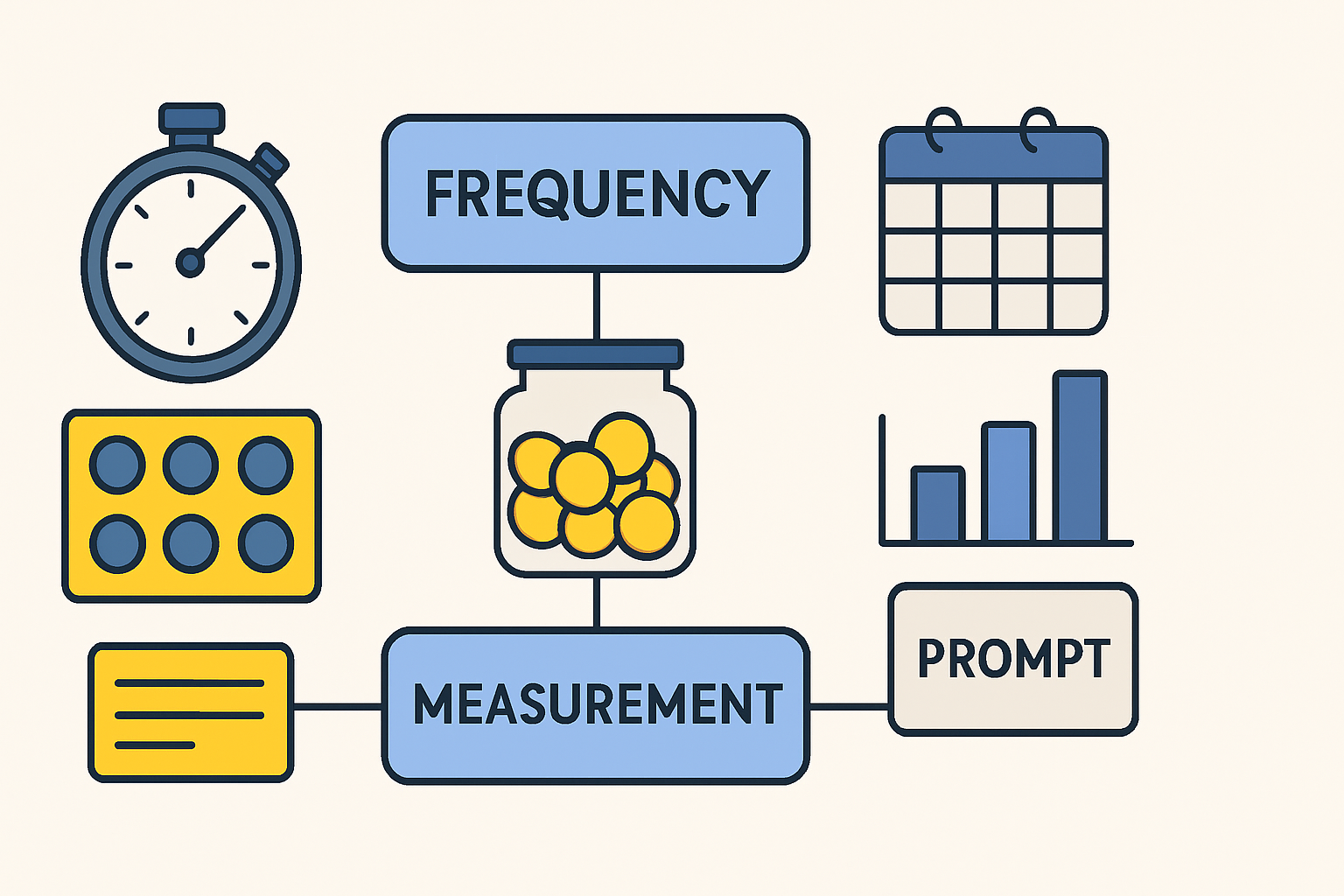
Applied Examples: Choosing the Right Measure
Selecting between frequency and duration depends entirely on your clinical question and the behavior’s characteristics. Let’s examine realistic scenarios to clarify this decision-making process.
Example 1: Hand Raising vs. Off-Task Talking
In a classroom setting, measuring hand raising frequency makes perfect sense. Each instance is discrete, countable, and has a clear endpoint. You might record 15 hand raises during a 30-minute lesson, giving you a rate of 0.5 per minute.
Conversely, off-task vocalizations often occur in continuous streams. Measuring duration provides more meaningful data about how much instructional time is lost. You could record that a student engaged in off-task talking for 12 minutes during that same 30-minute lesson, representing 40% of instructional time.
These different measurements answer different questions: frequency tells you how often the student attempts to participate, while duration reveals how much learning time is compromised.
Example 2: Tantrum Episodes
Tantrum behavior demonstrates how both measures can be valuable for the same target. You could measure frequency (number of tantrums per day) to understand how often the behavior occurs, or measure duration (total minutes of tantrum per day) to assess the behavior’s overall impact.
A parent might report “three tantrums today” (frequency), but if each lasted only 30 seconds, the total duration is just 1.5 minutes. Another day might have only one tantrum (frequency), but if it lasted 45 minutes (duration), the clinical significance is dramatically different. This distinction is crucial for functional behavior assessment and treatment planning.
BCBA Exam Relevance and Common Traps
The BCBA exam frequently tests your ability to select appropriate measurement procedures. Understanding common pitfalls can significantly improve your exam performance.
Trap 1: Confusing the Clinical Question
Exam questions often present scenarios where you must determine whether the clinical question concerns how many times or how long. Consider this sample vignette: “A teacher wants to reduce interruptions during reading time. The behavior is defined as any vocalization not related to the reading activity.”
If the teacher asks “How many times does the student interrupt?” you’d select frequency. If the question is “How much instructional time is lost to interruptions?” you’d choose duration. The clinical question drives your measurement selection every time.
Trap 2: Overlooking Measurement Practicalities
Duration measurement can be impractical for very brief or high-frequency behaviors. Imagine trying to time each instance of pencil tapping that occurs 50 times per minute. Frequency or rate measurement would be more feasible and accurate in such cases.
Similarly, for behaviors with unclear start and end points, duration measurement becomes challenging. The exam tests your understanding of these practical constraints and your ability to select the most feasible measurement method.
Trap 3: Misinterpreting Data Displays
You must carefully examine graph labels to determine whether data represent frequency counts or duration measures. A decreasing trend line could show fewer incidents (frequency) or shorter episodes (duration). Always check the y-axis label for units like “number of occurrences” versus “minutes engaged.”
This skill connects directly to graphing and visual analysis competencies tested on the exam.
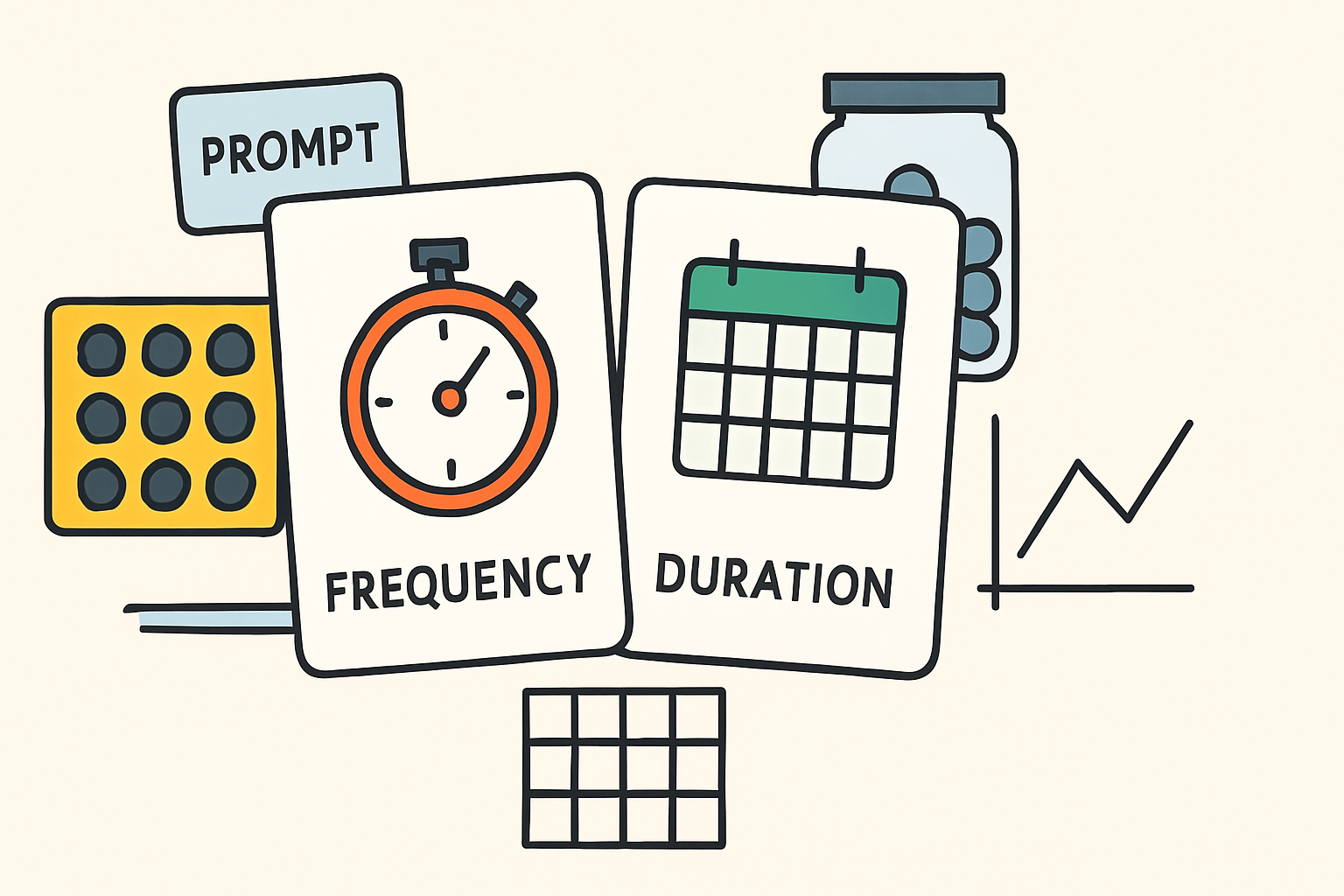
Quick Checklist for Measurement Selection
Use this practical guide when deciding between frequency and duration measurement:
- Ask the clinical question: Does it concern “how many times” or “how long”?
- Examine behavior characteristics: Is the behavior discrete with clear start/end points?
- Consider practical constraints: Can you reliably time each occurrence?
- Review the operational definition: Does it specify countable instances or measurable duration?
- Check data utility: Which measure provides more meaningful information for decision-making?
- Assess feasibility: Which method can be implemented consistently by staff?
This checklist aligns with the BCBA Test Content Outline requirements for measurement system selection.
Summary and Key Takeaways
Frequency and duration represent fundamental measurement dimensions in applied behavior analysis. Remember that frequency answers “how many times” and works best for discrete, countable behaviors. Duration answers “how long” and is essential when the temporal dimension matters clinically.
Your measurement selection should always begin with the clinical question, consider the behavior’s characteristics, and account for practical implementation factors. Mastering this distinction supports more complex analyses and ensures you collect data that actually answers your intervention questions.
For comprehensive guidance on behavioral measurement principles, refer to the research literature on measurement in applied behavior analysis.


