
Accurate measurement forms the foundation of effective applied behavior analysis. Among the most fundamental measurement systems are frequency and duration data sheets, each serving distinct purposes in behavioral assessment. Understanding when and how to use these tools is essential for both clinical practice and exam success.
Table of Contents
- frequency and duration data sheets: Defining Frequency and Duration in ABA Measurement
- Choosing the Right Measure: Frequency vs. Duration
- Exam Relevance and Common Measurement Traps
- Quick-Reference Checklist for Data Sheet Selection
- Summary and Next Steps for Mastery
frequency and duration data sheets: Defining Frequency and Duration in ABA Measurement
Measurement systems in ABA provide objective data about behavior. Two primary approaches capture different dimensions of behavioral occurrence.
What is Frequency Data?
Frequency data measures how many times a behavior occurs within a specified observation period. This approach counts discrete behaviors that have clear beginnings and endings. When observation times vary, practitioners convert frequency to rate by dividing count by time.
Common frequency data sheet layouts include:
- Tally marks for quick counting during observation periods
- Pre-formatted grids with time intervals for structured recording
- Digital tracking systems that automatically calculate behavioral rate
- Combination sheets that include antecedent and consequence columns
What is Duration Data?
Duration data measures the total time a behavior lasts from start to finish. This system tracks continuous behaviors where temporal dimensions matter. Practitioners typically use stopwatches or digital timers for precise recording.
Key duration measurement approaches include:
- Total duration recording for cumulative time across sessions
- Latency measurement for time between stimulus and response
- Percentage of intervals where behavior occurred
- Real-time graphing of behavioral episodes over time
Choosing the Right Measure: Frequency vs. Duration
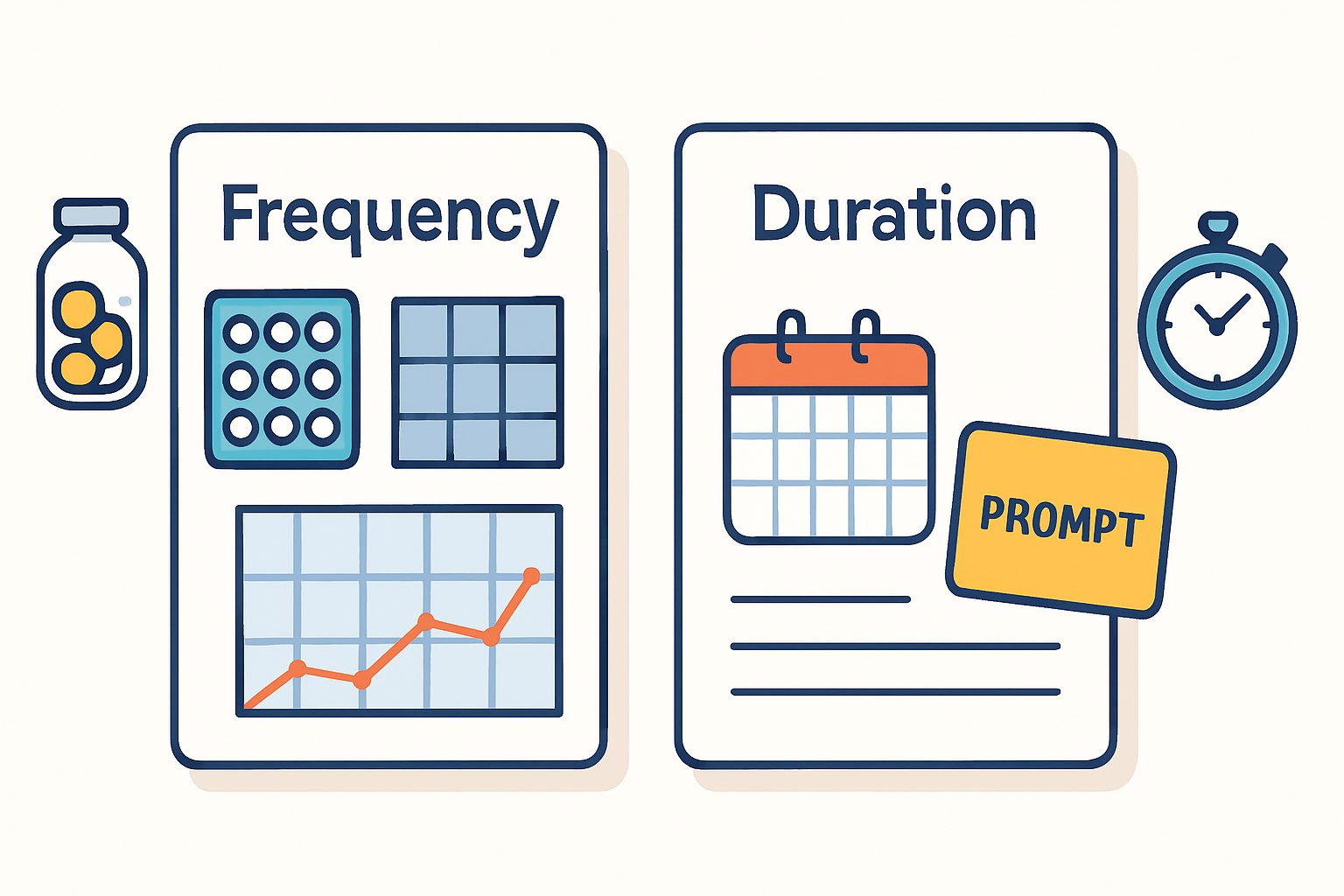
Selecting the appropriate measurement system depends on the behavior’s topography and the clinical question being asked. The wrong choice can lead to misleading data.
When to Use Frequency (or Rate) Data Sheets
Frequency measurement works best for discrete, countable behaviors where each occurrence is similar in form. Consider these practical applications:
- Hand raises during classroom instruction
- Vocal tics or repetitive vocalizations
- Item flips or object manipulations
- Social initiations during play sessions
Example: A student calls out eight times during a 30-minute lesson. The behavioral rate would be 0.27 responses per minute (8/30). This data helps identify patterns related to attention-seeking functions.
When to Use Duration Data Sheets
Duration measurement suits behaviors where temporal dimensions provide meaningful information. These typically involve continuous engagement or extended episodes.
- Tantrum episodes with varying lengths
- On-task behavior during academic work
- Social engagement during peer interactions
- Repetitive motor movements
Example: A child engages in toy lining for 45 minutes during a 2-hour observation period. This represents 37.5% of the session. Such data might suggest automatic reinforcement functions.
The Critical Distinction: Count vs. Time
The fundamental difference lies in what dimension you’re measuring. Consider social initiations: frequency answers “How often?” while duration answers “How long?”
This distinction directly impacts operational definitions. A clear definition specifies whether you’re counting occurrences or timing engagement. For exam questions, carefully read whether the scenario asks about number of times or length of time.
Exam Relevance and Common Measurement Traps
Measurement concepts appear throughout the BCBA exam. Understanding common pitfalls can prevent costly mistakes.
Key Terms and Scenarios to Know for the BCBA Exam
Master these essential measurement concepts:
- Rate: Frequency divided by time (count/time)
- Count: Simple tally of occurrences
- Total Duration: Cumulative time behavior occurred
- Latency: Time between stimulus and response onset
- Interresponse Time (IRT): Time between responses
- Partial Interval: Behavior occurs at any point in interval
- Whole Interval: Behavior occurs throughout entire interval
- Momentary Time Sampling: Behavior occurs at interval’s end
Frequently Missed Questions and How to Avoid Them
Exam traps often involve subtle distinctions. Watch for these common errors:
- Trap 1: Confusing duration with frequency when behaviors have both countable and temporal aspects
- Trap 2: Selecting duration for high-rate, discrete behaviors that should use frequency/rate
- Trap 3: Forgetting to report rate when observation times vary across sessions
- Trap 4: Misapplying interval recording when continuous measurement is needed
Sample exam question: “A practitioner records each instance of hand-flapping during a 15-minute observation. What measurement system is being used?” The correct answer is frequency, not duration.
Quick-Reference Checklist for Data Sheet Selection
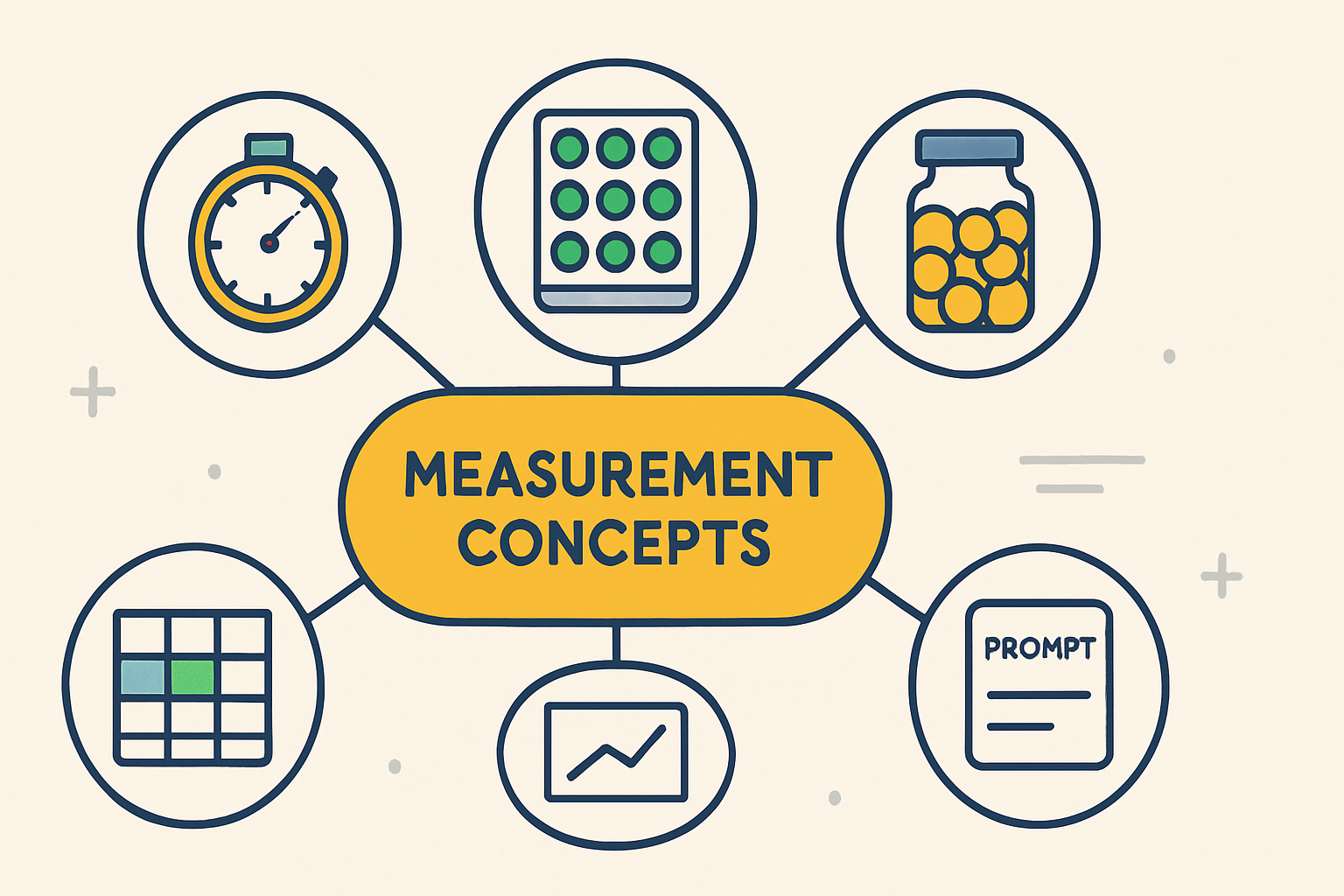
Use this practical guide when choosing between frequency and duration measurement:
- Ask the clinical question: Are you interested in how often or how long?
- Examine behavior topography: Is it discrete and countable or continuous?
- Consider the operational definition: Does it specify count or time parameters?
- Review available resources: Do you have timers for duration or counters for frequency?
- Check observation consistency: Will session times vary (requiring rate calculation)?
- Align with intervention goals: Are you targeting reduction in number or length?
- Verify data utility: Will the chosen measure answer your clinical questions?
Summary and Next Steps for Mastery
Mastering frequency and duration data sheets requires understanding their distinct purposes and applications. Frequency measures countable occurrences, while duration tracks temporal engagement. The choice depends entirely on the behavior’s nature and the clinical question.
For further study, explore comprehensive data collection methods and assessment approaches.
Practice identifying measurement scenarios and creating appropriate data sheets. With consistent application, you’ll develop the clinical judgment needed for both exam success and effective practice.


