

Forward chaining is a systematic teaching procedure used in applied behavior analysis to build complex skills. This method breaks down multi-step tasks into manageable components, teaching them in their natural sequence from first to last. Understanding this approach is essential for both effective clinical practice and exam success.
Table of Contents
- What is Forward Chaining? A Behavioral Definition
- Forward Chaining in Action: Worked ABA Examples
- Forward Chaining on the BCBA Exam: Relevance and Traps
- Quick-Reference Study Checklist
- Summary and Key Takeaways
- References
What is Forward Chaining? A Behavioral Definition
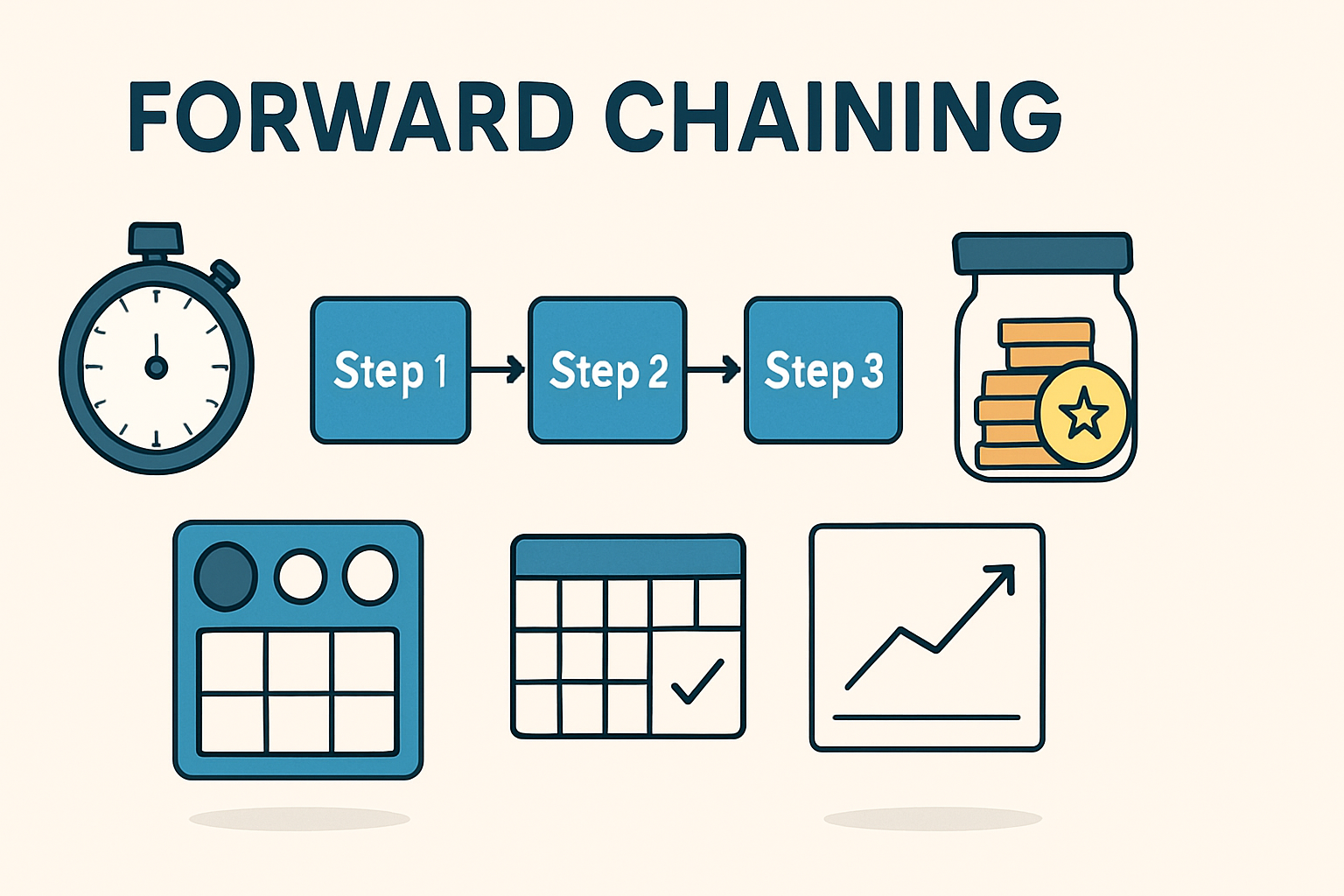
Forward chaining is a chaining procedure where you teach the initial step of a behavioral sequence first. The learner receives reinforcement after completing just that first step. Once mastered, you add the second step, requiring completion of both steps before reinforcement, and continue this pattern.
The Core Principle: Teaching Steps in Sequence
The fundamental principle involves teaching sequential behaviors in their natural order. You begin with a task analysis that breaks the skill into distinct steps. The procedure focuses on building behavioral momentum by starting with the easiest or most reinforcing step.
When to Use Forward Chaining in Practice
This method works best for teaching new multi-step skills where the initial steps are simplest. It’s particularly effective when early success provides natural reinforcement or when the learner needs immediate accomplishment. Forward chaining is ideal for skills like dressing, cooking sequences, or academic routines.
Consider these optimal scenarios:
- Teaching self-care routines to young learners
- Building academic task completion sequences
- Developing vocational skills with clear step progression
- When the initial steps are most reinforcing or easiest
- For learners who benefit from immediate success experiences
Forward Chaining in Action: Worked ABA Examples
Real-world examples demonstrate how forward chaining translates theory into practice. These scenarios show the procedure’s application across different skill domains and age groups.
Example 1: Teaching Hand Washing to a Young Learner
A 5-step task analysis for hand washing includes: 1) Turn on water, 2) Wet hands, 3) Apply soap, 4) Rub hands for 20 seconds, 5) Rinse and dry. Using forward chaining, you’d teach step one until mastery, then add step two.
Consider this ABC data for a potential error:
- Antecedent: Instruction to wash hands
- Behavior: Completes steps 1-2, skips soap application
- Consequence: Prompt to apply soap, then praise
The hypothesized function is escape from task demand. Forward chaining addresses this by ensuring mastery of each step before adding complexity, reducing frustration and building confidence.
Example 2: Building a Morning Routine for a Teenager
A 4-step morning routine includes: 1) Make bed, 2) Get dressed, 3) Eat breakfast, 4) Brush teeth. With forward chaining, you’d focus on ‘make bed’ until fluent, then add ‘get dressed’ as the next target.
This approach supports generalization by teaching steps in their natural context. The procedure allows for prompt fading as each step becomes independent. Consider linking this with other procedures like behavior skills training for comprehensive skill development.
Forward Chaining on the BCBA Exam: Relevance and Traps
Understanding forward chaining is crucial for exam success. The BCBA exam tests this concept through scenario-based questions that require selecting appropriate teaching procedures.
How the Exam Tests This Concept
Exam questions typically present scenarios requiring selection of an appropriate teaching procedure. You might need to differentiate between chaining types or analyze data from a chaining intervention. Questions often test your ability to match the procedure to learner characteristics and skill requirements.
Common exam formats include:
- Scenario-based questions about skill acquisition
- Data interpretation from chaining interventions
- Differentiating between forward and backward chaining
- Selecting procedures based on learner prerequisites
Common Exam Traps and How to Avoid Them
Candidates often confuse forward chaining with backward chaining. Remember that forward chaining teaches from the beginning, while backward chaining starts with the final step. Another trap involves misapplying the procedure to non-sequential tasks that don’t require a specific order.
Watch for these common mistakes:
- Forgetting that reinforcement follows each mastered step
- Overlooking learner prerequisite skills needed for success
- Confusing with total task presentation or other chaining methods
- Not considering natural reinforcement opportunities in the sequence
Quick-Reference Study Checklist
Use this checklist to assess your understanding and prepare for exam questions on forward chaining.
- ✓ Define forward chaining in behavioral terms
- ✓ Identify when to use forward chaining versus backward chaining
- ✓ Create a task analysis for a multi-step skill
- ✓ Describe the reinforcement schedule in forward chaining
- ✓ Recognize common implementation errors to avoid
- ✓ Differentiate forward chaining from shaping and other procedures
- ✓ Identify learner characteristics that make forward chaining appropriate
Summary and Key Takeaways
Forward chaining is an essential teaching procedure for building complex skills through sequential mastery. The method begins with the first step of a behavior chain and systematically adds subsequent steps as each is mastered.
Key points to remember include:
- Forward chaining teaches skills in their natural sequence from first to last
- Reinforcement follows completion of each mastered step combination
- The procedure is ideal for multi-step skills with clear sequences
- Effective implementation requires careful task analysis and prompt fading
- On the exam, differentiate from backward chaining and other procedures
For more information on related procedures, review our guide on chaining in ABA. Understanding these concepts will help you apply forward chaining effectively in practice and answer related questions confidently on the BCBA exam.


