

Understanding reinforcement schedules is essential knowledge for any behavior analyst, and the fixed ratio schedule represents one of the most fundamental yet frequently misunderstood concepts. This schedule produces distinctive behavioral patterns that every BCBA candidate must recognize and apply correctly in both clinical practice and examination scenarios.
Table of Contents
- What is a Fixed Ratio Schedule?
- Fixed Ratio Schedule in Practice: ABA Examples
- Fixed Ratio Schedules on the BCBA Exam
- Study Checklist and Summary
What is a Fixed Ratio Schedule?
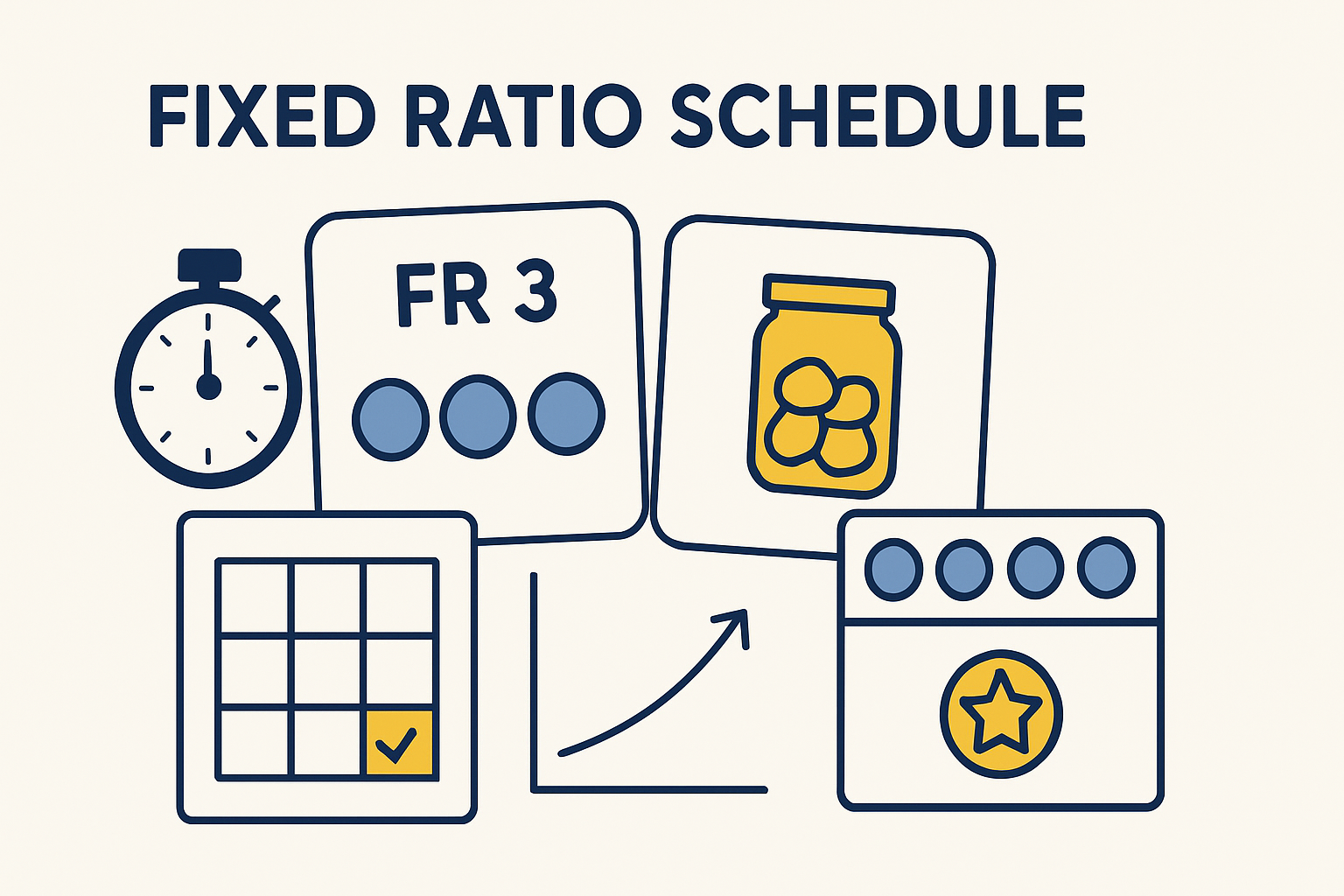
A fixed ratio schedule delivers reinforcement after a specific number of responses have been emitted. The ‘fixed’ component means the requirement remains constant, while ‘ratio’ refers to the relationship between responses and reinforcement.
The Basic Definition and Formula
In technical terms, an FR schedule reinforces behavior after a predetermined number of responses. The formula R = SR+/FR # describes this relationship, where reinforcement follows completion of the specified response count. For instance, FR5 means reinforcement occurs after every fifth response, while FR10 reinforces after ten responses.
Key Characteristics and Behavioral Effects
Fixed ratio schedules produce several distinctive patterns that exam questions frequently test. The most notable is the post-reinforcement pause, where responding temporarily stops immediately after reinforcement. This is followed by a high steady rate of responding until the next reinforcement is earned.
Other important effects include:
- Ratio strain occurs when the ratio requirement becomes too high, leading to decreased responding or cessation
- Consistent response patterns with predictable pauses after reinforcement
- High overall response rates once the organism begins responding
- Clear discrimination of the response requirement
Fixed Ratio Schedule in Practice: ABA Examples
Real-world applications help solidify understanding of fixed ratio schedules. These examples demonstrate how practitioners implement FR schedules in various settings.
Example 1: Academic Task Completion
A student earns a token after completing five math problems (FR5). The antecedent is the presentation of worksheets, the behavior is problem completion, and the consequence is token delivery. This schedule maintains steady work rates with brief pauses after token earning.
Example 2: Vocational Skill Training
An adult in a vocational program assembles ten components (FR10) to earn a five-minute break. Data collection shows response rates increase as the break approaches, with clear pauses after each break. This demonstrates how ratio requirements can be adjusted based on skill level.
Example 3: Differentiating FR from Other Schedules
Understanding how FR differs from other schedules is crucial for exam success. Unlike variable ratio schedules, FR produces predictable pauses. Compared to interval schedules, FR is response-based rather than time-based.
Key differences include:
- FR vs VR: Fixed ratio has predictable pauses; variable ratio produces steady responding
- FR vs FI: Ratio schedules are response-dependent; interval schedules are time-dependent
- FR vs VI: Fixed ratio yields high rates with pauses; variable interval produces moderate steady rates
Fixed Ratio Schedules on the BCBA Exam
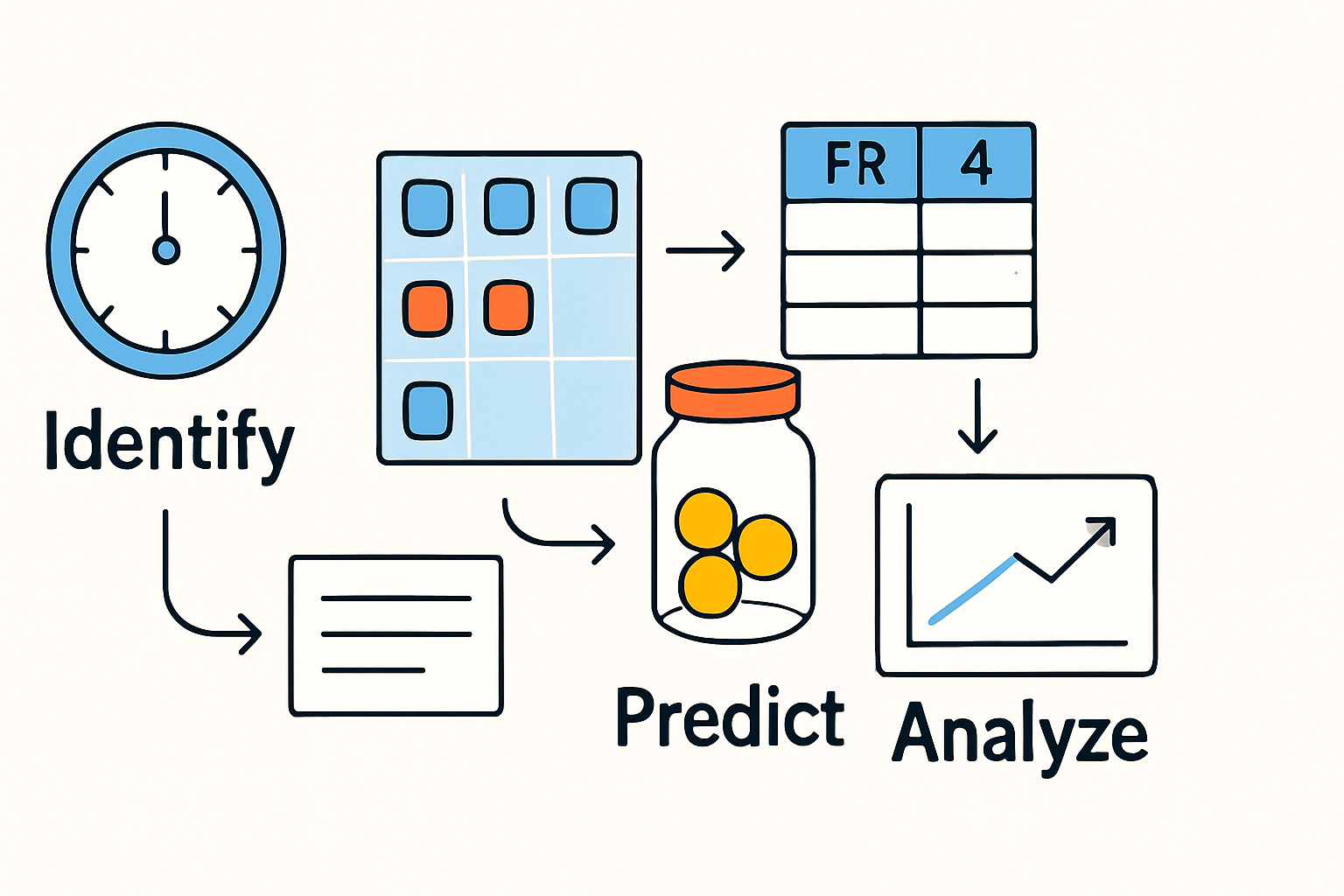
Exam questions test both conceptual understanding and practical application of fixed ratio schedules. Candidates must identify FR schedules from descriptions and predict behavioral outcomes.
Common Exam Question Formats
Questions typically appear in several formats that require different analytical approaches. Scenario-based questions present a behavioral intervention and ask you to identify the schedule. Prediction questions require forecasting behavioral patterns based on schedule parameters.
Common formats include:
- Identification questions: “Which schedule is being used?”
- Prediction questions: “What behavioral pattern would you expect?”
- Application questions: “Which schedule would be most appropriate?”
- Comparison questions: “How does FR differ from VR in this scenario?”
Traps to Avoid: Misidentification and Misapplication
Several common errors trip up candidates on exam questions about fixed ratio schedules. The most frequent mistake involves confusing FR with variable ratio schedules, especially when the scenario mentions consistent reinforcement patterns.
Key traps include:
- Mistaking time-based requirements for response-based ones
- Overlooking the post-reinforcement pause as a defining characteristic
- Applying FR schedules to behaviors requiring steady, continuous responding
- Forgetting that ratio strain indicates the requirement is too high
Study Checklist and Summary
This final section provides actionable tools for exam preparation. Use these checklists to ensure comprehensive understanding of fixed ratio schedules.
Quick-Review Checklist for Fixed Ratio
Before your exam, verify you can:
- Define FR schedule with the correct formula
- Identify the post-reinforcement pause as a key characteristic
- Recognize ratio strain and its implications
- Differentiate FR from VR, FI, and VI schedules
- Predict behavioral patterns based on FR parameters
- Apply FR appropriately in intervention planning
Key Takeaways for Your Exam
Three essential points will serve you well on exam day. First, fixed ratio schedules reinforce after a specific number of responses, producing high rates with predictable pauses. Second, the post-reinforcement pause is a hallmark feature that distinguishes FR from variable schedules. Third, ratio strain indicates the requirement exceeds the organism’s capacity.
For additional study resources, explore our guide on compound schedules of reinforcement and the comprehensive BCBA Test Course Outline.


