
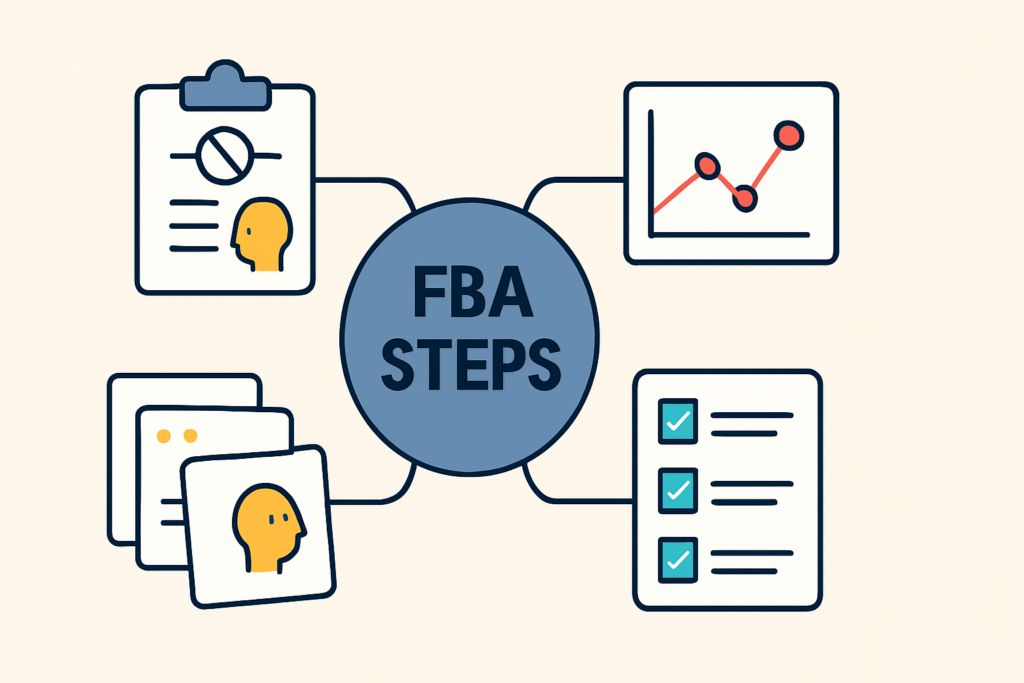
A Functional Behavior Assessment (FBA) is the cornerstone of ethical, effective behavior analysis practice. This systematic process identifies the function or purpose behind challenging behaviors, allowing BCBAs to develop targeted interventions. Understanding the FBA steps is essential for both clinical practice and exam success.
Table of Contents
- What is a Functional Behavior Assessment (FBA)? Definition and Purpose
- The 6 Systematic Steps of a Functional Behavior Assessment
- FBA Steps in Practice: Worked Examples for BCBA Candidates
- FBA Steps on the BCBA Exam: Common Traps and How to Avoid Them
- Quick-Check FBA Steps Checklist for Ethical Practice
- Summary: Integrating FBA Steps into Your Professional Practice
- References
The process involves gathering data, forming hypotheses, and creating evidence-based intervention plans. This guide walks through each step with practical examples to help you master this critical assessment method.
What is a Functional Behavior Assessment (FBA)? Definition and Purpose
A Functional Behavior Assessment is a systematic process used to identify the environmental variables that maintain problem behavior. The primary purpose is to understand why behavior occurs, not just what it looks like. This understanding forms the foundation for effective intervention design.
FBAs are required by ethical codes and often mandated in educational settings under IDEA. They ensure interventions address the root cause rather than just suppressing behavior temporarily.
FBA vs. Functional Analysis: A Key Distinction
Many candidates confuse these terms. An FBA typically refers to descriptive assessment methods like interviews and observations. A Functional Analysis (FA) is an experimental procedure that systematically manipulates variables to confirm behavioral function.
The FBA steps often serve as a prerequisite to an FA. While descriptive data shows correlations, only experimental analysis establishes causation. Understanding this distinction is crucial for exam questions and ethical practice.
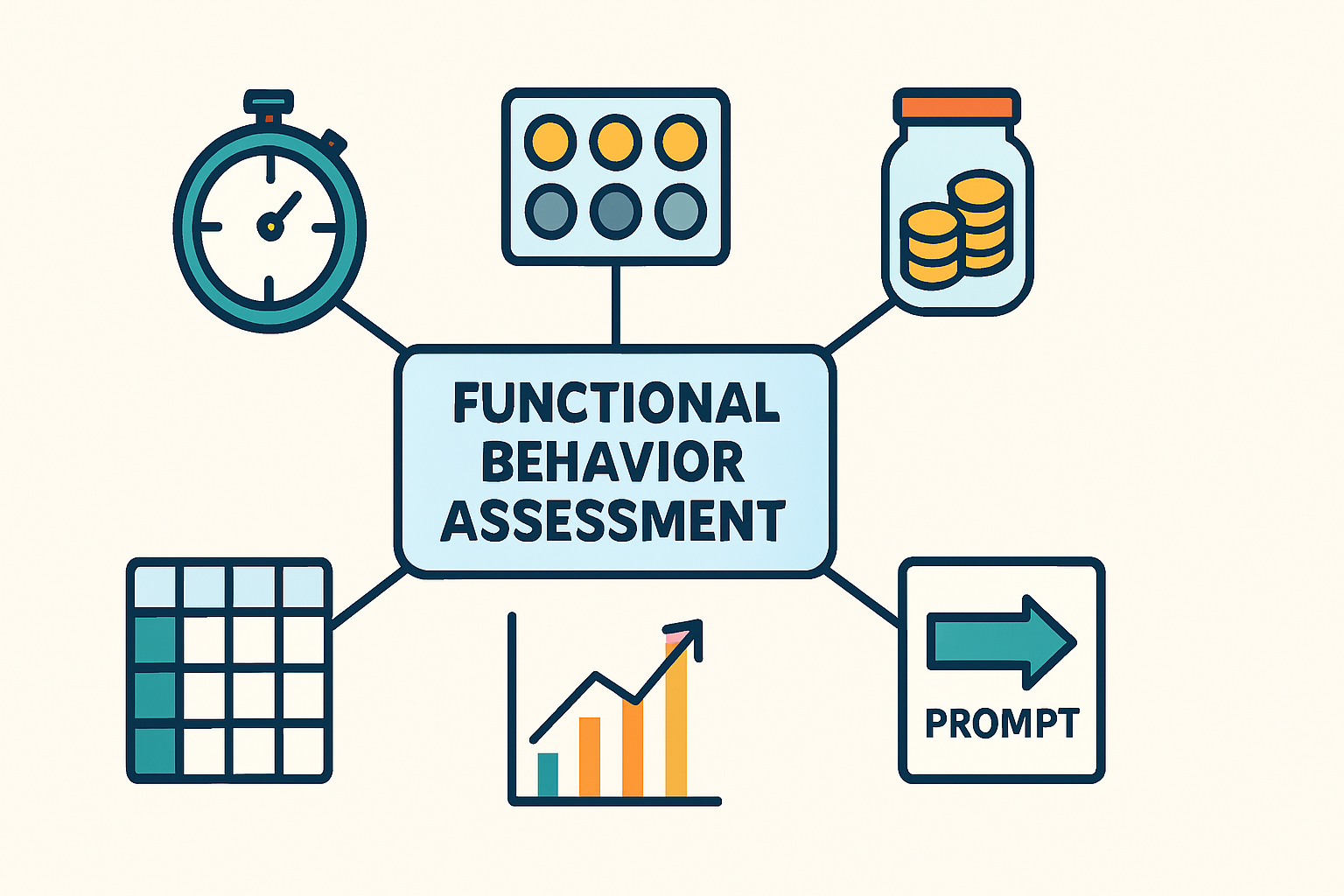
The 6 Systematic Steps of a Functional Behavior Assessment
The FBA process follows a logical sequence from identification to intervention. Each step builds upon the previous one, creating a comprehensive understanding of the behavior-environment relationship.
Step 1: Identifying and Defining the Target Behavior
Begin with a clear, operational definition that is observable and measurable. Avoid vague terms like ‘aggression’ and instead specify ‘hitting others with open hand with force sufficient to leave a red mark.’
Poor definitions lead to inconsistent data collection and ineffective interventions. A well-defined target behavior allows for reliable measurement and clear communication among team members.
Step 2: Conducting Indirect and Descriptive Assessments
Gather information through multiple methods:
- Indirect assessments: Interviews (FAI, MAS), rating scales (QABF), and record reviews
- Descriptive assessments: ABC narrative recording, scatter plots, and direct observation
- Data collection: Frequency, duration, latency, and intensity measures
For example, an ABC recording might show: ‘When presented with math worksheet (antecedent), student screams and throws materials (behavior), teacher removes worksheet (consequence).’ This pattern suggests an escape function.
Step 3: Formulating a Testable Hypothesis of Function
Synthesize assessment data into a clear statement: ‘When [antecedent] occurs, the individual engages in [behavior] to access/escape [consequence].’ Common functions include:
- Social positive reinforcement (access to attention or tangibles)
- Social negative reinforcement (escape from demands or aversives)
- Automatic reinforcement (sensory stimulation)
The hypothesis should be specific enough to guide intervention development while remaining testable through further assessment or intervention data.
Step 4: (Optional) Conducting a Functional Analysis
When descriptive data is inconclusive or risk allows, conduct an experimental Functional Analysis. This involves systematically testing conditions (attention, escape, tangible, alone) to confirm the hypothesized function.
FA provides the strongest evidence of behavioral function but requires careful consideration of safety and ethical guidelines. It’s particularly useful when multiple functions are suspected or when interventions based on descriptive data prove ineffective.
Step 5: Developing and Implementing the Behavior Intervention Plan (BIP)
The BIP directly addresses the identified function. For escape-maintained behavior, interventions might include antecedent modifications like task choice or breaking tasks into smaller steps. For attention-maintained behavior, functional communication training might teach appropriate ways to request attention.
Every intervention component should logically follow from the FBA findings. The BIP should include prevention strategies, replacement behaviors, and consequence strategies that align with the function.
Step 6: Monitoring, Evaluating, and Modifying the Plan
Ongoing data collection is essential to evaluate intervention effectiveness. Monitor both the target behavior and replacement behaviors to ensure meaningful progress.
Regularly assess treatment integrity to ensure interventions are implemented as designed. If data shows insufficient progress, return to earlier FBA steps to refine the hypothesis or assessment methods.
FBA Steps in Practice: Worked Examples for BCBA Candidates
Applying the FBA framework to realistic scenarios demonstrates the practical application of each step. These examples show how assessment data informs intervention decisions.
Example 1: Elopement in a Classroom Setting
Step 1: Target behavior defined as ‘leaving assigned area without permission, moving more than 3 feet from desk or group.’
Step 2: ABC data shows elopement occurs during independent math work, particularly with word problems. Teacher typically calls student back to desk.
Step 3: Hypothesis: ‘When presented with challenging math work, student elopes to escape difficult tasks and access teacher attention during retrieval.’
Step 5: BIP includes antecedent modifications (visual schedules, task choice), replacement behavior (teaching hand raise for help), and consequence strategies (minimal attention during retrieval, praise for task completion).
Example 2: Aggression During Home Sessions
Step 1: Aggression defined as ‘hitting therapist with closed fist or throwing objects within 3 feet of therapist.’
Step 2: Interview reveals aggression occurs when preferred toys are removed. Descriptive data shows aggression results in return of toys.
Step 3: Hypothesis: ‘When preferred items are removed, student engages in aggression to regain access to tangibles.’
Step 5: BIP focuses on functional communication training (teaching ‘more please’ sign), preference assessments to identify powerful reinforcers, and schedule thinning for access to high-preference items.
FBA Steps on the BCBA Exam: Common Traps and How to Avoid Them
The exam tests both knowledge of FBA procedures and application skills. Recognizing common pitfalls can improve your exam performance and clinical practice.
Trap 1: Confusing Correlation with Causation in Descriptive Data
Descriptive assessments show patterns but don’t prove causation. An exam question might present ABC data showing behavior occurs after demands and conclude escape function. However, only experimental analysis can confirm this relationship.
Remember: Correlation suggests, experiment confirms. When questions ask for the strongest evidence of function, choose Functional Analysis over descriptive methods.
Trap 2: Misaligning the Intervention with the Function
Interventions must match the identified function. Providing attention for escape-maintained behavior or escape for attention-maintained behavior can worsen the problem. For example, using time-out (removal of attention) for attention-seeking behavior may actually reinforce the behavior if it provides escape from demands.
Always ask: ‘Does this intervention address the WHY behind the behavior?’ If not, reconsider your approach.
Trap 3: Skipping or Reordering Essential Steps
The FBA process has a logical sequence for ethical and practical reasons. Implementing interventions without adequate assessment violates ethical principles and often leads to ineffective outcomes.
Common sequencing errors include developing a BIP before completing assessment or selecting interventions based on topography rather than function. Follow the systematic process to ensure comprehensive understanding and effective intervention.
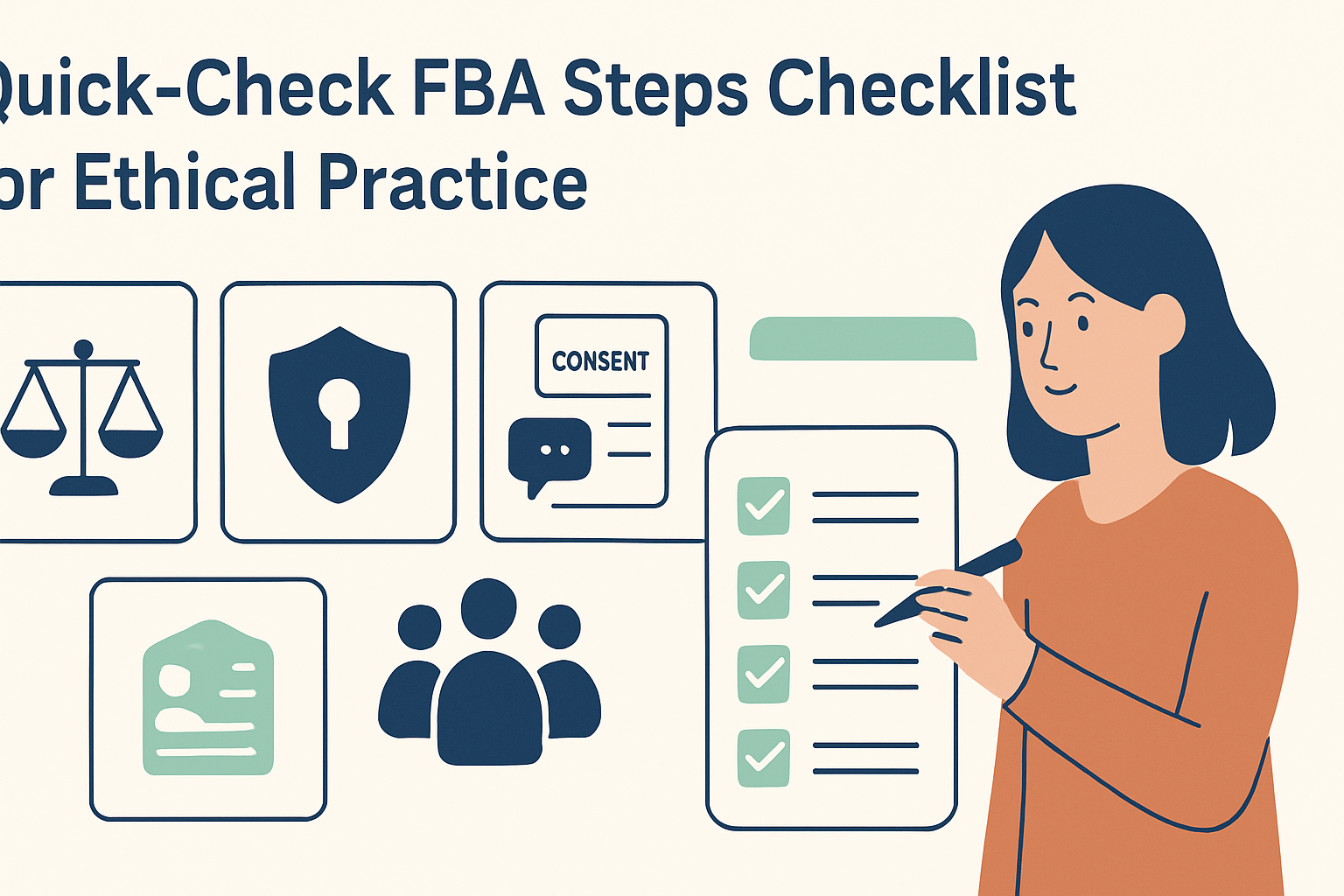
Quick-Check FBA Steps Checklist for Ethical Practice
Use this checklist to ensure you’re following best practices in FBA implementation:
- ✓ Develop clear, operational definitions of target behaviors
- ✓ Collect data using multiple assessment methods (indirect and descriptive)
- ✓ Formulate testable hypotheses about behavioral function
- ✓ Consider Functional Analysis when descriptive data is inconclusive
- ✓ Design interventions that directly address the identified function
- ✓ Implement ongoing data collection to monitor progress
- ✓ Assess treatment integrity regularly
- ✓ Modify interventions based on data analysis
Summary: Integrating FBA Steps into Your Professional Practice
The FBA process represents the scientific foundation of applied behavior analysis. By systematically identifying the environmental variables maintaining behavior, BCBAs can develop effective, ethical interventions that address root causes rather than symptoms.
Mastering these steps requires both theoretical knowledge and practical application. Regular practice with case scenarios and understanding common exam traps will prepare you for both clinical work and certification requirements. Remember that the FBA is not just a procedural requirement but a fundamental tool for creating meaningful behavior change.
For more on assessment methods, see our guide to functional analysis vs. descriptive assessment. To strengthen your understanding of behavioral functions, review our four functions of behavior guide. For comprehensive exam preparation strategies, explore our BCBA exam prep guide.


