
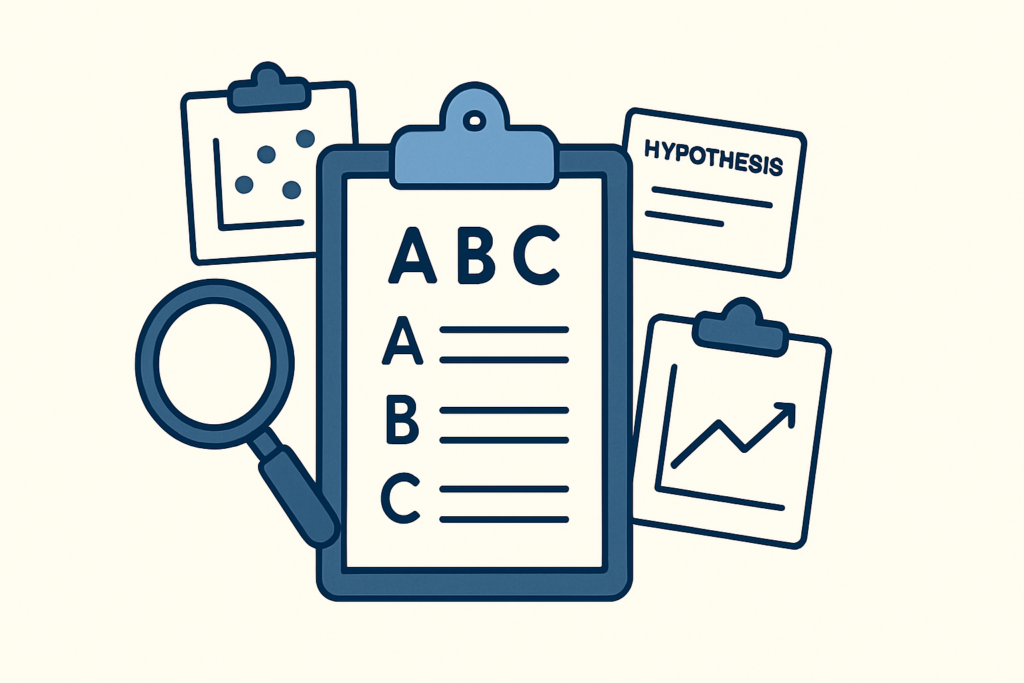
Functional Behavior Assessment process: What is a Functional Behavior Assessment (FBA)?
A Functional Behavior Assessment (FBA) is a systematic process for identifying the environmental variables that maintain challenging behavior. This assessment approach moves beyond simply describing what a behavior looks like to understanding why it occurs.
Table of Contents
- Functional Behavior Assessment process: What is a Functional Behavior Assessment (FBA)?
- The Four Phases of the FBA Process
- FBA in Practice: Worked Examples for BCBA Candidates
- The FBA Process on the BCBA Exam: What to Expect
- FBA Process Quick-Reference Checklist
The core purpose is to develop function-based interventions that address the root cause rather than just the symptoms of behavior.
The Definition and Goal of an FBA
An FBA involves collecting information about antecedents, behaviors, and consequences to determine the maintaining variables. It differs from a functional analysis (FA), which involves systematic manipulation of variables to test hypotheses.
The primary goal is to identify the function of behavior—whether it serves to gain access, escape, obtain attention, or provide automatic reinforcement.
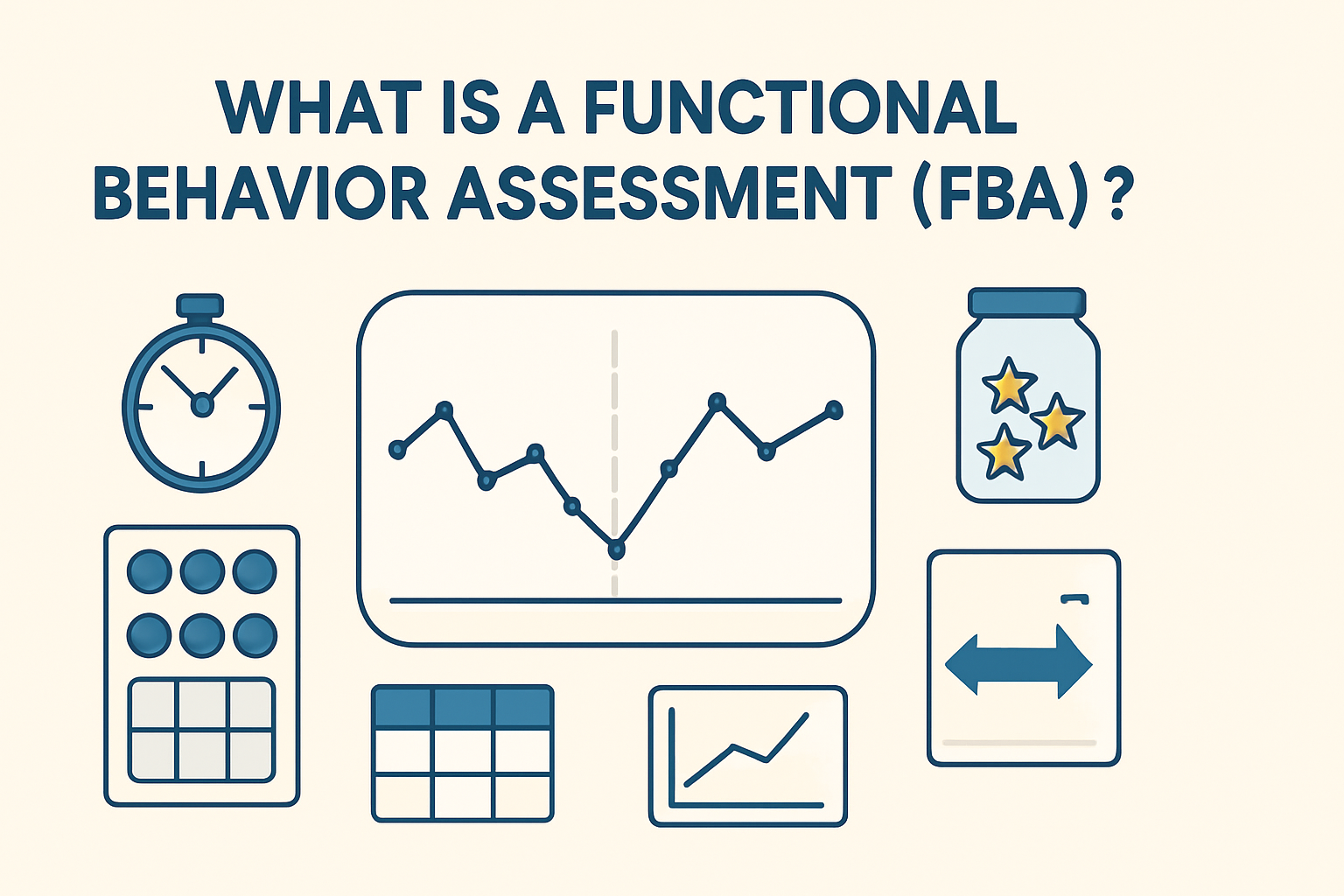
Ethical Imperative: The Link Between Assessment and Compassionate Care
Conducting a thorough FBA is an ethical obligation for behavior analysts. It ensures interventions respect client dignity by addressing the actual purpose of behavior rather than suppressing its topography.
This approach aligns with the individualized treatment principle in ABA and demonstrates respect for client autonomy. You can learn more about ethical considerations in our guide on compassionate care and client dignity.
The Four Phases of the FBA Process
The FBA process follows a logical sequence that builds from initial information gathering to hypothesis development. Understanding these phases is crucial for both clinical practice and exam success.
Phase 1: Indirect Assessment and Record Review
This initial phase involves gathering information without directly observing the behavior. Common methods include:
- Structured interviews using tools like the Functional Assessment Interview (FAI) or Motivation Assessment Scale (MAS)
- Reviewing existing educational records, medical history, and previous intervention data
- Completing questionnaires with caregivers, teachers, or other stakeholders
- Identifying patterns through informant reports about when and where behavior occurs
Phase 2: Direct Descriptive Assessment
During this phase, you observe and record behavior in the natural environment. Key data collection methods include:
- ABC recording (Antecedent-Behavior-Consequence) to identify patterns
- Scatterplot analysis to determine temporal patterns of behavior
- Duration, latency, and interval recording to quantify behavioral dimensions
- Naturalistic observation in the relevant settings where behavior typically occurs
Phase 3: Hypothesis Development
This phase involves synthesizing data from previous phases to form testable hypotheses. The process includes:
- Identifying consistent antecedent patterns that precede the behavior
- Analyzing consequence patterns that follow the behavior
- Considering setting events and motivating operations that affect behavior
- Formulating hypotheses about the primary function(s) of behavior
Phase 4: Hypothesis Testing (Optional/Advanced)
While not always required, this phase involves systematically testing hypotheses through manipulation. This distinguishes functional analysis from descriptive assessment.
According to the BACB Task List, understanding when to use functional analysis versus descriptive assessment is a key competency area.
FBA in Practice: Worked Examples for BCBA Candidates
Applying the FBA process to concrete scenarios helps bridge theory and practice. These examples demonstrate the analytical thinking required for both clinical work and exam questions.
Example 1: Escape-Maintained Behavior in a Classroom
Consider a student who elopes from the classroom during math instruction. The indirect assessment reveals teacher reports of avoidance during difficult tasks.
Direct ABC data shows:
- Antecedent: Teacher presents challenging math worksheet
- Behavior: Student leaves seat and exits classroom
- Consequence: Teacher redirects after 2 minutes, worksheet removed
The hypothesis: Escape from academic demands maintains elopement behavior.
Example 2: Attention-Maintained Behavior at Home
A child engages in sibling aggression when parents are occupied with household tasks. Indirect assessment indicates parents provide attention following incidents.
Direct observation data reveals:
- Antecedent: Parent on phone or cooking dinner
- Behavior: Hits sibling with moderate force
- Consequence: Parent immediately stops activity, provides reprimands and comfort
The hypothesis: Access to adult attention maintains aggressive behavior.
The FBA Process on the BCBA Exam: What to Expect
Exam questions often test your ability to apply FBA principles to vignettes and select appropriate assessment methods. Understanding common traps is essential for success.
Common Exam Traps and Misconceptions
Avoid these frequent mistakes when answering FBA-related questions:
- Confusing behavior topography with behavior function (what it looks like vs. why it occurs)
- Selecting interventions before confirming the maintaining function through assessment
- Misidentifying automatic reinforcement when social functions are present
- Overlooking the role of setting events and motivating operations
- Failing to consider multiple functions of a single behavior
Sample Exam-Style Practice Prompts
Test your understanding with these practice scenarios:
1. A child engages in hand-flapping during transitions between activities. Parents report the behavior occurs most frequently when moving from preferred to non-preferred activities. What is the NEXT step in the FBA process?
2. ABC data shows a student throws materials immediately after being given independent work, resulting in removal from the classroom. What is the most likely function?
For more practice with assessment concepts, explore our guide on assessment in ABA.
FBA Process Quick-Reference Checklist
Use this checklist to ensure you complete all essential steps in the Functional Behavior Assessment process:
- Complete indirect assessments through interviews and record review
- Conduct direct observations using ABC data collection methods
- Identify patterns in antecedents and consequences
- Consider setting events and motivating operations
- Formulate testable hypotheses about behavioral function
- Validate hypotheses through additional data or manipulation
- Develop function-based interventions based on assessment findings
- Monitor intervention effectiveness and adjust as needed
Remember that the FBA process is iterative—you may need to revisit earlier phases as new information emerges. For comprehensive information on behavior functions, refer to the BACB Ethics Code and our guide on the four functions of behavior.
Mastering the Functional Behavior Assessment process requires both conceptual understanding and practical application. By following this systematic approach, you’ll be prepared to conduct effective assessments in clinical practice and answer related questions on the BCBA exam with confidence.


