
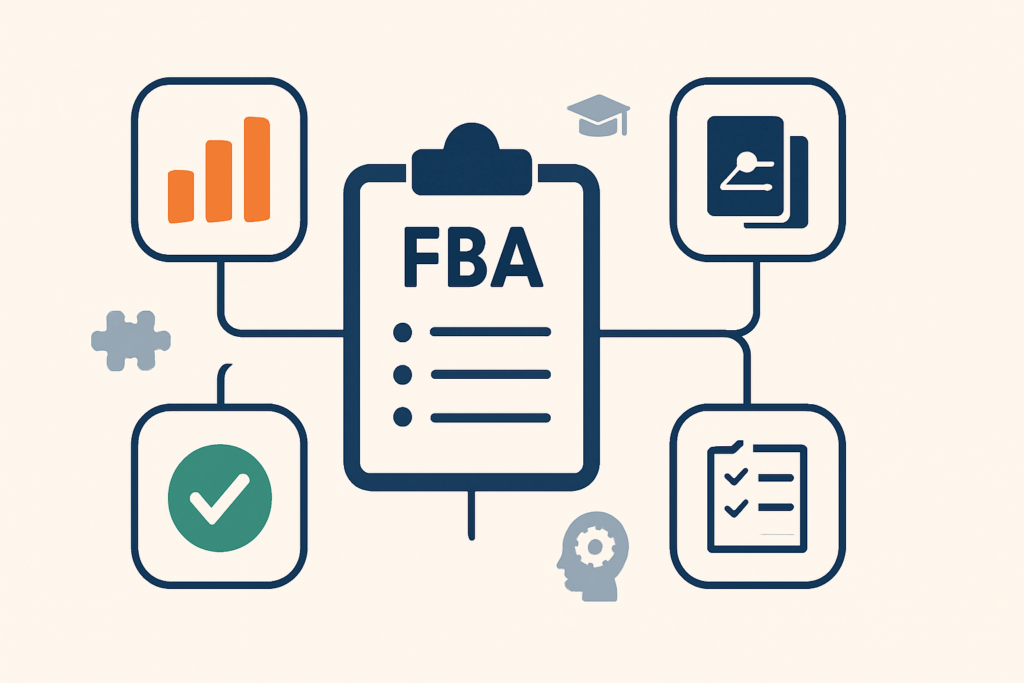
A Functional Behavior Assessment (FBA) represents a systematic approach to understanding why challenging behaviors occur in educational settings. In special education contexts, this process isn’t just good practice—it’s often legally required under IDEA when behaviors significantly interfere with learning. For BCBA candidates, mastering FBA procedures means understanding both the technical methodology and the ethical framework that guides assessment in school environments.
Table of Contents
- FBA special education: What is a Functional Behavior Assessment (FBA) in a SPED Context?
- Conducting an Ethical and Effective FBA: A Step-by-Step Process
- FBA in Action: Worked Examples for the BCBA Exam
- From FBA to Intervention: The Critical Link
- FBA Readiness Checklist & Summary
FBA special education: What is a Functional Behavior Assessment (FBA) in a SPED Context?
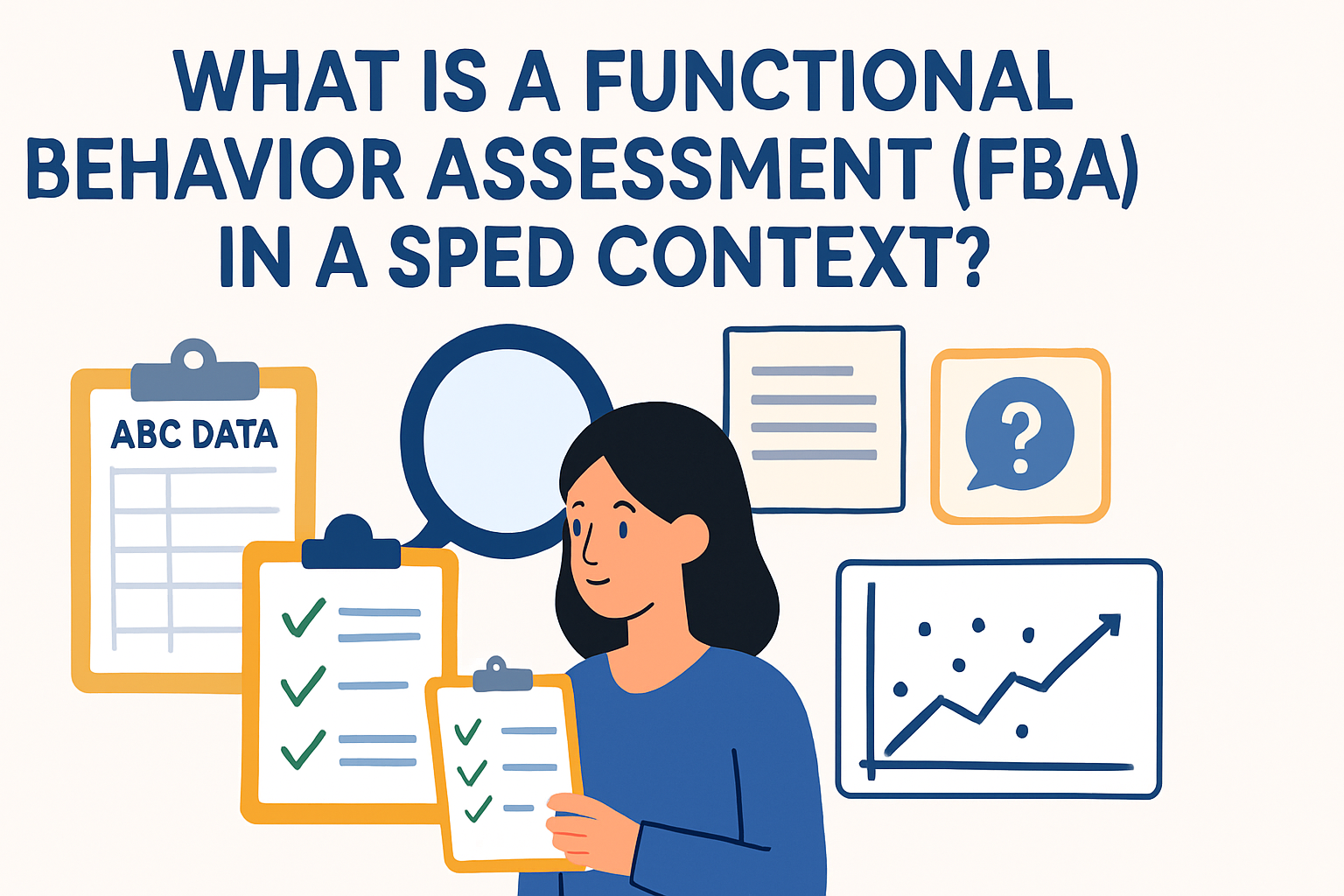
An FBA in special education involves gathering information to identify the environmental variables maintaining problem behavior. This systematic process moves beyond simple observation to create data-driven hypotheses about behavior function.
The Legal and Ethical Imperative
The Individuals with Disabilities Education Act (IDEA) mandates FBAs when behaviors impede a student’s learning or that of others. This legal requirement aligns with BACB Ethics Code sections 2.01 (Accepting Clients) and 3.01 (Behavior-Analytic Assessment), which emphasize conducting assessments only after obtaining appropriate consent and using methods supported by research.
Core Components: Beyond the ABCs
While ABC data forms the foundation, a comprehensive FBA includes multiple components:
- Record review of educational and medical history
- Structured interviews with teachers, parents, and staff
- Systematic direct observation using various measurement methods
- Development of testable behavioral hypotheses
- Collaboration with the IEP team throughout the process
Conducting an Ethical and Effective FBA: A Step-by-Step Process
Following a structured process ensures both ethical compliance and assessment validity. Each step builds upon the previous one, creating a comprehensive understanding of the behavior in context.
Step 1: Gathering Indirect and Direct Data
Begin with indirect assessment methods like record reviews and interviews using tools such as the Functional Assessment Interview (FAI). These provide historical context and initial hypotheses. Follow with direct observation using methods appropriate to the behavior’s characteristics:
- Scatter plots for identifying temporal patterns
- ABC narrative recording for detailed sequence analysis
- Conditional probability calculations to identify correlations
- Structured observation during specific activities or settings
Step 2: Analyzing Data to Form a Hypothesis
Synthesize data from all sources to identify patterns. Look for consistent antecedent conditions that predict behavior occurrence and consequences that maintain it. Common functions in school settings include:
- Escape/avoidance from academic demands or social situations
- Attention-seeking from peers or adults
- Access to tangibles or preferred activities
- Automatic reinforcement (sensory consequences)
FBA in Action: Worked Examples for the BCBA Exam
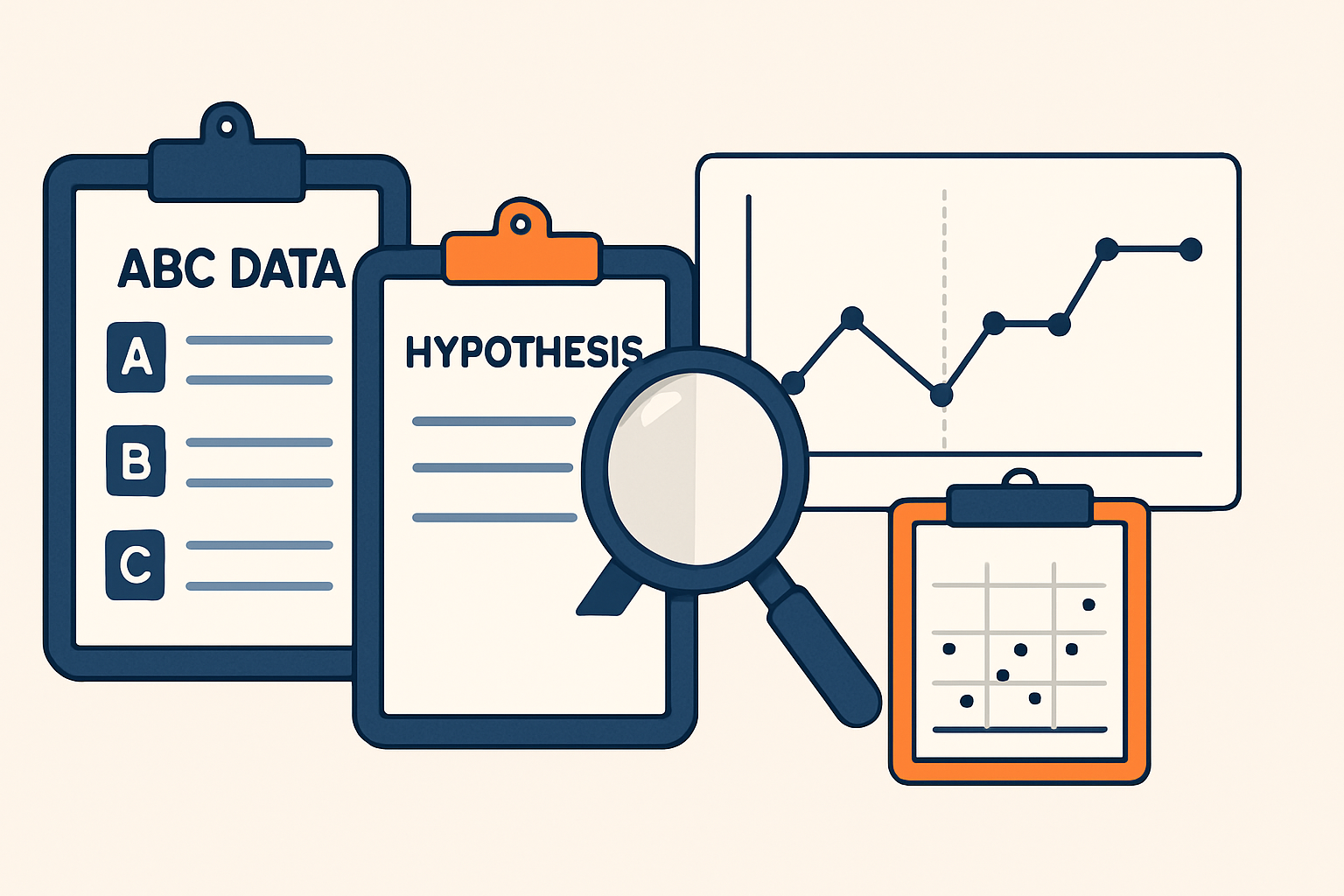
Applying FBA principles to realistic scenarios helps solidify understanding for exam preparation. These examples demonstrate how data analysis leads to functional hypotheses.
Example 1: Elopement in the Classroom
Consider a student who leaves his seat during independent math work. ABC data shows the behavior occurs 80% of the time during multiplication worksheets and stops when the teacher removes the work. The likely function is escape from difficult academic demands. Testing this hypothesis might involve modifying task difficulty or teaching alternative escape responses.
Example 2: Disruption During Group Time
A student makes loud noises during circle time. Observations reveal the behavior consistently results in peer laughter and teacher redirection. The function appears to be attention-seeking, specifically access to peer attention. This differs from escape functions, which would show behavior cessation when removed from the group.
From FBA to Intervention: The Critical Link
The FBA’s true value emerges when its findings directly inform intervention planning. A well-conducted assessment should naturally lead to function-based interventions that address the identified maintaining variables.
Linking Hypothesis to BIP Strategies
Each behavioral function suggests specific intervention approaches. For escape-maintained behaviors, consider task modification, choice-making opportunities, or teaching functional communication for breaks. For attention-seeking behaviors, implement differential reinforcement of alternative behaviors and planned ignoring of problem behavior.
Common Pitfalls and Exam Traps
BCBA exam questions often test recognition of common FBA errors. Watch for these traps:
- Confusing topography with function (assuming all aggression serves the same purpose)
- Recommending punishment-based interventions without reinforcement components
- Failing to obtain proper consent before assessment
- Not involving the educational team in the process
- Over-relying on indirect assessment without direct observation
- Creating interventions that don’t match the identified behavioral function
FBA Readiness Checklist & Summary
Before beginning any FBA in a special education setting, ensure you’ve addressed these critical elements:
- Obtained proper parental consent and explained the process
- Reviewed the student’s IEP and relevant educational records
- Identified clear, operational definitions of target behaviors
- Selected appropriate data collection methods for the setting
- Planned for collaboration with teachers and support staff
- Considered cultural variables that might influence assessment
- Prepared to develop testable hypotheses based on data patterns
Mastering FBA procedures requires understanding both the technical assessment methods and the ethical framework governing special education practice. The process should always be collaborative, data-driven, and focused on developing effective interventions that support student success. For more on ethical assessment practices, see our guide on ethics in ABA practice. Additional resources on behavior functions can be found in our four functions of behavior guide. For authoritative guidance on FBA procedures, consult the BACB Ethics Code and research on functional assessment methods.


