
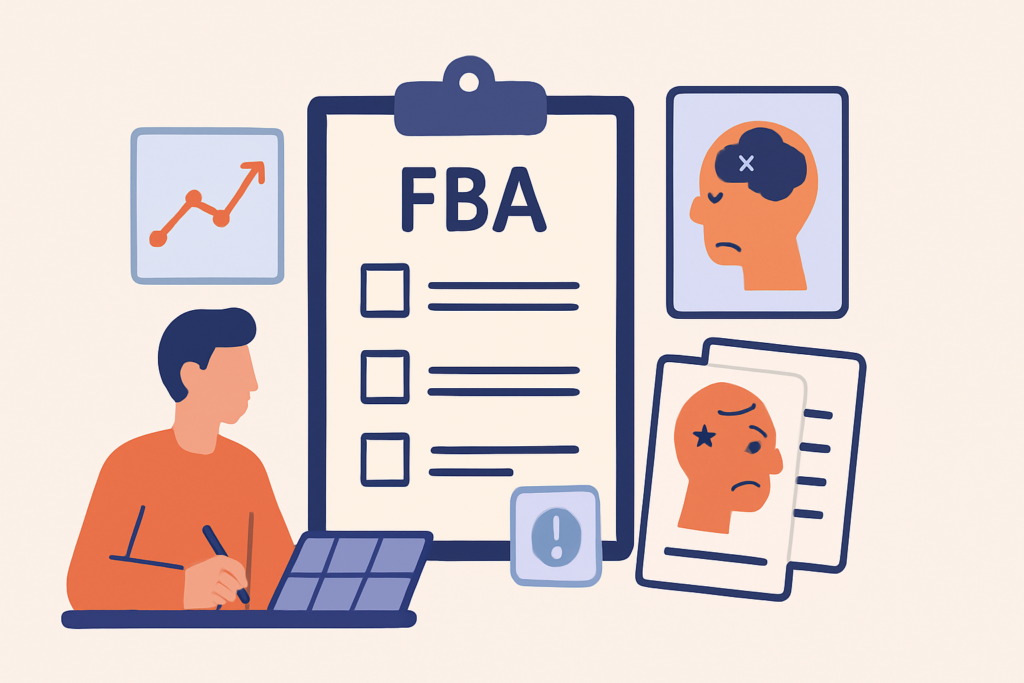
What is the Standard FBA Format?
A Functional Behavior Assessment (FBA) is a systematic process for identifying the environmental variables that maintain problem behavior. The FBA format provides the structured framework for documenting this analysis in professional practice and on the BCBA exam.
Table of Contents
- What is the Standard FBA Format?
- Applying the FBA Format: Worked Examples
- FBA Format on the BCBA® Exam: Relevance and Traps
- FBA Format Quick-Checklist and Summary
This standardized format ensures comprehensive assessment and clear communication of findings.
Core Components of an FBA Report
Every complete FBA includes these essential sections:
- Referral Information: Client demographics, referral source, and relevant background
- Problem Behavior Description: Clear operational definitions of target behaviors
- Assessment Methods: Documentation of indirect assessments, descriptive assessments, and any functional analysis conducted
- Data Summary: Organized presentation of assessment findings
- Functional Hypothesis: Statement of the proposed maintaining variables
- Recommendations: Evidence-based intervention suggestions
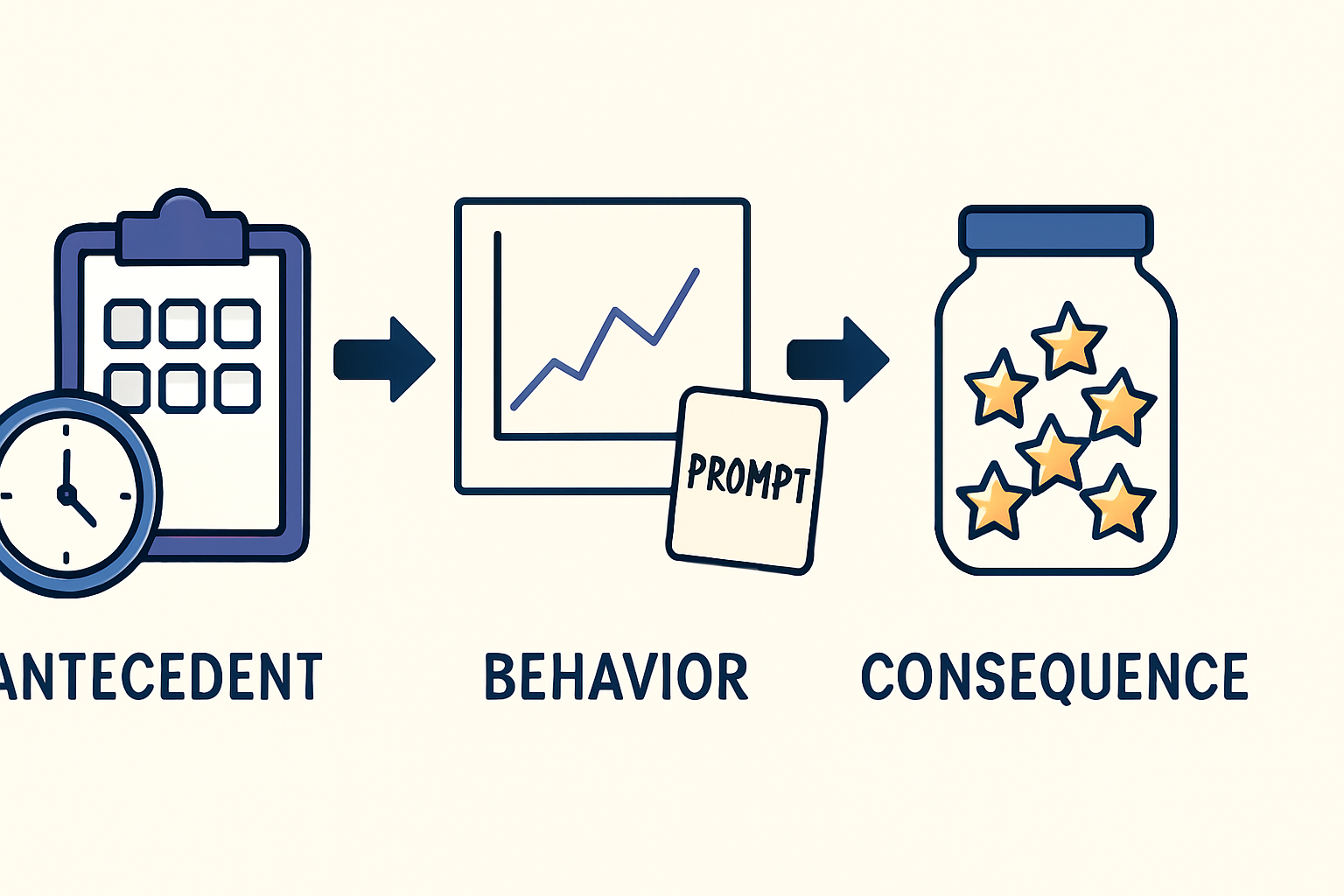
The Role of the Functional Hypothesis
The functional hypothesis represents the central conclusion of your assessment. It synthesizes all collected data into a testable statement about the behavior’s function.
This hypothesis directly links assessment findings to intervention planning, making it the critical bridge between understanding and changing behavior.
Applying the FBA Format: Worked Examples
Seeing the format in action clarifies how theoretical components translate to practical application. These examples demonstrate proper documentation.
Example 1: Escape-Maintained Behavior in a School Setting
Consider a student who engages in work refusal during math assignments. The FBA format would document:
- Operational definition: “Saying ‘no’ to teacher instructions, pushing materials away, or leaving seat during math work”
- ABC data showing antecedent: math worksheet presented, behavior: refusal, consequence: worksheet removed
- Functional hypothesis: “Work refusal is maintained by negative reinforcement in the form of escape from difficult academic tasks”
- Recommendations: Task modification, functional communication training for break requests, and differential reinforcement of alternative behaviors
This example shows how descriptive assessment data leads to an escape hypothesis.
Example 2: Attention-Seeking Behavior at Home
For a child having tantrums when parents are occupied, the FBA would include:
- Indirect assessment via parent interview identifying patterns
- Direct observation data showing increased tantrums during phone conversations
- Functional hypothesis: “Tantrums are maintained by positive reinforcement in the form of parental attention”
- Recommendations: Noncontingent reinforcement of attention, teaching appropriate attention-seeking behaviors, and extinction procedures
This demonstrates how multiple assessment methods converge on a social attention function.
FBA Format on the BCBA® Exam: Relevance and Traps
Understanding the FBA format is essential for exam success. Questions test your ability to identify proper components and avoid common errors.
Key Terms and Definitions You Must Know
Master these essential concepts:
- Indirect assessment: Interviews, rating scales, and record reviews
- Descriptive assessment: Direct observation without manipulation
- Functional analysis: Systematic manipulation of variables to test hypotheses
- Setting events: Contextual factors that alter stimulus value
- Motivating operations: Variables that alter reinforcement effectiveness
- Function vs. topography: Purpose vs. form of behavior
Common Exam Traps and Misconceptions
Avoid these frequent errors:
- Confusing correlation with causation in descriptive data
- Prioritizing behavior topography over function
- Recommending interventions before establishing a functional hypothesis
- Misidentifying assessment methods or their appropriate uses
- Failing to consider setting events and motivating operations
Remember that the BACB Ethics Code requires FBAs before implementing certain interventions. For more on ethical practice, see our guide to ethics in ABA practice.
FBA Format Quick-Checklist and Summary
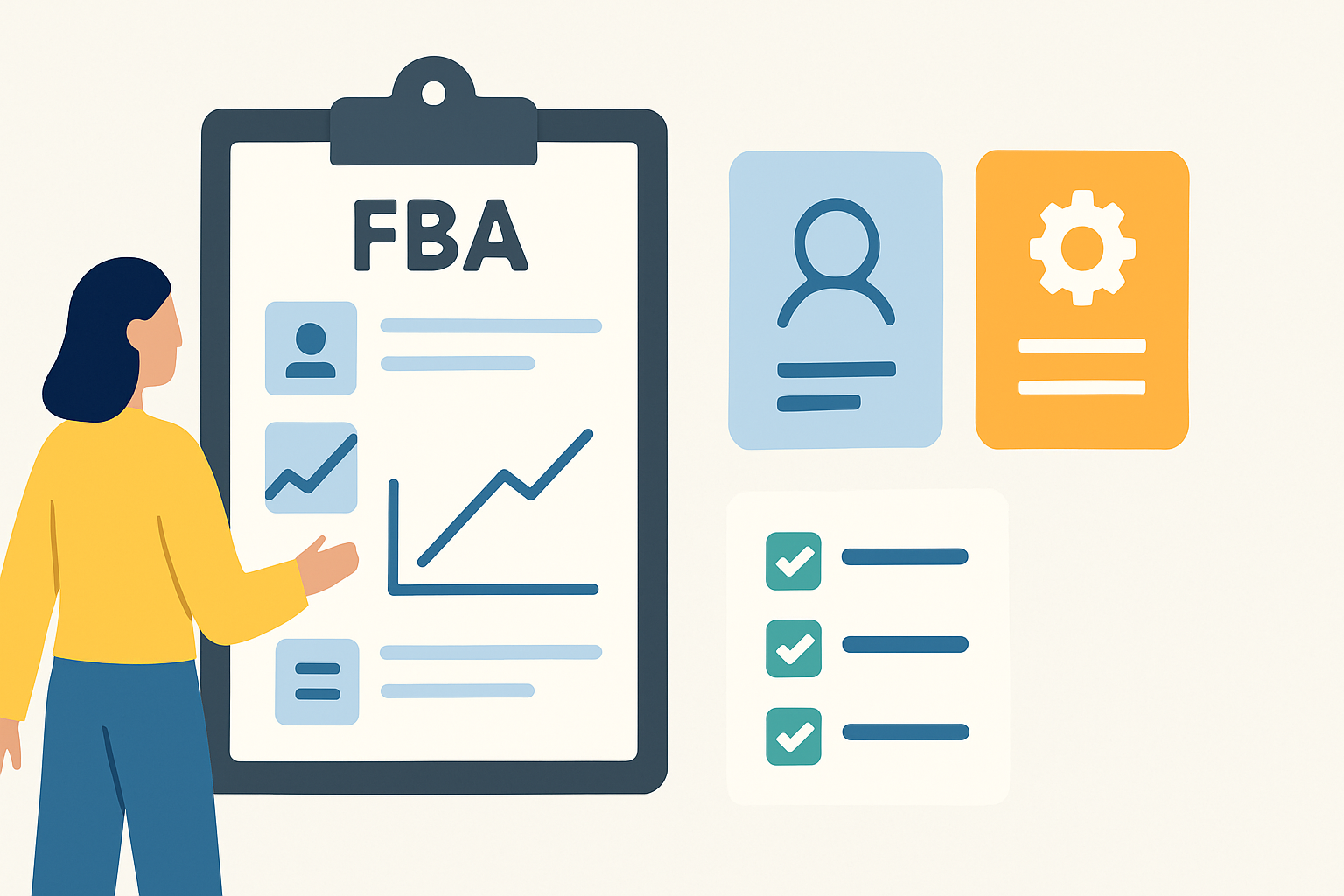
Use this practical tool to verify your FBA includes all essential components.
Your FBA Format Quality Checklist
Before finalizing any FBA, confirm it includes:
- Clear operational definitions of target behaviors
- Documentation of multiple assessment methods
- Organized presentation of assessment data
- A data-supported functional hypothesis
- Function-matched recommendations for intervention
- Consideration of client preferences and social validity
Final Summary: From Assessment to Intervention
The FBA format provides the essential structure for moving from behavior understanding to effective intervention. It ensures your assessment is comprehensive, your hypothesis is testable, and your recommendations are evidence-based.
Mastering this format is crucial for both exam success and professional practice. For additional resources on behavior assessment, explore our comprehensive guide to functional behavior assessment.
Remember that proper FBA documentation follows the scientific method and aligns with the 7 dimensions of ABA. For authoritative guidance on FBA procedures, consult the Behavior Analyst Certification Board resources and peer-reviewed literature on functional assessment methodology.


