
An FBA data collection sheet is the foundational tool for gathering systematic information during a Functional Behavior Assessment. This structured recording form captures the antecedent-behavior-consequence sequence that reveals why behaviors occur. For BCBA candidates, mastering this tool is essential for both clinical practice and exam success.
Table of Contents
- What is an FBA Data Collection Sheet?
- Applied Examples: From Data to Hypothesis
- Exam Relevance and Common Data Collection Traps
- Your FBA Data Sheet Implementation Checklist
- Summary and Next Steps for Mastery
What is an FBA Data Collection Sheet?
This specialized recording form documents the three-term contingency in real-time observations. It serves as the primary data source for identifying behavioral functions through descriptive assessment methods. Unlike informal notes, it provides standardized data that supports evidence-based decision making.
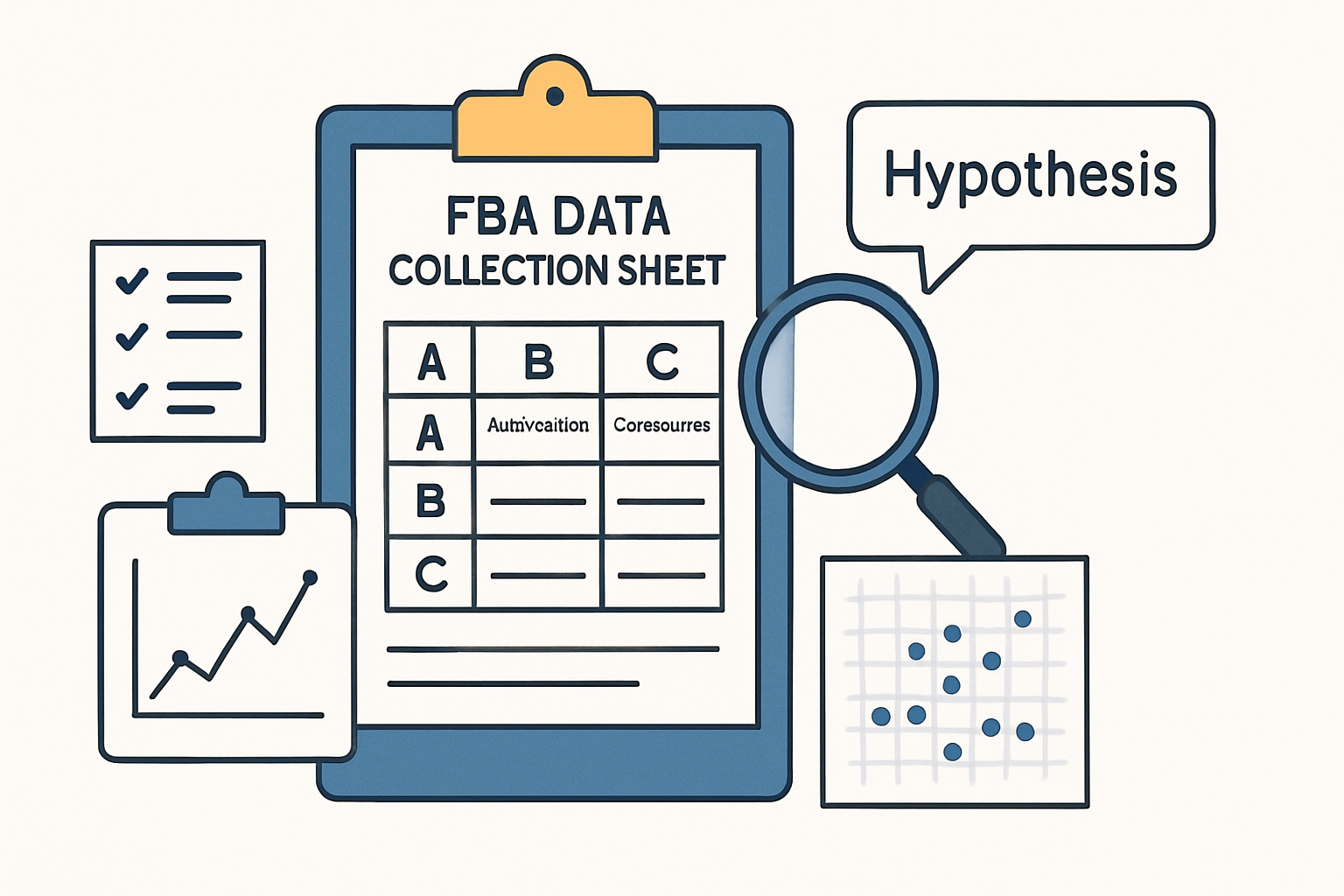
Core Components of an Effective Sheet
Every well-designed sheet includes several critical columns that ensure comprehensive data collection:
- Date and Time: Records when observations occur to identify patterns
- Antecedent: Documents setting events and immediate triggers before behavior
- Operational Definition: Provides clear, measurable description of target behavior
- Consequence: Records what happened immediately after the behavior
- Initials/Notes: Tracks observer and any relevant contextual information
Linking Data Collection to Assessment Phases
The sheet bridges different assessment approaches within the FBA process. During indirect assessment, it organizes information from interviews and rating scales. For direct descriptive assessment, it facilitates ABC recording through naturalistic observation. This differs from functional analysis data sheets, which record experimental manipulation results.
Applied Examples: From Data to Hypothesis
Exam questions often present sample data requiring functional analysis. These examples demonstrate how raw observations translate into behavioral hypotheses.
Example 1: Escape-Maintained Behavior in a Classroom
Consider this classroom scenario with a student named Alex:
- Antecedent: Teacher presents math worksheet
- Behavior: Alex throws materials on floor
- Consequence: Teacher removes worksheet, tells Alex to take break
When this pattern repeats across multiple demanding tasks, the data suggests an escape function. The behavior consistently results in task removal, making escape from demands the likely maintaining variable.
Example 2: Attention-Seeking Behavior During Play
Examine this playground observation data:
- Antecedent: Peers playing together without including Sam
- Behavior: Sam knocks over block tower
- Consequence: Peers yell at Sam, tell him to stop
This pattern indicates social attention as the probable function. The behavior consistently occurs during low-attention situations and produces peer reactions.
Example 3: Tangible-Seeking Scenario
Review this home-based observation:
- Setting Event: Tablet was visible but not accessible
- Antecedent: Parent says “no tablet until after dinner”
- Behavior: Child screams and hits wall
- Consequence: Parent eventually gives tablet to stop screaming
This demonstrates tangible reinforcement. Recording setting events is crucial here, as they establish the context for the antecedent condition.
Exam Relevance and Common Data Collection Traps
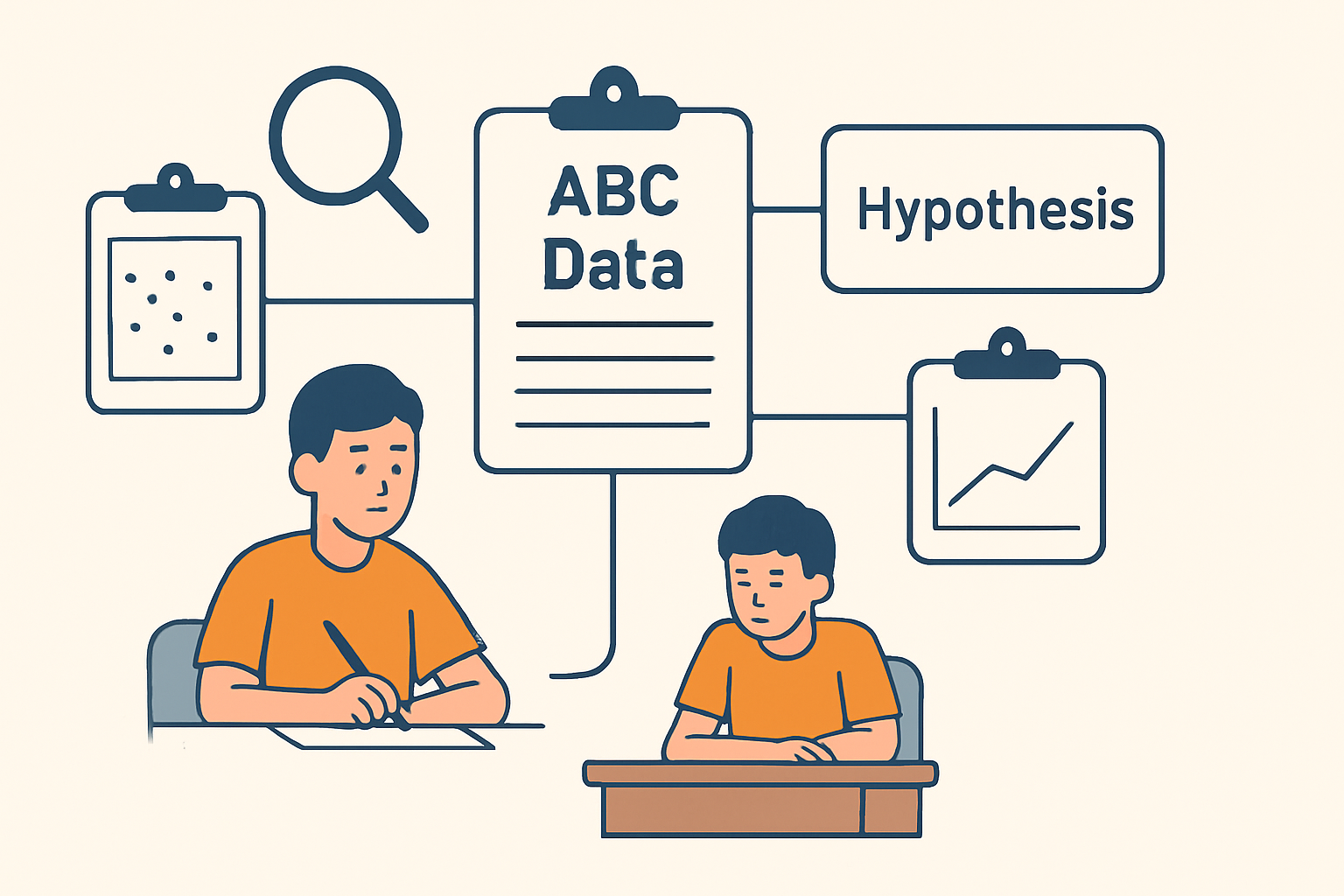
BCBA exam questions frequently test your ability to interpret FBA data and identify assessment errors. Understanding common pitfalls is essential for both clinical practice and exam success.
Key Task List Areas and Question Formats
The BACB Task List addresses FBA data collection in several domains. Section F-1 covers conducting assessments, while F-2 focuses on identifying variables. Exam questions might present completed data sheets and ask you to:
- Identify the most likely behavioral function
- Determine the next assessment step
- Select appropriate intervention strategies
- Recognize data collection errors
For comprehensive exam preparation, explore our BCBA exam prep guide which covers assessment strategies in depth.
Pitfalls to Avoid in Practice and on the Exam
Several common errors can compromise data quality and lead to incorrect conclusions:
- Confusing correlation with causation: Assuming antecedents cause behavior without experimental verification
- Poor operational definitions: Using vague descriptions that different observers might interpret differently
- Observer drift: Changing interpretation of behavior definitions over time
- Missing setting events: Failing to record contextual factors that influence behavior
- Over-reliance on single data points: Drawing conclusions from insufficient observations
- Misidentifying automatic reinforcement: Assuming social functions when behavior may be sensory-maintained
Your FBA Data Sheet Implementation Checklist
Use this practical checklist when creating or evaluating data collection sheets:
- Define behavior operationally with clear, measurable criteria
- Include all essential columns: date/time, antecedent, behavior, consequence, notes
- Train observers thoroughly on definitions and recording procedures
- Collect sufficient data across multiple contexts and times
- Record setting events that might influence behavioral patterns
- Maintain objectivity by recording only observable events
- Review data regularly for patterns and potential observer drift
- Cross-validate findings with multiple assessment methods
For more on assessment fundamentals, see our guide on assessment in ABA.
Summary and Next Steps for Mastery
The FBA data collection sheet is more than just a recording tool—it’s a hypothesis-generating instrument that drives effective intervention planning. Mastery requires both technical skill in sheet design and analytical ability in pattern recognition.
Ethical data collection demands accurate recording, objective observation, and systematic analysis. BCBA candidates should practice creating and interpreting sample sheets regularly. For additional practice with data interpretation questions, consider using free BCBA mock exam questions that include assessment scenarios.
Remember that the BACB Ethics Code requires using assessment methods that are appropriate, comprehensive, and culturally responsive. Always consider individual differences and contextual factors when designing data collection systems. For authoritative guidance on assessment standards, refer to the official BACB Ethics Code and peer-reviewed resources on functional assessment methodology.


