

What is FBA Data Collection? Definition and Core Purpose
FBA data collection refers to the systematic process of gathering information about a target behavior within its natural context. This empirical approach serves as the foundation for identifying functional relationships between environmental variables and behavior.
Table of Contents
- What is FBA Data Collection? Definition and Core Purpose
- Key FBA Data Collection Methods and When to Use Them
- Applied Examples: From Data Collection to Hypothesized Function
- FBA Data Collection on the BCBA Exam: Relevance and Common Traps
- FBA Data Collection Quick-Reference Checklist
- Summary and Next Steps for Mastery
The core purpose is to develop testable hypotheses about why a behavior occurs, moving beyond mere description to prediction and control.
The Role of Data in the FBA Process
Data collection transforms informal observation into measurable, objective information. It provides the empirical evidence needed to identify patterns and relationships that inform intervention planning.
This systematic approach distinguishes functional behavior assessment from casual observation, ensuring decisions are based on evidence rather than assumptions.
Key FBA Data Collection Methods and When to Use Them
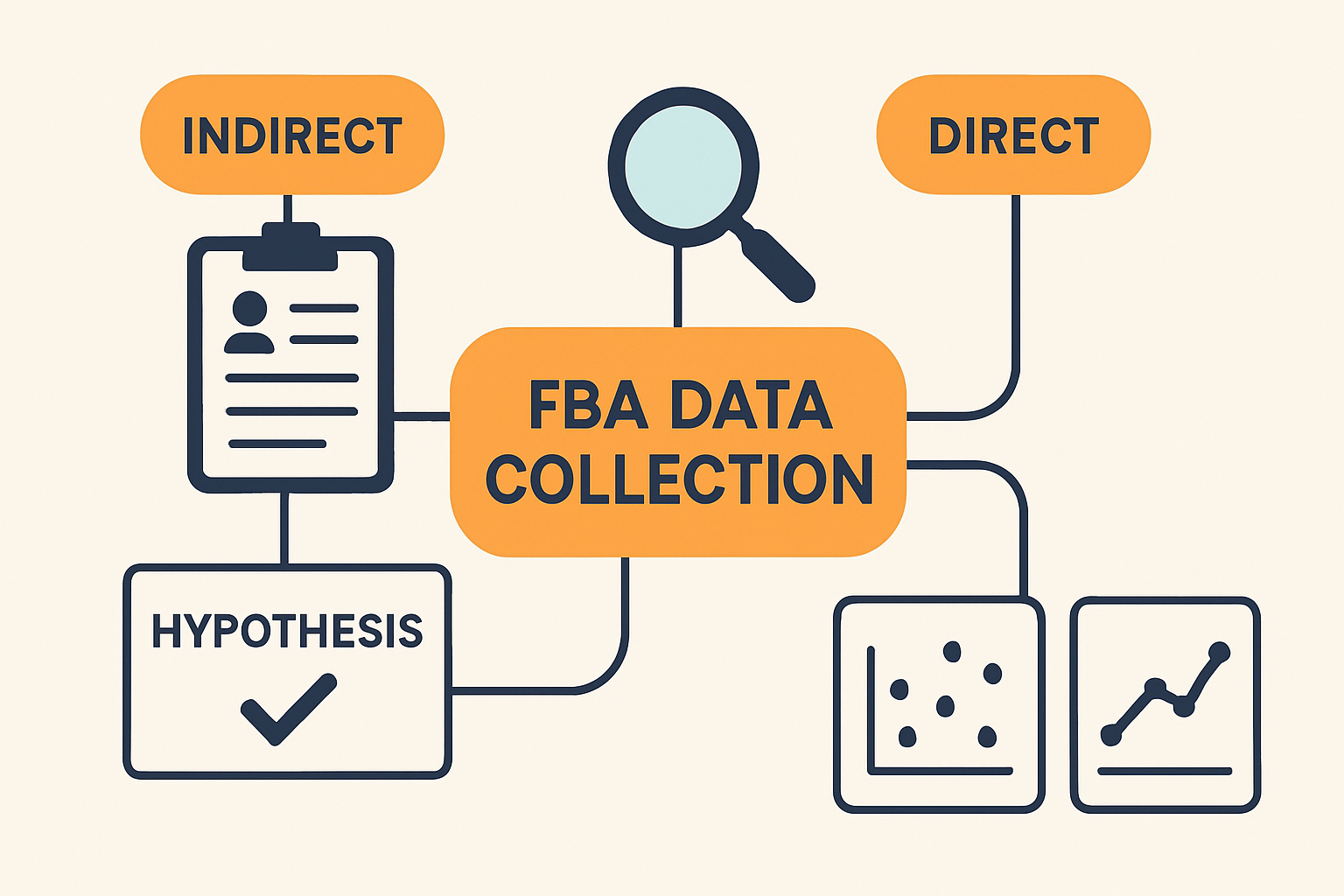
Selecting appropriate data collection methods depends on behavior topography, available resources, and assessment phase. Methods fall into two main categories: indirect and direct approaches.
Indirect Methods: Interviews and Checklists
Indirect methods gather information from those familiar with the individual and behavior. These include Functional Assessment Interviews (FAI) and rating scales like the Motivation Assessment Scale (MAS).
- Best for initial hypothesis generation when direct observation isn’t immediately possible
- Useful for gathering historical information and identifying potential patterns
- Cannot confirm function alone – always require follow-up with direct methods
- Common exam trap: mistaking interview results for confirmed functional relationships
Direct Descriptive Methods: ABC Recording
ABC recording documents Antecedent-Behavior-Consequence sequences as they occur naturally. This method captures the environmental context surrounding behavior.
- Narrative ABC recording: Detailed written descriptions of each occurrence
- ABC checklist: Structured forms with predetermined categories
- Ideal for identifying patterns across multiple occurrences
- Provides rich contextual data for hypothesis development
Direct Quantitative Methods: Scatterplots and Conditional Probability
Quantitative methods measure specific dimensions of behavior to identify patterns. Scatterplots track when behavior occurs across time periods, revealing temporal patterns.
Conditional probability analysis calculates the likelihood of behavior given specific antecedents or consequences. This statistical approach strengthens hypothesis testing.
Applied Examples: From Data Collection to Hypothesized Function
Exam-style scenarios demonstrate how raw data translates into functional hypotheses. Each example shows different data patterns leading to specific conclusions.
Example 1: Escape-Maintained Behavior (Task Refusal)
ABC checklist data shows behavior occurring primarily during difficult academic demands. The pattern reveals high probability of refusal when math worksheets are presented, followed by task removal.
This consistent pattern suggests negative reinforcement through escape from aversive tasks.
Example 2: Attention-Maintained Behavior (Disruption)
Narrative ABC data documents behavior during low-attention contexts, consistently followed by teacher reprimands. The data shows increased disruption when peers are engaged and teacher attention is divided.
This pattern indicates social positive reinforcement through attention acquisition.
Example 3: Automatic Reinforcement (Skin Picking)
Scatterplot data reveals no clear environmental correlations. Behavior occurs across various settings, times, and activities without consistent antecedents or social consequences.
This pattern suggests automatic reinforcement, requiring further analysis of sensory consequences. For more on this topic, see our guide on automatic reinforcement.
FBA Data Collection on the BCBA Exam: Relevance and Common Traps
This topic appears frequently across exam domains, testing both conceptual understanding and practical application skills.
High-Yield Exam Topics and Question Formats
Expect questions that test your ability to select appropriate methods, interpret data patterns, and distinguish between different assessment approaches.
- Differentiating indirect vs. direct assessment methods
- Choosing the most appropriate data collection method given specific scenarios
- Interpreting ABC data or scatterplot patterns to identify potential functions
- Recognizing limitations of various data collection approaches

Frequent Exam Pitfalls and How to Avoid Them
Common mistakes include confusing behavior topography with function and misinterpreting data patterns.
- Topography-function confusion: Remember that the same behavior can serve different functions
- Method selection errors: Choosing indirect methods when direct observation is possible and appropriate
- Data misinterpretation: Assuming ‘no consequence’ in ABC data means ‘no function’
- Overgeneralization: Drawing conclusions from insufficient data or single observations
FBA Data Collection Quick-Reference Checklist
Use this practical checklist to plan assessments or answer scenario-based questions effectively.
- Define the target behavior using observable, measurable terms
- Select appropriate data collection methods based on behavior characteristics
- Train observers to ensure reliable data collection
- Collect data across multiple settings and times
- Analyze patterns using appropriate analytical methods
- Develop testable hypotheses based on identified patterns
- Validate hypotheses through additional assessment or intervention
Summary and Next Steps for Mastery
Effective FBA data collection requires careful method selection, systematic implementation, and thoughtful analysis. The link between data collection choices and functional hypothesis development is crucial for successful assessment.
To build mastery, practice analyzing various data sets and selecting appropriate methods for different scenarios. Consider using our practice questions to test your understanding. For comprehensive guidance on assessment approaches, review the functional analysis vs. descriptive assessment comparison.
Continue developing your skills through applied practice and study of authoritative sources like the Behavior Analyst Certification Board resources and peer-reviewed literature on functional assessment methodologies.


