
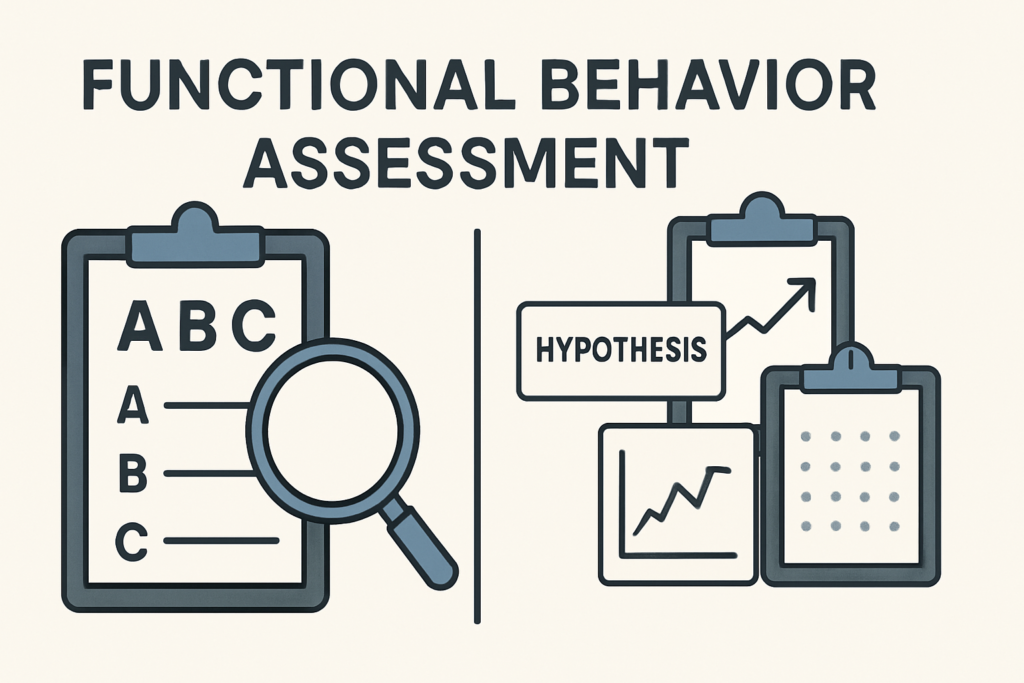
What is a Functional Behavior Assessment (FBA)?
A Functional Behavior Assessment is a systematic process used to identify the environmental variables that maintain challenging behavior. This assessment goes beyond simply describing what a behavior looks like to understand why it occurs in specific contexts.
Table of Contents
- What is a Functional Behavior Assessment (FBA)?
- The Step-by-Step FBA Process in Practice
- FBA Worked Examples: From Data to Function
- FBA Assessment on the BCBA Exam: What to Expect
- Quick-Reference FBA Checklist for Candidates
- Summary and Next Steps for Mastery
Core Objectives and Ethical Imperative
FBAs are conducted to develop effective, function-based interventions rather than relying on guesswork or punishment. The BACB Ethics Code requires behavior analysts to base interventions on assessment data, making FBA an ethical imperative for responsible practice.
This approach contrasts sharply with non-functional methods that target behavior topography without addressing underlying causes, often leading to temporary suppression rather than meaningful change.
Key Components of a Comprehensive FBA
Every thorough FBA includes several essential elements working together:
- Indirect assessment methods like interviews and rating scales
- Direct observation using ABC data collection
- Functional analysis when needed to test hypotheses
- Hypothesis development about behavioral function
- Data synthesis across multiple sources
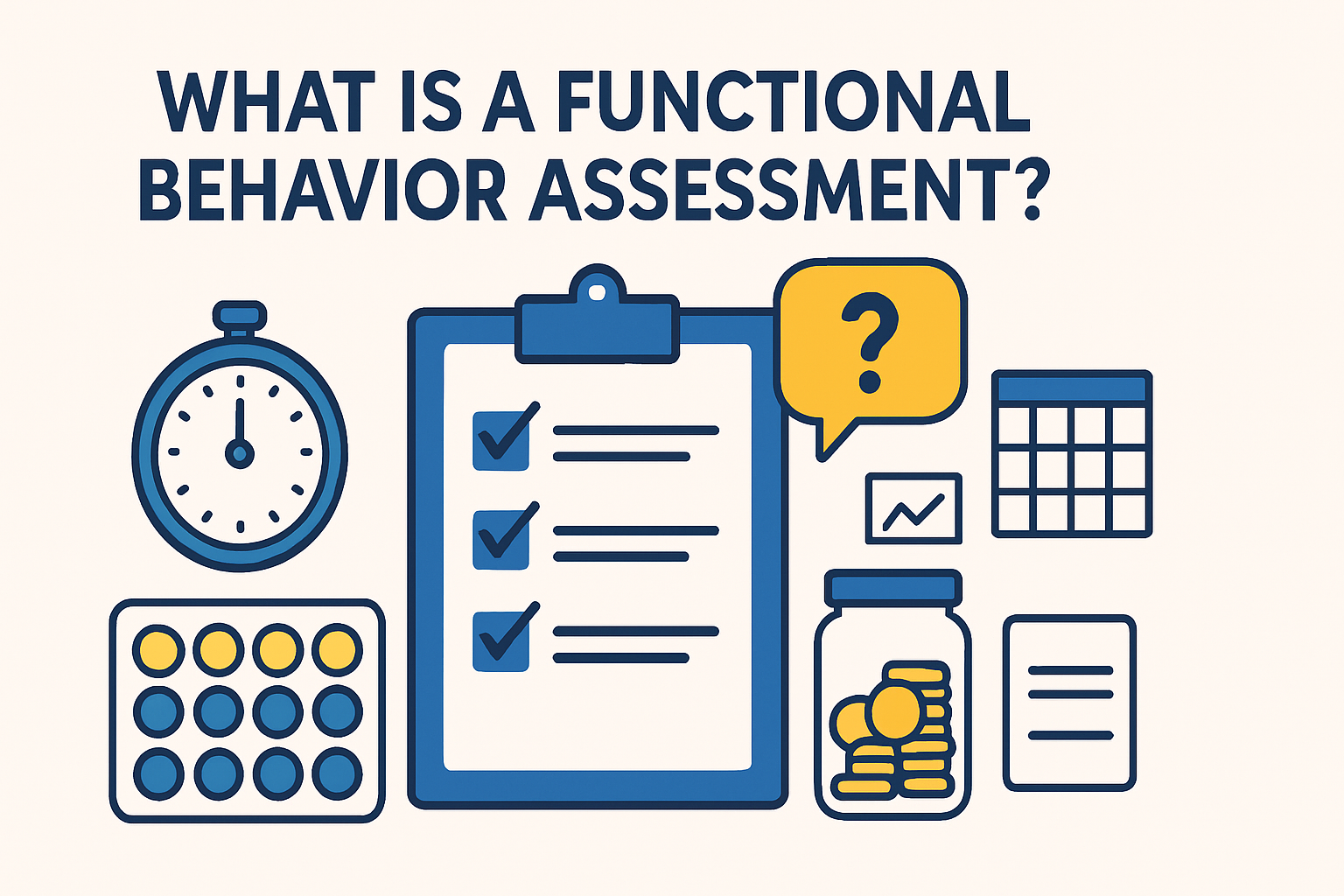
The Step-by-Step FBA Process in Practice
Conducting a proper FBA follows a logical sequence that builds from information gathering to hypothesis testing.
Phase 1: Gathering Information (Indirect & Descriptive Assessment)
This initial phase focuses on collecting comprehensive data about the behavior’s context and patterns. Common methods include structured interviews with caregivers and teachers, standardized rating scales like the FAIR-T or MAS, and direct ABC narrative recording.
The goal is to identify consistent antecedent-behavior-consequence patterns that suggest potential maintaining variables. This phase establishes the foundation for more targeted assessment.
Phase 2: Testing the Hypothesis (Functional Analysis)
When descriptive data suggests a clear pattern but requires confirmation, a functional analysis provides experimental verification. This involves systematically manipulating environmental variables across controlled conditions:
- Attention condition – measuring behavior when attention follows
- Escape condition – assessing behavior when task removal follows
- Tangible condition – testing access to preferred items
- Alone condition – evaluating automatically reinforced behavior
On the BCBA exam, you’ll often encounter simulated scenarios where you must interpret functional analysis data or select appropriate test conditions.
FBA Worked Examples: From Data to Function
Understanding FBA concepts requires seeing them applied to real scenarios. These examples demonstrate how raw data transforms into functional hypotheses.
Example 1: Escape-Maintained Behavior in a Classroom
Consider a student who engages in task refusal during math worksheets. ABC data shows a consistent pattern:
- Antecedent: Teacher presents difficult math worksheet
- Behavior: Student throws materials, says “I can’t do this”
- Consequence: Teacher removes worksheet, offers easier task
This pattern across multiple observations suggests an escape function. The behavior successfully removes the aversive task, making escape the maintaining variable. Understanding this function guides intervention toward task modification or escape extinction rather than attention-based strategies.
Example 2: Attention-Seeking Behavior During Play
Another common scenario involves disruptive behavior during group activities. ABC data reveals:
- Antecedent: Peers engaged with each other, ignoring target child
- Behavior: Child knocks over block tower, laughs loudly
- Consequence: Peers look at child, teacher gives verbal reprimand
This consistent pattern indicates social positive reinforcement through attention. The behavior reliably produces peer and teacher attention, maintaining its occurrence. This understanding supports interventions like functional communication training teaching appropriate attention-seeking skills.
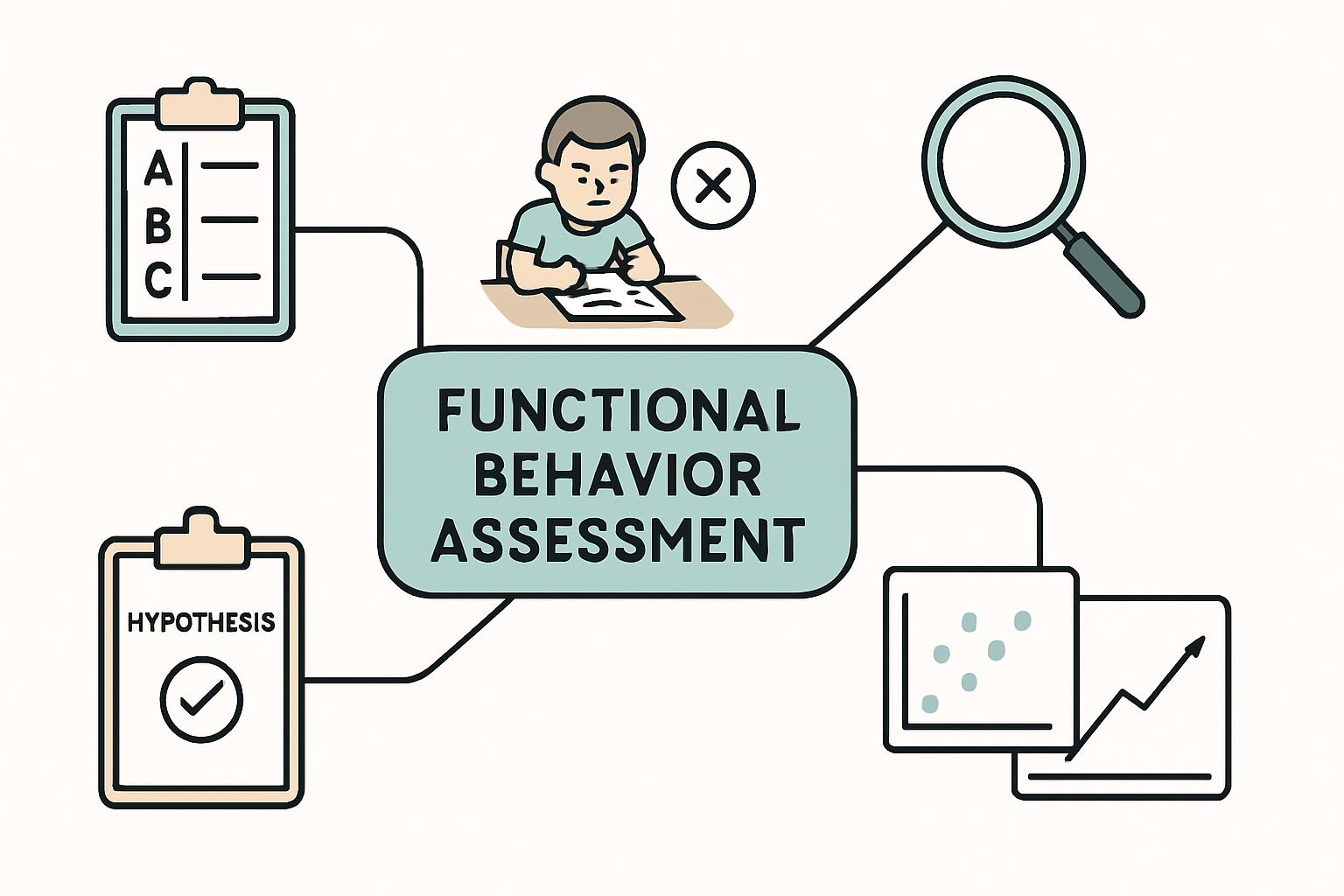
FBA Assessment on the BCBA Exam: What to Expect
The BCBA exam extensively tests FBA knowledge across multiple task list items. Understanding how questions are structured helps you prepare effectively.
Common Question Formats and Task List Alignment
FBA content aligns with several BACB Task List items, particularly in Domain B (Assessment). You’ll encounter questions testing:
- Selection of appropriate assessment methods (B-01)
- Interpretation of assessment results (B-04)
- Development of behavior intervention plans (B-06)
Typical question stems include “What is the NEXT step in the FBA process?” or “Based on the ABC data, what is the MOST likely function?” You might also need to identify which assessment component is missing from a described scenario.
Frequent Exam Traps and How to Avoid Them
Several common pitfalls trip up candidates on FBA questions:
- Confusing topography with function – Remember that the same behavior can serve different functions for different individuals
- Selecting interventions before confirming function – Always base interventions on assessment data, not assumptions
- Misinterpreting ABC data patterns – Look for consistency across observations, not isolated incidents
- Overlooking automatic reinforcement – Consider sensory consequences when social consequences don’t explain the pattern
To avoid these traps, practice with mock exam questions that test FBA application in varied contexts.
Quick-Reference FBA Checklist for Candidates
Use this checklist to ensure you’ve covered all essential FBA components:
- Conduct comprehensive indirect assessment (interviews, rating scales)
- Collect direct observation data using ABC recording
- Identify consistent antecedent-behavior-consequence patterns
- Develop clear hypotheses about function
- Consider functional analysis when descriptive data is unclear
- Synthesize data across multiple sources and methods
- Base intervention selection on identified function, not topography
- Document assessment process and rationale for conclusions
Summary and Next Steps for Mastery
Mastering Functional Behavior Assessment is essential for both ethical practice and exam success. The process moves systematically from data collection to hypothesis testing, always focusing on understanding why behaviors occur rather than just what they look like.
For further study, review the four functions of behavior and practice applying FBA concepts to diverse scenarios. The BACB website provides additional resources on assessment standards and ethical requirements.
Remember that effective FBA requires both technical skill and clinical judgment. As you prepare, focus on developing your ability to analyze patterns and make data-based decisions that lead to meaningful behavior change.


