
extinction automatically reinforced behavior: What is Extinction for Automatically Reinfor
Extinction of automatically reinforced behavior involves systematically removing or blocking the sensory consequences that maintain a behavior. Unlike socially-mediated extinction where you withhold attention or tangible items, this procedure targets behaviors maintained by their own sensory feedback.
Table of Contents
- extinction automatically reinforced behavior: What is Extinction for Automatically Reinfor
- Applied Examples: From ABC Data to Intervention
- Navigating Exam Questions and Common Pitfalls
- Implementation Checklist for Practitioners
- Key Takeaways for Your BCBA Study Plan
This approach is particularly relevant to BACB Task List items, especially those addressing intervention implementation based on consequence modification. Understanding this distinction is crucial for effective clinical practice and exam success.
Defining Automatic Reinforcement and the Extinction Process
Automatic reinforcement occurs when behavior produces its own reinforcing consequences without social mediation. The reinforcement comes from the sensory experience itself – visual, auditory, tactile, or other sensory feedback.
Extinction in this context means preventing access to these sensory consequences. This could involve physical barriers, environmental modifications, or other interventions that block the reinforcing sensory feedback.
Why This Procedure is Critical for BCBA Candidates
Mastering this concept directly relates to BACB Task List items like G-14, which requires implementing interventions based on modification of antecedents and consequences. The complexity arises because you’re not simply withholding social reinforcement but physically blocking sensory access.
This topic frequently appears on exams because it tests your ability to distinguish between different behavioral functions and select appropriate intervention strategies. For more on behavioral functions, see our guide on the four functions of behavior.
Applied Examples: From ABC Data to Intervention
Real-world application requires moving from assessment data to targeted intervention. Here are practical scenarios demonstrating how to implement extinction for automatically reinforced behaviors.
Example 1: Hand Flapping for Visual Stimulation
ABC data shows hand flapping occurs most frequently during quiet activities when the individual is alone. The behavior produces visual stimulation from hand movement.
- Hypothesis: Automatic positive reinforcement (visual)
- Extinction procedure: Wearing opaque gloves or sitting in dimly lit environments
- Ethical considerations: Monitor for extinction burst and ensure alternative sensory activities are available
- Safety precautions: Gradual implementation with reinforcement of alternative behaviors
Example 2: Skin Picking for Tactile Stimulation
Data indicates skin picking increases during periods of low stimulation, with the individual appearing focused on the tactile sensation rather than social consequences.
- Hypothesis: Automatic positive reinforcement (tactile)
- Extinction procedure: Protective mittens or bitter-tasting nail solutions as barriers
- Medical consultation: Essential before implementation to address potential skin damage
- Replacement behaviors: Provide alternative tactile stimulation like stress balls or textured objects
Example 3: Vocal Stereotypy for Auditory Feedback
Vocalizations occur consistently regardless of social context, suggesting the behavior is maintained by the auditory feedback it produces.
- Hypothesis: Automatic positive reinforcement (auditory)
- Extinction procedure: Noise-canceling headphones to block self-produced sounds
- Key distinction: This is extinction, not masking – the consequence (auditory feedback) is prevented
- Implementation: Pair with functional communication training for appropriate vocalizations
Navigating Exam Questions and Common Pitfalls
BCBA exam questions often test your ability to correctly identify automatic reinforcement and select appropriate extinction procedures. Understanding common traps can improve your exam performance.
Trap 1: Confusing Automatic with Socially-Mediated Reinforcement
Exam scenarios often describe behaviors occurring when no one is present. Candidates must recognize this as a key indicator of automatic function. Choosing ‘ignore the behavior’ as an extinction plan would be incorrect since social attention isn’t maintaining the behavior.
Look for clues like: behavior occurs in isolation, continues despite social consequences, or produces obvious sensory feedback. For more on reinforcement types, review our automatic reinforcement guide.
Trap 2: Overlooking the Extinction Burst and Ethical Safeguards
Extinction bursts are particularly concerning with automatically reinforced behaviors because they can lead to increased intensity or novel dangerous behaviors. Exam questions test whether you would include safety measures.
- Extinction burst: Temporary increase in behavior frequency or intensity
- Safety precautions: Physical barriers, close monitoring, medical consultation
- Concurrent interventions: Always pair extinction with reinforcement-based strategies
- Ethical considerations: Client dignity and least restrictive alternatives
Trap 3: Misidentifying the Sensory Modality
To apply extinction correctly, you must identify exactly what sensory consequence is reinforcing the behavior. The blocking method must match the sensory modality.
- Visual behaviors: Require visual blocking (gloves, dim lighting)
- Auditory behaviors: Need auditory blocking (headphones, ear protection)
- Tactile behaviors: Demand tactile barriers (mittens, protective coverings)
- Assessment accuracy: Functional analysis is essential for correct identification
Implementation Checklist for Practitioners
This actionable checklist summarizes key steps for implementing extinction procedures for automatically reinforced behaviors in clinical practice.
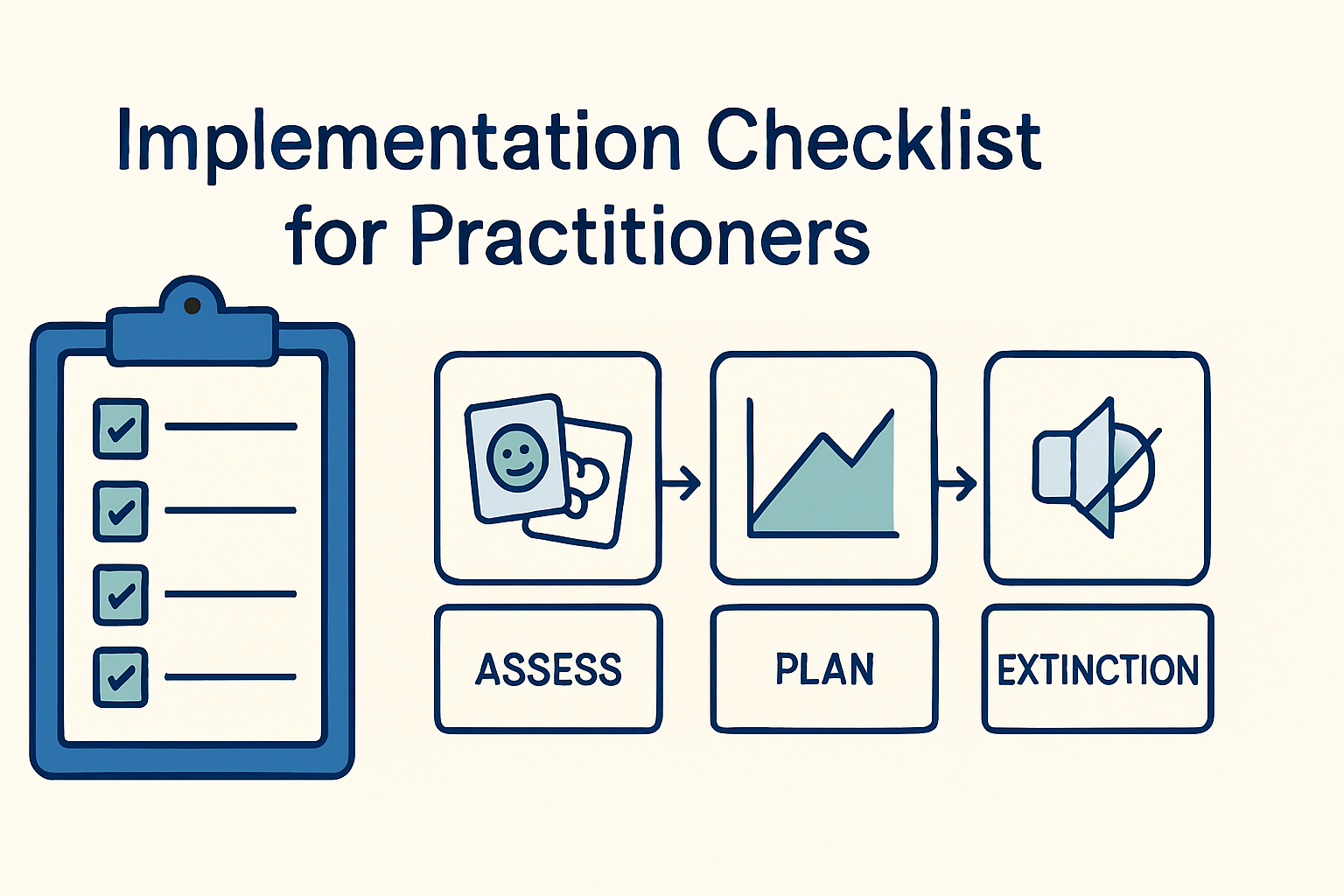
- Conduct thorough assessment: Complete functional analysis to confirm automatic reinforcement
- Identify sensory modality: Determine whether visual, auditory, tactile, or other sensory feedback maintains behavior
- Select appropriate barrier: Choose physical or environmental modifications that block the specific sensory consequence
- Develop safety plan: Address potential extinction bursts and ensure client protection
- Implement reinforcement concurrently: Pair extinction with differential reinforcement of alternative behaviors
- Monitor closely: Track frequency, intensity, and any novel behaviors during implementation
- Adjust as needed: Modify procedures based on data and client response
- Document thoroughly: Record procedures, outcomes, and any necessary modifications
Key Takeaways for Your BCBA Study Plan
Understanding extinction of automatically reinforced behavior requires integrating several key concepts from the BACB Task List. Focus on these critical areas for exam preparation and clinical competence.
Core Concepts to Master
- Function identification: Distinguish automatic from socially-mediated reinforcement through careful assessment
- Sensory specificity: Match extinction procedures to the exact sensory modality maintaining behavior
- Ethical implementation: Always consider safety, client dignity, and least restrictive alternatives
- Data-based decision making: Use ongoing data collection to guide intervention adjustments
Integration with Other Procedures
Extinction should never be used in isolation. Effective intervention requires combining it with other evidence-based strategies:
- Differential reinforcement: Reinforce appropriate alternative behaviors while extinguishing problematic ones
- Antecedent interventions: Modify environments to reduce motivation for the behavior
- Functional communication training: Teach appropriate ways to access sensory stimulation
- Generalization programming: Ensure skills maintain across settings and over time
For comprehensive exam preparation, integrate this topic with related areas like general extinction procedures and differential reinforcement strategies. The BACB provides additional resources on ethical implementation of behavior interventions.
Remember that successful intervention requires careful assessment, individualized planning, and ongoing data analysis. Mastery of these concepts will serve you well both on the BCBA exam and in your clinical practice.


