

Differential reinforcement of low rates (DRL) is a specialized behavior reduction procedure that targets appropriate behaviors occurring at excessive frequencies. Unlike other differential reinforcement approaches, DRL doesn’t aim to eliminate behavior completely. Instead, it teaches appropriate pacing by reinforcing only those instances that fall below a predetermined threshold.
Table of Contents
- What is Differential Reinforcement of Low Rates (DRL)?
- Applying DRL: Worked Examples for BCBA Candidates
- DRL on the BCBA Exam: Relevance and Common Traps
- Implementing DRL Effectively: A Quick Checklist
- Summary and Key Takeaways
What is Differential Reinforcement of Low Rates (DRL)?
DRL involves delivering reinforcement contingent upon a behavior occurring at or below a specified rate. The goal is reduction, not elimination, making it ideal for behaviors we want to maintain but at more manageable frequencies.
Core Definition and Goal
In DRL procedures, reinforcement is delivered only when the target behavior occurs at a rate below a pre-set criterion. This distinguishes DRL from differential reinforcement of other behavior (DRO), which reinforces the absence of behavior, and from differential reinforcement of alternative behavior (DRA), which reinforces a different behavior entirely.
The primary application is for socially appropriate behaviors that occur too frequently. Examples include appropriate question-asking, break requests, or social initiations that disrupt routines when excessive.
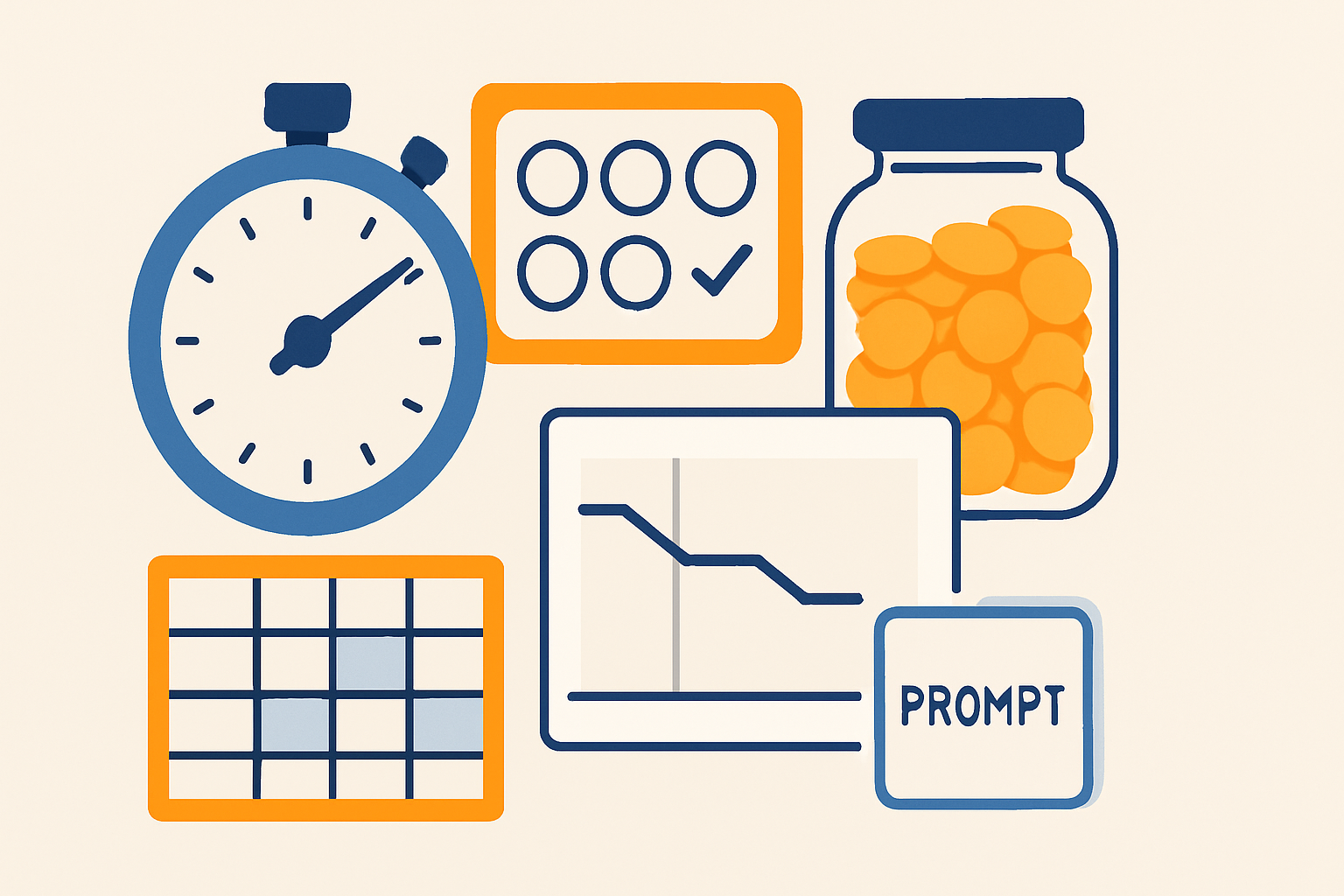
The Two Main Types: Spaced-Responding and Full-Session DRL
Behavior analysts implement two main DRL variations, each with distinct measurement approaches.
- Spaced-responding DRL requires a minimum inter-response time (IRT) between behaviors. Reinforcement follows only responses separated by this time interval.
- Full-session DRL sets a response ceiling for an entire session. Reinforcement is delivered if total responses stay at or below this limit.
- Spaced-responding targets response pacing, while full-session focuses on overall frequency reduction.
- Both types maintain the behavior’s functional value while reducing its disruptive impact.
Applying DRL: Worked Examples for BCBA Candidates
These practical scenarios demonstrate DRL implementation with complete ABC analysis and functional considerations.
Example 1: Reducing Rapid-Fire Questions in the Classroom
A student asks relevant academic questions but at excessive rates, disrupting instructional flow. The behavior serves an access function for adult attention and information.
- Antecedent: Teacher presents instructional demand or academic material
- Behavior: Student raises hand and asks content-related question
- Consequence: If IRT > 3 minutes, teacher provides praise and answer; if IRT < 3 minutes, teacher gives brief acknowledgment only
- Schedule thinning: Gradually increase required IRT to 5, then 7 minutes as student adapts
- Data collection: Track frequency and IRT to monitor progress toward criterion
Example 2: Managing Appropriate Break Requests During Work
A client appropriately requests breaks using a visual card but does so so frequently that work completion suffers. The behavior serves an escape function from task demands.
- Antecedent: Work task materials present at table
- Behavior: Client hands ‘break’ card to therapist
- Consequence: If 3 or fewer requests in 30-minute work block, access to 2-minute break; if 4+ requests, brief work continuation with neutral response
- Ethical consideration: Ensure break remains a reinforcer by monitoring preference and avoiding satiation
- Implementation note: Combine with task modification to address escape function comprehensively
DRL on the BCBA Exam: Relevance and Common Traps
Understanding DRL’s nuances is crucial for exam success and clinical competence. This procedure appears across multiple BACB Task List domains.
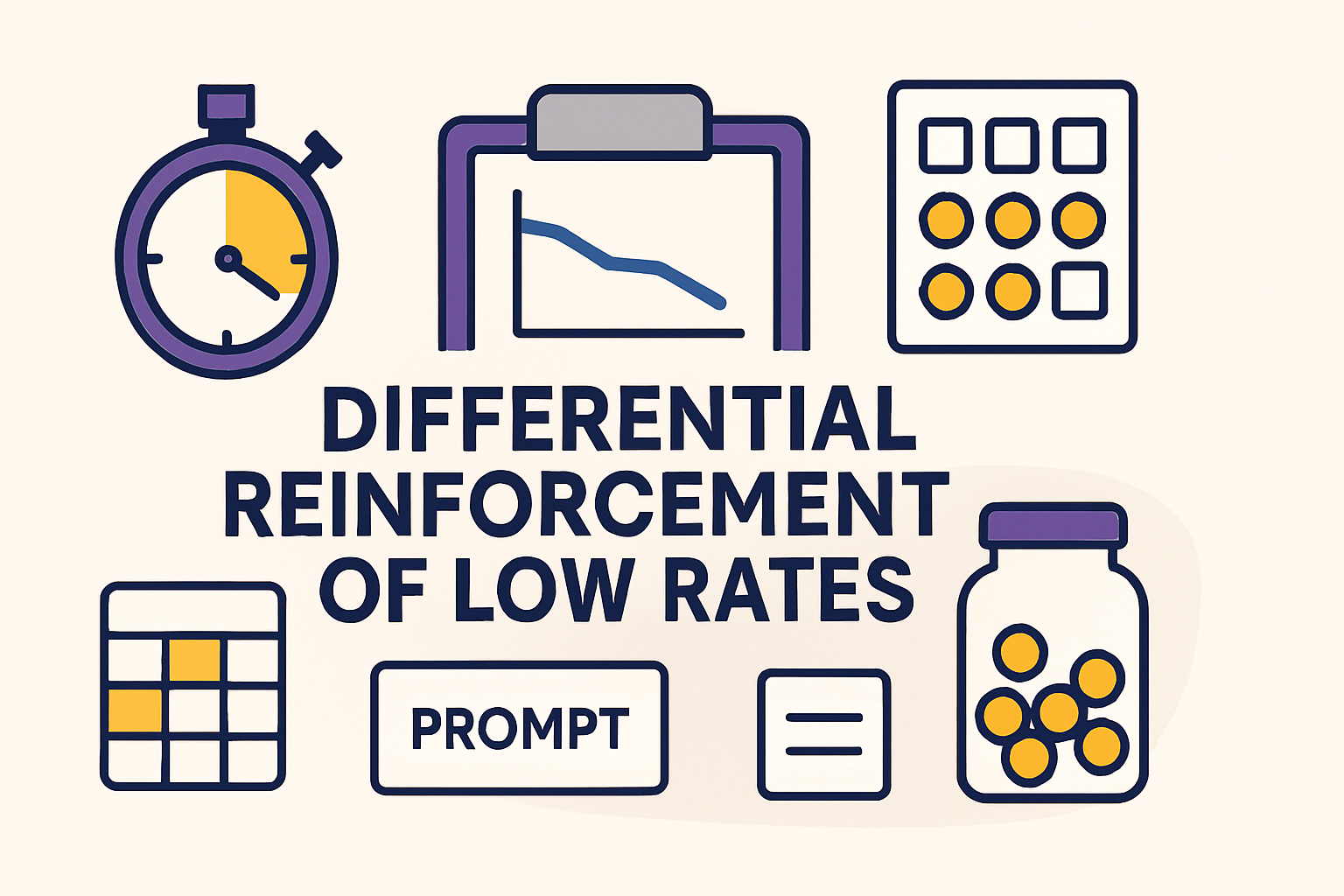
Key Exam Connections and Task List Alignment
DRL directly relates to Task List section F-3: Use differential reinforcement. It’s also relevant to behavior reduction planning and ethical implementation considerations. On the exam, DRL questions often test your ability to:
-
- Distinguish DRL from other differential reinforcement procedures
>
- Select appropriate measurement methods for spaced-responding vs. full-session DRL
- Identify when DRL is clinically appropriate versus when other procedures are needed
- Implement DRL within comprehensive behavior plans that include antecedent strategies
Frequent Misconceptions and Exam Pitfalls
Candidates commonly make these errors when applying DRL concepts:
- Confusing DRL with DRO: DRL reduces rate; DRO reinforces zero occurrences
- Selecting DRL for elimination targets: Using DRL for behaviors that should be eliminated entirely (e.g., aggression, self-injury)
- Misidentifying procedure type: Failing to distinguish spaced-responding from full-session DRL in scenario questions
- Overlooking reinforcement maintenance: Forgetting that the target behavior must still be occasionally reinforced in DRL
- Ignoring functional assessment: Implementing DRL without considering the behavior’s maintaining variables
Implementing DRL Effectively: A Quick Checklist
Follow these steps for successful DRL implementation in clinical practice:
- Conduct functional assessment to identify maintaining variables
- Establish baseline data on current response rate and patterns
- Set initial criterion slightly below baseline for achievable success
- Select reinforcement type that matches the behavior’s function
- Choose measurement method (spaced-responding or full-session) based on clinical goals
- Implement consistently across settings and staff
- Monitor progress regularly and adjust criteria as needed
- Program for generalization across people, settings, and materials
For more on differential reinforcement procedures, see our comprehensive differential reinforcement guide.
Summary and Key Takeaways
DRL is a valuable tool for reducing excessive but appropriate behaviors. Remember these essential points:
- DRL targets rate reduction, not elimination, of socially appropriate behaviors
- Two main types exist: spaced-responding DRL (minimum IRT) and full-session DRL (response ceiling)
- Always conduct functional assessment before implementation
- DRL is inappropriate for behaviors requiring complete elimination
- Successful implementation requires careful criterion setting and consistent reinforcement delivery
- Monitor both response rate and functional outcomes throughout intervention
For additional behavior reduction strategies, explore our guide on extinction procedures and functional communication training. The BCBA Test Content Outline provides official guidance on differential reinforcement requirements.


