

Differential reinforcement of incompatible behavior (DRI) is a proactive behavior reduction strategy that reinforces a specific alternative behavior that cannot occur simultaneously with the target problem behavior. This approach emphasizes ethical practice by focusing on building appropriate skills rather than simply suppressing unwanted behaviors.
Table of Contents
- What is Differential Reinforcement of Incompatible Behavior (DRI)?
- DRI in Action: Applied Examples for BCBA Candidates
- DRI on the BCBA Exam: Key Distinctions and Common Traps
- Implementing DRI: A Quick-Reference Checklist
- Summary and Key Takeaways
What is Differential Reinforcement of Incompatible Behavior (DRI)?
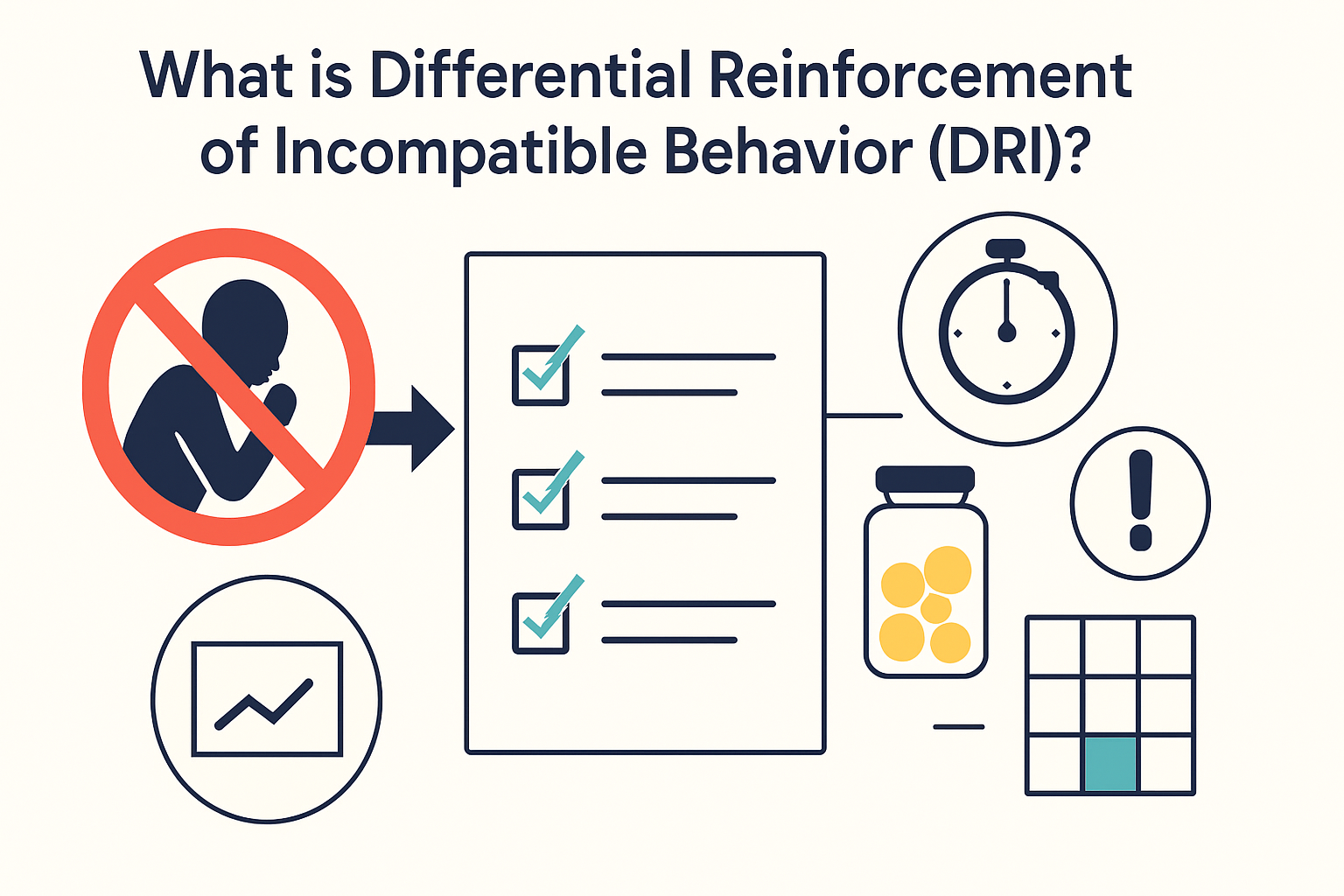
DRI involves systematically reinforcing a behavior that is physically incompatible with the target problem behavior. The incompatibility requirement means both behaviors cannot occur at the same time due to physical constraints.
The Core Definition and Mechanism
According to Cooper, Heron, and Heward, DRI involves reinforcing a behavior that cannot be performed simultaneously with the problem behavior. The key mechanism is that engaging in the incompatible behavior physically prevents the occurrence of the target behavior.
For example, if a child engages in hand mouthing, having their hands on a desk or manipulating materials is physically incompatible with bringing hands to the mouth.
DRI in the Context of Ethical Practice
DRI aligns with the BACB Ethics Code principle of prioritizing reinforcement-based approaches over punishment. This method respects client dignity by focusing on skill acquisition rather than suppression.
It represents a compassionate approach to behavior change that builds appropriate alternatives while reducing problematic behaviors through natural physical constraints.
DRI in Action: Applied Examples for BCBA Candidates
These practical examples demonstrate how DRI works in real-world scenarios, complete with ABC data analysis and implementation details.
Example 1: Reducing Hand Mouthing During Academic Work
Target behavior: Hand mouthing (bringing hands to mouth during seated work)
Hypothesized function: Automatic sensory reinforcement
Incompatible behavior: Hands flat on desk or manipulating a fidget toy
ABC Data:
- Antecedent: Independent worksheet time
- Behavior: Hand mouthing occurs approximately every 2 minutes
- Consequence: Automatic sensory stimulation maintained
DRI Intervention: Reinforce with praise and tokens every 30 seconds hands remain on desk. The physical incompatibility prevents mouthing while hands are engaged with desk surface.
Example 2: Addressing Vocal Stereotypy in a Group Setting
Target behavior: Loud vocal scripting during group instruction
Hypothesized function: Automatic auditory stimulation
Incompatible behavior: Quiet mouth closed or engaged in silent motor task
ABC Data:
- Antecedent: Teacher giving group instructions
- Behavior: Vocal stereotypy interrupts instruction
- Consequence: Automatic auditory feedback maintained
DRI Intervention: Provide social reinforcement for quiet mouth during instruction periods. Use shaping to gradually increase duration of incompatible behavior.
Example 3: Decreasing Task Avoidance Through Incompatible Engagement
Target behavior: Throwing academic materials
Hypothesized function: Escape from difficult tasks
Incompatible behavior: Hands on materials manipulating them appropriately
ABC Data:
- Antecedent: Presentation of math worksheet
- Behavior: Throws pencil and paper
- Consequence: Task removal (negative reinforcement)
DRI Intervention: Reinforce appropriate material manipulation with escape breaks contingent on engagement. This example highlights the importance of functional assessment before selecting DRI.
DRI on the BCBA Exam: Key Distinctions and Common Traps
Understanding how DRI differs from other differential reinforcement procedures is crucial for exam success. Many questions test your ability to distinguish between DRI, DRA, and DRO.
DRI vs. DRA vs. DRO: A Comparison Chart
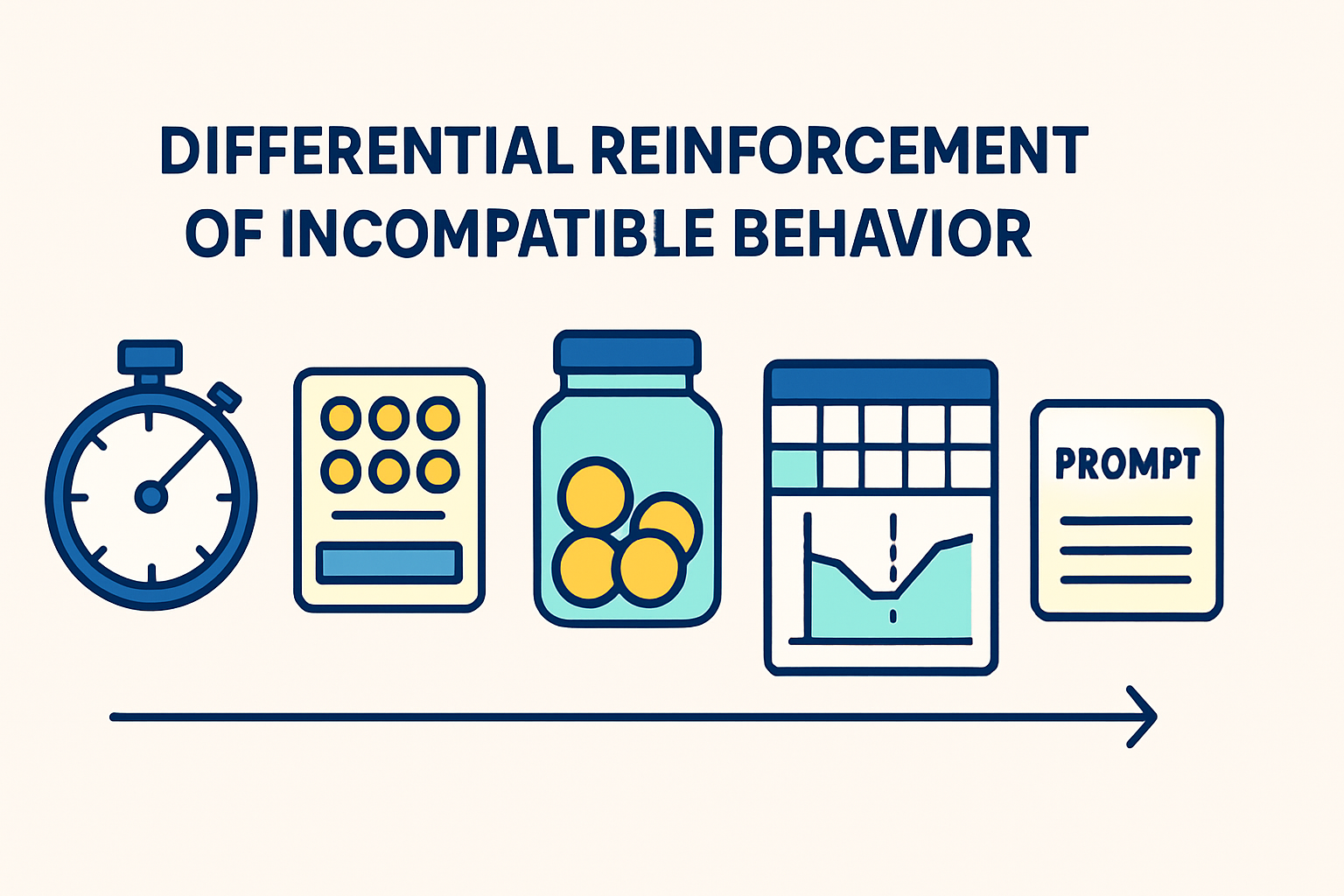
- DRI (Differential Reinforcement of Incompatible Behavior): Reinforces behavior that physically cannot occur with target behavior
- DRA (Differential Reinforcement of Alternative Behavior): Reinforces any appropriate alternative behavior, not necessarily physically incompatible
- DRO (Differential Reinforcement of Other Behavior): Reinforces absence of target behavior for specified time intervals
The defining feature of DRI is the physical impossibility of simultaneous occurrence, while DRA focuses on functionally equivalent alternatives.
Frequently Missed Exam Questions on DRI
Common exam pitfalls include confusing physical impossibility with mere difficulty, and forgetting to pair DRI with extinction.
- Trap 1: Selecting DRI when behaviors are merely difficult to perform together, not physically impossible
- Trap 2: Choosing DRI when DRA would be more appropriate (e.g., when physical incompatibility isn’t the goal)
- Trap 3: Forgetting that DRI should be combined with extinction of the problem behavior for maximum effectiveness
Implementing DRI: A Quick-Reference Checklist
Use this practical checklist when designing and implementing DRI interventions in your practice.
- Conduct functional assessment to identify maintaining variables
- Select incompatible behavior that physically prevents target behavior
- Ensure reinforcement is potent and delivered contingently
- Implement extinction for problem behavior concurrently
- Collect baseline data and monitor intervention effectiveness
- Program for generalization across settings and people
- Fade reinforcement gradually to natural maintaining contingencies
Remember that successful DRI implementation requires careful data collection and ongoing treatment integrity monitoring.
Summary and Key Takeaways
DRI is a powerful ethical intervention that builds appropriate skills while reducing problem behaviors through physical incompatibility. Key points to remember:
- DRI requires physical impossibility of simultaneous behaviors
- Always pair with extinction procedures for maximum effectiveness
- Distinguish carefully from DRA and DRO on the BCBA exam
- Implementation requires thorough functional assessment first
- Monitor social validity and client progress throughout intervention
For more information on related procedures, see our guide on differential reinforcement procedures and extinction in ABA. Additional resources can be found in the BACB Ethics Code and Cooper, Heron, and Heward’s Applied Behavior Analysis textbook.


