
What is Differential Reinforcement of High Rates (DRH)?
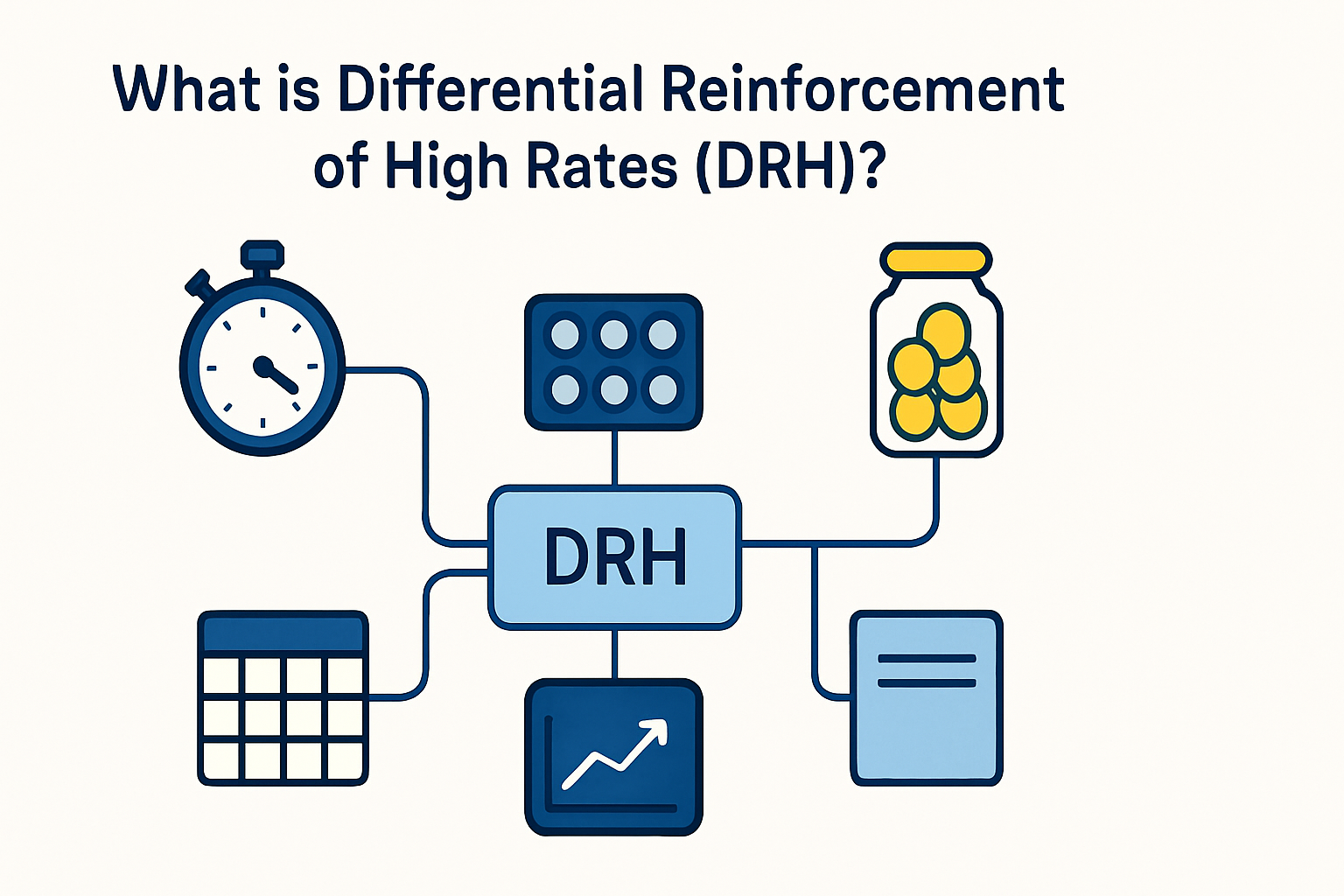
Differential Reinforcement of High Rates (DRH) is a behavioral procedure where reinforcement is delivered only when a target behavior occurs at or above a predetermined high rate criterion within a specific time period. The primary goal is to increase the frequency of an already existing behavior by setting a minimum performance standard that must be met for reinforcement to occur.
Table of Contents
- What is Differential Reinforcement of High Rates (DRH)?
- Applying DRH: Worked Examples from ABA Practice
- DRH on the BCBA Exam: What to Know and Common Traps
- Quick Checklist: Implementing and Identifying DRH
- Final Summary and Key Takeaways
The Core Definition and Goal
In DRH, you establish a baseline rate first, then set a criterion slightly above that current performance level. Reinforcement is contingent upon meeting or exceeding this minimum frequency requirement. This procedure is particularly useful for building behavioral fluency and increasing productivity in skills that already exist in the individual’s repertoire but occur at insufficient rates.
DRH vs. DRL, DRO, and DRA
Understanding how DRH differs from other differential reinforcement procedures is crucial for proper implementation and exam success:
- DRH (Differential Reinforcement of High Rates): Increases behavior frequency by reinforcing only when behavior occurs at or above a high criterion
- DRL (Differential Reinforcement of Low Rates): Decreases behavior frequency by reinforcing only when behavior occurs at or below a low criterion
- DRO (Differential Reinforcement of Other Behavior): Reinforces the absence of target behavior during specific time intervals
- DRA (Differential Reinforcement of Alternative Behavior): Reinforces a specific alternative behavior while extinguishing the target behavior
Each procedure serves distinct purposes in behavior change programming, with DRH specifically targeting rate increases rather than decreases or replacements.
Applying DRH: Worked Examples from ABA Practice
These practical examples demonstrate how DRH operates in real-world settings, complete with ABC data and implementation rationales.
Example 1: Increasing Academic Engagement
A third-grade student participates in group instruction but rarely raises his hand to answer questions. Baseline data shows he raises his hand approximately once per 10-minute session. The teacher implements DRH to increase academic responding.
- Antecedent: Teacher asks a question to the class
- Target Behavior: Student raises hand appropriately
- Consequence: Teacher provides verbal praise and allows answering only if student raises hand 3+ times in 10-minute session
- Function: Access to adult attention and peer recognition
- Criterion: Minimum of 3 hand raises per 10-minute instructional period
The reinforcement contingency is clear: meeting the frequency requirement earns the opportunity to answer and receive praise. This builds both academic engagement and classroom participation skills.
Example 2: Building Fluency in a Vocational Skill
An adult learner in a vocational training program assembles electronic components but works at a slow pace that limits productivity. Baseline data shows 8 assemblies per hour. The supervisor implements DRH to increase work rate and build vocational fluency.
- Antecedent: Workstation with components ready for assembly
- Target Behavior: Complete assembly of one electronic unit
- Consequence: 5-minute break and token only if 12+ assemblies completed per hour
- Function: Access to tangible reinforcement (break time) and escape from work demands
- Criterion: Minimum of 12 completed assemblies per 60-minute work period
This application demonstrates how DRH can build work efficiency in employment settings. The criterion is set just above baseline to ensure attainable goals while promoting gradual improvement.
DRH on the BCBA Exam: What to Know and Common Traps
Understanding DRH for exam purposes requires recognizing specific question patterns and avoiding common misconceptions that trip up candidates.
Spotting DRH in Vignettes
Exam questions often describe scenarios with specific rate requirements for reinforcement. Look for keywords like “at least X times in Y period” or “minimum number required” for reinforcement delivery. These phrases indicate a frequency criterion rather than simple occurrence reinforcement.
When analyzing vignettes, identify whether the procedure aims to increase an existing behavior’s rate (DRH) versus developing new behaviors (shaping) or decreasing rates (DRL). The presence of a pre-set minimum for reinforcement is the key differentiator.
Frequent Misconceptions and Exam Traps
- Confusing DRH with DRL: Remember DRH increases rates, DRL decreases rates. Exam questions may present similar scenarios with opposite goals
- Mistaking DRH for shaping: Shaping develops new behavior topographies through successive approximations; DRH increases frequency of existing behaviors
- Overlooking baseline requirements: DRH requires the behavior already occurs at some level; it’s not for teaching completely new skills
- Missing the rate criterion: If reinforcement isn’t contingent on a minimum frequency, it’s not DRH
- Confusing with fixed ratio schedules: FR schedules reinforce after a set number of responses regardless of time; DRH includes both number and time components
For more on differential reinforcement procedures, see our comprehensive guide on differential reinforcement types.
Quick Checklist: Implementing and Identifying DRH
Use this actionable checklist for both study and practical application:
- Establish baseline rate of target behavior through direct observation
- Set achievable criterion slightly above current performance level
- Define clear time period for measuring behavior frequency
- Program reinforcement contingency only for meeting/exceeding criterion
- Monitor progress regularly and adjust criteria as performance improves
- Ensure behavior exists in repertoire before implementing DRH
- Use appropriate measurement (rate/frequency) rather than duration or latency
- Consider function of behavior when selecting reinforcers
- Gradually increase criteria to build toward terminal goal
- Document procedures clearly for replication and analysis
Final Summary and Key Takeaways
Differential Reinforcement of High Rates is a powerful behavioral tool for increasing the frequency of existing behaviors. Its effectiveness lies in the clear contingency management between performance criteria and reinforcement delivery. For BCBA candidates, mastering DRH requires understanding both its procedural elements and how to distinguish it from similar interventions.
Remember that successful DRH implementation depends on accurate baseline assessment, appropriate criterion setting, and consistent reinforcement delivery. When studying for the exam, focus on identifying the rate requirement component that distinguishes DRH from other differential reinforcement procedures.
For additional study resources on behavioral procedures, explore our guide to the seven dimensions of ABA and learn more about reinforcement principles. The BACB’s Ethics Code provides essential guidance on ethical implementation of all behavioral procedures.


