
contextual fit ABA: What is Contextual Fit? The Core Definition for BCBAs
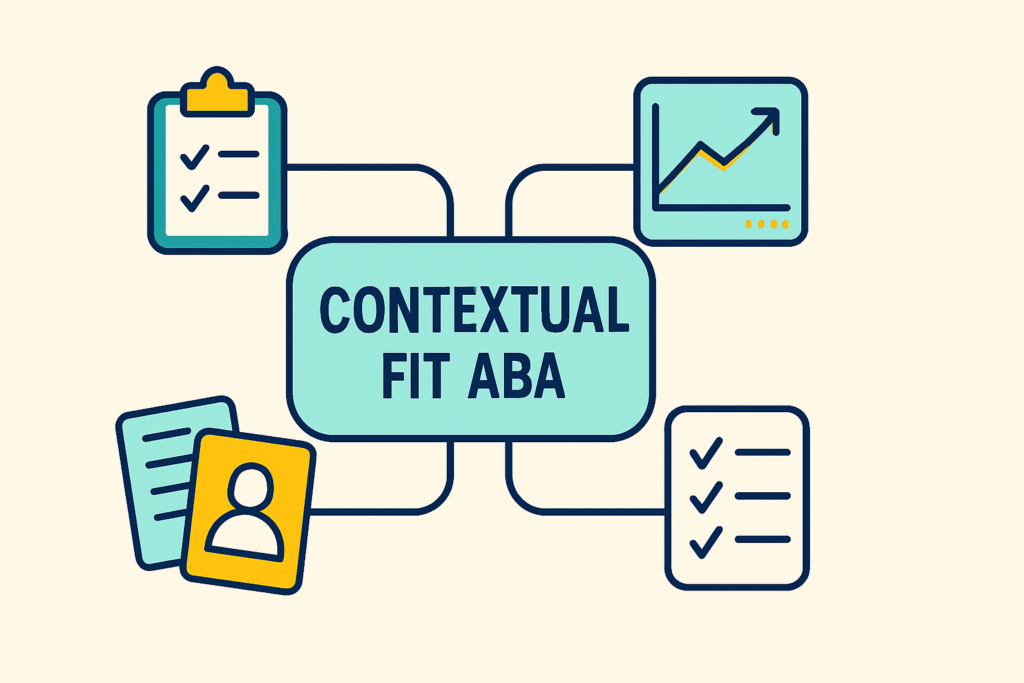
Contextual fit refers to how well an intervention aligns with the practical realities of a client’s life. This Domain H competency ensures that behavior change strategies work within real-world constraints.
Table of Contents
- contextual fit ABA: What is Contextual Fit? The Core Definition for BCBAs
- Assessing Contextual Fit: Real-World ABA Examples
- Contextual Fit on the BCBA Exam: What to Expect
- Your Quick Checklist for Evaluating Contextual Fit
- Summary: Integrating Fit into Your Professional Practice
Unlike social validity which measures stakeholder satisfaction, contextual fit focuses on practical implementation. It answers whether an intervention can actually be carried out given available resources and environmental factors.
Beyond Social Validity: The Practical Alignment
Social validity asks ‘Do stakeholders like this intervention?’ Contextual fit asks ‘Can stakeholders actually implement this intervention?’ The distinction is crucial for sustainable outcomes.
A technically perfect intervention that ignores contextual factors will fail in practice. This alignment is essential for treatment integrity and long-term success.
Key Components of a Contextually Appropriate Intervention
Effective contextual fit assessment examines multiple dimensions:
- Caregiver values and skills: Does the intervention align with family priorities and match implementer capabilities?
- Environmental constraints: Can the intervention be implemented within physical space, time, and resource limitations?
- Cultural norms: Does the intervention respect and incorporate cultural practices and beliefs?
- Client preferences: Does the intervention consider the individual’s interests and dignity?
- Available reinforcement: Are natural reinforcers accessible within the environment?
Assessing Contextual Fit: Real-World ABA Examples
Understanding contextual fit requires examining concrete scenarios. These examples illustrate how ABC data informs intervention selection based on practical realities.
Example 1: Elopement in a Busy Household
ABC data shows elopement (B) occurs during parent phone calls (A) for attention (F). A proposed intervention requires constant 1:1 blocking and physical redirection.
Poor contextual fit: The single parent works from home and cannot implement constant supervision. A better fit teaches a ‘wait’ signal with a visual timer the child can access independently.
This alternative respects the parent’s limited availability while addressing the attention function. It also promotes self-management skills appropriate for the child’s developmental level.
Example 2: Vocal Stereotypy in the Classroom
ABC data indicates vocal stereotypy (B) increases during independent work (A), likely for automatic reinforcement (F). The intervention proposes noise-canceling headphones and competing items.
Contextual fit issues: Headphones may impede instruction and create social stigma. The classroom lacks staff to manage competing items consistently.
A better fit provides a quiet fidget tool and scheduled access to preferred sensory activities. This respects classroom routines while addressing the sensory function.
Contextual Fit on the BCBA Exam: What to Expect
BCBA exam questions test your ability to select interventions based on practical implementation rather than technical perfection. Understanding Domain H requirements is essential for exam success.
Common Exam Traps and How to Avoid Them
Several patterns emerge in contextual fit questions:
- Confusing effectiveness with fit: The most effective intervention may not be the most implementable
- Overlooking caregiver skill level: Assuming all implementers have equal training and capability
- Ignoring environmental constraints: Proposing interventions that require unavailable resources
- Prioritizing technical purity: Choosing complex procedures over simpler, more sustainable options
Sample Practice Question and Rationale
A 6-year-old with autism engages in hand-flapping during transitions at school. The behavior appears to serve a self-regulatory function. Which intervention has the best contextual fit?
Options include: A) Differential reinforcement with token economy, B) Response interruption and redirection, C) Teaching deep breathing with visual cues, D) Functional communication training for break requests.
The best answer considers classroom resources, teacher training, and the child’s communication level. Option C offers the best practical implementation within typical classroom constraints.
Your Quick Checklist for Evaluating Contextual Fit
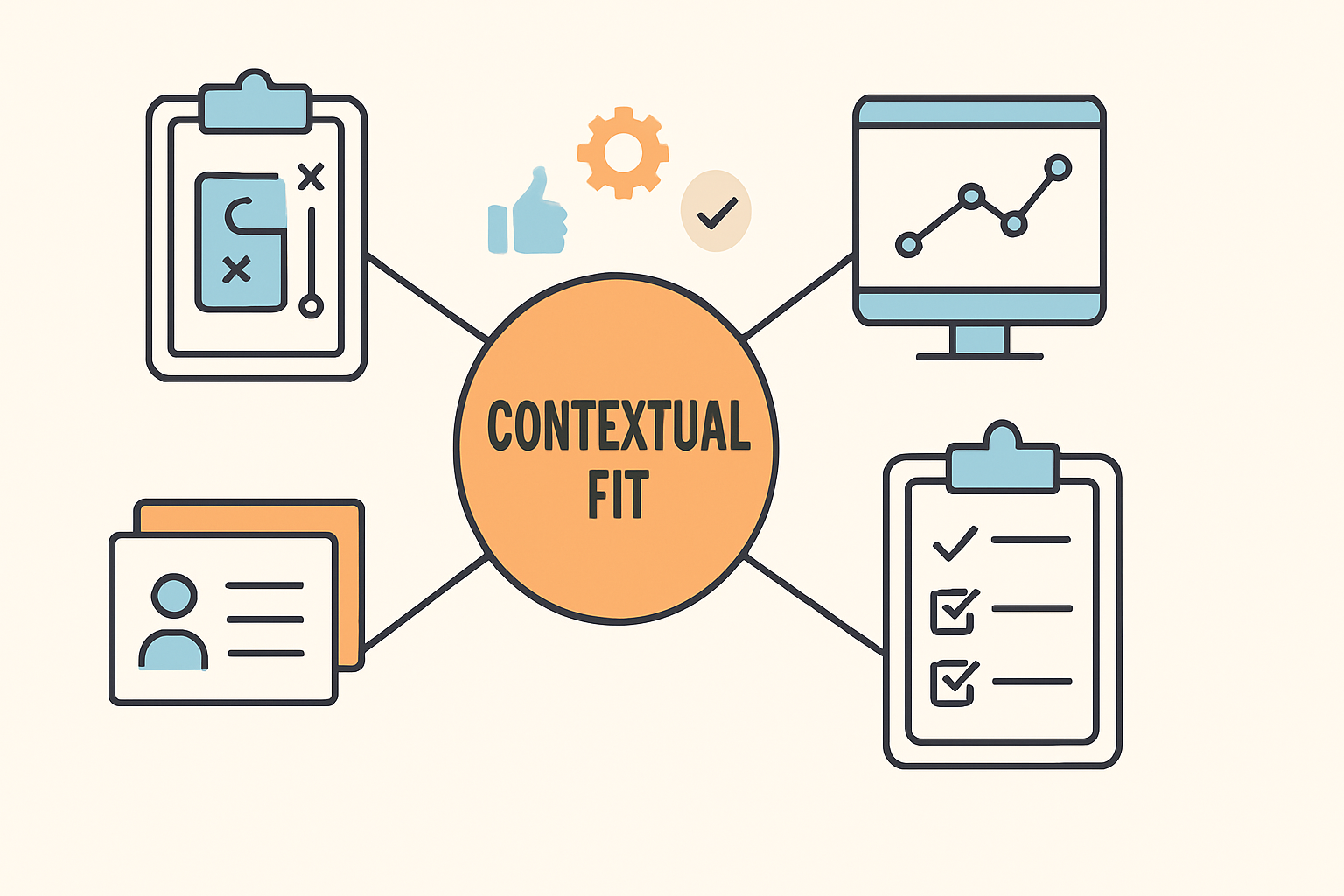
Use this actionable tool during intervention planning and BCBA exam preparation:
- Assess implementer skills: Can caregivers/staff execute procedures with available training?
- Evaluate resource availability: Are necessary materials, space, and time accessible?
- Consider cultural alignment: Does the intervention respect family values and practices?
- Check environmental compatibility: Will the intervention work within physical and social settings?
- Review sustainability: Can the intervention be maintained long-term with natural supports?
- Verify client dignity: Does the intervention respect the individual’s preferences and autonomy?
This checklist aligns with BACB ethical standards and promotes evidence-based practice that works in real-world contexts.
Summary: Integrating Fit into Your Professional Practice
Contextual fit is not an optional consideration but an ethical imperative in ABA practice. It bridges the gap between technical expertise and practical implementation.
Effective behavior analysts prioritize interventions that work within real-world constraints while maintaining therapeutic integrity. This approach respects client dignity and promotes sustainable behavior change.
Remember that contextual fit assessment is an ongoing process. As environments change and skills develop, interventions may need adjustment. Regular stakeholder feedback and data analysis ensure continued alignment.
For more on ethical implementation, see our guide to ethics in ABA practice. To understand how interventions fit within broader assessment frameworks, explore functional analysis methods. For comprehensive exam preparation, review study frameworks that incorporate contextual considerations.
External resources include the BACB Ethics Code and research on social validity in behavior analysis.


