BCBA Exam Prep

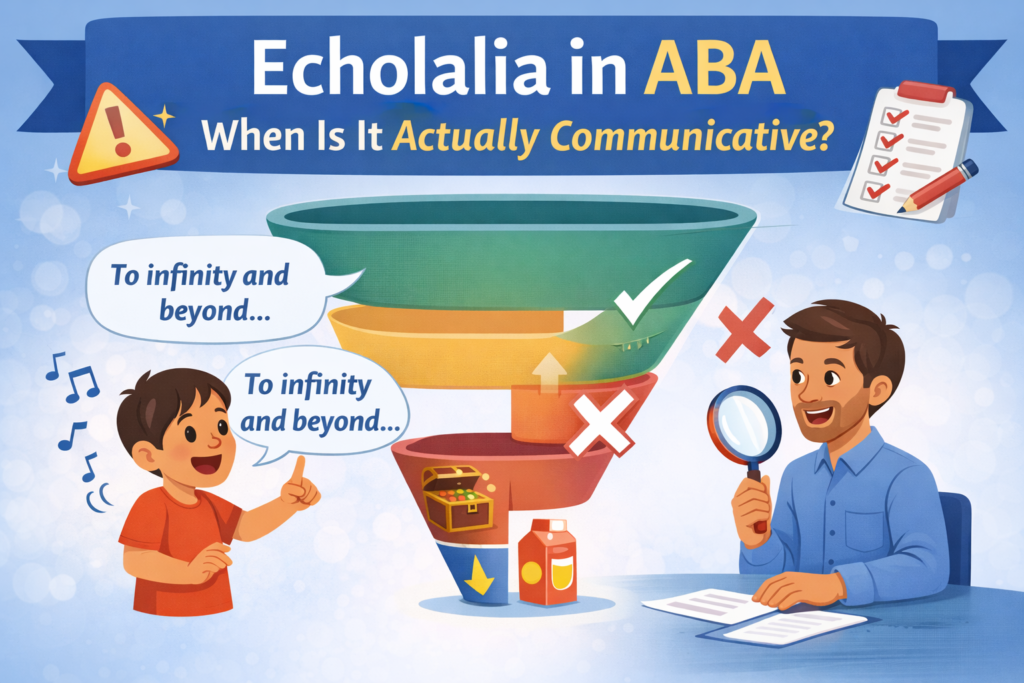
Echoic in ABA: When Does Repetition Actually Matter?

Echoic in ABA: When Does Repetition Actually Matter? Echoic behavior is often treated as one of the simplest verbal operants in ABA. For many BCBA candidates, it feels straightforward: a learner repeats what they hear, point made, move on. However, this oversimplified view is exactly why echoic-related questions quietly become easy-to-miss points on the BCBA® […]

Echoic in ABA: When Does Repetition Actually Matter? Read More »
What Is Prompt Dependency in ABA? Causes, Examples, and How to Reduce It

What Is Prompt Dependency in ABA? Causes, Examples, and How to Reduce It In Applied Behavior Analysis (ABA), prompt dependency refers to a situation in which a learner performs a target skill only when specific prompts are present and fails to do so independently when those prompts are removed. Prompt dependency is one of the

What Is Prompt Dependency in ABA? Causes, Examples, and How to Reduce It Read More »

What Are Socially Significant Behaviors in ABA? A Complete Guide for BCBA Exam Prep

What Are Socially Significant Behaviors and Why They Matter in ABA In Applied Behavior Analysis (ABA), socially significant behaviors are actions that have meaningful impact on a learner’s ability to function, communicate, and interact in daily life. These behaviors are not selected because they are easy to measure, or because they are interesting to researchers,

What Are Socially Significant Behaviors in ABA? A Complete Guide for BCBA Exam Prep Read More »

VB‑MAPP Mastery for BCBA Prep: Key Concepts, Tips, and Test Strategies

What Is the Verbal Behavior Milestones Assessment and Placement Program (VB-MAPP)? The Verbal Behavior Milestones Assessment and Placement Program (VB-MAPP) is essential for professionals seeking to understand functional communication in autism treatment programsis. It is one of the most widely used assessment tools in Applied Behavior Analysis (ABA) for evaluating and guiding language and learning

VB‑MAPP Mastery for BCBA Prep: Key Concepts, Tips, and Test Strategies Read More »

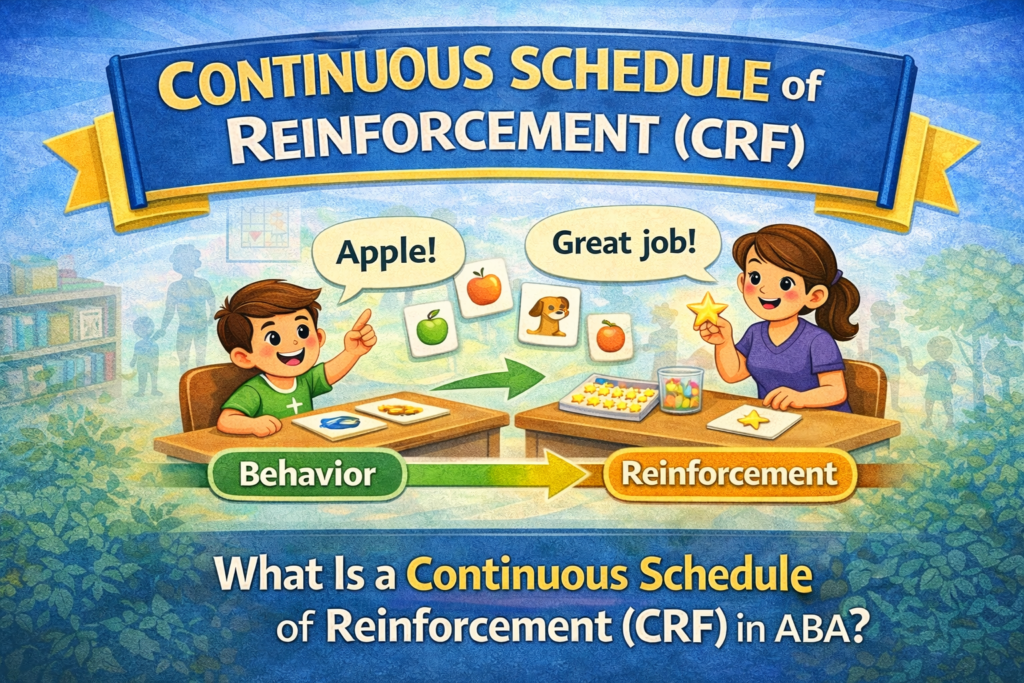
What Is a Continuous Schedule of Reinforcement (CRF) in ABA?

What Is a Continuous Schedule of Reinforcement (CRF) in ABA? A continuous schedule of reinforcement (CRF) is one of the most basic and commonly taught concepts in applied behavior analysis (ABA). It is especially important for BCBA® candidates to understand because it frequently appears in questions related to reinforcement schedules, skill acquisition, and behavior change.

What Is a Continuous Schedule of Reinforcement (CRF) in ABA? Read More »

How Consequence Affects Behavior in ABA: A Practical Guide

How Consequences Affects Behavior in ABA: A Practical Guide In applied behavior analysis (ABA), consequences plays a crucial role in shaping behavior. A consequence is any event or stimulus that follows a behavior and influences whether that behavior will occur again in the future. Understanding how a consequence works in ABA is critical for both

How Consequence Affects Behavior in ABA: A Practical Guide Read More »

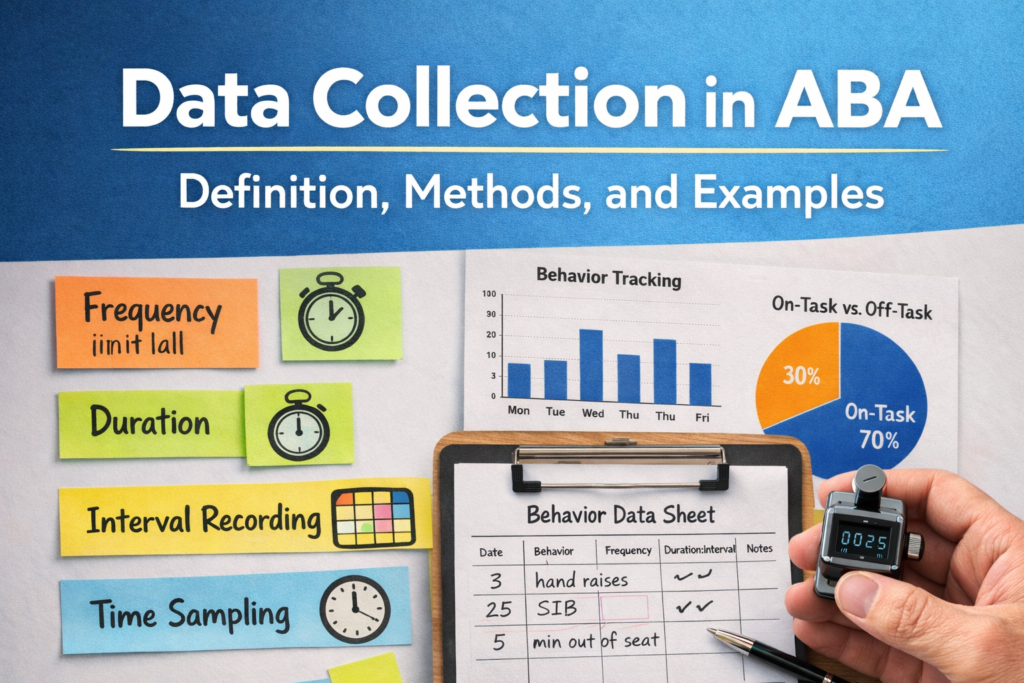
Data Collection in ABA: Definition, Methods, and Examples

Data Collection in ABA: Definition, Methods, and Examples Data collection is a cornerstone of applied behavior analysis (ABA). It is used to track and measure behaviors, monitor progress, and inform decision-making about interventions. Whether you are preparing for the BCBA exam or working as a behavior analyst, understanding data collection methods is crucial for effective

Data Collection in ABA: Definition, Methods, and Examples Read More »

ABA Preference Assessments: A Practical Guide to Finding Powerful Reinforcers (and Acing BCBA Questions)

ABA Preference Assessments: A Practical Guide to Finding Powerful Reinforcers (and Acing BCBA Questions)

A child reaches for the same spinning toy again, then ignores it tomorrow. A teen says they “don’t care” about rewards, but lights up when they get to control the playlist. ABA preference assessments exist for this exact problem: preferences shift, and our guesses are often wrong. So how do you identify what someone actually wants to work for—quickly, ethically, and in a way that hol

ABA Preference Assessments: A Practical Guide to Finding Powerful Reinforcers (and Acing BCBA Questions) Read More »

Fine Motor Skills in ABA: Definition, Development, and Teaching Strategies

What Are Fine Motor Skills? Fine motor skills refer to the small, precise movements of the hands, fingers, wrists, and sometimes toes, needed to perform tasks like writing, buttoning a shirt, using scissors, or picking up small items. These skills involve coordination between the brain and the muscles, especially in the fingers and hands. They

Fine Motor Skills in ABA: Definition, Development, and Teaching Strategies Read More »