
The BACB Task List serves as the official blueprint for the BCBA certification examination. This comprehensive document outlines every knowledge area and skill competency that candidates must master to demonstrate professional readiness. Understanding its structure and application transforms abstract concepts into actionable study targets.
Table of Contents
- What is the BACB Task List? The Blueprint for Your Exam
- From Theory to Practice: How Task List Items Appear on the Exam
- Building Your Study Plan Around the BACB Task List
- Key Takeaways and Next Steps for Your Preparation
What is the BACB Task List? The Blueprint for Your Exam
The Behavior Analyst Certification Board publishes this essential document to standardize professional competencies across the field. It represents the minimum requirements for safe, effective practice as a Board Certified Behavior Analyst.
Structure and Organization: Domains, Sections, and Items
The Task List follows a hierarchical structure that organizes content logically. At the highest level, Domains represent major content areas like Assessment or Intervention. Each Domain contains multiple Sections that break down broader topics into manageable components.
Within Sections, specific Task List items detail exact competencies. For example, under Domain 4: Intervention, you might find Section 4.2: Implement Behavior-Change Procedures, containing items like “Use positive and negative reinforcement procedures appropriately.” This precise structure ensures comprehensive coverage of all necessary skills.
Why the Task List is Your Most Important Study Tool
Every examination question directly corresponds to at least one Task List item. The BACB examination blueprint uses this document to determine question distribution across content areas. By mastering each item, you systematically prepare for the entire exam scope.
This document also helps identify knowledge gaps before they become exam weaknesses. When you encounter challenging concepts in your BCBA mock exams, you can trace them back to specific Task List items for targeted review.
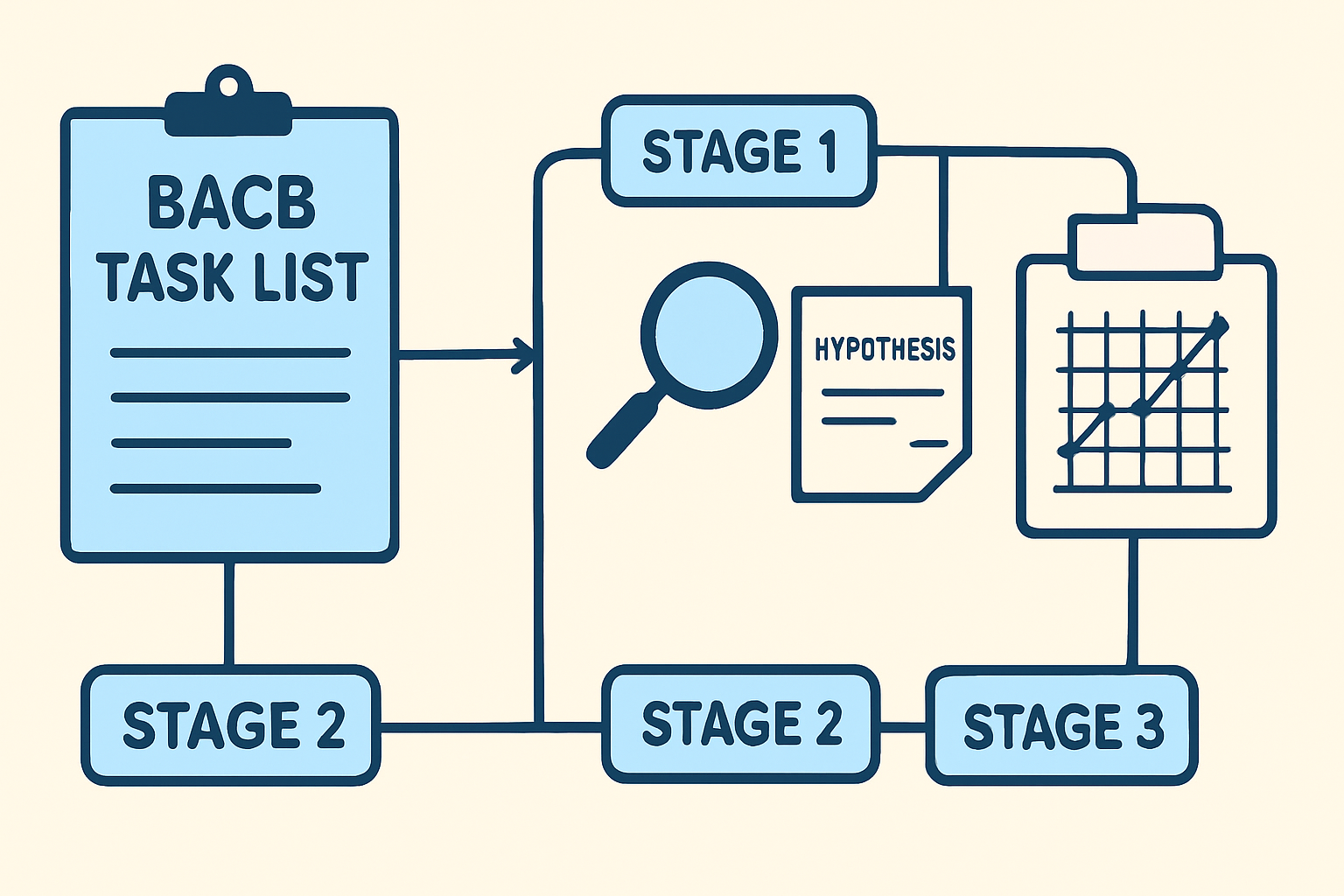
From Theory to Practice: How Task List Items Appear on the Exam
Understanding how abstract competencies translate into exam questions is crucial. The examination tests applied knowledge rather than rote memorization of definitions.
Example 1: Assessment – Conducting a Functional Behavior Assessment (FBA)
Consider a scenario where a student engages in disruptive classroom behavior. The Task List item “Conduct descriptive assessments” might be tested through questions about interpreting ABC data. You might analyze data showing that disruptive behavior consistently occurs during difficult math tasks and results in task removal.
The correct analysis would identify escape-maintained behavior through functional assessment procedures. This demonstrates how the exam evaluates your ability to apply assessment principles to real situations, not just recall definitions.
Example 2: Intervention – Implementing Differential Reinforcement
Imagine a client whose attention-seeking behavior interferes with social interactions. The relevant Task List items cover differential reinforcement procedures and behavior reduction strategies. A question might present data showing high rates of inappropriate attention-seeking and ask you to design an appropriate intervention.
Your response should demonstrate understanding of Differential Reinforcement of Alternative Behavior (DRA), including identifying an appropriate replacement behavior, establishing reinforcement schedules, and monitoring effectiveness. Each step connects directly to specific Task List competencies.
Common Exam Traps Related to Task List Application
Several recurring patterns trip up candidates who haven’t fully integrated Task List understanding:
- Confusing similar procedures like DRA vs. DRO or positive vs. negative punishment
- Misidentifying behavioral function from presented data, leading to inappropriate intervention selection
- Selecting interventions that violate ethical guidelines outlined in the Task List’s professional conduct sections
- Overlooking measurement requirements when implementing behavior-change procedures
These traps often stem from superficial understanding rather than deep mastery of Task List items. For more on ethical considerations, review our guide on ethics in ABA practice.
Building Your Study Plan Around the BACB Task List
A strategic approach transforms the Task List from a reference document into an active study tool. This systematic method ensures comprehensive preparation.
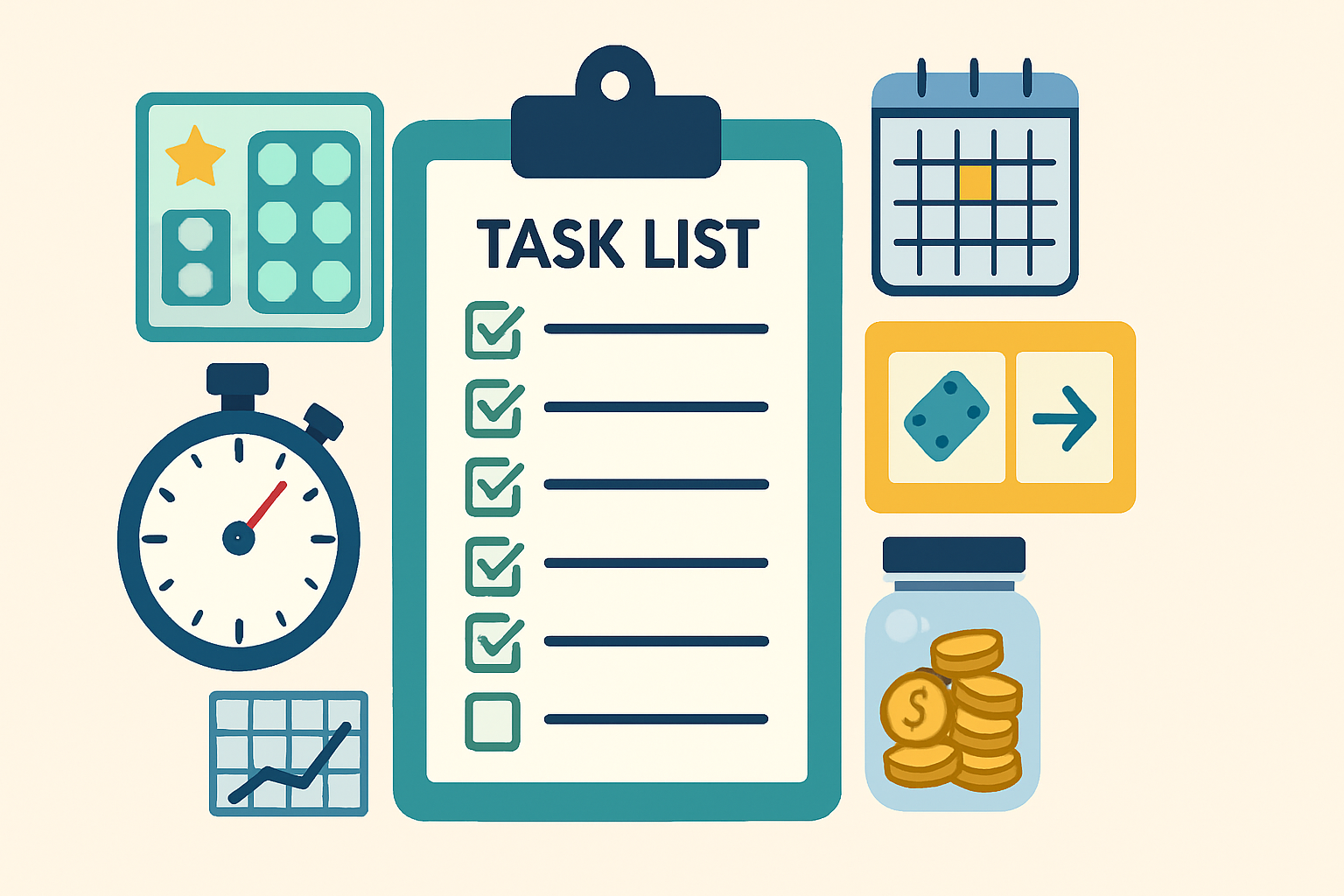
The Self-Assessment Checklist: Identifying Your Knowledge Gaps
Create a personalized tracking system to monitor your progress through each Task List item. This approach provides objective feedback about your preparation status.
- Rate your confidence on each Domain using a three-point scale: Mastered, Developing, or Needs Review
- Identify high-weightage sections that appear more frequently on the exam
- Track time allocation based on your self-assessment ratings
- Schedule regular review sessions for items rated as Developing or Needs Review
- Document progress over time to maintain motivation and adjust study intensity
Linking Study Materials to Specific Content Areas
Organize your resources according to Task List structure for maximum efficiency. This creates direct connections between study materials and exam content.
When reviewing textbook chapters or practice questions, note which Task List items they address. Create a cross-reference system that allows you to quickly locate materials for specific competencies needing reinforcement.
This method ensures you’re not just studying randomly but targeting specific knowledge gaps identified through your self-assessment. For foundational concepts, our guide on the 7 dimensions of ABA provides essential background.
Key Takeaways and Next Steps for Your Preparation
The BACB Task List represents more than just an exam outline—it’s the foundation of professional competency. Mastering its content ensures both examination success and clinical effectiveness.
Begin by downloading the current Task List from the BACB website. Create your self-assessment checklist and identify 2-3 priority areas for immediate study. Integrate Task List review into your regular study sessions, using it to guide both content selection and self-evaluation.
Remember that true mastery comes from applied understanding, not just memorization. Practice applying Task List items to varied scenarios, and regularly test your knowledge through mock examinations that mirror the actual test structure. This comprehensive approach transforms the Task List from a daunting document into your most valuable preparation tool.



