
What is a Simple Functional Behavior Assessment Form?
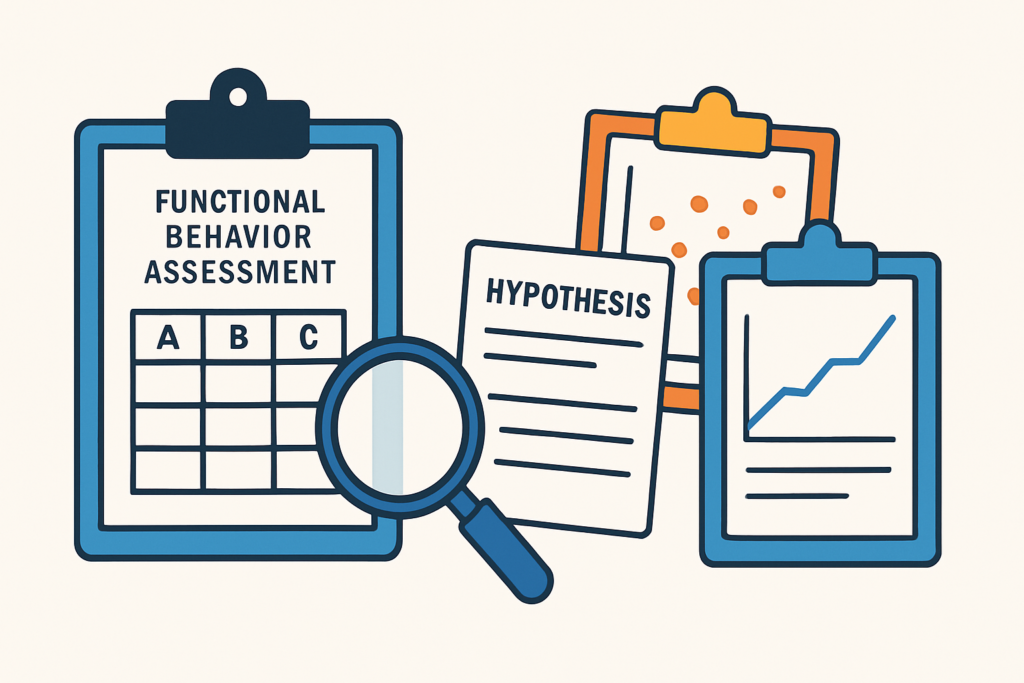
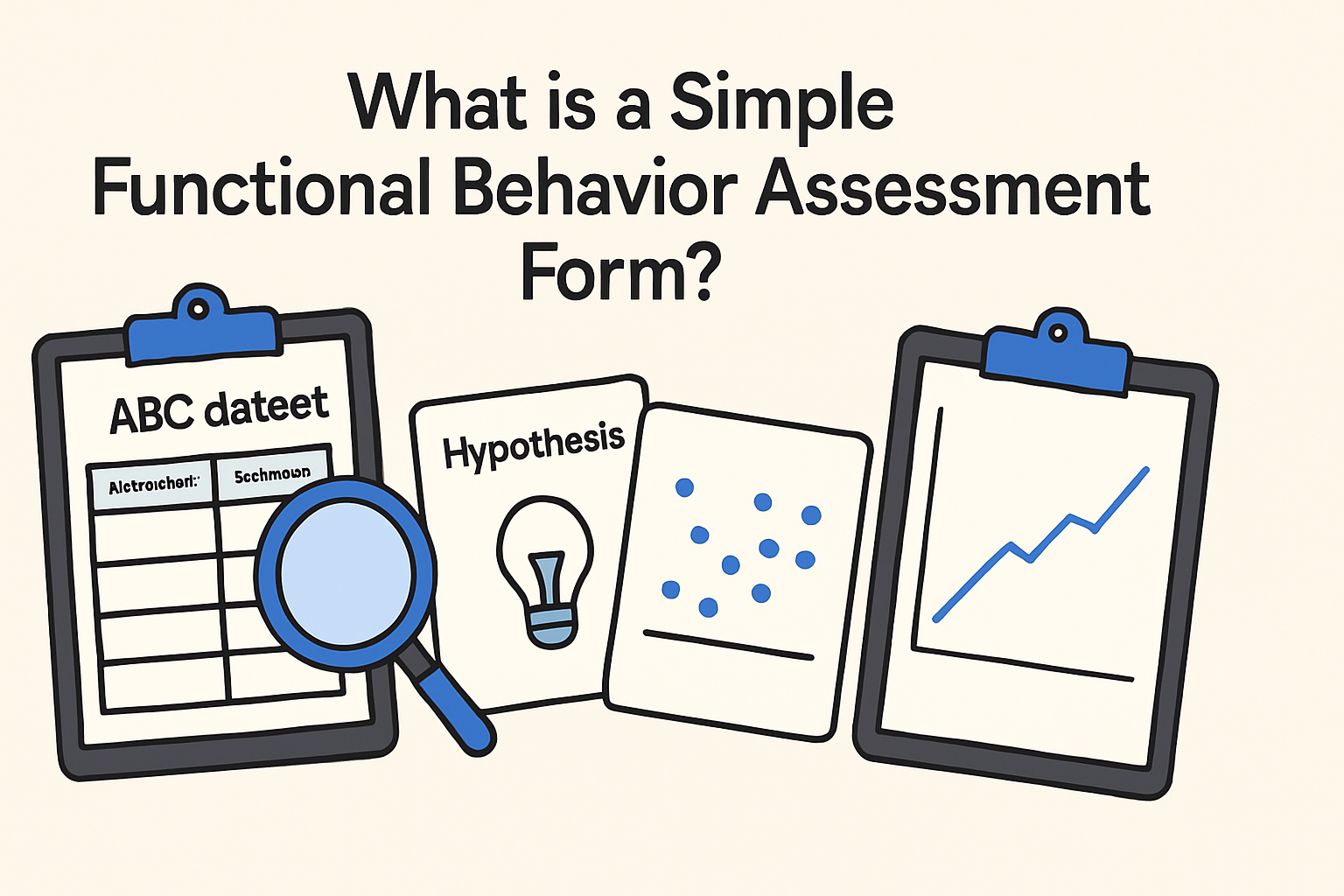
A simple functional behavior assessment form is a structured tool that helps behavior analysts systematically collect and organize data about challenging behaviors. This practical instrument captures the essential elements needed to identify behavioral functions while maintaining efficiency in clinical and educational settings.
Table of Contents
- What is a Simple Functional Behavior Assessment Form?
- From Form to Function: Worked ABA Examples
- Exam Relevance and Common Candidate Traps
- Your Quick FBA Form Checklist
- Summary: Mastering Assessment for Intervention
The form serves as the foundation for developing effective function-based interventions by providing clear documentation of behavioral patterns.
Core Components of an Effective FBA Form
Every effective FBA form includes several critical sections that guide systematic data collection:
- Operational Definition: A clear, objective description of the target behavior that allows for reliable measurement and observation.
- Antecedent Conditions: Environmental events or stimuli that immediately precede the behavior, including specific triggers and contextual factors.
- Behavior Description: Detailed recording of the behavior’s topography, intensity, duration, and frequency using measurable terms.
- Consequence Analysis: Immediate environmental changes following the behavior that may serve as reinforcement or punishment.
- Setting Events: Broader contextual factors that influence behavioral probability, such as sleep deprivation, medication changes, or recent transitions.
- Measurable Dimensions: Quantitative data on frequency, duration, latency, and intensity that supports objective analysis.
From Form to Function: Worked ABA Examples
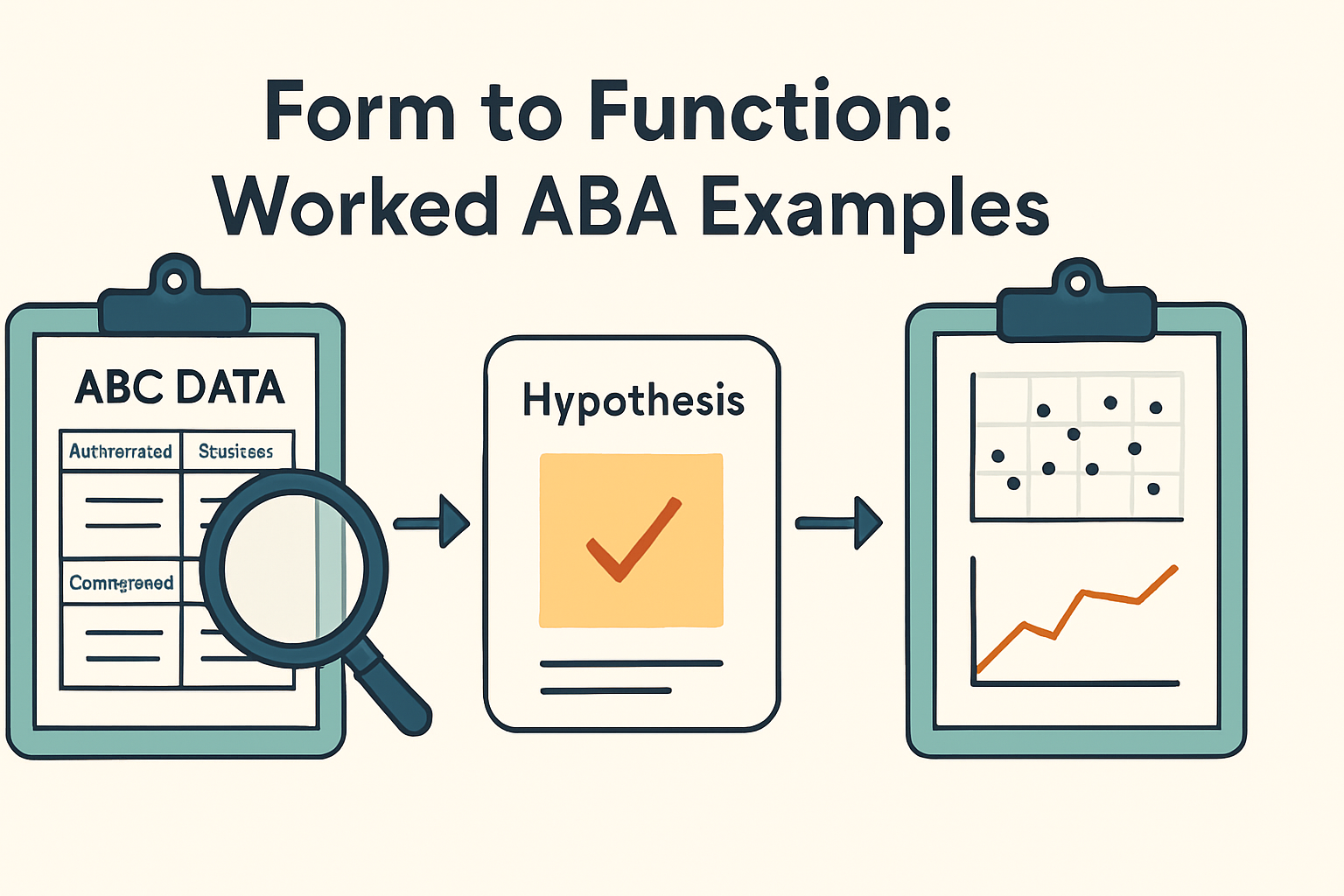
Understanding how to translate form data into functional hypotheses is crucial for both practice and exam success. These examples demonstrate the practical application of FBA forms.
Example 1: Escape-Maintained Behavior in a Classroom
Consider a student who engages in elopement behavior during math instruction. The completed FBA form reveals consistent patterns:
- Antecedent: Teacher presents a worksheet with multi-digit division problems
- Behavior: Student stands up, walks to classroom door, attempts to exit (elopement lasting 2-5 minutes)
- Consequence: Teacher redirects student to hallway, worksheet is removed
- Setting Event: Student missed breakfast, math is most challenging subject
The pattern suggests an escape function – the behavior consistently results in removal of the difficult task. This hypothesis aligns with the negative reinforcement paradigm where behavior increases to terminate aversive stimuli.
Example 2: Attention-Seeking Behavior at Home
A child engages in loud vocalizations during parent phone conversations. The FBA form data shows:
- Antecedent: Parent answers phone, begins conversation with another adult
- Behavior: Child yells “Mom!” repeatedly at high volume (average 8 instances per call)
- Consequence: Parent pauses conversation, says “Not now,” makes eye contact
- Setting Event: Child has been playing independently for 30 minutes prior
This pattern indicates an attention function, specifically access to adult attention. The behavior is maintained by positive reinforcement through social interaction, even when that interaction includes reprimands.
Exam Relevance and Common Candidate Traps
FBA forms directly relate to several critical areas of the BCBA Task List, particularly in the assessment domain. Understanding these connections helps candidates approach exam questions strategically.
Linking Form Data to the Task List (B-01, B-02, B-03)
The components of an FBA form map directly to specific Task List items:
- B-01: Conduct preference assessments – Setting events section should consider deprivation states affecting reinforcement value
- B-02: Assist with individualized assessment procedures – The entire form structure supports systematic data collection
- B-03: Assist with functional assessment procedures – ABC data collection forms the core of functional assessment
- B-04: Design and implement the full range of functional assessment procedures – Simple forms often serve as initial descriptive assessments
For more on assessment fundamentals, see our guide on assessment in ABA.
Top 3 Mistakes on FBA-Related Exam Items
Candidates frequently encounter these pitfalls when answering FBA questions:
- Confusing topography with function – Describing what behavior looks like rather than why it occurs
- Selecting interventions prematurely – Choosing treatments before confirming the functional hypothesis through additional assessment
- Overlooking setting events – Focusing only on immediate antecedents while missing broader contextual influences
- Misinterpreting consequence data – Assuming all attention functions as positive reinforcement without considering escape components
Your Quick FBA Form Checklist
Use this actionable checklist when reviewing FBA scenarios on the exam or in practice:
- Verify operational definition – Is the behavior described objectively and measurably?
- Check antecedent specificity – Are triggers clearly identified with environmental details?
- Analyze consequence patterns – What consistently follows the behavior across observations?
- Consider setting events – Are broader contextual factors documented?
- Look for consistency – Does the pattern hold across multiple observations?
- Formulate testable hypothesis – Can the proposed function be confirmed through manipulation?
- Connect to intervention – Does the hypothesis logically lead to function-based treatment?
For additional assessment strategies, explore our resource on functional analysis vs descriptive assessment.
Summary: Mastering Assessment for Intervention
The simple functional behavior assessment form represents more than just a data collection tool – it’s the foundation for ethical, effective behavior support. By mastering this instrument, practitioners ensure their interventions target the true function of behavior rather than merely addressing topography.
Effective use of FBA forms requires attention to detail in data collection, systematic analysis of patterns, and careful hypothesis development. These skills directly translate to exam success and, more importantly, to meaningful client outcomes in practice.
Remember that the BACB emphasizes evidence-based assessment practices, and simple FBA forms provide the structured approach needed to meet these standards while maintaining clinical efficiency. For comprehensive behavior function analysis, refer to our guide on the four functions of behavior.
For authoritative guidance on assessment standards, consult the BACB Ethics Code and research on functional assessment methodologies in peer-reviewed literature.


