

Understanding independent, dependent, and controlled variables forms the foundation of experimental design in applied behavior analysis. These concepts allow practitioners to establish functional relationships between interventions and behavioral outcomes while maintaining experimental rigor. Mastery of these variables is essential for both effective practice and success on the BCBA examination.
Table of Contents
- Independent Dependent Controlled variables: Core Definitions: What Are Independent, Depend
- Applied Examples: Identifying Variables in ABA Scenarios
- Exam Relevance and Common Testing Pitfalls
- Quick-Reference Checklist and Summary
Independent Dependent Controlled variables: Core Definitions: What Are Independent, Depend
In behavior analysis, variables represent the building blocks of experimental investigation. Each type serves a distinct purpose in establishing cause-and-effect relationships.
The Independent Variable (IV): The Intervention or Manipulation
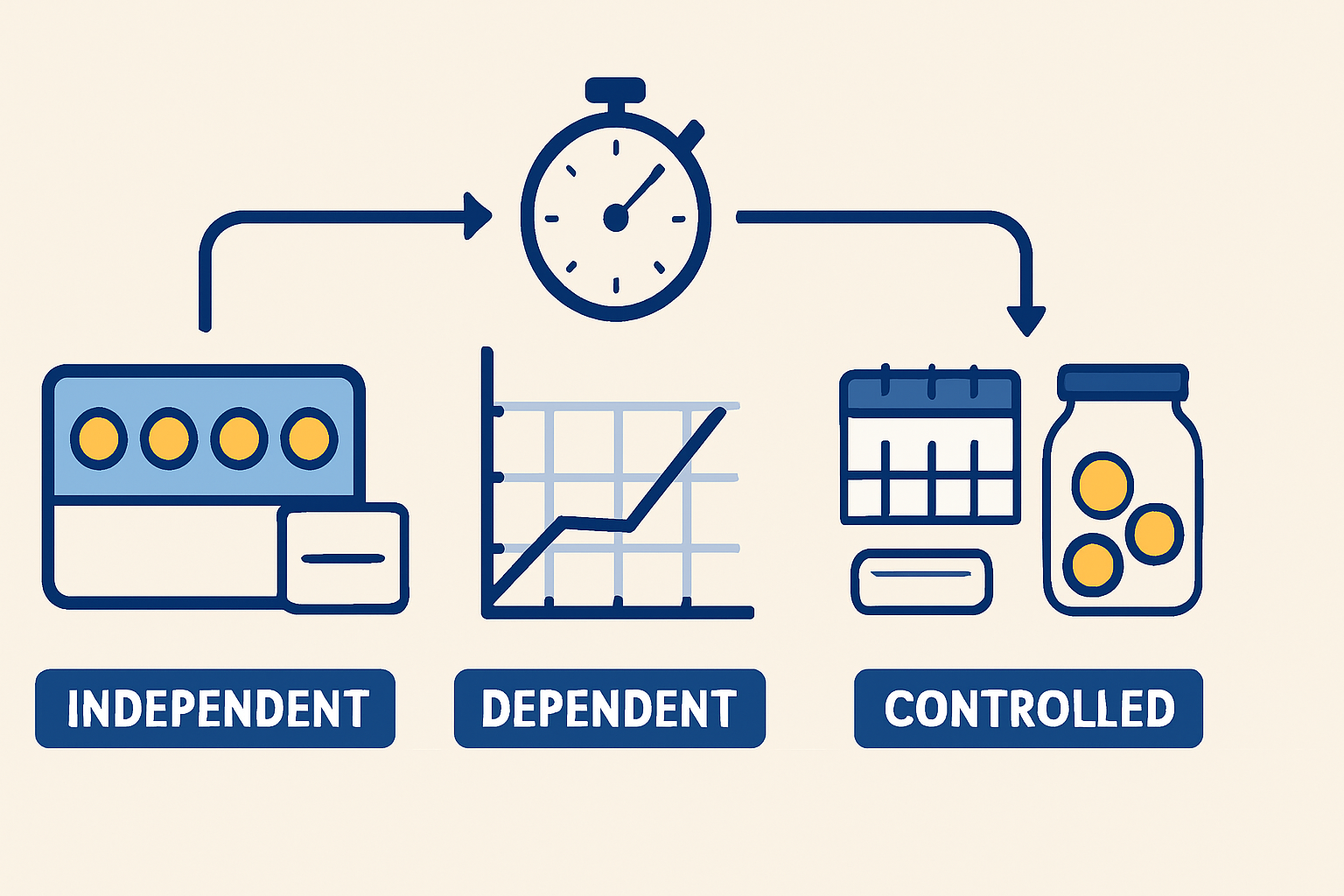
The independent variable is the factor systematically manipulated by the researcher or practitioner. In ABA, this typically represents the intervention or treatment being tested. The IV is what you change to see if it produces an effect on behavior.
Common examples include differential reinforcement procedures, prompting strategies, functional communication training, or environmental modifications. The key question to identify the IV is: “What is being intentionally changed or implemented?”
The Dependent Variable (DV): The Measured Outcome
The dependent variable is the outcome measure that responds to changes in the independent variable. In ABA, DVs are always dimensions of behavior that can be quantified and tracked over time.
These include measures like rate (frequency per time), duration, latency, percentage of correct responses, or interresponse time. The DV answers: “What behavior are we measuring as our outcome?”
Controlled Variables (CVs): Holding Conditions Constant
Controlled variables are extraneous factors that must be held constant to prevent confounding experimental results. These are not the focus of investigation but must be managed to ensure that changes in the DV can be attributed to the IV.
Examples include session length, therapist identity, time of day, materials used, and environmental conditions. CVs differ from confounding variables, which are uncontrolled factors that could influence results.
Applied Examples: Identifying Variables in ABA Scenarios
Let’s examine how these variables appear in realistic behavior analysis situations. These examples demonstrate the practical application of variable identification.
Example 1: Reducing Elopement with Functional Communication Training
A practitioner works with a child who elopes from difficult academic tasks. An ABC analysis suggests the behavior is maintained by escape from demands. The intervention plan involves teaching the child to request breaks appropriately.
- Independent Variable: Implementation of functional communication training (teaching “break” card exchange)
- Dependent Variable: Frequency of elopement per school day
- Controlled Variables: Task difficulty level, therapist implementing sessions, classroom environment, session duration
The practitioner collects baseline data on elopement, implements FCT, and measures whether elopement decreases as the child learns the alternative communication response.
Example 2: Increasing Social Initiations Using a Peer-Mediated Intervention
A student with autism spectrum disorder makes few social initiations during recess. The team implements a structured peer-mediated intervention to increase social engagement.
- Independent Variable: Structured peer-mediated social initiation training with scripted prompts
- Dependent Variable: Number of independent social initiations per 15-minute observation
- Controlled Variables: Play materials available, specific peers present, observation time, playground location
This example shows how multiple variables work together in a single-subject design. The team would likely use a reversal or multiple baseline design to demonstrate experimental control.
Exam Relevance and Common Testing Pitfalls
The BCBA examination frequently tests variable identification through scenario-based questions. Understanding common traps can help you avoid mistakes.
Trap 1: Confusing the Dependent Variable with the Behavior Definition
Many candidates mistakenly identify the target behavior rather than its measurement as the DV. Remember: the behavior (e.g., “hitting”) is what we’re targeting, but the dependent variable is how we measure it (e.g., “rate of hitting per hour”).
Exam questions may ask specifically for the measurement dimension, not just the behavior of interest. Always look for the quantifiable aspect in the scenario description.
Trap 2: Mistaking a Controlled Variable for an Independent Variable
Context determines whether a factor is an IV or CV. Changing therapists might be a controlled variable in one study (held constant) but could be the independent variable in a study comparing therapist effectiveness.
Ask yourself: “Is this factor being manipulated to test its effect, or is it being held constant to prevent confounding?” This distinction is crucial for experimental design questions.
Trap 3: Overlooking the IV in Complex Interventions
Treatment packages often combine multiple procedures. For a package like DRA + extinction + visual schedule, the entire package is typically considered the independent variable.
The exam may present multi-component interventions and ask you to identify the IV. In these cases, look for what is being systematically implemented or manipulated, even if it includes several elements.
Quick-Reference Checklist and Summary
Use this practical guide for rapid review and self-assessment during your study sessions.
BCBA Exam Self-Check: Variables
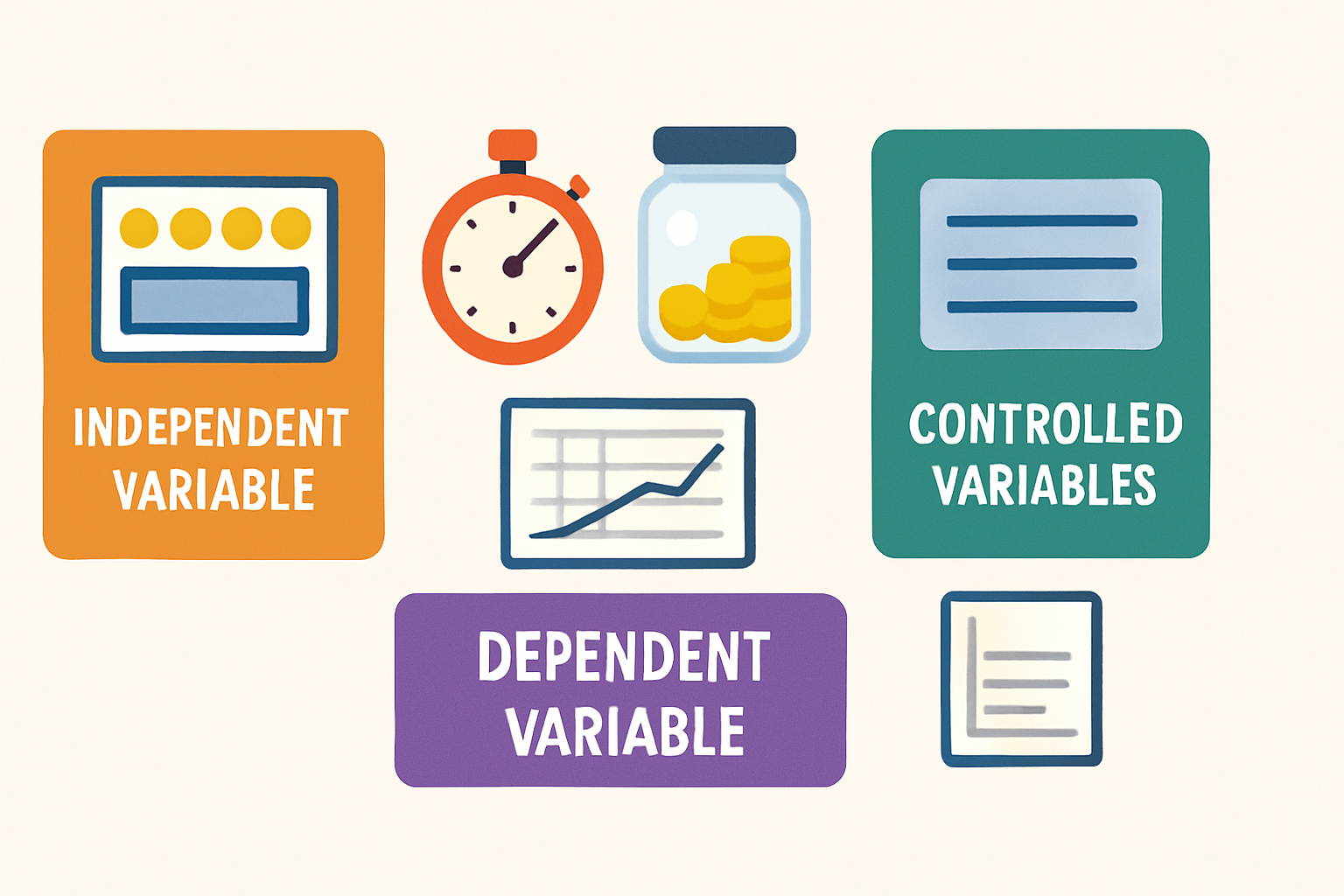
- Independent Variable: Ask “What is being manipulated or implemented by the practitioner?”
- Dependent Variable: Ask “What measurable behavior shows the intervention’s effect?”
- Controlled Variables: Ask “What factors are being kept constant to ensure a fair test?”
- Remember that the DV must be quantifiable and directly observable
- Consider whether variables might serve different roles in different experimental contexts
- Practice identifying variables in published single-subject research articles
Key Takeaways for Your Study Notes
The relationship between independent and dependent variables represents the core of experimental analysis in ABA. Controlled variables provide the necessary stability to attribute changes in behavior to the intervention rather than extraneous factors. These concepts directly support the goals of behavior analysis as a science: description, prediction, and control of behavior.
For further study of related experimental concepts, explore our guide to experimental design in behavior analysis. Understanding these fundamental relationships will strengthen both your clinical practice and examination performance. The BACB’s Task List emphasizes experimental design skills, making variable identification a critical competency area.


