

Understanding different credentials in applied behavior analysis is crucial for both professional practice and exam preparation. The Qualified Behavior Analyst QBA represents a specific certification level with distinct responsibilities and limitations that every BCBA candidate should master.
Table of Contents
- Qualified Behavior Analyst QBA: Defining the Qualified Behavior Analyst (QBA)
- QBA in Practice: Scenarios and Functional Analysis
- Exam Relevance and Common Points of Confusion
- Quick Reference and Summary
Qualified Behavior Analyst QBA: Defining the Qualified Behavior Analyst (QBA)
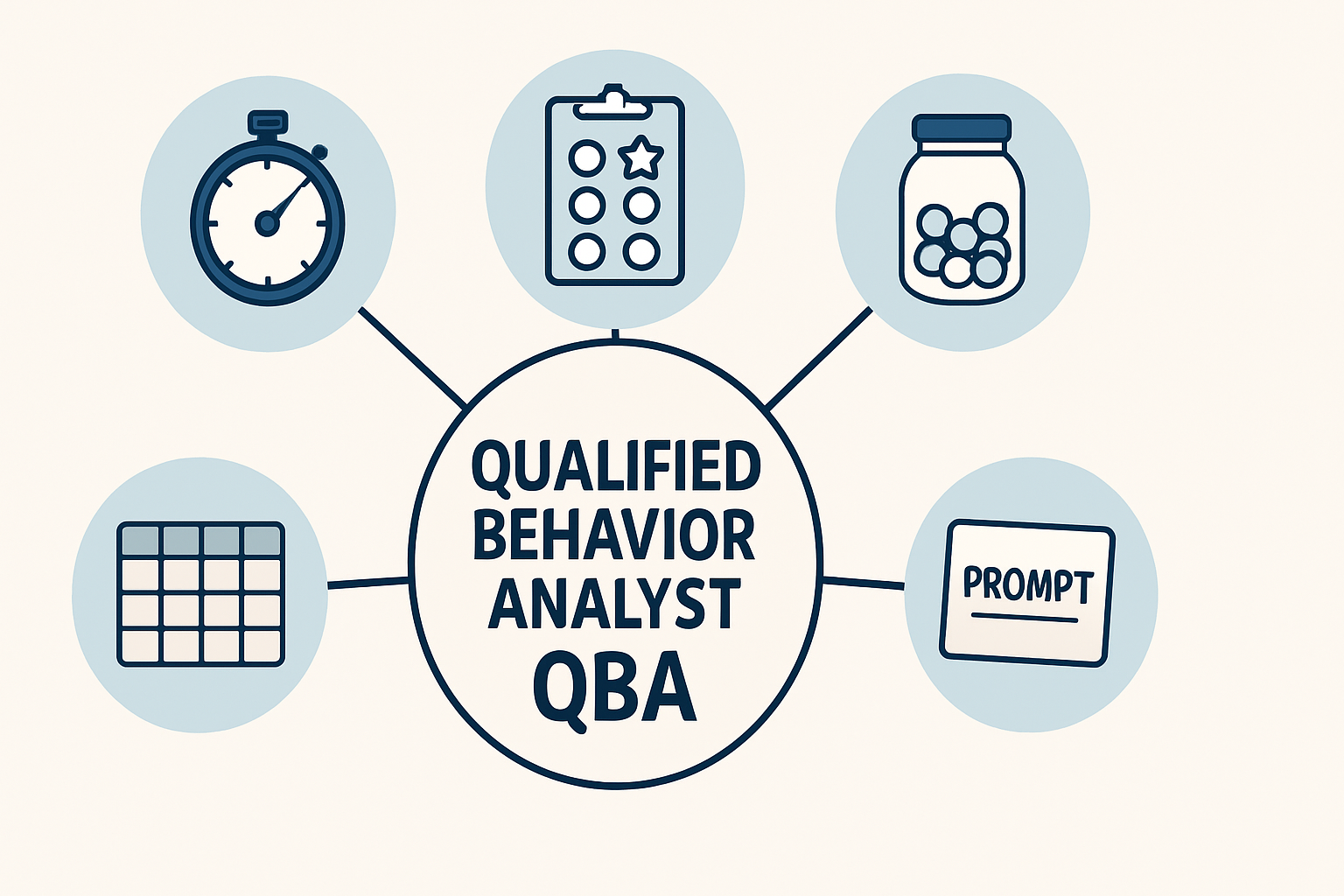
A Qualified Behavior Analyst is a professional who has met specific educational and experiential requirements to implement behavior analytic services under supervision. Unlike the Board Certified Behavior Analyst (BCBA), which is governed by the Behavior Analyst Certification Board, the QBA credential may be regulated by state licensing boards or specific organizational requirements.
Core Requirements and Scope of Practice
QBAs typically complete graduate-level coursework in behavior analysis and accumulate supervised experience hours. Their scope of practice focuses on implementation rather than design. Key distinctions include:
- Implementation of behavior plans designed by BCBAs
- Data collection and analysis using established protocols
- Caregiver training on specific procedures
- Direct client services under supervision
- Requiring BCBA supervision for plan modifications
- Cannot conduct functional analyses independently
QBA in the Ethical Landscape of ABA
The BACB Ethics Code provides essential guidance for QBAs regarding scope of competence and supervision. Section 1.02 specifically addresses boundaries of competence, requiring professionals to practice only within their documented training and experience. QBAs must clearly represent their credentials and seek supervision when needed, as outlined in the ethics guide for ABA practice.
QBA in Practice: Scenarios and Functional Analysis
Practical application clarifies the QBA’s role in service delivery. These scenarios demonstrate how QBAs operate within their scope while contributing to effective interventions.
Example 1: Implementing a Behavior Reduction Plan
Consider a client with aggression maintained by escape from demands. The BCBA has designed a plan using differential reinforcement and antecedent modifications. The QBA’s responsibilities include:
- Implementing the antecedent strategies as written
- Collecting frequency data on target behaviors
- Applying reinforcement procedures with fidelity
- Monitoring treatment integrity through checklists
- Reporting data patterns to the supervising BCBA
- Consulting before modifying any intervention components
Example 2: Training Caregivers on a Skill Acquisition Program
For a mand training program designed by a BCBA, the QBA can train caregivers on implementation procedures. This involves:
- Demonstrating correct prompting procedures
- Teaching data collection methods
- Providing feedback on implementation fidelity
- Monitoring generalization across settings
- Referring questions about program design to the BCBA
Exam Relevance and Common Points of Confusion
BCBA exam questions often test understanding of credential boundaries and scope of practice. Recognizing these distinctions is essential for exam success.
Key Distinctions: QBA vs. BCBA vs. BCaBA
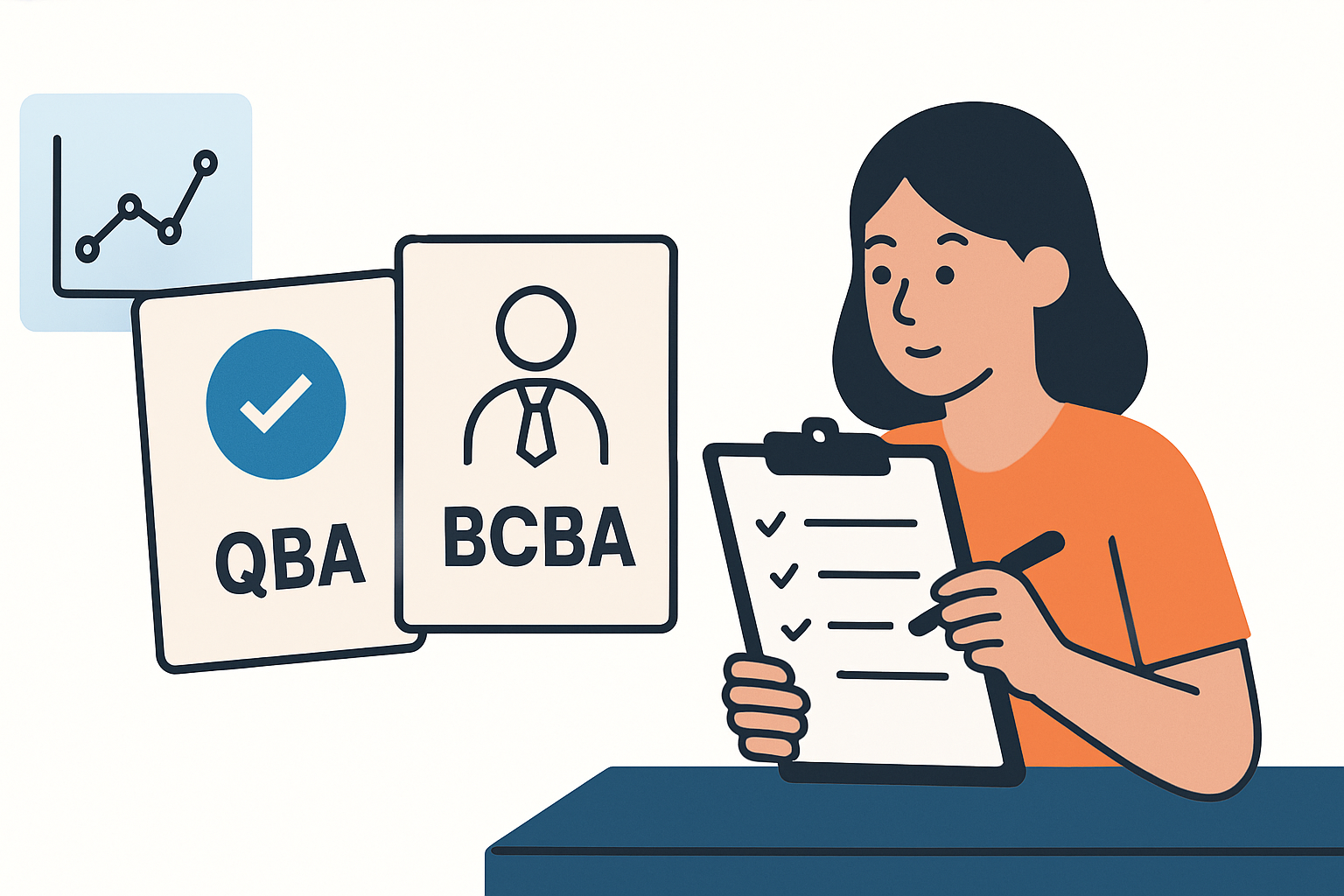
Understanding credential differences prevents common exam errors. Consider these critical distinctions:
- Independence level: BCBAs practice independently; QBAs require supervision
- Assessment authority: Only BCBAs can conduct independent functional behavior assessments
- Plan development: BCBAs design interventions; QBAs implement established plans
- Supervision requirements: QBAs receive supervision; BCBAs provide supervision
- Ethical responsibility: BCBAs bear ultimate responsibility for cases
Practice Prompts and Trap Questions
Exam questions often present scenarios testing credential boundaries. Consider this example:
Question: A QBA notices that a behavior reduction plan isn’t producing expected results after two weeks of implementation. What should they do first?
- Correct answer: Consult with the supervising BCBA about the data patterns
- Common trap: Modifying the intervention independently based on their analysis
- Key principle: QBAs implement but don’t modify BCBA-designed plans
Another common area involves functional analysis procedures. While QBAs can assist with data collection during an FA, only BCBAs can design, interpret, and modify the analysis protocol, as detailed in our functional analysis guide.
Quick Reference and Summary
Consolidating key information helps with rapid review and application in both exam and practice settings.
QBA Scope Checklist for BCBA Candidates
Use this checklist when supervising QBAs or answering exam questions about credential boundaries:
- Can do: Implement BCBA-designed behavior plans with fidelity
- Can do: Collect and graph behavioral data using established methods
- Can do: Train others on specific implementation procedures
- Can do: Monitor treatment integrity and social validity measures
- Must refer: Modify intervention components or assessment protocols
- Must refer: Conduct independent functional behavior assessments
- Must refer: Take ultimate responsibility for case outcomes
- Must refer: Make diagnostic or discharge decisions independently
The Qualified Behavior Analyst plays a vital role in the service delivery system of applied behavior analysis. Understanding their scope, limitations, and ethical responsibilities is essential for both exam success and effective professional collaboration. For more information on credential requirements, visit the Behavior Analyst Certification Board website.


