
A discussion-based assessment is an indirect descriptive assessment method used in Applied Behavior Analysis to gather initial information about behavior from caregivers, teachers, or other informants. This approach serves as a crucial first step in the Functional Behavior Assessment process, helping behavior analysts develop preliminary hypotheses about behavior function before moving to direct observation methods.
Table of Contents
- Discussion Based Assessment: Defining the Discussion-Based Assessment in ABA
- Applying the Method: From Discussion to Hypothesis
- BCBA Exam Focus and Common Pitfalls
- Quick-Reference Checklist for Practitioners and Exam Prep
Discussion Based Assessment: Defining the Discussion-Based Assessment in ABA
This assessment method involves structured conversations with individuals who have direct knowledge of the client’s behavior in natural settings. Unlike direct observation methods, it relies on verbal reports and recollections to identify patterns and potential maintaining variables.
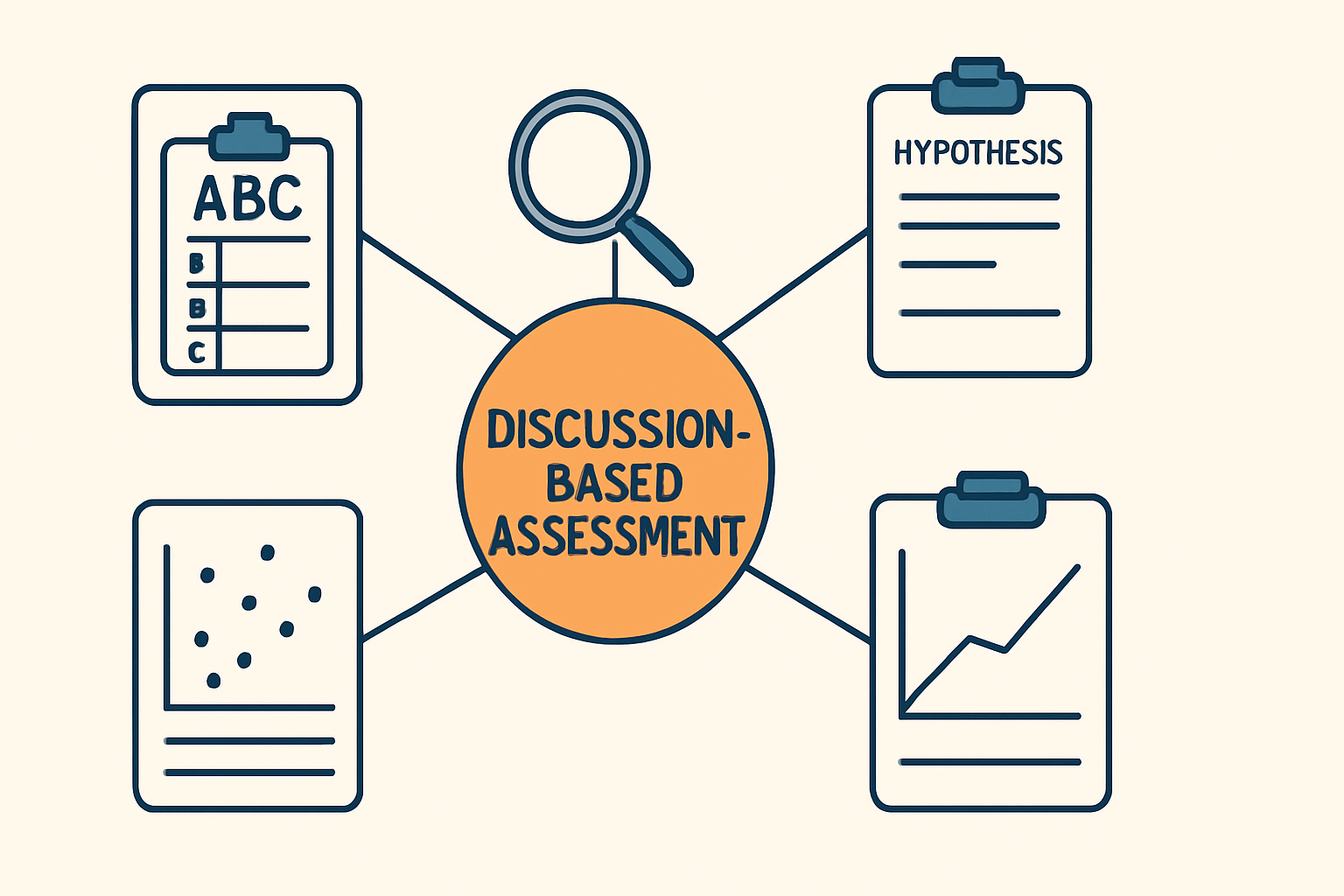
Core Purpose and Role in the FBA Process
The primary purpose of a discussion-based assessment is to gather preliminary information that guides subsequent assessment steps. It helps identify potential antecedents, consequences, and environmental variables that may be influencing behavior.
- Identifies potential behavioral functions for further testing
- Guides selection of appropriate direct observation methods
- Helps establish rapport with stakeholders
- Provides context for understanding social validity concerns
- Informs development of structured interviews and checklists
Ethical Foundations: Consent, Rapport, and Cultural Humility
Ethical implementation requires adherence to BACB Code sections, particularly those addressing client dignity and informed consent. Building rapport is essential for obtaining accurate information, while cultural humility ensures questions are adapted to the informant’s background.
- Obtain informed consent before assessment (BACB Code 2.0)
- Maintain confidentiality of shared information
- Adapt questions for cultural relevance and linguistic accessibility
- Recognize potential informant bias in reporting
- Use information to guide, not replace, direct observation
Applying the Method: From Discussion to Hypothesis
Effective application requires translating verbal reports into testable behavioral hypotheses. This process involves identifying patterns in informant descriptions and connecting them to potential maintaining variables.

Worked Example 1: Elopement in a School Setting
During a teacher interview, the BCBA learns that elopement occurs primarily during transition times and when difficult tasks are presented. The teacher reports that when the student leaves the classroom, staff typically follow and redirect him back after several minutes.
- Antecedent patterns: Task demands, transitions between activities
- Consequence patterns: Attention from staff, temporary escape from demands
- Hypothesis: Elopement is maintained by escape from demands with possible attention component
- Next step: Conduct ABC recording during transitions to test hypothesis
Worked Example 2: Hand Mouthing in a Clinic
A parent describes their child’s hand mouthing as occurring most frequently during quiet times or when alone. They mention the behavior seems to increase when the child appears bored and decreases during preferred activities.
- Parent description: “Seems bored,” “does it when nothing else is happening”
- Behavioral translation: Occurs in contexts of low stimulation
- Hypothesis: Hand mouthing is maintained by automatic reinforcement
- Important note: Requires direct observation and possibly functional analysis to confirm
BCBA Exam Focus and Common Pitfalls
Understanding discussion-based assessment is essential for the BCBA exam, particularly in sections covering assessment and ethical practice. Candidates must distinguish between different assessment types and recognize limitations.
Key Terminology and Task List Alignment
Several key terms relate to this assessment method and appear in the BACB Task List. Understanding these distinctions is crucial for exam success.
- Indirect assessment: Gathers information without direct observation
- Descriptive assessment: Documents naturally occurring antecedents and consequences
- Functional analysis: Experimental manipulation to identify function
- Informant: Person providing assessment information
- Social validity: Assessment of intervention acceptability
These concepts align with Task List Section F (Behavior Assessment) and are frequently tested in exam scenarios. For more on assessment methods, see our guide on functional analysis vs descriptive assessment.
Navigating Exam Traps and Ethical Dilemmas
Common exam traps involve misapplication of discussion-based assessment data. Candidates must recognize when additional assessment is needed and avoid ethical violations.
- Trap: Treating discussion data as conclusive proof of function
- Trap: Failing to corroborate with direct observation
- Trap: Overlooking informant bias or memory errors
- Ethical issue: Sharing confidential information during discussions
- Ethical issue: Proceeding without proper informed consent
For comprehensive ethical guidance, review our article on ethics in ABA practice.
Quick-Reference Checklist for Practitioners and Exam Prep
This practical checklist summarizes key considerations for both clinical practice and exam preparation. Use it to ensure thorough implementation and avoid common errors.
- ✓ Obtain informed consent before beginning assessment
- ✓ Establish rapport with informants to improve accuracy
- ✓ Use open-ended questions followed by specific probes
- ✓ Document potential antecedent and consequence patterns
- ✓ Formulate testable hypotheses based on discussion data
- ✓ Plan direct observation methods to test hypotheses
- ✓ Recognize limitations of informant memory and potential bias
- ✓ Maintain confidentiality throughout the process
- ✓ Consider cultural factors in question formulation
- ✓ Use discussion data to guide, not replace, comprehensive assessment
Discussion-based assessment serves as a valuable initial step in the FBA process when implemented ethically and with appropriate limitations in mind. By combining this method with direct observation and possibly experimental analysis, behavior analysts can develop accurate, data-based interventions. For additional assessment resources, the BACB Task List provides comprehensive guidance on assessment requirements.


