
An extinction burst represents a critical behavioral phenomenon that every ABA practitioner must understand. This temporary increase in challenging behavior occurs when reinforcement is discontinued, testing both clinical skill and ethical judgment. Mastering this concept is essential for effective intervention and BCBA exam success.
Table of Contents
- What is an Extinction Burst? A Core ABA Concept
- Extinction Burst in Practice: Analyzing Real ABA Examples
- Extinction Burst and the BCBA Exam: What You Need to Know
- A Clinical Checklist for Managing Extinction Procedures
- Summary and Key Takeaways
What is an Extinction Burst? A Core ABA Concept
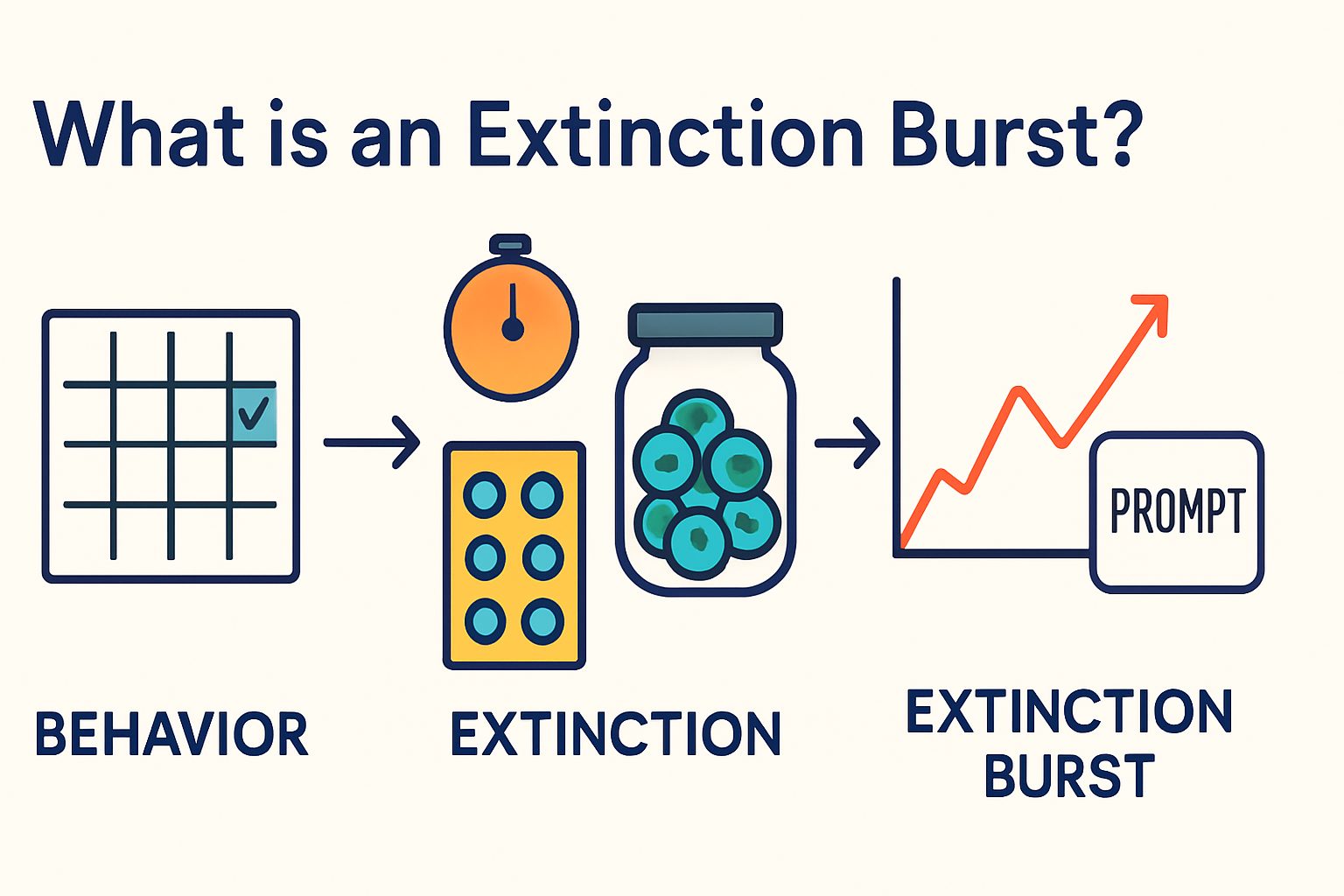
An extinction burst describes the immediate, temporary escalation of a previously reinforced behavior when its maintaining consequence is withheld. This phenomenon occurs across all behavioral functions and serves as a predictable pattern in applied behavior analysis.
The Behavioral Definition and Mechanism
Formally, an extinction burst involves a sudden increase in the frequency, duration, or intensity of a target behavior when reinforcement stops. This differs from sensory extinction, which involves blocking automatic reinforcement. The burst represents the learner’s increased effort to access what previously worked.
Why the Burst Happens: A Behavioral Perspective
From the learner’s perspective, the burst makes logical sense. When a previously effective response fails, increasing effort seems reasonable. This connects to motivating operations that establish the value of reinforcement and the principle of response effort escalation.
Extinction Burst in Practice: Analyzing Real ABA Examples
Understanding extinction bursts requires examining concrete scenarios. Each example demonstrates how different behavioral functions manifest during extinction procedures.
Example 1: Attention-Maintained Behavior in a Classroom
A student typically calls out during instruction to gain teacher attention. When the teacher implements planned ignoring, the extinction burst emerges.
- Antecedent: Teacher gives instruction to class
- Behavior: Student calls out louder and more frequently
- Consequence: Teacher continues instruction without acknowledging calls
- Function: Social positive reinforcement (attention)
Example 2: Escape-Maintained Task Refusal
A client pushes work materials away to escape demands. The therapist implements escape extinction by keeping demands present.
- Antecedent: Therapist presents difficult worksheet
- Behavior: Client escalates from pushing to yelling and flopping
- Consequence: Therapist continues prompting through task
- Function: Social negative reinforcement (escape)
Example 3: Tangible-Maintained Behavior at Home
A child tantrums when a tablet is removed. The parent implements extinction by no longer providing the tablet following tantrums.
- Antecedent: Parent removes tablet after time limit
- Behavior: Tantrum duration and intensity spike dramatically
- Consequence: Tablet remains unavailable despite escalation
- Function: Social positive reinforcement (access to tangible)
Extinction Burst and the BCBA Exam: What You Need to Know
Exam questions about extinction bursts test both conceptual understanding and clinical application. Recognizing common question formats helps avoid typical mistakes.
Common Exam Question Formats and Traps
Questions often present scenarios requiring identification of extinction bursts versus other phenomena. Common traps include confusing bursts with spontaneous recovery or resurgence.
- Scenario identification: Recognize burst patterns in case descriptions
- Differentiation tasks: Distinguish bursts from other extinction effects
- Ethical considerations: Address safety and consent requirements
- Concomitant strategies: Select appropriate reinforcement procedures
Key Related Terms to Master
Understanding these related concepts is essential for exam success. Each represents a different aspect of extinction processes.
- Extinction procedure: Withholding reinforcement for a behavior
- Resistance to extinction: How long behavior persists without reinforcement
- Spontaneous recovery: Reappearance of extinguished behavior after time
- Resurgence: Return of previously extinguished behavior when new behavior extinguishes
A Clinical Checklist for Managing Extinction Procedures
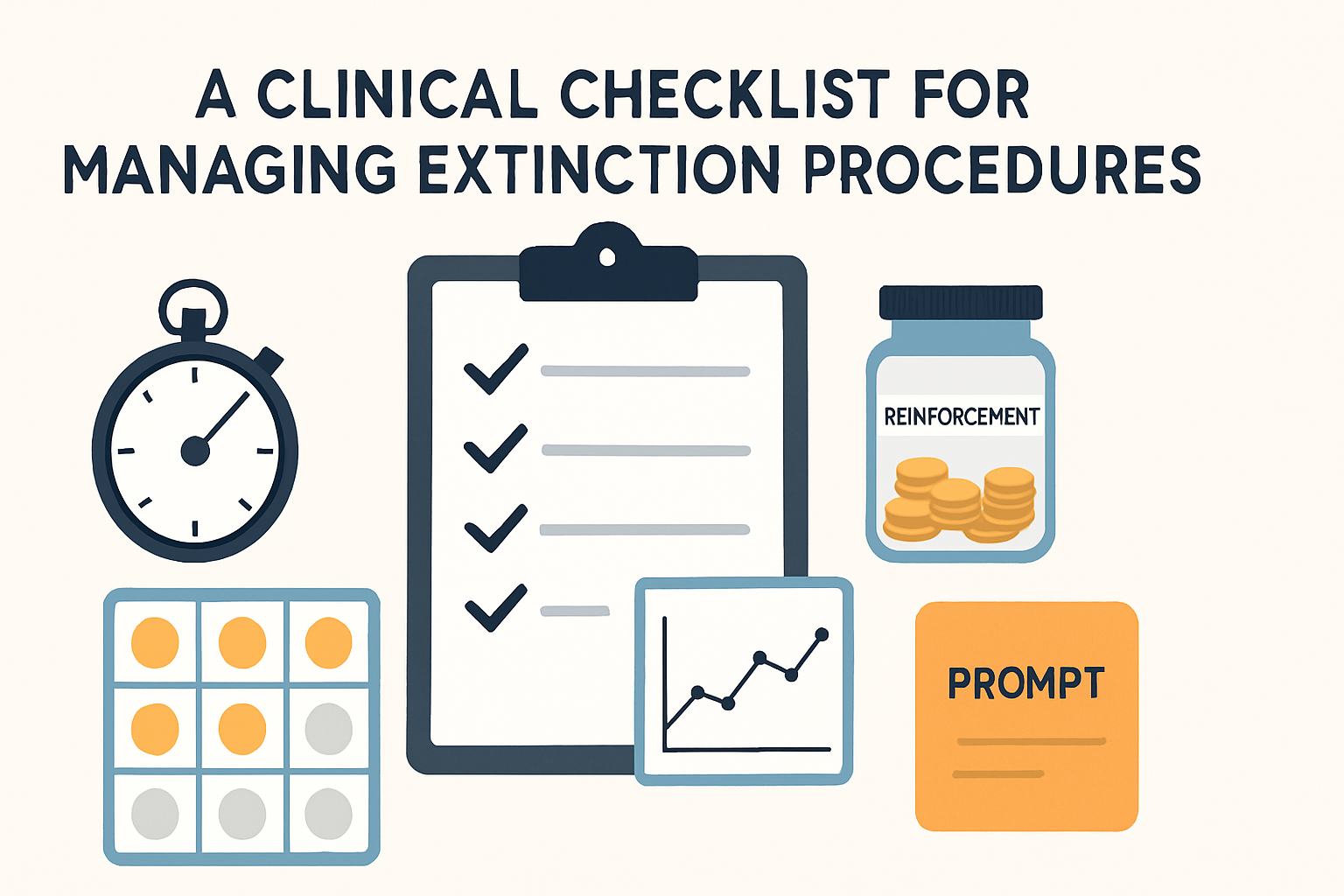
Implementing extinction requires careful planning and monitoring. This checklist ensures ethical, effective implementation while managing the inevitable burst.
Pre-Implementation Steps
Proper preparation minimizes risks and maximizes success. These steps should precede any extinction procedure.
- Conduct a thorough functional assessment to identify maintaining variables
- Obtain informed consent from all relevant stakeholders
- Develop safety plans for potential escalation scenarios
- Select and teach appropriate replacement behaviors
- Ensure consistency across all environments and implementers
During the Burst: Monitoring and Response
Effective management during the extinction burst requires specific actions. These strategies maintain procedural integrity while ensuring safety.
- Collect continuous data collection to confirm burst patterns
- Maintain strict procedural integrity across all sessions
- Reinforce alternative behaviors consistently and immediately
- Provide ongoing support and training for all team members
- Monitor for signs of emotional responding or aggression
Summary and Key Takeaways
Extinction bursts represent a predictable, temporary escalation when reinforcement stops. Understanding this phenomenon is crucial for both clinical practice and BCBA exam success.
- Extinction bursts involve increased frequency, duration, or intensity of behavior
- They occur across all behavioral functions and reinforcement types
- Proper implementation requires thorough assessment and planning
- Concomitant reinforcement of alternative behaviors is essential
- Ethical considerations include safety, consent, and stakeholder training
For more information on related concepts, explore our guides on extinction procedures and functional behavior assessment. The BACB Ethics Code provides essential guidance for ethical implementation of extinction procedures.


