

What Are the 7 Dimensions of ABA?
The 7 dimensions of ABA form the foundational criteria established by Baer, Wolf, and Risley in their seminal 1968 article. This framework defines what qualifies as applied behavior analysis versus experimental research or other behavioral approaches.
Table of Contents
- What Are the 7 Dimensions of ABA?
- Breaking Down Each Dimension with Examples
- The 7 Dimensions in Practice: A Worked Example
- BCBA Exam Focus: Common Traps and How to Avoid Them
- Quick Checklist and Summary
- References
These dimensions serve as a checklist to ensure interventions are practical, measurable, and socially meaningful.
The Purpose of the 7 Dimensions
Baer, Wolf, and Risley created this framework to distinguish applied behavior analysis from the experimental analysis of behavior. While both study behavior change, ABA focuses on socially significant improvements in real-world settings.
The mnemonic ‘GET A CAB’ helps remember all seven dimensions: Generality, Effective, Technological, Applied, Conceptual, Analytic, and Behavioral.
Breaking Down Each Dimension with Examples
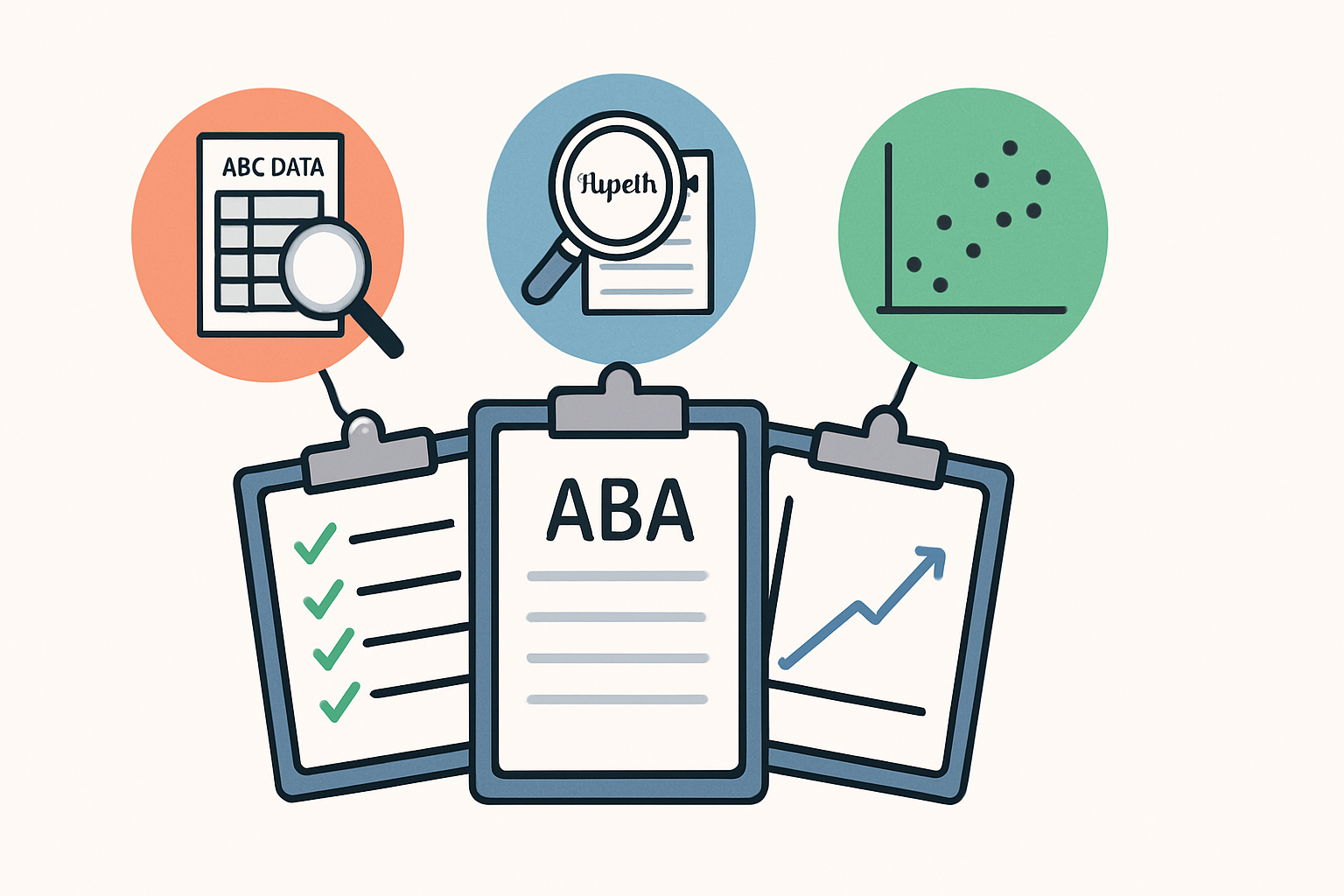
Understanding each dimension requires more than memorization. Let’s explore how they work together in practice.
Applied, Behavioral, and Analytic: The Core of Measurement
The first three dimensions form the measurement foundation of ABA. Applied means targeting behaviors that matter to the client’s life and community. Behavioral requires observable, measurable actions rather than internal states. Analytic demonstrates functional control through experimental design.
Consider teaching a child to request breaks using a card exchange system. This targets a socially significant behavior (Applied) by measuring card exchanges per session (Behavioral). Using a reversal design proves the teaching procedure caused the increase (Analytic).
Technological, Conceptual, Effective, and Generality: Ensuring Quality and Reach
The remaining dimensions ensure interventions are replicable, principled, impactful, and lasting. Technological means procedures are described clearly enough for replication. Conceptual ties interventions to behavioral principles. Effective produces practical, meaningful change. Generality ensures changes maintain and transfer.
Continuing our break request example: written procedures allow exact replication (Technological), the intervention uses mand training principles (Conceptual), meltdowns decrease significantly (Effective), and the skill transfers to home settings (Generality).
The 7 Dimensions in Practice: A Worked Example
Let’s examine a complete case study demonstrating all seven dimensions working together.
Case Example: Reducing Elopement During Transitions
A client elopes from circle time to access preferred toys. The hypothesized function is access to tangibles. The intervention includes a visual schedule, transition warnings, and reinforcement for staying seated.
- Applied: Targeting elopement improves safety and participation
- Behavioral: Measuring steps from chair provides objective data
- Analytic: Using an ABAB design demonstrates functional control
- Technological: Detailed protocol includes timing, prompts, and reinforcement criteria
- Conceptual: Based on antecedent interventions and differential reinforcement
- Effective: Elopement decreases from 10 to 1 instance per session
- Generality: Skill maintains during other transitions and different settings
BCBA Exam Focus: Common Traps and How to Avoid Them

Exam questions often test subtle distinctions between dimensions and related concepts. Understanding these differences prevents costly mistakes.
Distinguishing Dimensions from Ethics and Procedures
The 7 dimensions are criteria for ABA practice, not ethical guidelines. A question about ‘ensuring procedures are replicable’ tests Technological, not ‘professional responsibility.’ Similarly, ‘socially significant change’ refers to Applied, not necessarily ‘client dignity.’
Remember that dimensions describe what makes something ABA, while ethics codes guide how to practice responsibly. For more on ethical practice, see our guide on ethics in ABA practice.
Sample Exam-Style Practice Prompts
Test your understanding with these typical exam questions:
- A BCBA writes procedures so clearly that another professional can implement them exactly. Which dimension does this BEST demonstrate? (Answer: Technological)
- An intervention successfully reduces aggression at school, and the behavior change maintains at home six months later. Which two dimensions are demonstrated? (Answer: Effective and Generality)
- A behavior analyst uses a multiple baseline design to demonstrate that their teaching procedure causes skill acquisition. Which dimension is this? (Answer: Analytic)
Quick Checklist and Summary
Use this practical tool to evaluate your own interventions and study effectively.
Self-Assessment Checklist for Your Interventions
For each dimension, ask these critical questions:
- Applied: Is the target behavior socially significant to the client?
- Behavioral: Can the behavior be observed and measured objectively?
- Analytic: Does your data demonstrate functional control?
- Technological: Could another professional replicate your procedures?
- Conceptual: Are your methods tied to behavioral principles?
- Effective: Does the change make a practical difference?
- Generality: Does the behavior maintain and transfer appropriately?
Key Takeaways for Your Study Plan
The 7 dimensions of ABA define what qualifies as applied behavior analysis. Use ‘GET A CAB’ to remember them all. On the exam, focus on definitions and avoid confusing dimensions with ethical codes or procedural steps.
This framework serves as the foundation for evaluating all ABA interventions. For additional study resources, explore our BCBA exam prep guide and review single-subject experimental designs to strengthen your analytic dimension understanding.
Remember that these dimensions work together as a system. An intervention meeting all seven criteria represents high-quality, evidence-based ABA practice that produces meaningful, lasting change.


