
Understanding the function of behavior is fundamental to applied behavior analysis and essential for BCBA exam success. This concept moves beyond what a behavior looks like to uncover why it occurs. Every behavior serves a purpose for the individual, and identifying that purpose allows for effective intervention design.
Table of Contents
- Defining the Function of Behavior in ABA
- Analyzing Behavior with ABC Examples
- Exam Relevance and Common Pitfalls
- Quick-Reference Checklist for Identifying Function
- Summary and Next Steps for Mastery
Defining the Function of Behavior in ABA
In ABA, the function of behavior refers to the purpose or reinforcing consequence that maintains a behavior. This differs from topography, which describes what the behavior looks like physically. Two individuals might engage in the same behavior (like screaming) for completely different reasons.
Why ‘Why’ Matters: The Core of Functional Assessment
The central question in functional assessment is “Why does this behavior occur?” rather than “What does it look like?” This shift in perspective is crucial because interventions based on behavior function are more effective than those based on form alone. When you understand what maintains a behavior, you can design interventions that address the underlying need.
Reinforcement drives behavior maintenance. Whether through positive reinforcement (adding something desirable) or negative reinforcement (removing something aversive), behaviors persist because they work for the individual in their environment.
The Four Primary Functions: S.E.A.T.
The S.E.A.T. acronym represents the four primary functions of behavior tested on the BCBA exam:
- Sensory/Automatic Reinforcement: The behavior itself produces reinforcing stimulation. This includes self-stimulatory behaviors like hand-flapping or rocking that provide sensory input.
- Escape/Avoidance: The behavior allows escape from or avoidance of an aversive stimulus, demand, or situation. This is maintained by negative reinforcement.
- Attention (Social): The behavior produces access to social reinforcement from others, including verbal attention, physical proximity, or reactions.
- Tangible/Access: The behavior results in access to preferred items, activities, or other tangible reinforcers.
Analyzing Behavior with ABC Examples
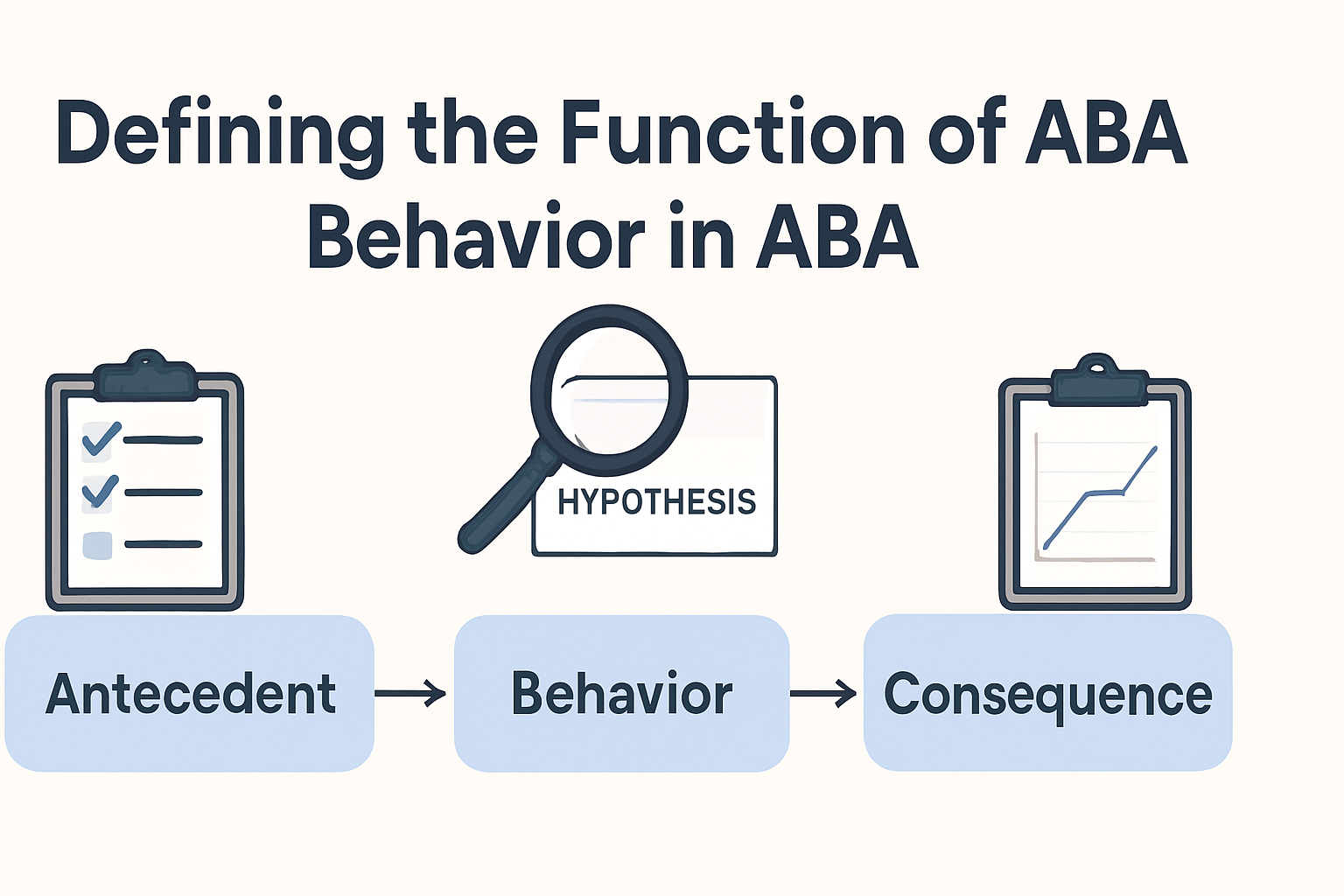
Antecedent-Behavior-Consequence analysis provides the framework for hypothesizing behavior function. By examining what happens before and after a behavior, you can identify patterns that suggest maintaining variables.
Example 1: Escape-Maintained Behavior in a Classroom
Consider this ABC scenario: During independent math work (antecedent), a student throws their worksheet on the floor (behavior), and the teacher removes the task while saying “Let’s take a break” (consequence).
The pattern suggests escape function. The aversive math task is removed following the behavior, making throwing the worksheet more likely in the future when similar demands are presented. This is negative reinforcement in action.
Example 2: Attention-Maintained Behavior with Peers
During silent reading time when peers are focused on their books (antecedent), a student makes loud animal noises (behavior), resulting in peers looking and laughing (consequence).
This pattern indicates social attention function. The behavior produces peer attention, which serves as reinforcement. Even negative attention (like scolding) can maintain behaviors if attention is reinforcing for that individual.
Example 3: Automatic Reinforcement (Sensory)
A child engages in hand-flapping throughout the day across various environments. The behavior occurs during quiet activities, during transitions, and when alone. No consistent social consequences follow the behavior.
This pattern suggests automatic reinforcement. The behavior itself provides sensory stimulation that maintains it. The lack of social mediation is a key indicator of this function.
Exam Relevance and Common Pitfalls
Behavior function questions appear throughout the BCBA exam, particularly in sections related to assessment and intervention. Understanding this concept is essential for passing the certification.
How Functions Are Tested on the BCBA Exam
Exam questions typically assess your ability to:
- Identify behavior function from written vignettes or data
- Select appropriate functional assessment methods based on the situation
- Design interventions that match the identified function
- Differentiate between functional assessment approaches
These questions align with BACB Task List items, particularly in the assessment and intervention domains. For comprehensive exam preparation, explore our BCBA exam prep guide.
Traps to Avoid: Top Candidate Mistakes
Common errors on function-related questions include:
- Confusing topography with function: Assuming all instances of the same behavior serve the same purpose
- Over-attributing to attention: Defaulting to “attention-seeking” without sufficient data
- Missing automatic reinforcement: Overlooking sensory functions when no social consequences are apparent
- Ignoring multiple functions: Failing to consider that a behavior might serve different purposes in different contexts
- Forgetting environmental variables: Not considering how motivating operations affect behavior function
Quick-Reference Checklist for Identifying Function
Use this checklist when analyzing behavior scenarios:
- Examine the immediate consequence following the behavior
- Look for patterns across multiple occurrences
- Consider whether the behavior occurs across different environments
- Assess if the behavior persists when alone (suggests automatic reinforcement)
- Determine if escape from demands maintains the behavior
- Evaluate if social reactions follow the behavior consistently
- Check if access to preferred items/activities is contingent on the behavior
- Remember that multiple functions can coexist for the same topography
For more detailed assessment strategies, review our guide on functional behavior assessment.
Summary and Next Steps for Mastery
Mastering behavior function analysis is essential for effective ABA practice and BCBA exam success. The S.E.A.T. model provides a framework for understanding why behaviors occur, while ABC analysis offers a practical method for hypothesis development.
To deepen your understanding:
- Practice analyzing case studies using the ABC framework
- Study the differences between functional analysis and descriptive assessment methods
- Learn how to match interventions to identified functions
- Review the BACB’s Task List for specific function-related competencies
Remember that accurate function identification leads to more effective, ethical interventions. Continue your study with related topics like functional analysis methods and differential reinforcement strategies to build comprehensive assessment skills.


