
What is a Paired Choice Preference Assessment?
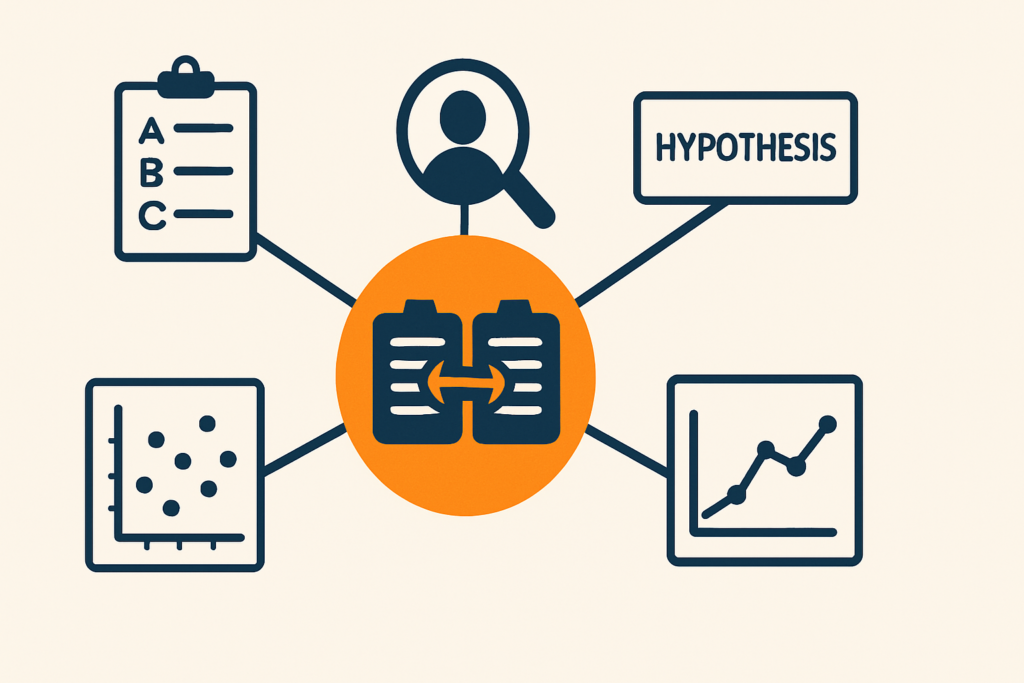
A paired choice preference assessment is a direct, trial-based method used in applied behavior analysis to identify relative preference among potential reinforcers. This systematic approach presents items in pairs and records which one the learner selects, creating a hierarchy of preferred stimuli.
Table of Contents
- What is a Paired Choice Preference Assessment?
- Conducting the Assessment: A Step-by-Step Guide
- Paired Choice Assessment in Practice: Worked Examples
- BCBA Exam Focus: Key Terms and Common Traps
- Quick-Reference Implementation Checklist
- Summary and Next Steps for Your Studies
Clinically, this assessment serves multiple purposes: identifying potent reinforcers for skill acquisition programs, respecting client autonomy through choice-making opportunities, and informing individualized treatment plans based on reliable preference data.
Core Definition and Clinical Purpose
This assessment method falls under the broader category of stimulus preference assessments, which systematically evaluate potential reinforcers without directly testing their effects on behavior. Unlike a reinforcer assessment that measures behavioral effects, the paired choice method focuses purely on preference identification.
The procedure involves presenting two items simultaneously, allowing the learner to choose one, providing brief access, and systematically rotating through all possible pairings. This creates a relative preference hierarchy that informs reinforcement selection.
When to Use It: Strengths and Limitations
This method excels when you need to narrow down preferences from a known set of items or when working with clients who can reliably choose between two options. It’s particularly useful for establishing reinforcement hierarchies for skill acquisition programs.
- Ideal situations: When you have 4-8 potential reinforcers identified through interviews or observations
- Client requirements: Learners who can attend to two items and make a clear selection
- Clinical advantages: Provides clear preference rankings, respects client choice, and yields reliable data
- Limitations to consider: Less efficient than multiple stimulus without replacement for initial screening of many items
- Time considerations: Requires more trials than free operant assessments but yields more precise data
Conducting the Assessment: A Step-by-Step Guide
Implementing a paired choice preference assessment requires careful preparation and systematic execution. Follow these steps to ensure valid, reliable results that accurately reflect client preferences.

Step 1: Preparation and Item Selection
Begin by identifying potential reinforcers through indirect methods like reinforcer surveys or direct observations. Select 4-8 items that are safe, appropriate, and varied in type. Prepare a neutral presentation area and ensure all items are clean and functional.
- Conduct preference interviews with caregivers or the learner
- Observe free operant interactions with potential items
- Select items representing different categories (edibles, toys, activities)
- Ensure items are presented neutrally without bias
- Prepare data collection sheets with all possible pairings
Step 2: The Presentation and Data Collection Procedure
Present two items approximately equidistant from the learner with the instruction “Pick one” or similar. Record the selection immediately, then provide 15-30 seconds of access to the chosen item. Remove both items briefly before presenting the next pair.
Systematically rotate through all possible pairings using a balanced presentation order. Each item should appear equally often on both sides to control for position bias. Complete multiple rounds if needed to establish stable preferences.
Step 3: Calculating and Interpreting Results
Calculate the percentage of times each item was chosen when available. Divide the number of selections by the number of presentations, then multiply by 100. Rank items from highest to lowest percentage to create your preference hierarchy.
- High-preference items (80-100% selection): Primary reinforcers for difficult tasks
- Medium-preference items (40-79% selection): Useful for maintenance or easier tasks
- Low-preference items (0-39% selection): May not function as effective reinforcers
- Consider reinforcer assessments to verify actual reinforcing effects
Paired Choice Assessment in Practice: Worked Examples
Understanding the theoretical procedure is essential, but seeing practical applications brings the concepts to life. These examples demonstrate how paired choice assessments inform real clinical decisions.
Example 1: Identifying Edible Reinforcers for a Young Learner
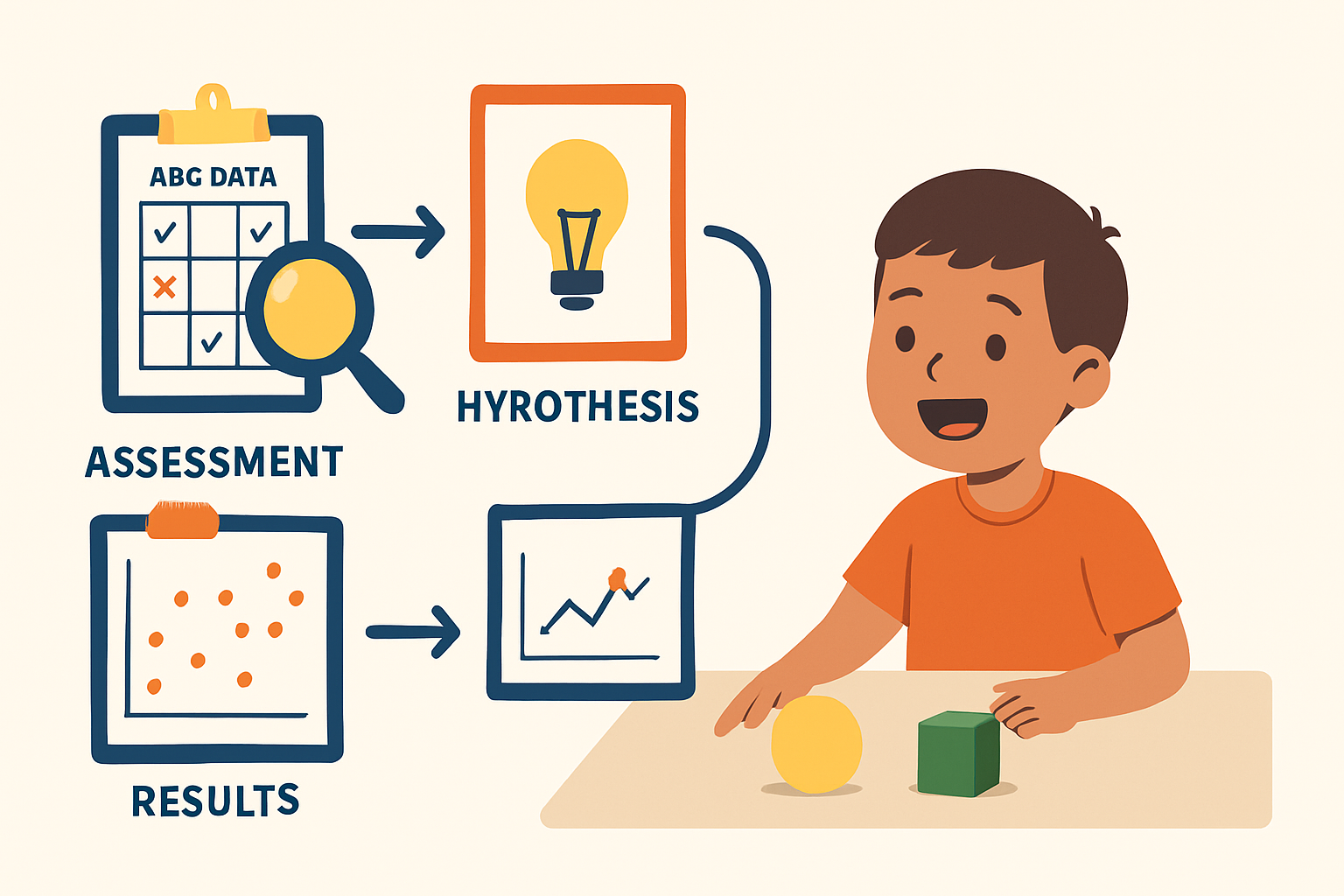
Marcus is a 5-year-old working on vocal mand training. His team conducted a paired choice assessment with six edible items identified through parent interview: crackers, grapes, cheese, pretzels, apple slices, and yogurt bites.
The assessment revealed a clear hierarchy: grapes (92%), cheese (83%), crackers (75%), pretzels (58%), apple slices (33%), and yogurt bites (17%). Based on these results, the team uses grapes and cheese as high-preference reinforcers for initial mand acquisition, saving lower-preference items for maintenance tasks.
Example 2: Assessing Leisure Items for an Adolescent
Sarah, a 14-year-old with limited leisure skills, engages in challenging behavior when denied access to electronics. ABC data suggests the behavior is maintained by tangible access. The team assessed six leisure items: tablet, puzzle, book, drawing materials, music player, and fidget toys.
The paired choice assessment results showed tablet (96%), music player (79%), drawing (63%), puzzle (42%), book (29%), and fidget toys (21%). This data informed a reinforcement-based intervention where Sarah earns access to preferred items for engaging in appropriate leisure activities, reducing challenging behavior by 85%.
BCBA Exam Focus: Key Terms and Common Traps
Understanding paired choice assessments is crucial for BCBA exam success. This section highlights essential vocabulary and common pitfalls that frequently appear on the examination.
Essential Vocabulary and Concepts
Master these terms to demonstrate competency with preference assessment procedures:
- Stimulus preference assessment: Systematic evaluation of potential reinforcers without testing behavioral effects
- Reinforcer assessment: Direct test of whether an item increases target behavior
- Contrived vs. naturalistic conditions: Structured assessment vs. observing in natural environments
- Momentary vs. duration-based access: Brief contact vs. extended interaction with chosen items
- Preference hierarchy: Rank-ordered list of items based on selection percentages
Frequent Exam Pitfalls and How to Avoid Them
Exam questions often test subtle distinctions between assessment types and procedures. Watch for these common traps:
- Confusing preference vs. reinforcer assessments: Remember that paired choice identifies preference; only a reinforcer assessment confirms behavioral effects
- Misidentifying as ‘forced choice’: Paired choice allows selection; forced choice would require choosing
- Overlooking relative preference: Results show preference relative to other items, not absolute value
- Forgetting equal pairing requirements: Each item must be paired with every other item equally
- Ignoring position bias controls: Items should appear equally on left and right sides
Quick-Reference Implementation Checklist
Use this actionable checklist when preparing to conduct a paired choice preference assessment in clinical practice or studying for the BCBA exam.
- □ Identify 4-8 potential reinforcers through interviews or observations
- □ Ensure all items are safe, appropriate, and varied in type
- □ Prepare data sheet with all possible pairings
- □ Present items neutrally, equidistant from the learner
- □ Use clear instruction (“Pick one” or similar)
- □ Record selection immediately after choice
- □ Provide 15-30 seconds of access to chosen item
- □ Systematically rotate through all pairings
- □ Control for position bias by varying item placement
- □ Calculate selection percentages for each item
- □ Create preference hierarchy from highest to lowest percentage
- □ Consider conducting reinforcer assessments to verify effects
Summary and Next Steps for Your Studies
Paired choice preference assessments provide valuable data for identifying effective reinforcers while respecting client autonomy. This systematic approach yields reliable preference hierarchies that inform individualized treatment planning and skill acquisition programs.
For comprehensive exam preparation, explore related topics like multiple stimulus without replacement assessments and reinforcement schedules. Understanding the full range of assessment methods ensures you can select the most appropriate approach for each clinical situation.
Remember that while paired choice assessments identify preferences, always verify reinforcing effects through direct observation and data collection. For authoritative guidance on assessment procedures, consult the Behavior Analyst Certification Board resources and peer-reviewed literature on stimulus preference assessment methodologies.


