

Differential reinforcement procedures are essential tools in applied behavior analysis, and differential reinforcement of incompatible behavior (DRI) represents a particularly effective approach for reducing problematic behaviors while teaching appropriate alternatives. This guide provides a comprehensive understanding of DRI for both clinical practice and BCBA exam preparation.
Table of Contents
- What is Differential Reinforcement of Incompatible Behavior (DRI)?
- Applying DRI: Worked Examples from Assessment to Intervention
- DRI on the BCBA Exam: Common Traps and How to Avoid Them
- Quick-Reference Checklist for Implementing DRI
- Summary and Key Takeaways
- References
What is Differential Reinforcement of Incompatible Behavior (DRI)?
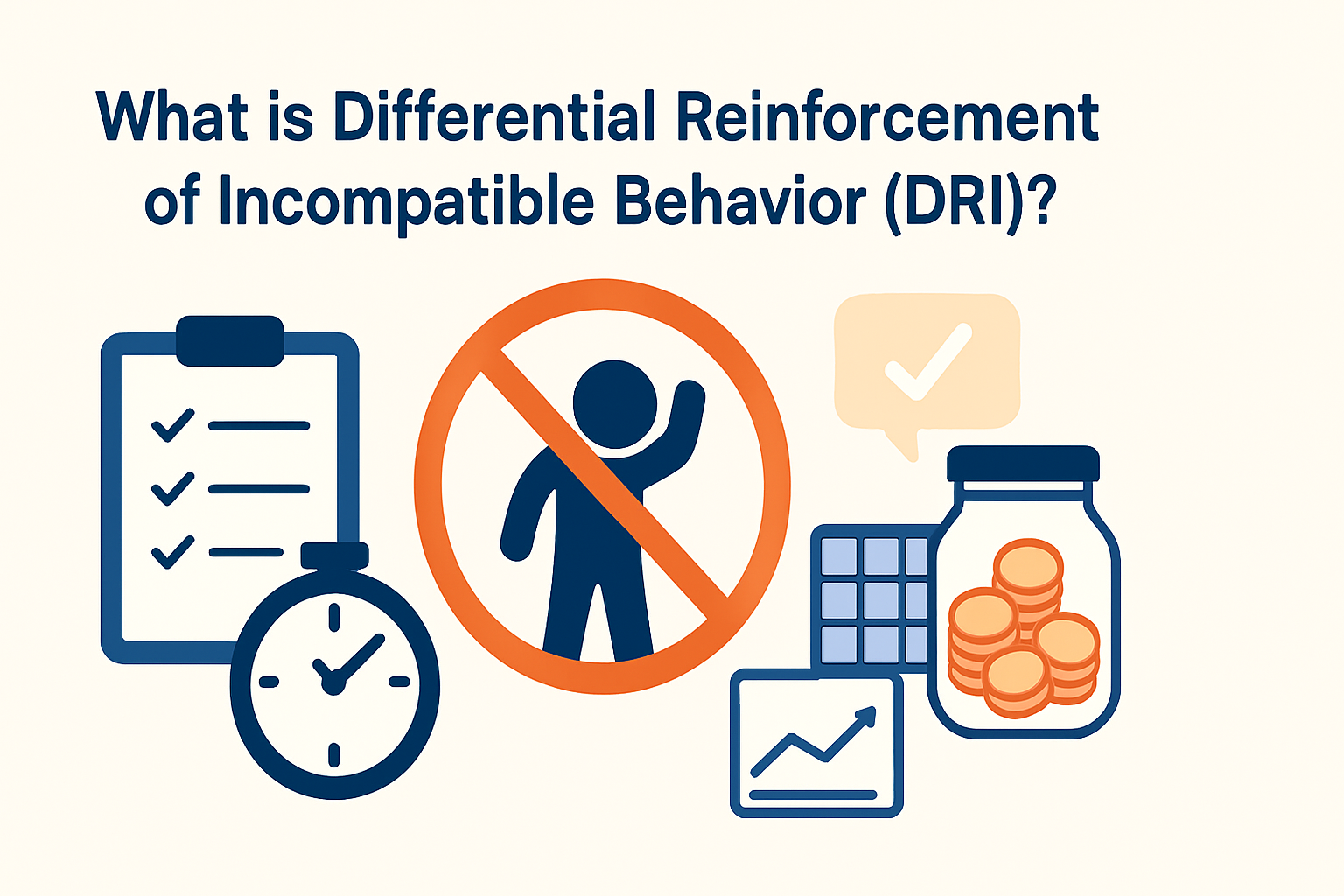
Differential reinforcement of incompatible behavior is a behavioral intervention where reinforcement is delivered for a specific behavior that cannot occur simultaneously with the target behavior. The incompatible behavior must be topographically mutually exclusive with the problem behavior, meaning the client physically cannot perform both at the same time.
The Operational Definition and Key Mechanism
In DRI, you identify a behavior that is physically impossible to perform while engaging in the target behavior. The reinforcement contingency is applied only to this incompatible behavior, while the target behavior is placed on extinction. This creates a situation where the client must choose between the reinforced incompatible behavior and the non-reinforced problem behavior.
Key characteristics of DRI include:
- Physical incompatibility between behaviors is required
- Reinforcement is contingent on the incompatible behavior
- The target behavior receives no reinforcement (extinction)
- Both behaviors cannot occur simultaneously
DRI Within the Ethical Framework of ABA
DRI aligns with the ethical principles of ABA by focusing on teaching appropriate behaviors rather than simply suppressing problematic ones. This approach respects client dignity and promotes skill development while reducing harmful behaviors. DRI represents a least restrictive intervention that emphasizes positive behavior support.
Applying DRI: Worked Examples from Assessment to Intervention
Effective DRI implementation requires careful assessment and planning. Each intervention should begin with a functional behavior assessment to understand why the behavior occurs, followed by selection of an appropriate incompatible behavior.
Example 1: Reducing Hand-Mouthing During Table Work
Target Behavior: Putting non-food items in mouth during academic tasks
Hypothesized Function: Automatic sensory reinforcement
Incompatible Behavior: Hands placed flat on table or manipulating designated fidget toy
Implementation steps:
- Conduct preference assessment to identify effective reinforcers
- Teach “hands down” as incompatible behavior through prompting
- Reinforce immediately when hands remain on table
- Use extinction for hand-mouthing (no attention, continue task)
- Gradually thin reinforcement schedule as behavior stabilizes
Example 2: Addressing Disruptive Vocalizations During Group Instruction
Target Behavior: Loud, context-inappropriate vocalizations
Hypothesized Function: Attention from peers/instructor
Incompatible Behavior: Raising quiet hand or using question card
Intervention components:
- Teach and prompt appropriate attention-seeking behavior
- Reinforce hand-raising with immediate teacher attention
- Implement planned ignoring for disruptive vocalizations
- Use visual supports to remind of appropriate behavior
- Collect treatment integrity data to ensure consistent implementation
DRI on the BCBA Exam: Common Traps and How to Avoid Them
BCBA exam questions about DRI often test your ability to distinguish it from similar procedures and select appropriate incompatible behaviors. Understanding these distinctions is crucial for exam success.
Distinguishing DRI from DRA and DRO
The most common exam trap involves confusing DRI with differential reinforcement of alternative behavior (DRA). While both reinforce appropriate behaviors, DRI requires physical incompatibility, whereas DRA requires functional equivalence. DRO (differential reinforcement of other behavior) reinforces the absence of the target behavior during specific intervals.
Key differentiators:
- DRI: Behaviors cannot occur together (physical impossibility)
- DRA: Behaviors serve same function but can occur together
- DRO: Reinforcement for not engaging in target behavior
Selecting the Correct Incompatible Behavior
Exam questions often present scenarios where you must choose between multiple potential replacement behaviors. The correct choice will always be the behavior that is physically incompatible with the target behavior. A helpful rule: if the client could theoretically perform both behaviors simultaneously, it’s not DRI.
Consider this sample scenario: A student taps his pencil loudly during independent work. Which behavior would be appropriate for DRI?
- Writing with pencil (incompatible – cannot tap while writing)
- Reading silently (not incompatible – could tap while reading)
- Asking for help (not incompatible – could tap while asking)
Quick-Reference Checklist for Implementing DRI
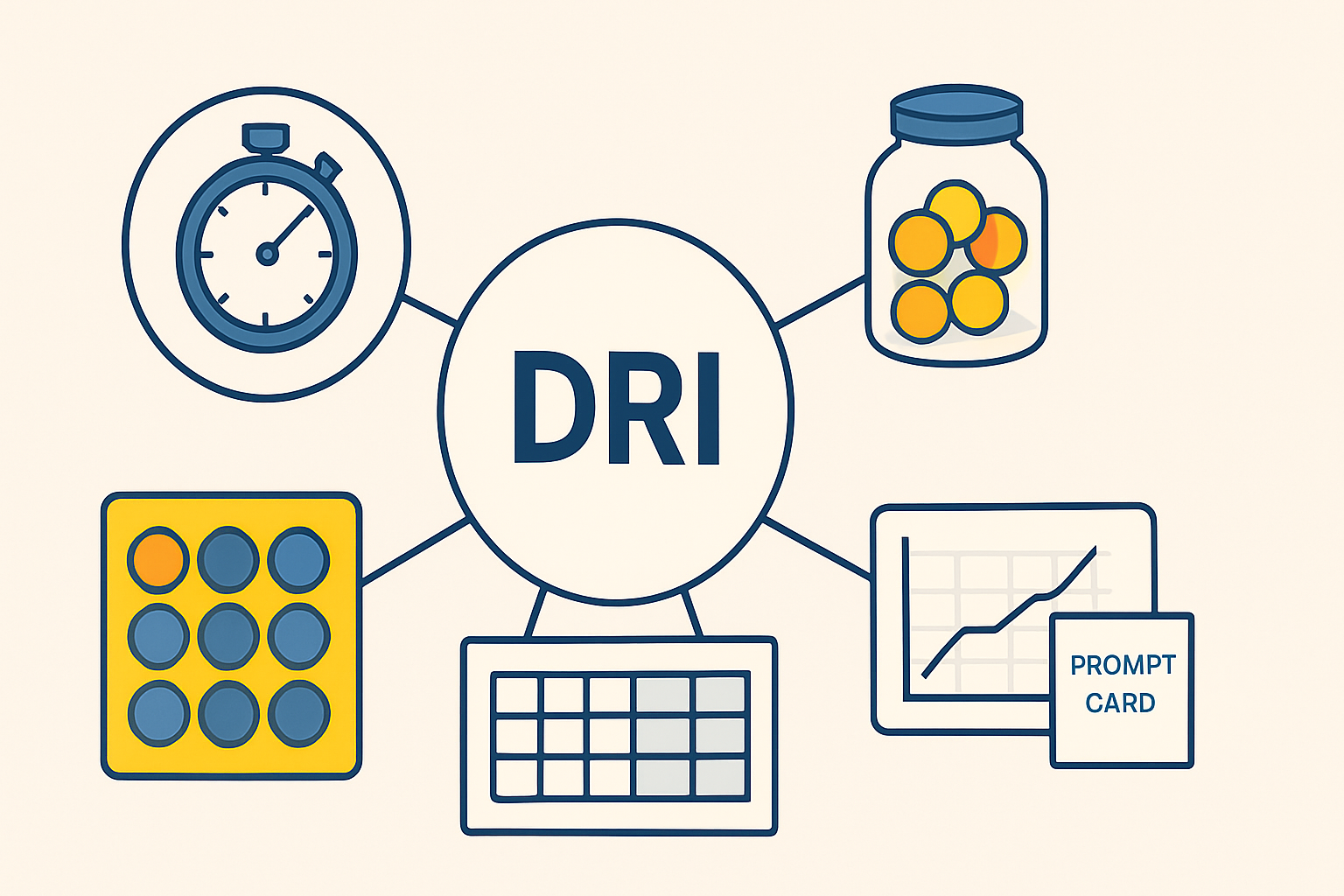
Use this checklist to ensure proper DRI implementation in clinical practice and to review key concepts for the BCBA exam.
- Conduct functional behavior assessment to identify behavior function
- Select behavior that is physically incompatible with target behavior
- Ensure incompatible behavior is developmentally appropriate
- Identify effective reinforcers through preference assessment
- Implement extinction for target behavior consistently
- Use appropriate prompting strategies to teach incompatible behavior
- Collect baseline data before intervention
- Monitor treatment integrity and social validity
- Plan for generalization and maintenance from the beginning
- Gradually thin reinforcement schedule as behavior stabilizes
Summary and Key Takeaways
Differential reinforcement of incompatible behavior is a powerful intervention that reduces problematic behaviors while teaching appropriate alternatives. Remember that the incompatible behavior must be physically impossible to perform simultaneously with the target behavior. For BCBA exam preparation, focus on distinguishing DRI from other differential reinforcement procedures and understanding the ethical considerations in implementation.
Successful DRI implementation requires careful assessment, appropriate behavior selection, consistent reinforcement, and proper extinction procedures. When studying for the BCBA exam, practice identifying scenarios where DRI is the most appropriate intervention and selecting behaviors that meet the physical incompatibility criterion. For more information on related procedures, see our guide on differential reinforcement procedures and extinction in ABA.


