
Negative Punishment ABA: What is Negative Punishment? A Behavioral Definition
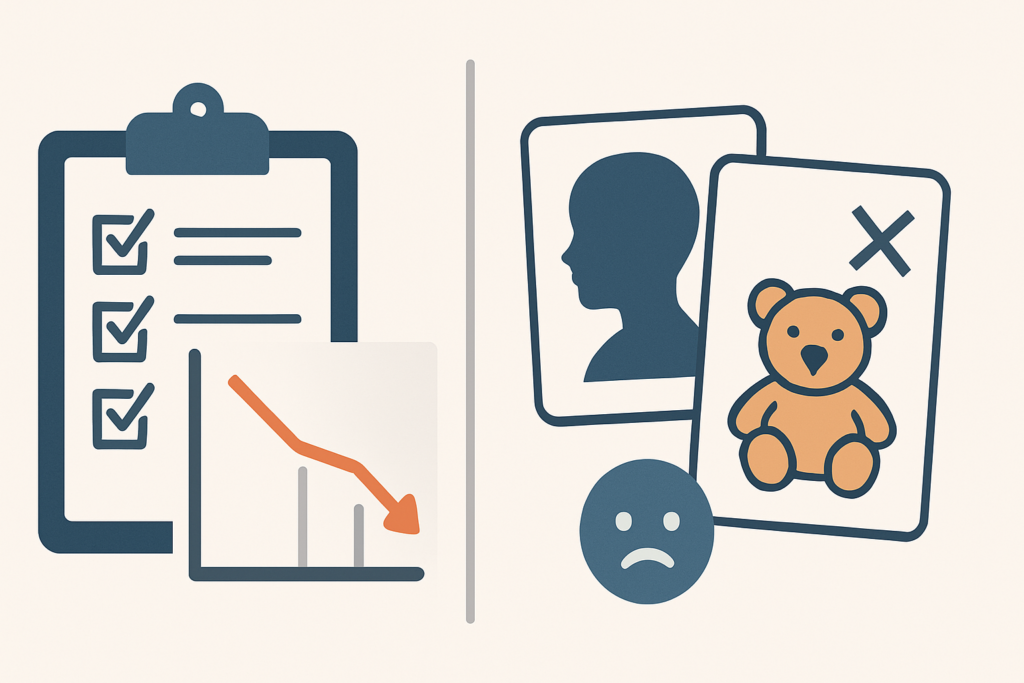
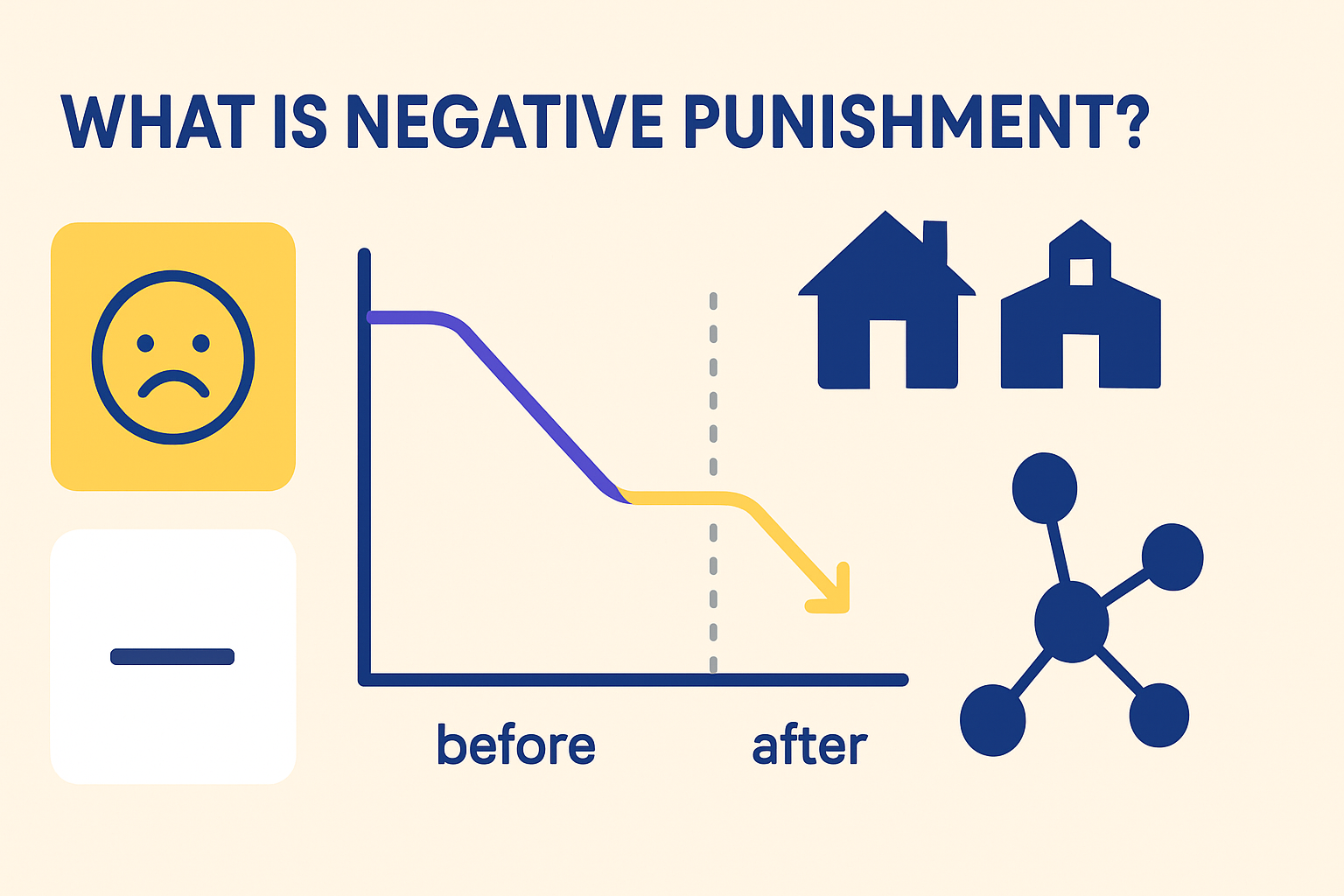
In applied behavior analysis, negative punishment refers to a specific behavioral process where a behavior is followed by the removal of a stimulus, resulting in a decrease in the future frequency of that behavior. The term ‘negative’ indicates removal, while ‘punishment’ specifies the effect on behavior frequency.
Table of Contents
- Negative Punishment ABA: What is Negative Punishment? A Behavioral Definition
- Negative Punishment in Practice: Worked ABA Examples
- Ethical Implementation and Exam Relevance
- Summary and Key Takeaways
This fundamental concept is essential for understanding how consequences shape behavior in clinical practice.
The Core Principle: Removal of a Stimulus
The defining characteristic of negative punishment is the removal of a stimulus contingent upon a behavior. This removal must result in a measurable decrease in behavior frequency to qualify as punishment. The stimulus removed is typically something the individual values or finds reinforcing.
Understanding this principle helps distinguish negative punishment from other behavioral procedures that might appear similar but operate through different mechanisms.
Negative Punishment vs. Other Procedures
Several behavioral procedures can be confused with negative punishment. Clear differentiation is crucial for accurate assessment and intervention planning.
- Positive punishment: Involves adding an aversive stimulus following behavior, rather than removing a valued stimulus. Both decrease behavior but through opposite operations.
- Extinction: Involves withholding reinforcement for a previously reinforced behavior, not removing an existing stimulus. Extinction leads to behavior decrease through non-reinforcement rather than punishment.
- Response cost: A specific type of negative punishment where a specified amount of a reinforcer is removed contingent upon behavior. All response cost procedures are negative punishment, but not all negative punishment involves response cost.
Negative Punishment in Practice: Worked ABA Examples
Real-world examples help clarify how negative punishment operates in clinical settings. These scenarios demonstrate the application of behavioral principles to decrease challenging behaviors.
Example 1: Time-Out from Positive Reinforcement
Consider a child who hits peers during playtime to gain access to preferred toys. A time-out procedure might be implemented as follows:
- Antecedent: Child sees peer playing with preferred toy
- Behavior: Child hits peer
- Consequence: Brief removal from play environment (2-minute time-out)
- Hypothesized function: Access to tangibles
- Effect: Future hitting decreases because the child loses access to the reinforcing play environment
This example demonstrates how removal of access serves as the punishing consequence. The time-out procedure qualifies as negative punishment because it removes the opportunity for reinforcement contingent upon the target behavior.
Example 2: Response Cost for Inappropriate Vocalizations
A student frequently makes off-task comments during group work to gain peer attention. A response cost system could be implemented:
- Antecedent: Teacher gives group work instruction
- Behavior: Student makes off-task comment
- Consequence: Loss of one token from token board
- Hypothesized function: Social attention
- Effect: Off-task comments decrease because the student loses accumulated tokens
This illustrates response cost as a subtype of negative punishment. The token represents a conditioned reinforcer that is removed contingent upon the inappropriate behavior. For more on reinforcement systems, see our guide on reinforcement in ABA.
Ethical Implementation and Exam Relevance
Implementing negative punishment requires careful ethical consideration and adherence to professional standards. The BACB Ethics Code provides specific guidelines for using punishment procedures in practice.
Ethical Checklist for Using Negative Punishment
Before implementing any punishment procedure, behavior analysts should complete this ethical checklist:
- Reinforcement-based interventions have been tried and documented first
- Obtained informed consent from client or guardian
- Conducted functional behavior assessment to identify maintaining variables
- Established data collection systems to monitor effectiveness
- Implemented reinforcement for alternative appropriate behaviors
- Monitored for potential side effects like emotional responding or aggression
- Ensured the procedure is the least restrictive alternative
These ethical safeguards help ensure that punishment procedures are used responsibly and effectively. For comprehensive ethical guidance, review our article on ethics in ABA practice.
Navigating Common BCBA Exam Traps
Several areas consistently challenge candidates on the BCBA exam. Understanding these traps can improve exam performance.
- Confusing negative/positive punishment: Remember that negative involves removal, positive involves addition
- Misidentifying extinction: Extinction withholds reinforcement; punishment removes a stimulus
- Selecting punishment first: Reinforcement-based interventions should typically precede punishment procedures
- Overlooking response cost: Recognize that response cost is a specific type of negative punishment
- Ignoring ethical requirements: Always consider consent, data collection, and reinforcement alternatives
These exam traps often test both conceptual understanding and ethical application. For additional exam strategies, explore our BCBA exam prep guide.
Summary and Key Takeaways
Negative punishment is a powerful behavioral procedure that requires careful implementation and ethical consideration. Key points to remember include:
- Definition: Removal of a stimulus following behavior that decreases future frequency
- Core principle: The ‘negative’ refers to removal, not to the quality of the stimulus
- Common forms: Time-out and response cost are frequently used negative punishment procedures
- Ethical requirements: Reinforcement alternatives first, informed consent, data monitoring
- Exam relevance: Differentiate from positive punishment and extinction; recognize ethical implementation steps
- Clinical application: Always pair with reinforcement for appropriate alternative behaviors
For further study on related concepts, the BACB Ethics Code provides comprehensive guidance on punishment procedures. Additionally, research from the Behavior Modification journal offers evidence-based practices for implementing behavioral interventions effectively.
Mastering negative punishment concepts requires both theoretical understanding and practical application skills. By studying these principles and their ethical implementation, behavior analysts can make informed clinical decisions and demonstrate competence on certification examinations.


