
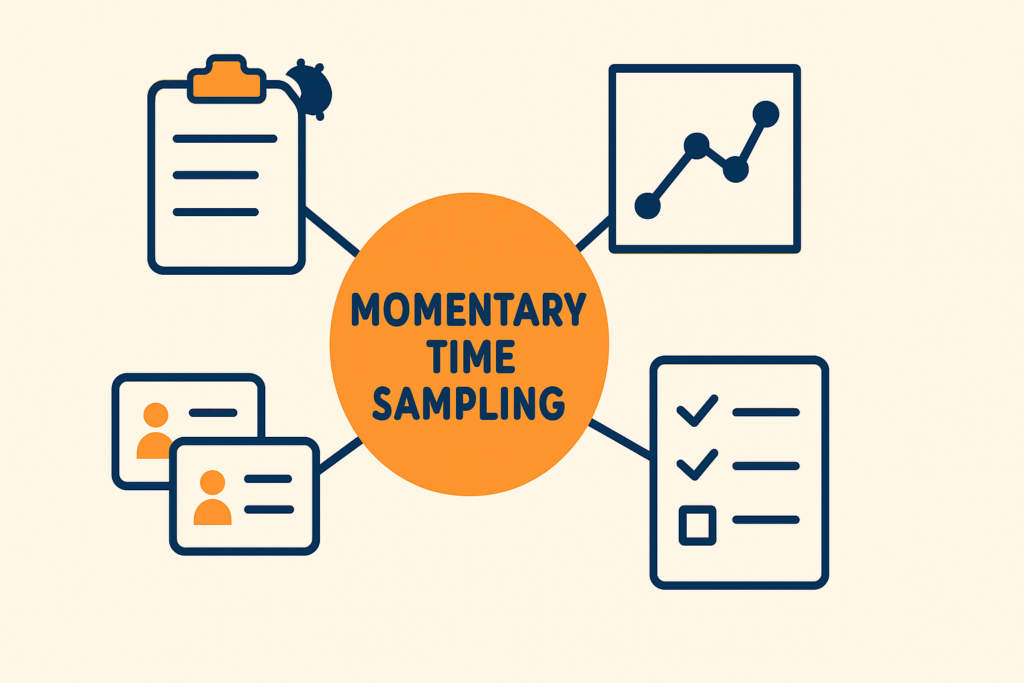
Momentary time sampling is a discontinuous measurement procedure used in applied behavior analysis to estimate the occurrence of behavior across time. This method provides a practical approach when continuous observation isn’t feasible, making it particularly valuable for BCBA candidates to understand thoroughly. The technique involves recording whether a target behavior is occurring at specific, predetermined moments rather than throughout an entire observation period.
Table of Contents
- What is Momentary Time Sampling? Definition and Core Concept
- Applying Momentary Time Sampling: Worked ABA Examples
- Momentary Time Sampling on the BCBA Exam
- Summary and Key Takeaways
What is Momentary Time Sampling? Definition and Core Concept
Momentary time sampling falls under the category of interval recording methods within discontinuous measurement systems. Unlike continuous measurement procedures that track every instance of behavior, this approach samples behavior at specific moments in time. The procedure is particularly useful when you need to monitor multiple clients or behaviors simultaneously, or when continuous observation would be impractical or disruptive.
The Basic Procedure: Recording at the Moment
The fundamental mechanics of momentary time sampling involve dividing an observation period into equal intervals. At the exact end of each interval, the observer records whether the target behavior is occurring at that precise moment. This creates a snapshot of behavior presence rather than a continuous record. The resulting data provides an estimate of behavior prevalence across the observation period.
Key procedural elements include:
- Interval length selection based on behavior characteristics
- Consistent timing for observation moments
- Clear operational definitions of target behaviors
- Reliable recording procedures at interval endpoints

When to Use Momentary Time Sampling in Practice
This measurement approach is ideal for specific clinical and educational scenarios. It works best with behaviors that have extended durations rather than brief, discrete occurrences. The method is particularly valuable when you need to monitor behavior across long periods or when observing multiple individuals simultaneously.
Common appropriate applications include:
- Classroom engagement monitoring during independent work periods
- Social interaction tracking in group settings
- On-task behavior assessment during therapy sessions
- Situations where continuous observation would be intrusive
- When resources for continuous measurement are limited
However, momentary time sampling has limitations. It typically underestimates actual frequency and duration compared to continuous measurement methods. The technique is less suitable for low-frequency behaviors or behaviors with very brief durations that might occur between observation moments.
Applying Momentary Time Sampling: Worked ABA Examples
Understanding theoretical concepts is essential, but practical application solidifies knowledge for the BCBA exam. These examples demonstrate how momentary time sampling works in real-world ABA scenarios, complete with antecedent-behavior-consequence analysis and data collection procedures.
Example 1: Classroom Engagement During Independent Work
Scenario: A 9-year-old student with escape-maintained off-task behavior during independent math work. The target behavior is operationally defined as “eyes oriented toward worksheet or instructional materials with hands positioned appropriately for writing.”
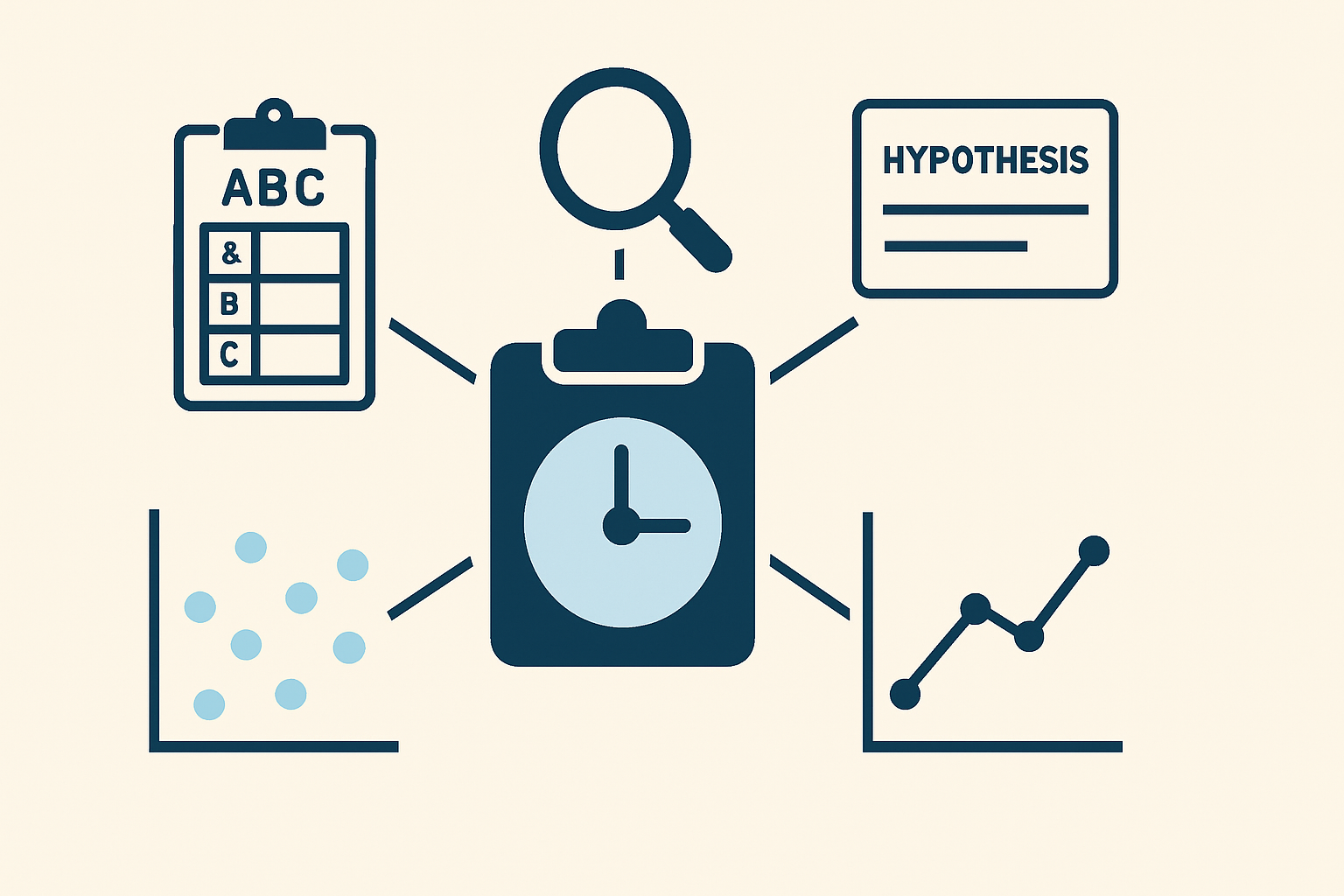
ABC analysis reveals:
- Antecedent: Math worksheet presented, teacher moves to other students
- Behavior: Student looks away from materials, plays with pencil
- Consequence: Delayed task completion, eventual teacher attention
Using a 5-minute momentary time sampling procedure with 30-second intervals:
- Observer sets timer for 30-second intervals
- At each interval endpoint, records ‘+’ if eyes are on materials
- Records ‘-‘ if student is looking away or engaged with non-task items
- Data sheet shows pattern: 8/10 intervals with engagement
This data indicates 80% engagement during the observation period, providing a baseline for intervention planning. The discontinuous measurement approach allows the teacher to continue instruction while collecting meaningful data.
Example 2: Peer Interaction During Recess
Scenario: A 7-year-old child with social skills deficits during unstructured recess time. The target behavior is “verbal initiation toward peers” defined as the child speaking directly to another child with appropriate social distance.
Hypothesized function is access to attention and play opportunities. The momentary time sampling procedure uses 1-minute intervals across a 15-minute recess period.
Data collection reveals:
- 3/15 intervals with verbal initiations (20% occurrence)
- Pattern shows initiations primarily toward familiar peers
- No initiations during final 5 minutes of recess
This efficient data collection method allows observation of multiple children simultaneously while providing actionable information about social interaction patterns. The data supports development of targeted social skills interventions and progress monitoring.
Momentary Time Sampling on the BCBA Exam
This measurement procedure frequently appears on the BCBA exam, often in questions about selecting appropriate data collection methods or interpreting measurement results. Understanding the key distinctions between momentary time sampling and other interval recording methods is crucial for exam success.
Common Exam Traps and How to Avoid Them
Several predictable traps appear in exam questions about momentary time sampling. Recognizing these patterns helps you select correct answers more consistently.
Primary exam challenges include:
- Confusing momentary time sampling with partial interval recording (which records if behavior occurs at any point during the interval)
- Mistaking it for whole interval recording (which requires behavior throughout the entire interval)
- Misidentifying when it’s the best measurement procedure for a given scenario
- Incorrectly interpreting data results as exact frequency counts rather than prevalence estimates
- Overlooking its tendency to underestimate actual behavior occurrence
To avoid these traps, remember that momentary time sampling specifically records behavior only at the moment the interval ends, making it a presence/absence snapshot rather than a duration measure.
Quick-Reference Application Checklist
Use this checklist during exam preparation and when reviewing measurement procedure questions:
- Is the target behavior clearly operationally defined and observable?
- Does the scenario require discontinuous rather than continuous measurement?
- Is the behavior typically of extended duration rather than brief occurrences?
- Is the primary need to sample behavior presence across time rather than count exact instances?
- Are resources for continuous measurement unavailable or impractical?
- Would continuous observation be overly intrusive or disruptive?
- Do you need to monitor multiple behaviors or individuals simultaneously?
This checklist aligns with the BACB Task List requirements for measurement procedures and helps ensure you select appropriate data collection methods for various scenarios. For more comprehensive exam preparation, consider our BCBA exam prep guide which covers all measurement domains.
Summary and Key Takeaways
Momentary time sampling serves as a valuable tool in the behavior analyst’s measurement toolkit. This discontinuous measurement procedure provides practical solutions for situations where continuous observation isn’t feasible. Understanding its proper application, limitations, and data interpretation is essential for both clinical practice and BCBA exam success.
Critical points to remember include:
- Records behavior presence only at specific interval endpoints
- Best suited for behaviors with extended durations
- Typically underestimates actual behavior frequency and duration
- Ideal for group settings and when monitoring multiple behaviors
- Provides prevalence estimates rather than exact counts
- Requires clear operational definitions and consistent timing
For further study on related measurement concepts, explore our guide on data collection methods in ABA. The BCBA Test Content Outline (6th ed.) provides official guidance on measurement requirements for certification. Remember that selecting appropriate measurement procedures represents a fundamental skill for behavior analysts, directly impacting intervention effectiveness and data-based decision making.


