
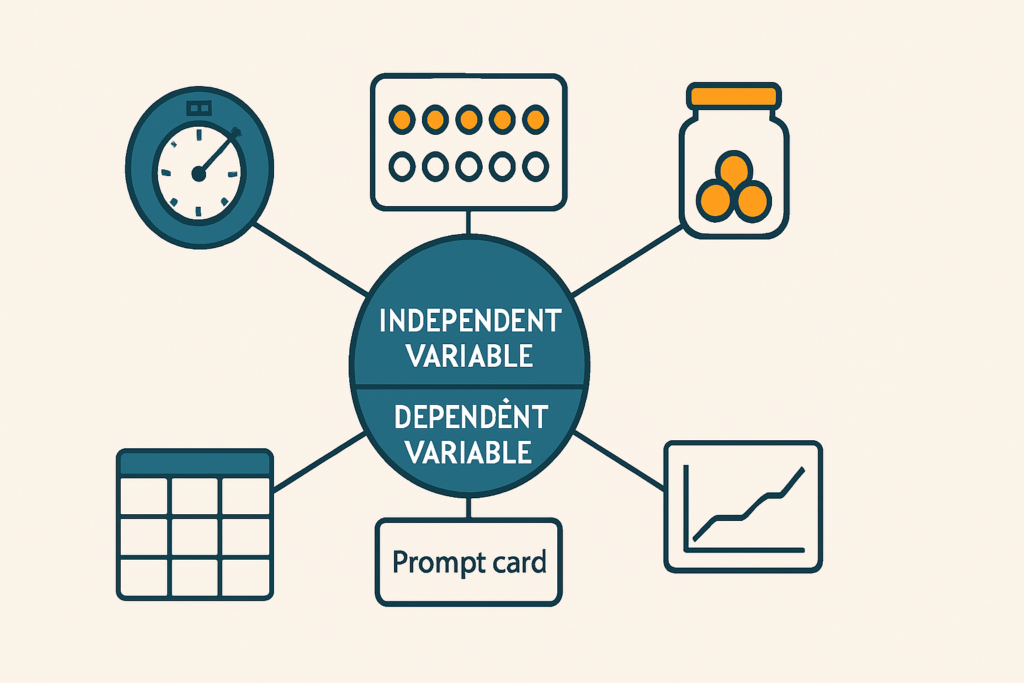
Understanding independent and dependent variables is fundamental to both research and practice in applied behavior analysis. These concepts form the backbone of experimental design and allow behavior analysts to demonstrate functional relationships between interventions and behavior change. For BCBA candidates, mastering this distinction is essential for both clinical practice and exam success.
Table of Contents
- independent versus dependent variables ABA: Defining the Core Variables in Behavior Analysis
- Applied Examples: Identifying IVs and DVs in ABA Scenarios
- Exam Relevance and Common Pitfalls for BCBA Candidates
- Quick-Reference Checklist and Summary
- References
Independent versus Dependent Variables ABA: Defining the Core Variables in Behavior Analysis
In behavior analysis, variables represent the key components we manipulate and measure to understand behavior change. The independent variable and dependent variable work together to demonstrate experimental control and functional relationships.
The Independent Variable (IV): What the Analyst Manipulates
The independent variable is the intervention, treatment, or condition that the researcher systematically changes. This represents the cause or treatment in experimental questions. In ABA practice, this typically involves specific procedures like reinforcement schedules, prompting strategies, or environmental modifications.
Key characteristics include that it’s actively manipulated by the experimenter, represents the intervention being tested, and is implemented with consistency across sessions. Understanding experimental design helps clarify how independent variables are systematically introduced and withdrawn.
The Dependent Variable (DV): The Measured Behavior
The dependent variable is the target behavior that is measured and expected to change in response to the independent variable. This represents the effect or outcome of the intervention. In single-subject designs, this is measured continuously to track changes over time.
Important features include that it must be operationally defined, measurable, and sensitive to changes in the independent variable. The dependent variable’s data path on graphs visually represents the intervention’s effectiveness.
Applied Examples: Identifying IVs and DVs in ABA Scenarios
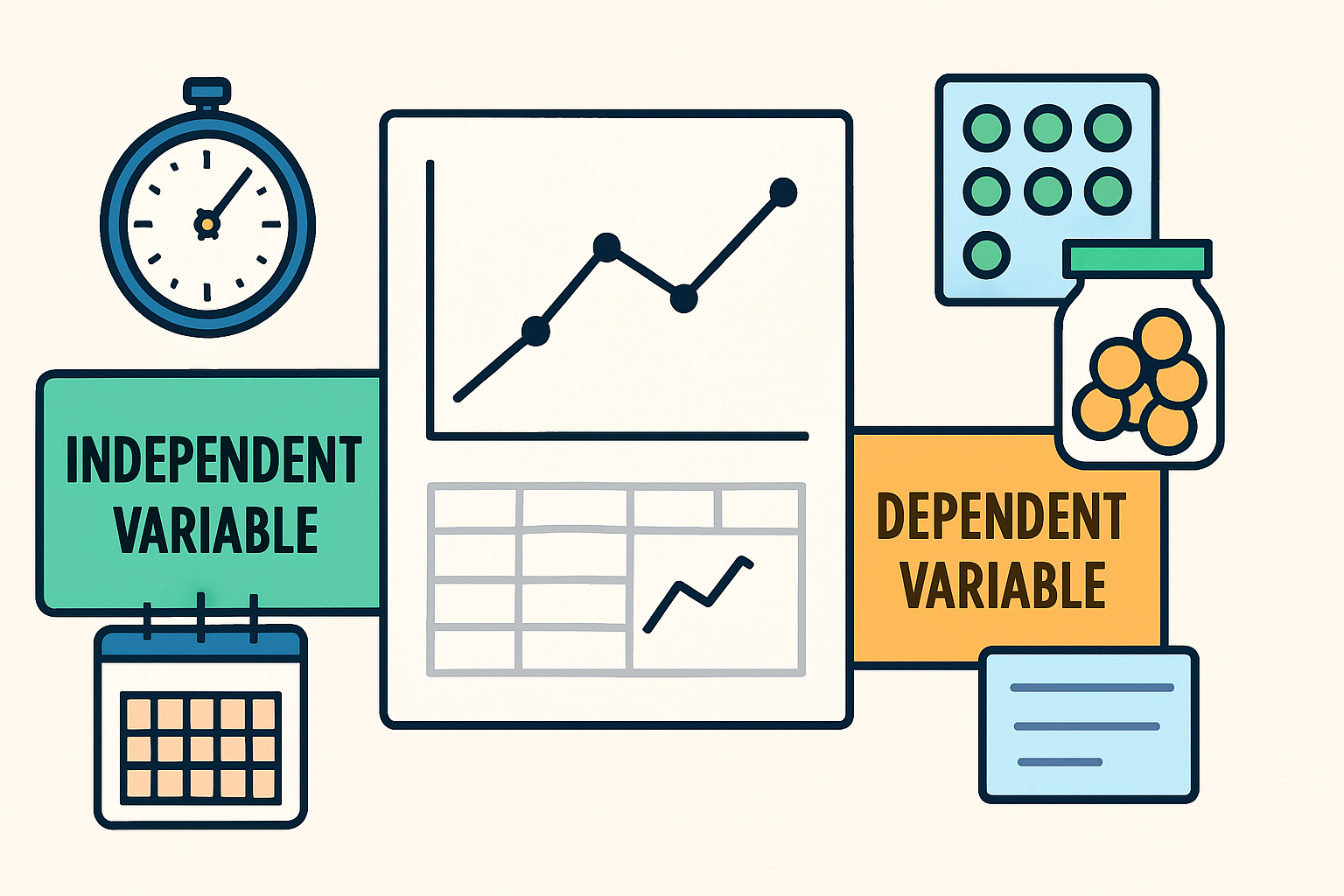
Moving from definitions to application, let’s examine concrete ABA scenarios that demonstrate how to identify these variables in practice.
Example 1: Token Economy for Task Completion
A BCBA implements a token economy where a student earns tokens for completing worksheets independently, then trades tokens for preferred break activities. The antecedent is the instruction to begin work, the behavior is worksheet completion, and the consequence is token delivery plus eventual break access.
- Independent Variable: Token economy procedure (specific reinforcement schedule and exchange system)
- Dependent Variable: Percentage of worksheet items completed independently
- Function: Positive reinforcement (access to break activities)
Example 2: Response Interruption for Hand Mouthing
An RBT uses response interruption and redirection when hand mouthing occurs, immediately blocking the behavior and redirecting to a chewy tube. The antecedent is often idle time, the behavior is hand mouthing, and the consequence is physical interruption followed by redirection.
- Independent Variable: Response interruption and redirection procedure
- Dependent Variable: Frequency of hand mouthing episodes
- Hypothesized Function: Automatic reinforcement (sensory stimulation)
Example 3: Visual Schedule to Reduce Transition Tantrums
A parent implements a first-then visual schedule before transitions, showing “first clean up, then TV.” The antecedent is the transition demand, the behavior is tantrumming, and the consequence has historically been task delay or avoidance.
- Independent Variable: Visual schedule intervention with specific prompting procedures
- Dependent Variable: Duration of tantrums during transition periods
- Hypothesized Function: Negative reinforcement (escape from demands)
Exam Relevance and Common Pitfalls for BCBA Candidates
On the BCBA exam, questions about independent and dependent variables test your ability to identify experimental components and avoid common misconceptions.
How IVs and DVs Are Tested on the BCBA Exam
Exam questions may present scenarios asking you to identify which variable is independent versus dependent. You might need to distinguish these from confounding variables or evaluate whether an experimental design demonstrates adequate control. Questions often involve analyzing single-subject designs like reversal or multiple baseline arrangements.
Some questions test your understanding of how changes in the independent variable should produce corresponding changes in the dependent variable to demonstrate a functional relationship.
Frequent Exam Traps and Misconceptions
Candidates often stumble on these common errors:
- Confusing measurement with behavior: Mistaking the measurement system (e.g., frequency count) for the dependent variable itself (the actual behavior like hand flapping)
- Misidentifying setting events: Confusing motivating operations or setting conditions (like deprivation states) with independent variables
- Multi-element confusion: In alternating treatments designs, incorrectly identifying different conditions as dependent variables rather than independent variables
- Procedure vs. component: Failing to distinguish between the overall intervention (IV) and specific components within it
Quick-Reference Checklist and Summary
Use this practical guide to quickly identify variables in any ABA scenario.
Self-Check: Identifying Variables in a Scenario
When analyzing any intervention scenario, ask yourself these questions:
- What is the researcher or practitioner actively doing or changing? (This is likely the independent variable)
- What specific behavior is being measured and graphed? (This is the dependent variable)
- Is this variable measured (DV) or manipulated (IV)?
- Would changing this variable likely affect the measured behavior? (If yes, it’s probably the IV)
- Does this variable represent the intervention procedure or the behavioral outcome?
Key Takeaways for Your Study Notes
Remember these essential points:
- Independent Variable = Intervention/Manipulation – What you do to change behavior
- Dependent Variable = Target Behavior/Measurement – What changes as a result
- The dependent variable depends on changes to the independent variable
- In single-subject design, the dependent variable is measured continuously
- Always tie back to the specific, operationally defined behavior of interest
- For more on related concepts, explore graphing and visual analysis techniques
Mastering the distinction between independent and dependent variables strengthens both your clinical practice and exam performance. These concepts form the foundation for demonstrating experimental control and making data-based decisions in behavior analysis.


