

Operational Awareness definition: Defining Operational Awareness in Behavior Analysis
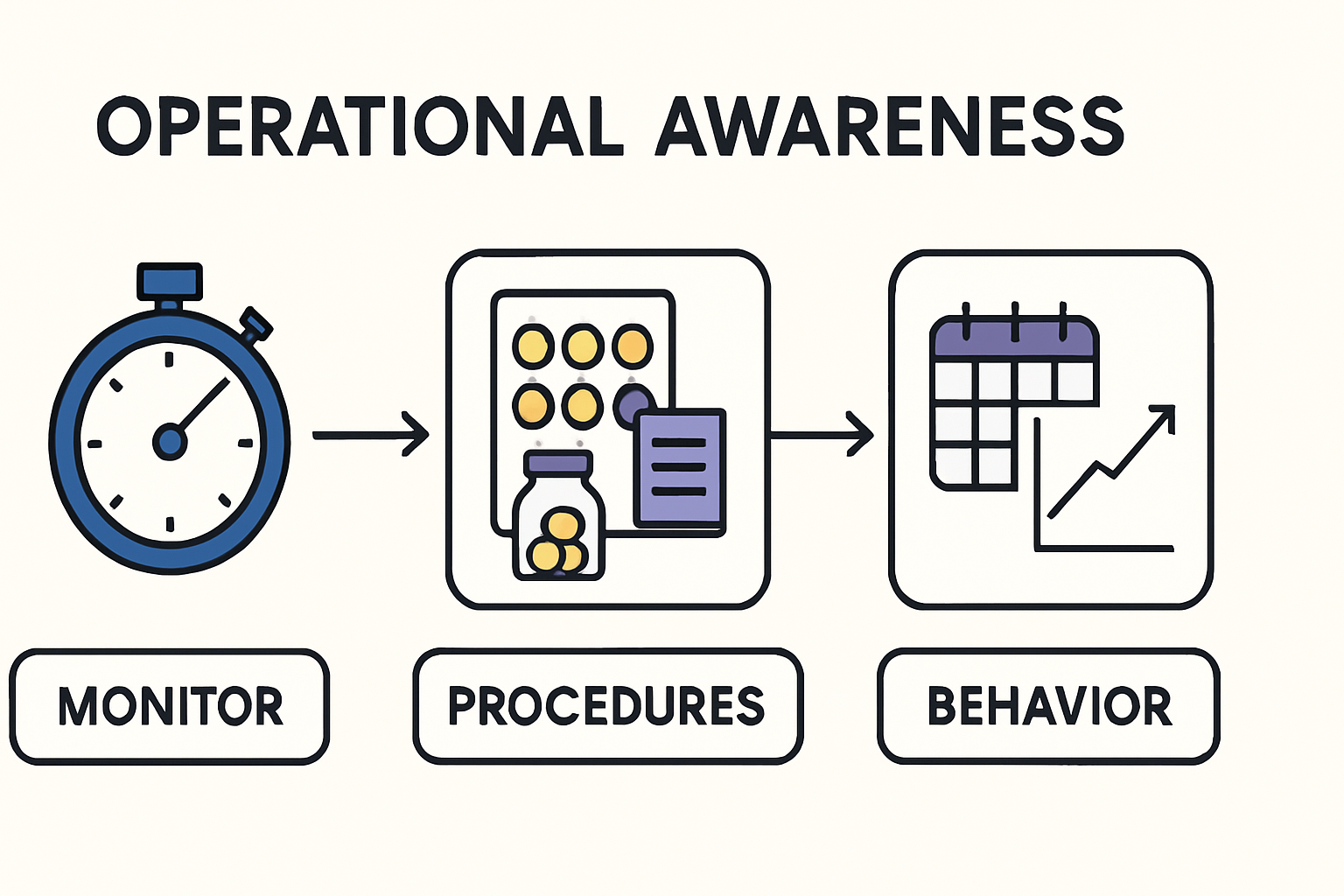
In applied behavior analysis, operational awareness represents a critical practitioner skill that bridges written intervention plans with effective implementation. This concept involves the conscious monitoring of whether procedures are being followed as designed while simultaneously assessing their effects on client behavior.
Table of Contents
- Operational Awareness definition: Defining Operational Awareness in Behavior Analysis
- Operational Awareness in Practice: Worked ABA Examples
- Operational Awareness on the BCBA Exam
- A Quick Checklist for Building Operational Awareness
- Summary: From Exam Concept to Ethical Practice
The Core Definition and Its Components
Operational awareness refers to the practitioner’s ongoing understanding of intervention implementation and outcomes. It encompasses two key components: monitoring procedural fidelity and evaluating behavioral effects in real time.
The BACB Ethics Code implicitly supports this concept through sections addressing responsible conduct (Section 2.09) and data-based decisions (Section 4.07). Practitioners must ensure interventions are implemented correctly while continuously assessing their effectiveness.
How It Differs from Treatment Integrity
While related, operational awareness and treatment integrity serve distinct functions in behavior analysis practice. Treatment integrity represents the objective measurement of implementation accuracy—the data showing what percentage of steps were followed correctly.
Operational awareness is the practitioner’s subjective judgment and perception of that implementation quality. Think of treatment integrity as the speedometer reading in a car, while operational awareness is the driver noticing that reading and adjusting their driving accordingly.
Operational Awareness in Practice: Worked ABA Examples
Understanding operational awareness becomes clearer through concrete examples. These scenarios demonstrate how practitioners apply this concept in real clinical settings.
Example 1: DRA for Attention-Maintained Behavior
Consider a classroom scenario where a BCBA implements differential reinforcement of alternative behavior (DRA) to address attention-seeking call-outs. The plan specifies reinforcing hand-raising with immediate teacher attention while placing call-outs on extinction.
The breakdown occurs when the classroom aide inconsistently reinforces hand-raising and accidentally provides attention following call-outs. A practitioner with strong operational awareness would notice this reinforcement contingency drift and intervene immediately to correct implementation.
Example 2: Antecedent Intervention for Escape
In a home setting, a BCBA implements a visual schedule and break card system for a child who engages in task avoidance. The intervention includes presenting the schedule, allowing choice-making, and honoring break requests within 30 seconds.
The implementation breakdown occurs when the RBT rushes through schedule presentation and delays honoring break requests. Operational awareness involves noticing these compromised antecedent manipulations and their impact on the client’s escape-maintained behavior.
Operational Awareness on the BCBA Exam
The BCBA exam frequently tests operational awareness concepts through various question formats. Understanding how this topic appears can help you prepare effectively.
Common Question Formats and Key Terms
Exam questions often use specific terminology related to operational awareness. You might encounter scenarios involving:
- Ensuring procedural fidelity during implementation
- Monitoring intervention delivery by staff
- A supervisor’s responsibility during direct observation
- Evaluating the independent variable implementation
- Assessing whether procedures match the written plan
These questions test your understanding of both measurement and judgment aspects of implementation quality.
Traps to Avoid: Misapplication and Confusion
Several common pitfalls can trip up exam candidates on operational awareness questions. Be particularly careful to avoid these errors:
- Confusing operational awareness with client self-awareness or self-monitoring
- Mistaking it for general clinical judgment without the fidelity component
- Selecting answers about client progress without first addressing implementation accuracy
- Overlooking the need for ongoing assessment during intervention
- Focusing only on outcomes rather than procedural adherence
Remember that operational awareness always involves monitoring both implementation fidelity and behavioral effects simultaneously.
A Quick Checklist for Building Operational Awareness
Use this practical checklist to develop and maintain operational awareness in both clinical practice and exam preparation:
- Review procedures before implementation begins
- Establish clear implementation criteria for all steps
- Schedule regular direct observation sessions
- Use treatment integrity checklists during observations
- Compare implementation data with behavioral outcomes
- Document procedural deviations immediately when noticed
- Provide corrective feedback to implementers promptly
- Adjust procedures based on ongoing assessment data
This checklist aligns with best practices in behavior analysis supervision and effective intervention implementation.
Summary: From Exam Concept to Ethical Practice
Operational awareness serves as the critical bridge between written behavior plans and effective, ethical intervention. This concept transforms from an exam topic to a daily practice skill that ensures client dignity and meaningful outcomes.
By maintaining operational awareness, practitioners uphold the scientific integrity of behavior analysis while delivering compassionate care. This approach ensures interventions are implemented as designed while remaining responsive to client needs.
For further study on related concepts, explore our guide to treatment integrity and social validity or learn about behavior skills training for effective staff training. The BACB Ethics Code provides essential guidance on responsible implementation practices.
Remember that operational awareness isn’t just about catching errors—it’s about creating systems that support consistent implementation and meaningful outcomes for every client you serve.


