
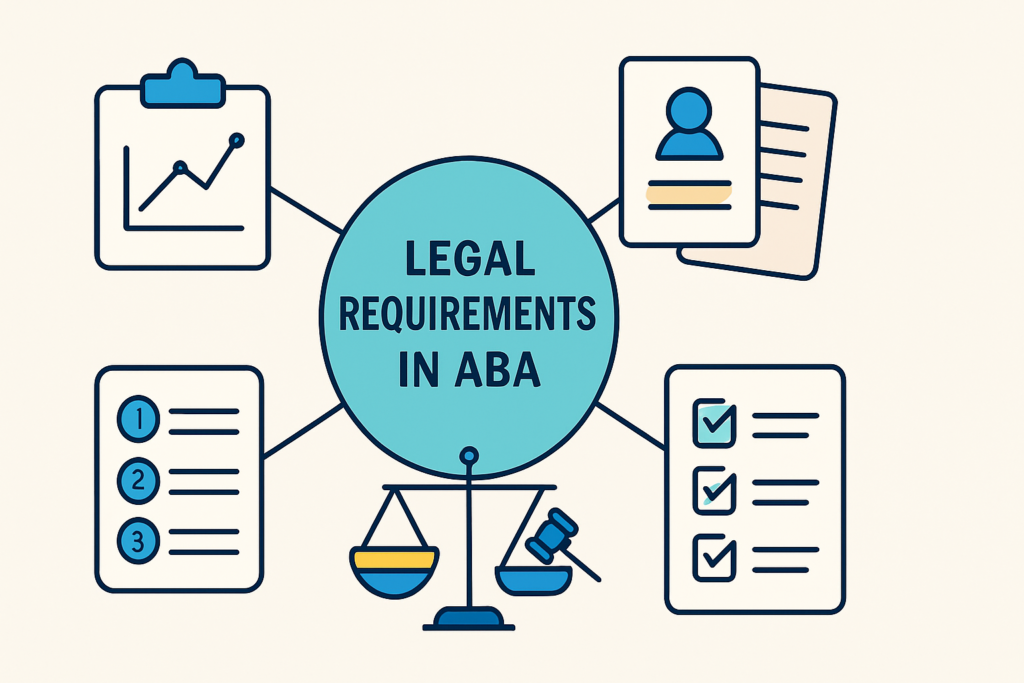
Understanding legal requirements is essential for every practicing behavior analyst. These obligations form a complex framework that guides professional conduct and protects both clients and practitioners. This guide examines how the BACB Ethics Code intersects with federal and state laws, providing practical strategies for navigating these requirements in daily practice.
Table of Contents
- Legal Requirements in ABA: Defining the Legal Landscape for Behavior Analysts
- Applied Analysis: Legal Requirements in Practice Scenarios
- Exam Focus: Navigating Legal and Ethical Questions
- Your BCBA Legal Requirements Checklist
Legal Requirements in ABA: Defining the Legal Landscape for Behavior Analysts
Behavior analysts operate within a multi-layered regulatory environment. This framework includes professional ethics codes, statutory laws, and organizational policies that collectively define acceptable practice standards.
The BACB Ethics Code: Your Primary Professional Compass
The BACB Ethics Code serves as an enforceable standard, not merely guidance. Key sections directly address legal interplay, including those covering professional boundaries, confidentiality requirements, and informed consent procedures. Violations can result in certification suspension or revocation.
Several core sections establish legal foundations:
- Section 1.04 addresses integrity and professional relationships
- Section 2.0 covers responsibility to clients and stakeholders
- Section 3.0 establishes assessment and treatment standards
- Section 4.0 defines supervision and delegation requirements
- Section 5.0 outlines ethical behavior in public statements
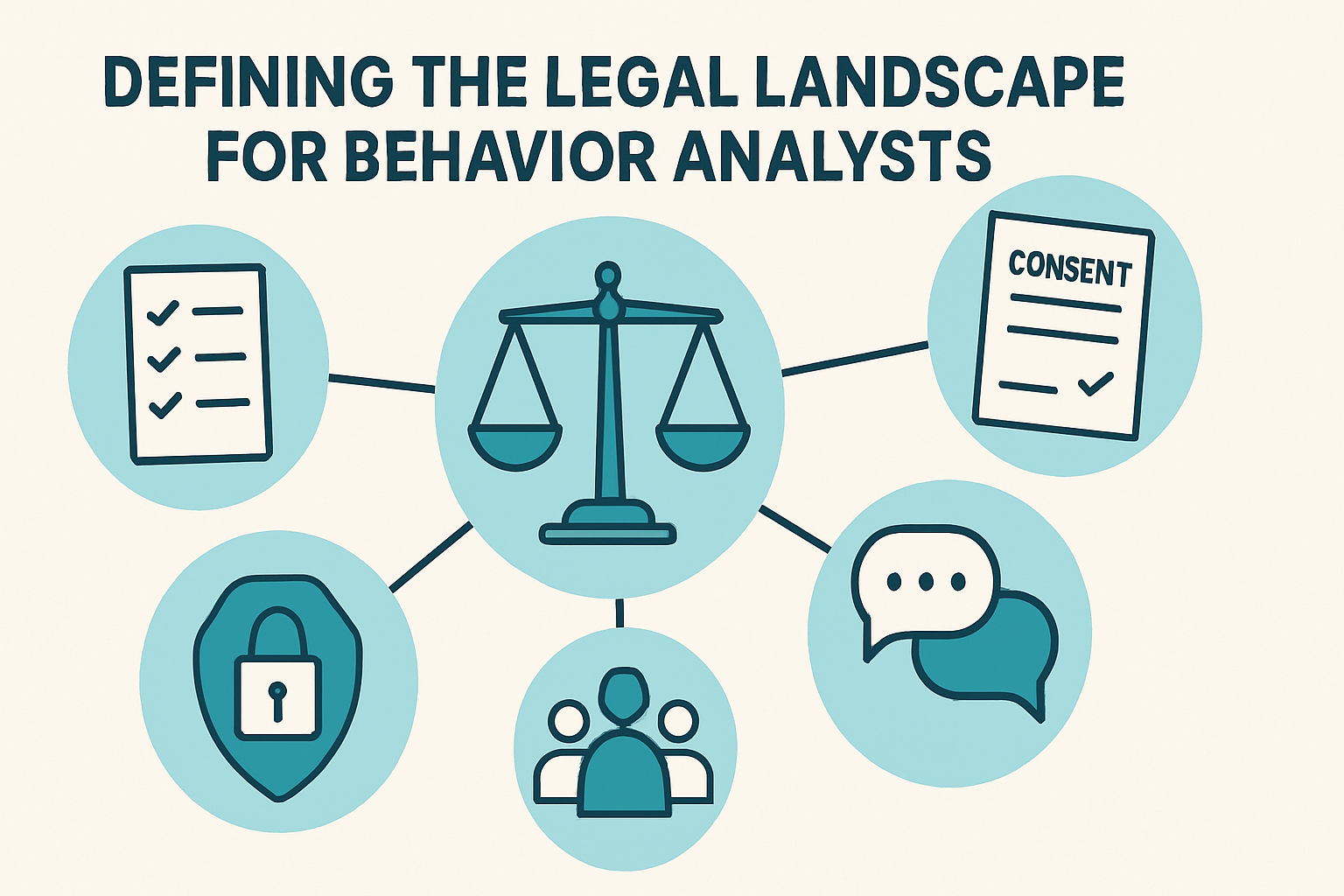
Statutory Law: HIPAA, FERPA, and Mandated Reporting
Beyond professional codes, behavior analysts must comply with independent legal obligations. These statutes create specific duties that must be followed alongside ethical guidelines.
Key statutory requirements include:
- HIPAA Privacy Rule protects health information in most clinical settings
- FERPA regulations govern educational records in school-based practice
- Mandated reporting laws require disclosure of suspected abuse or neglect
- State licensing requirements that may impose additional obligations
Applied Analysis: Legal Requirements in Practice Scenarios
Real-world application demonstrates how legal missteps can occur and their potential consequences. Analyzing these scenarios helps identify common pitfalls and appropriate responses.
Scenario 1: Confidentiality Breach During Data Collection
A BCBA uses a non-secured tablet for session notes in a public school setting. This creates potential FERPA violations and confidentiality breaches if the device is lost or accessed by unauthorized individuals.
Analyzing this scenario reveals:
- Antecedent: Convenience of digital data collection
- Behavior: Using unsecured technology for sensitive information
- Consequence: Potential data breach and ethical violation
- Function: Social positive reinforcement through convenience
The correct procedure involves using encrypted devices, implementing password protection, and following organizational data security protocols. For more on ethical practice, see our guide on ethics in ABA practice.
Scenario 2: Informed Consent and Scope of Practice Conflict
A parent requests a feeding intervention outside the BCBA’s competency area. This creates a legal and ethical trap where acquiescing could violate both scope of practice limitations and informed consent requirements.
Key considerations include:
- Function analysis: Negative reinforcement through conflict avoidance
- Legal risk: Practicing beyond competency violates ethical standards
- Ethical solution: Appropriate referral to qualified specialists
- Documentation requirement: Clear records of refusal rationale
Proper response involves explaining competency limitations, providing appropriate referrals, and documenting the informed consent discussion thoroughly.
Exam Focus: Navigating Legal and Ethical Questions
BCBA exam questions often test the intersection of legal requirements and ethical practice. Understanding common distractor patterns and developing a systematic approach improves exam performance.
Common Exam Traps and How to Avoid Them
Several recurring patterns appear in exam questions testing legal knowledge. Recognizing these traps helps select correct answers more consistently.
- Confusing ethical with legal requirements (they often overlap but differ)
- Prioritizing organizational policy over statutory law (law always supersedes)
- Missing duty to report cues in vignette descriptions
- Misunderstanding minimum necessary disclosure standards
- Overlooking state-specific requirements in general questions
A Decision-Making Framework for Test Questions
Developing a systematic approach helps navigate complex legal scenarios on exams. This framework provides consistent decision-making structure.
Follow these four steps when encountering legal questions:
- Identify the core issue presented in the scenario
- Recall specific Code items relevant to the situation
- Check for overriding statutes that might apply
- Select the action that satisfies both ethical and legal requirements
For additional exam strategies, explore our BCBA exam study framework.
Your BCBA Legal Requirements Checklist
This actionable summary provides quick reference for both study and practice. Regular review ensures ongoing compliance with evolving legal standards.
- Maintain current knowledge of BACB Ethics Code updates and revisions
- Document informed consent thoroughly for all interventions
- Implement secure data practices following HIPAA/FERPA requirements
- Know mandated reporting obligations for your practice jurisdiction
- Establish clear boundaries regarding scope of practice limitations
- Consult legal resources when uncertain about specific requirements
- Review organizational policies against current legal standards
- Document decision-making processes for complex legal situations
Remember that legal requirements in ABA practice continue to evolve. Regular consultation with the BACB Ethics Department and state regulatory bodies ensures ongoing compliance. For comprehensive information on professional standards, refer to the official BACB Ethics Code for Behavior Analysts.
Successful navigation of legal requirements requires both knowledge and systematic application. By integrating ethical principles with statutory obligations, behavior analysts can provide effective services while maintaining professional integrity and legal compliance.


