

Selection Bias ABA: What is Selection Bias in Behavior Analysis?
Selection bias represents a systematic measurement error that occurs when the sample of behaviors, times, or settings selected for observation fails to accurately represent a client’s typical performance. This threat to external validity undermines the accuracy of behavioral assessment and intervention planning.
Table of Contents
- Selection bias ABA: What is Selection Bias in Behavior Analysis?
- Selection Bias in Action: Worked ABA Examples
- Selection Bias on the BCBA Exam: Relevance and Common Traps
- The Practitioner’s Checklist: Avoiding Selection Bias
- Key Takeaways for BCBA Candidates
According to Cooper, Heron, and Heward, selection bias compromises our ability to generalize findings beyond the specific measurement conditions. It’s particularly problematic because it can create misleading data patterns that don’t reflect the client’s actual behavioral repertoire across different contexts.
A Formal Definition for Your Exam Toolbox
Selection bias occurs when measurement systematically favors certain behaviors, times, or settings over others, resulting in data that doesn’t represent the true behavioral baseline. This error stems from non-random sampling decisions that introduce systematic distortion into behavioral measurement.
The bias threatens external validity because findings from the measured sample cannot be reliably generalized to other contexts or times. This concept connects directly to the seven dimensions of ABA, particularly the dimension of generality.
Selection Bias vs. Observer Bias: Knowing the Difference
These two measurement errors are frequently confused on the BCBA exam. Selection bias concerns what gets measured – the specific behaviors, times, or settings chosen for observation. Observer bias involves how measurement occurs – systematic errors in scoring or recording behaviors.
While selection bias affects which data enters your measurement system, observer bias distorts how that data gets recorded. Both threaten validity but require different corrective strategies.
Selection Bias in Action: Worked ABA Examples
Understanding selection bias requires concrete examples that demonstrate how this error manifests in practice. Each scenario includes the antecedents, biased selection behavior, consequences, and the function maintaining the bias.
Example 1: The ‘Convenience’ Time Sample
A BCBA collects data only during the quiet 30 minutes after lunch, missing the client’s high-rate disruptive behaviors that typically occur during morning transitions. The antecedent is the practitioner’s need for manageable data collection. The behavior involves selecting the post-lunch period exclusively.
The consequence is clean, low-rate data that’s easy to graph. The function of this bias is negative reinforcement – the practitioner escapes the effort and frustration of measuring during chaotic morning periods.
Example 2: Targeting the ‘Visible’ Behavior
A practitioner focuses intervention on hand-flapping because it’s highly visible and concerning to parents, while ignoring chronic task avoidance that’s less noticeable but more functionally significant. The antecedent includes parental concern about appearance.
The behavior involves selecting hand-flapping for measurement and intervention. The consequence is parental approval and apparent progress. This bias functions as positive reinforcement through social validation.
Example 3: The ‘Successful’ Setting
Data collection occurs only in the therapy room where the client demonstrates high compliance, failing to measure generalization to the classroom where significant behavioral challenges persist. The antecedent is the goal to demonstrate intervention effectiveness.
The behavior involves selecting the therapy room for all probes. The consequence is data showing consistent improvement. This bias functions as positive reinforcement through successful-looking graphs and reports.
Selection Bias on the BCBA Exam: Relevance and Common Traps
Understanding selection bias is crucial for exam success, as it appears in multiple question formats related to measurement validity and ethical practice. The BACB tests this concept through scenario-based questions that require identifying measurement errors and recommending appropriate solutions.
How the Exam Tests This Concept
Selection bias questions typically appear in sections covering measurement validity, ethical data collection practices, interpreting graphed data, and designing comprehensive assessment plans. These questions often present realistic scenarios where practitioners have made systematic sampling errors.
You might encounter questions asking you to identify the threat to validity in a described measurement plan or to recommend strategies for obtaining representative behavioral samples. These connect to broader concepts in data collection methods and measurement systems.
Three Frequent Exam Mistakes to Avoid
- Confusing selection bias with observer drift or measurement reactivity. Remember that selection bias concerns what gets measured, not how it’s measured.
- Failing to recommend specific solutions like random time sampling, measuring across multiple contexts, or using comprehensive assessment periods.
- Overlooking the ethical implications of selection bias, which can misrepresent client progress and lead to inappropriate intervention decisions.
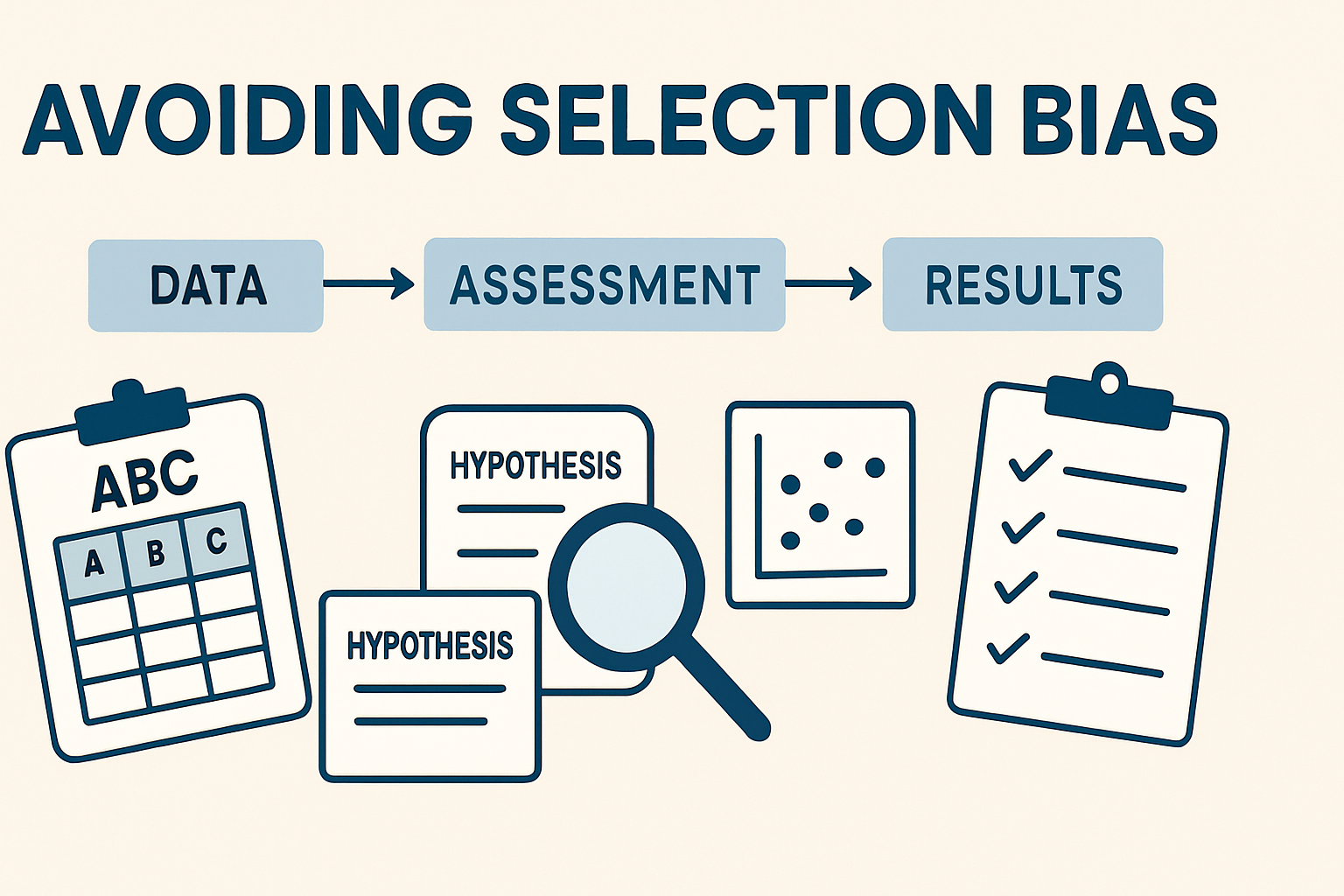
The Practitioner’s Checklist: Avoiding Selection Bias
Use this actionable checklist to audit your measurement plans and ensure representative sampling. These questions help identify and prevent systematic selection errors before they compromise your data.
- Does your measurement schedule include samples from all relevant times of day, including potentially challenging periods?
- Are you measuring behaviors across all settings where they naturally occur, not just controlled environments?
- Have you considered less visible but functionally significant behaviors that might be overlooked?
- Does your sampling method include random or systematic approaches to avoid convenience-based selection?
- Are you collecting sufficient data to capture behavioral variability across different conditions?
- Have you reviewed your measurement plan with colleagues to identify potential sampling biases?
Key Takeaways for BCBA Candidates
Selection bias represents a systematic error in what gets measured, threatening the external validity of behavioral assessments. This occurs when measurement samples fail to represent typical performance across relevant contexts and times.
The core strategy for combating selection bias involves ensuring representative sampling through comprehensive measurement across settings, times, and behavioral topographies. Ethical practice requires acknowledging and addressing these biases to provide accurate behavioral representation.
For further study on related measurement concepts, review the ethics guidelines and consult authoritative sources like the BACB’s professional standards and peer-reviewed literature on measurement validity in behavior analysis.


