

Attrition in ABA: What is Attrition in Behavior Analysis?
In behavior analysis, attrition refers to the loss of participants from a study or intervention over time. This systematic dropout creates significant challenges for both research validity and clinical effectiveness. Understanding this concept is crucial for interpreting study results and maintaining ethical practice standards.
Table of Contents
- attrition in ABA: What is Attrition in Behavior Analysis?
- Attrition in Action: Worked ABA Examples
- Why Attrition Matters for the BCBA Exam and Ethics
- Quick Checklist: Identifying and Addressing Attrition
- Summary and Key Takeaways
Attrition occurs when participants discontinue their involvement before a study’s completion, potentially biasing outcomes and limiting generalizability. This differs from other validity threats that affect measurement or design integrity.

Attrition vs. Other Threats to Validity
Several factors can compromise research validity, but attrition presents unique challenges. Distinguishing between these threats is essential for proper experimental design and data interpretation.
- Instrumentation: Changes in measurement tools or procedures during a study
- Maturation: Natural changes in participants over time unrelated to intervention
- Selection bias: Systematic differences between groups before intervention begins
- Testing effects: Changes in performance due to repeated exposure to assessments
Unlike these factors, attrition specifically involves participant dropout, which can create non-random missing data and threaten both internal and external validity.
Attrition in Action: Worked ABA Examples
Real-world scenarios help illustrate how attrition manifests in applied settings. These examples demonstrate the practical implications of participant dropout and how behavior analysts can identify potential causes.
Example 1: Parent Training Program Dropout
A comprehensive parent training program requires daily data collection and weekly sessions. After three weeks, several parents stop attending.
- Antecedent: Time-intensive data collection requirements and complex procedures
- Behavior: Parents discontinue session attendance and data submission
- Consequence: Removal of demanding tasks and scheduling constraints
The hypothesized function is escape from aversive demands. This pattern of attrition suggests the intervention may lack social validity or appropriate support structures.
Example 2: School-Based Group Contingency
A classroom intervention uses a group contingency to reduce disruptive behavior. One target student consistently withdraws from participation.
- Antecedent: Peer teasing during intervention implementation
- Behavior: Student withdraws assent and stops participating
- Consequence: Avoidance of social negative reinforcement from peers
The hypothesized function is avoidance of social aversives. This attrition pattern highlights the importance of considering social dynamics and obtaining ongoing assent in group settings.
Why Attrition Matters for the BCBA Exam and Ethics
Attrition has significant implications for both exam preparation and ethical practice. Understanding these connections helps behavior analysts maintain research integrity and client welfare.
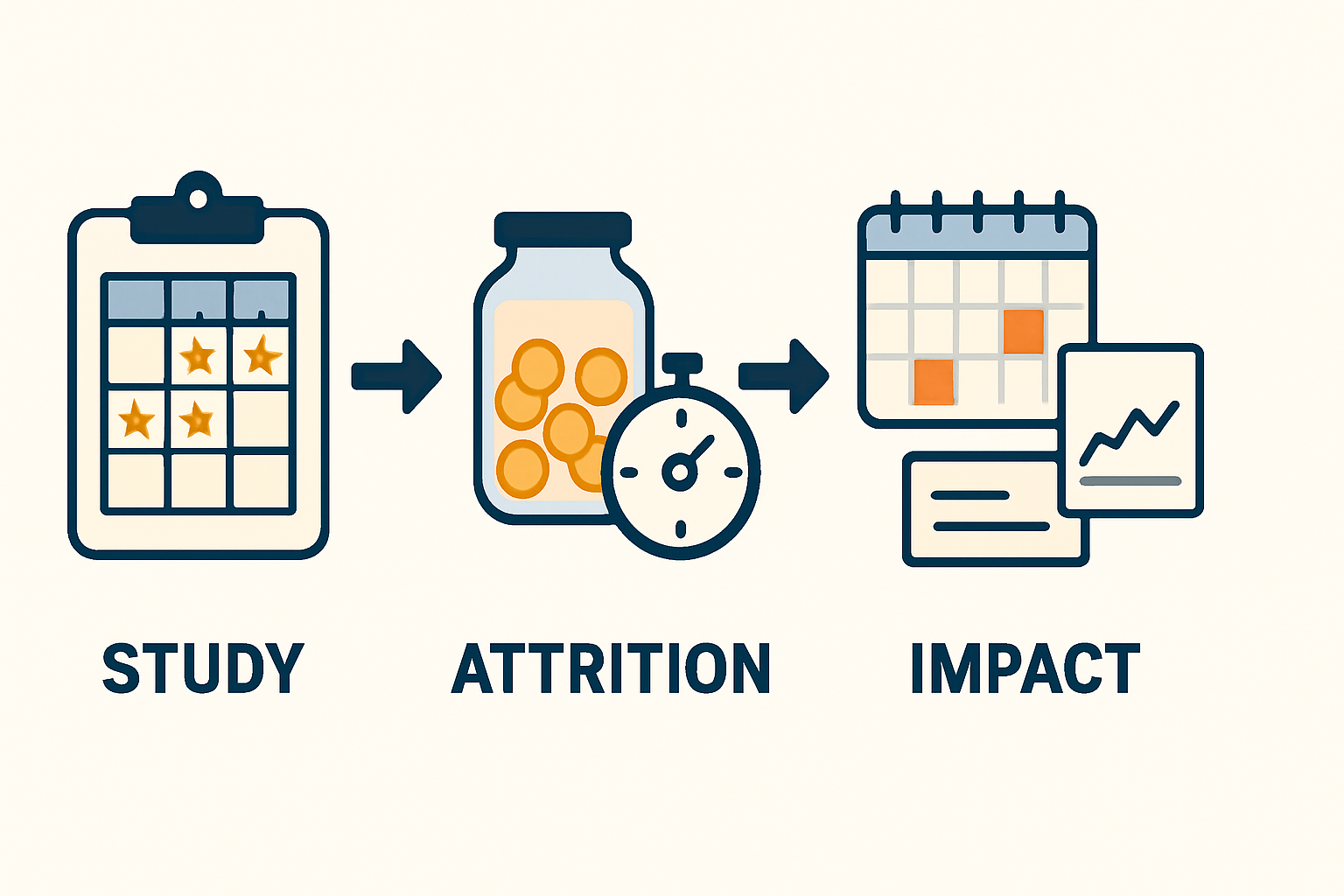
High attrition rates can compromise study conclusions and limit the applicability of findings to broader populations. This directly impacts evidence-based practice decisions.
Exam Relevance and Common Traps
BCBA exam questions often test understanding of validity threats and research methodology. Attrition appears in various question formats that require careful analysis.
- Biggest threat to external validity: Questions asking which factor most limits generalizability
- Distinguishing validity threats: Differentiating attrition from maturation or testing effects
- Research design implications: How attrition affects specific experimental designs
- Data interpretation: Understanding limitations when participants drop out
Common distractors include confusing attrition with instrumentation changes or selection bias. Remember that attrition specifically involves participant loss over time.
Ethical Strategies to Reduce Attrition
The BACB Ethics Code emphasizes client welfare and effective intervention. Several strategies align with ethical obligations to minimize dropout.
- Client-centered planning: Involve participants in intervention design and goal setting
- Social validity assessment: Ensure interventions are acceptable and meaningful
- Ongoing assent procedures: Regularly check participant willingness to continue
- Supportive environment: Create conditions that encourage sustained participation
- Flexible implementation: Adapt procedures based on participant feedback and needs
These approaches align with the seven dimensions of ABA, particularly generality and effective interventions.
Quick Checklist: Identifying and Addressing Attrition
This actionable summary helps both exam recall and clinical application. Use these points to systematically address attrition concerns.
- Monitor participation rates throughout intervention or study duration
- Document reasons for dropout when possible and ethical
- Analyze patterns to identify systematic factors influencing attrition
- Implement retention strategies based on identified barriers
- Report attrition rates transparently in research and clinical documentation
- Consider alternative designs like intent-to-treat analysis when attrition occurs
For more on research methodology, see our guide on single-subject experimental designs.
Summary and Key Takeaways
Attrition represents a critical consideration in both research and practice. Understanding this concept enhances both exam performance and clinical effectiveness.
Key definition: Attrition involves participant dropout over time, threatening research validity through non-random missing data. This differs from other validity threats like instrumentation or maturation.
Practical implications: In applied settings, attrition often relates to intervention acceptability, social validity, or environmental factors. Behavior analysts should analyze ABC patterns to identify potential functions.
Ethical responsibility: The BACB Ethics Code requires behavior analysts to implement strategies that minimize dropout and maintain client welfare. This includes ongoing assent procedures and client-centered planning.
Exam preparation: Focus on distinguishing attrition from other validity threats and understanding its implications for research design and data interpretation. Practice identifying common question patterns and distractors.
By mastering attrition concepts, behavior analysts enhance their research literacy and clinical practice while preparing effectively for certification requirements.



