
What is Token Reinforcement? A Core ABA Concept
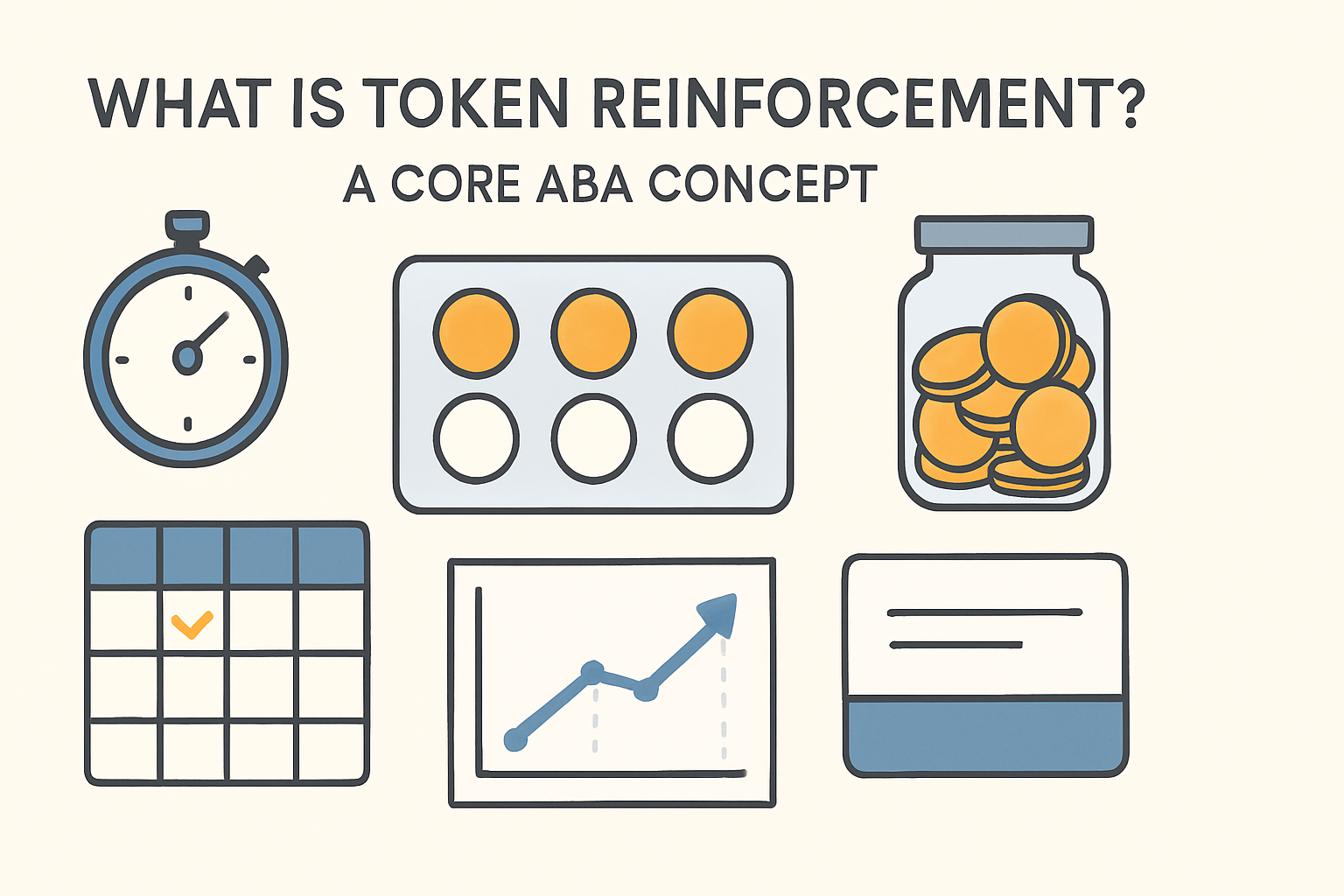
Token reinforcement is a powerful behavioral intervention that uses conditioned reinforcers to bridge delays between target behaviors and meaningful rewards. This system involves delivering tokens immediately following desired behaviors, which can later be exchanged for preferred items or activities known as backup reinforcers.
Table of Contents
- What is Token Reinforcement? A Core ABA Concept
- Token Reinforcement in Action: Worked ABA Examples
- Token Reinforcement on the BCBA Exam: Common Traps and Tips
- Quick-Start Checklist for Implementing a Token System
- Summary and Key Takeaways for Your Studies
- References
The effectiveness of token reinforcement lies in its ability to maintain motivation while teaching delayed gratification. This approach is particularly valuable in educational and clinical settings where immediate reinforcement may not be practical.
Key Characteristics and Terminology
Understanding the specific terminology is essential for both practice and exam success. A token economy refers to the complete system where tokens function as conditioned reinforcers. These tokens gain their reinforcing properties through systematic pairing with established backup reinforcers.
The exchange rate determines how many tokens are needed to access specific backup reinforcers. This rate should be carefully calibrated to maintain motivation while ensuring the system remains practical and sustainable.
Token Reinforcement vs. Other Reinforcement Strategies
Token reinforcement differs from direct reinforcement in several key ways. Unlike edible reinforcers or immediate praise, tokens provide flexibility and reduce the risk of satiation. They also bridge the delay between behavior and reinforcement, making them particularly effective for teaching complex skills.
Compared to other conditioned reinforcers like points or grades, tokens offer tangible representation of progress. This visual component can enhance motivation and provide clear feedback about performance.
Token Reinforcement in Action: Worked ABA Examples
Practical examples demonstrate how token systems function in real-world settings. Each scenario includes an ABC analysis and clear identification of behavioral function, reinforcing critical thinking skills needed for both practice and exam success.
Example 1: Increasing On-Task Behavior in a Classroom Setting
Scenario: A student with difficulty sustaining independent work during math periods. The teacher implements a token system where the student earns one token for every five math problems completed correctly.
ABC Analysis:
- Antecedent: Instruction to begin independent math worksheet
- Behavior: Completing five math problems with 80% accuracy
- Consequence: Receiving one token placed on a visual token board
Function: Positive reinforcement (access to backup reinforcer: 10 minutes of computer time after earning five tokens). The tokens bridge the delay between work completion and the preferred activity.
Example 2: Teaching Functional Communication to Reduce Tantrums
Scenario: A child who engages in tantrum behavior to escape non-preferred tasks. The team implements a token system to reinforce appropriate communication.
ABC Analysis:
- Antecedent: Presentation of non-preferred task (cleaning up toys)
- Behavior: Using a break card to request a pause
- Consequence: Receiving one token and continuing with task for 2 more minutes
Function: Negative reinforcement (escape from task demands). After earning three tokens, the child can exchange them for a five-minute break. This system teaches appropriate functional communication while reducing escape-maintained behaviors.
Token Reinforcement on the BCBA Exam: Common Traps and Tips
BCBA exam questions often test nuanced understanding of token systems. Recognizing common pitfalls can significantly improve your exam performance and clinical decision-making.
Identifying the Critical Element: The Backup Reinforcer
The most frequent reason token systems fail is ineffective backup reinforcers. Exam questions may present a scenario where a token system isn’t working, and the correct answer often involves assessing or modifying the backup reinforcers.
Remember that tokens only maintain their reinforcing properties through consistent pairing with meaningful rewards. If a client loses interest in the backup reinforcers, the entire system collapses. Regular preference assessments are essential to maintain system effectiveness.
Distinguishing Between Response Cost and Token Economy
This distinction is crucial for exam success. Removing tokens as a consequence for inappropriate behavior constitutes response cost, which is a form of punishment. In contrast, earning tokens for appropriate behavior is reinforcement.
Exam questions may present scenarios that blend these concepts. Look for keywords: ‘removing’ or ‘losing’ tokens indicates response cost, while ‘earning’ or ‘gaining’ tokens indicates reinforcement. Understanding this difference is essential for both exam questions and ethical practice.
Quick-Start Checklist for Implementing a Token System
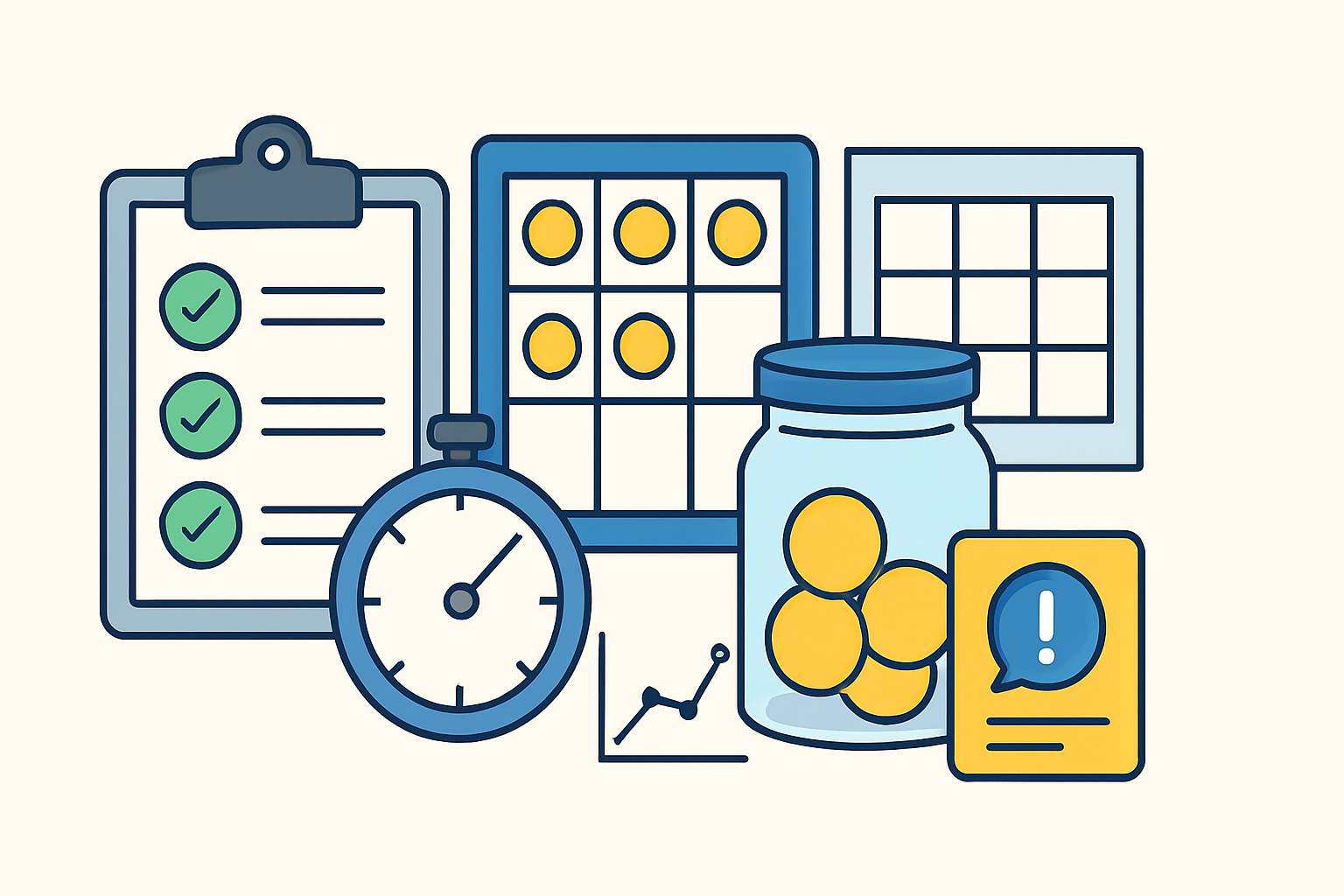
Follow this practical checklist to implement effective token systems in clinical or educational settings. Each step addresses critical components for system success.
- Conduct a thorough preference assessment to identify potent backup reinforcers
- Select appropriate, easily deliverable tokens that are age-appropriate and meaningful
- Establish clear exchange rates that balance motivation with practicality
- Create a visual display (token board) that clearly shows progress toward goals
- Define specific, observable behaviors that will earn tokens
- Train all staff on consistent token delivery and exchange procedures
- Monitor system effectiveness through regular data collection
- Gradually increase response requirements or delay exchanges to promote maintenance
For more on effective reinforcement strategies, see our guide on reinforcement in ABA.
Summary and Key Takeaways for Your Studies
Token reinforcement represents a sophisticated application of behavioral principles that bridges the gap between immediate and delayed consequences. Mastery of this concept requires understanding both the theoretical foundations and practical implementation considerations.
Key exam points to remember include the distinction between tokens as conditioned reinforcers and backup reinforcers as the ultimate source of value. The effectiveness of any token system depends entirely on the potency of the backup reinforcers and the consistency of their pairing with tokens.
For ethical implementation, always involve clients in selecting backup reinforcers and regularly assess their preferences. Token systems should be faded systematically as natural reinforcement contingencies develop. Understanding these principles will serve you well both on the BCBA exam and in professional practice.
For additional exam preparation resources, explore our comprehensive BCBA exam prep guide and learn more about behavioral principles in our article on operant conditioning.



