

A token economy represents one of the most versatile and widely used behavior change procedures in applied behavior analysis. This system bridges the gap between immediate behavior and delayed reinforcement, making it particularly valuable for teaching new skills and establishing complex behavioral repertoires. Understanding how to design, implement, and ethically manage a token economy is essential for any behavior analyst preparing for certification.
Table of Contents
- token economy ABA: What is a Token Economy? Definition and Core Components
- Token Economy in Action: Worked ABA Examples
- BCBA Exam Relevance and Common Implementation Traps
- Ethical Implementation and a Quick Design Checklist
- Summary and Key Takeaways for Your Study
token economy ABA: What is a Token Economy? Definition and Core Components
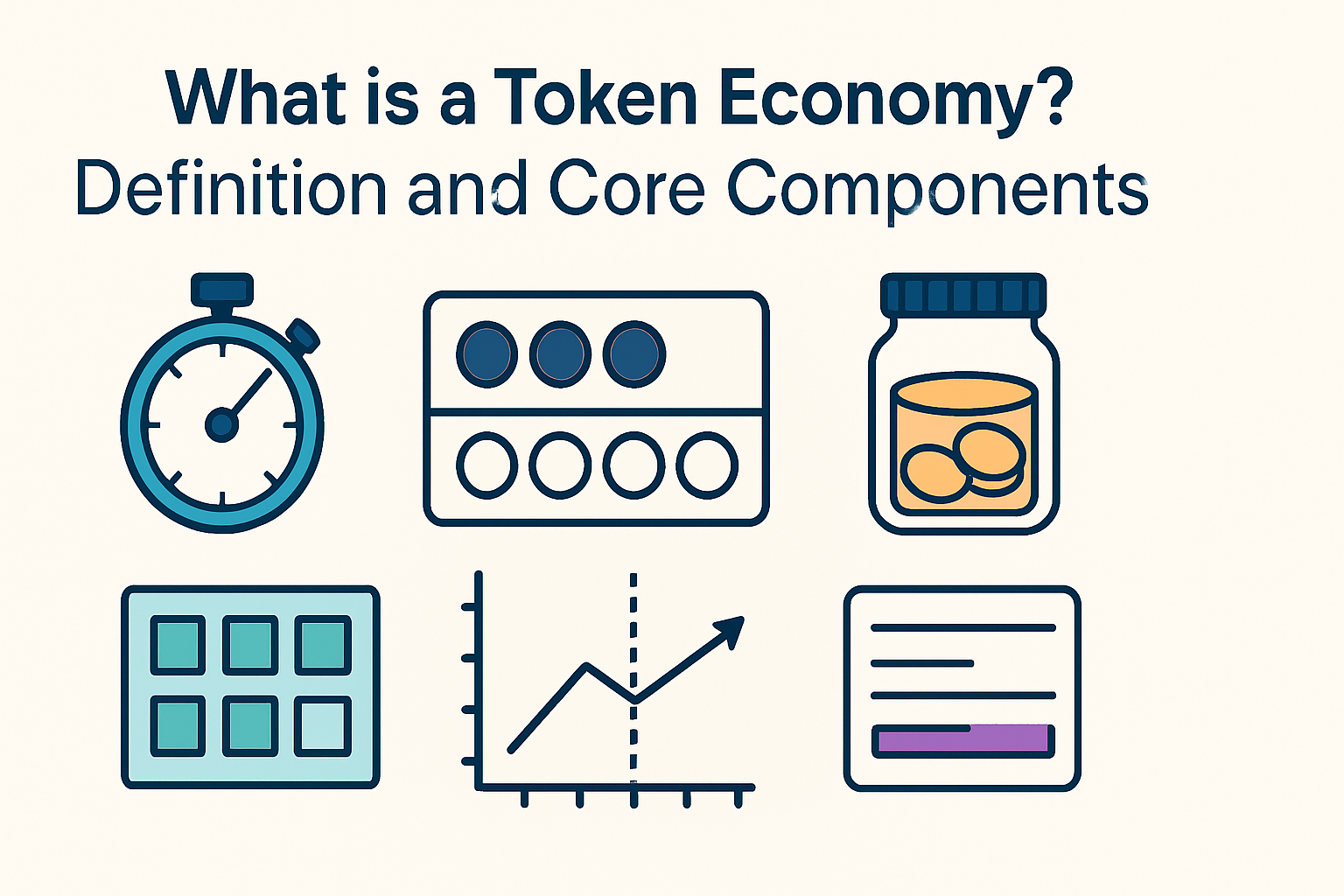
A token economy is a behavior change system where learners earn generalized conditioned reinforcers (tokens) immediately following target behaviors, which they can later exchange for established backup reinforcers. This procedure extends reinforcement beyond immediate delivery, allowing for more naturalistic teaching environments and complex skill acquisition.
The system’s effectiveness depends on three interconnected components working together systematically.
The Three Pillars of an Effective System
Every well-designed token economy rests on these essential elements:
- Tokens – These are generalized conditioned reinforcers that gain their value through pairing with established reinforcers. Common examples include points, stars, checkmarks, poker chips, or digital credits.
- Backup Reinforcers – These are the established reinforcers that maintain the token’s value. They must be identified through preference assessments and can include activities, tangible items, or privileges.
- Exchange System – This defines the exchange rate (how many tokens needed for each backup reinforcer) and the exchange schedule (when tokens can be traded). The system must be transparent and predictable for the learner.
Token Economy in Action: Worked ABA Examples
Exam questions often present scenarios requiring analysis of token economy applications. These examples demonstrate how to break down real-world applications using ABC analysis and identify the behavioral function being addressed.
Example 1: Increasing Academic Engagement in a Classroom
This scenario targets academic engagement in a third-grade classroom with multiple students showing low task completion rates.
- Antecedent: Teacher presents independent math worksheet assignment
- Behavior: Student completes five math problems with 80% accuracy
- Consequence: Teacher delivers one token to student’s chart
- Hypothesized Function: Positive reinforcement (access to preferred activities via tokens)
The token system bridges the delay between worksheet completion and access to preferred computer time at the end of the session. This addresses behavior maintained by access to tangible items or activities.
Example 2: Reducing Elopement During Transitions
This intervention targets elopement behavior during hallway transitions in a clinic setting.
- Antecedent: Therapist announces ‘time to go to the gym’
- Behavior: Client walks with the group without running ahead
- Consequence: Therapist immediately provides a token upon safe arrival
- Hypothesized Function: Negative reinforcement (escape from demands is not reinforced; tokens provide alternative reinforcement)
The token system competes with the automatic reinforcement of escaping demands by providing an immediate alternative consequence. This is particularly effective when combined with functional communication training for requesting breaks.
BCBA Exam Relevance and Common Implementation Traps
Token economies appear across multiple domains in the BACB Task List, making them high-yield content for exam preparation. Understanding both the procedural details and common pitfalls is crucial for success.
Linking to the Task List: Where Token Economies Are Tested
Token economy questions typically appear in these Task List areas:
- B-5: Define and provide examples of schedules of reinforcement (token economies often use fixed ratio schedules for token delivery)
- B-15: Design and use of token economies, contingency contracts, and group contingencies
- B-9: Define and provide examples of conditioned and unconditioned reinforcement (tokens as generalized conditioned reinforcers)
- F-3: Identify and address practical and ethical considerations when using reinforcement procedures
Five Common Exam Traps to Avoid
Candidates frequently stumble on these subtle but important distinctions:
- Confusing token economy with simple FR schedule: Remember that tokens are conditioned reinforcers that bridge to backup reinforcers, not just delayed primary reinforcement.
- Forgetting token conditioning history: Tokens must be systematically paired with backup reinforcers to establish their reinforcing value.
- Overlooking ethical considerations: Systems must include learner assent and choice in backup reinforcer selection, as outlined in the BACB Ethics Code.
- Failing to plan schedule thinning: Effective systems include a plan to gradually increase the response requirement or delay exchange opportunities.
- Misapplying to automatic reinforcement: Token systems are generally ineffective for behaviors maintained by automatic reinforcement without additional intervention components.
Ethical Implementation and a Quick Design Checklist
Beyond technical proficiency, ethical implementation requires careful consideration of client dignity, autonomy, and social validity. The BACB emphasizes these considerations in both the Ethics Code and exam content.
Ensuring Dignity and Autonomy Within the System
Ethical token economies prioritize client-centered design and transparent implementation. Key considerations include obtaining informed consent from clients or their representatives, ensuring backup reinforcer menus reflect genuine client preferences identified through ongoing preference assessments, and maintaining system transparency so clients understand exactly how to earn and exchange tokens. Additionally, practitioners should avoid using response cost procedures (token removal) without explicit consent and careful consideration of potential negative side effects.
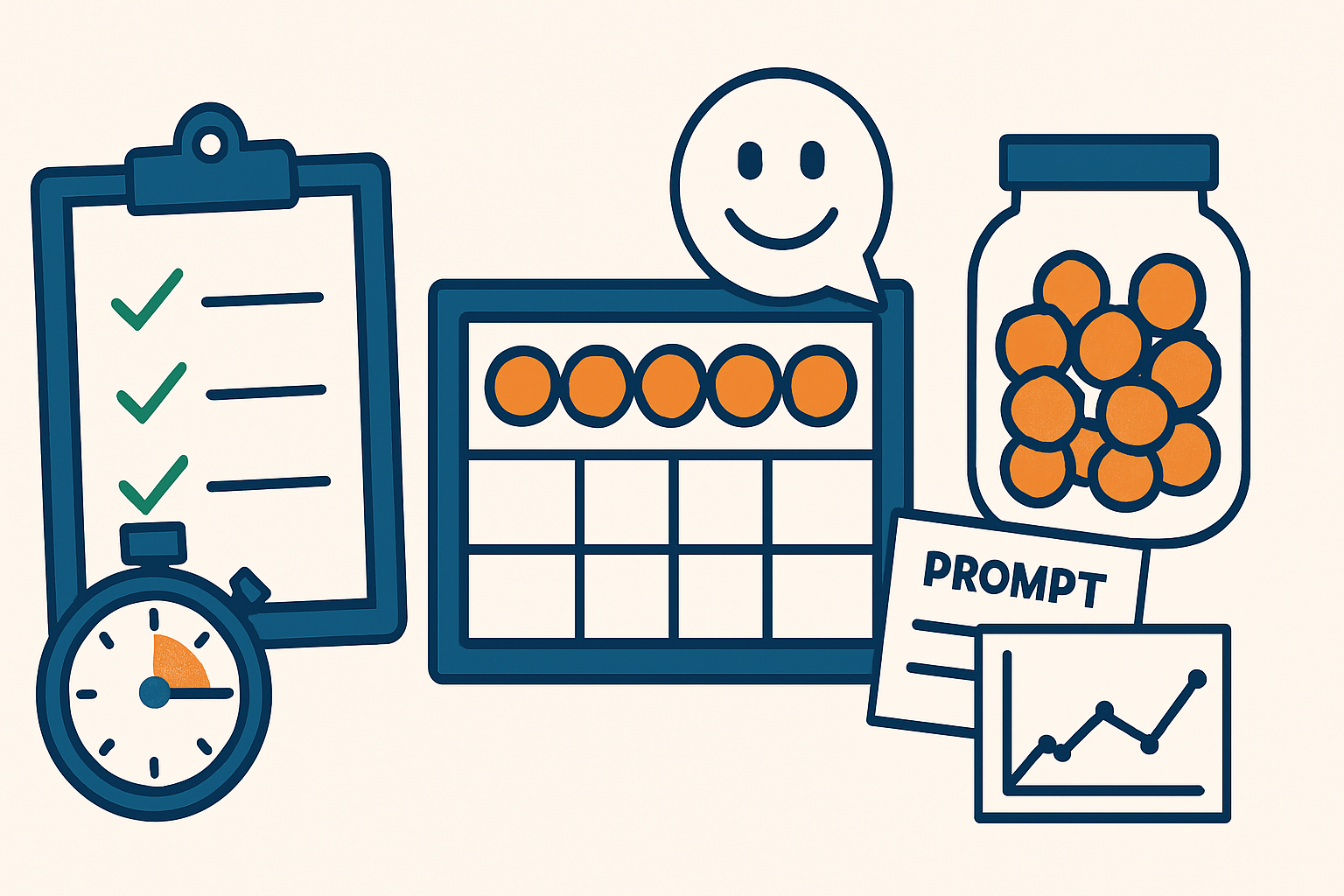
Use this practical checklist when designing your token economy system:
- Conduct preference assessments to identify potent backup reinforcers
- Select appropriate tokens that are durable, distinguishable, and age-appropriate
- Establish clear exchange rates that match the response effort required
- Create visual supports showing token-earning opportunities and exchange options
- Plan schedule thinning from the beginning of implementation
- Collect ongoing data on both token earnings and target behavior changes
- Regularly reassess backup reinforcer preferences and system effectiveness
Summary and Key Takeaways for Your Study
Mastering token economies requires understanding both the technical components and ethical considerations. For exam preparation, focus on these essential points:
- Tokens function as generalized conditioned reinforcers that bridge to backup reinforcers
- Effective systems require careful pairing procedures to establish token value
- Always consider the behavioral function when designing token interventions
- Ethical implementation requires client assent, choice, and system transparency
- Plan for schedule thinning and generalization from the intervention’s outset
- Token economies are most effective for behaviors maintained by socially-mediated reinforcement
For additional study resources on related topics, explore our guides on schedules of reinforcement and differential reinforcement procedures. The official BACB Ethics Code provides essential guidance on ethical implementation considerations.



