

What Does ‘Socially Mediated’ Mean in ABA?
In applied behavior analysis, the term socially mediated describes contingencies where another person delivers the consequence that affects behavior. This concept is fundamental to understanding how social interactions shape behavior in clinical and everyday settings.
Table of Contents
- What Does ‘Socially Mediated’ Mean in ABA?
- Socially Mediated Contingencies in Action: ABC Examples
- Exam Relevance and Common Candidate Pitfalls
- Quick Checklist: Identifying a Socially Mediated Function
- Summary and Key Takeaways
The Core Definition: A Contingency Delivered by People
Socially mediated reinforcement occurs when behavior increases because another person provides access to something desirable. Socially mediated punishment happens when behavior decreases because another person delivers an aversive consequence. The critical element is the mediation by another person in the contingency chain.
Socially Mediated vs. Automatic: A Critical Distinction
This distinction frequently appears on the BCBA exam. Automatic reinforcement and automatic punishment occur without social mediation—the behavior itself produces the consequence.
- Socially mediated: Teacher gives praise (positive reinforcement) for completing work
- Automatic: Rocking produces sensory stimulation without anyone’s involvement
- Socially mediated: Parent removes vegetables after tantrum (negative reinforcement)
- Automatic: Head-banging produces endorphin release internally
The key question: Does another person need to be present and act for the consequence to occur? If yes, it’s socially mediated.
Socially Mediated Contingencies in Action: ABC Examples
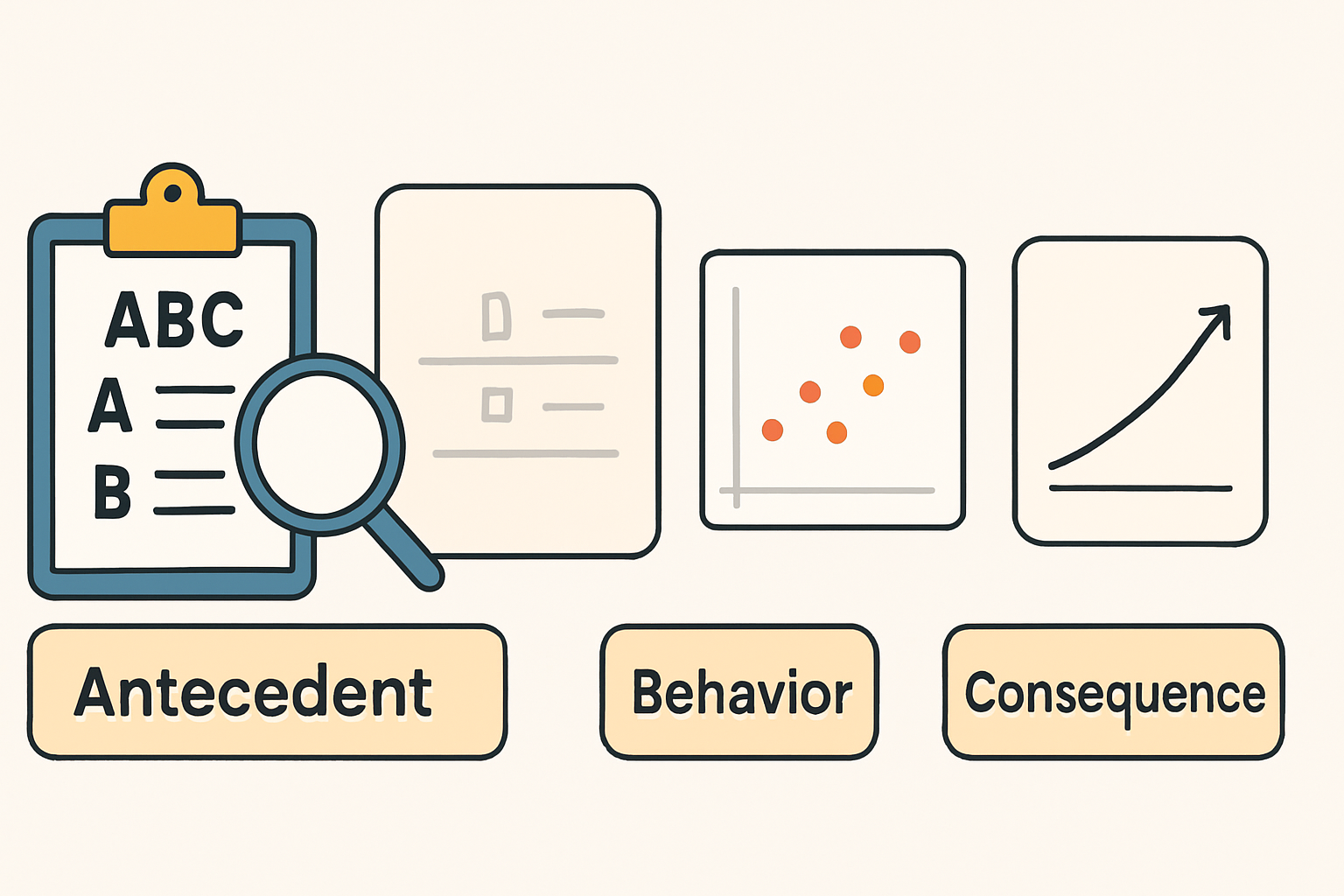
Real-world examples help solidify this concept. Let’s examine three common scenarios you might encounter in practice or on the exam.
Example 1: Escape-Maintained Tantrum (Socially Mediated Negative Reinforcement)
Antecedent: Parent presents math homework. Behavior: Child screams and throws materials. Consequence: Parent removes homework and says “we’ll try later.”
This represents socially mediated negative reinforcement. The tantrum increases because it results in escape from the aversive task, mediated by the parent’s removal of the demand. The function is escape from academic demands.
Example 2: Attention-Seeking Interruption (Socially Mediated Positive Reinforcement)
Antecedent: Therapist talks to another adult. Behavior: Client taps therapist’s arm repeatedly. Consequence: Therapist turns and says “What do you need?”
This demonstrates socially mediated positive reinforcement. The tapping behavior increases because it produces social attention from the therapist. The reinforcing consequence is the therapist’s verbal response.
Example 3: Socially Mediated Punishment in Practice
Antecedent: Peer group conversation. Behavior: Teen makes inappropriate joke. Consequence: Peers give disapproving looks and stop talking to him.
This shows socially mediated punishment. The inappropriate joking decreases because it results in social disapproval from peers. The punishing consequence is mediated by the peer group’s reaction.
Exam Relevance and Common Candidate Pitfalls
Understanding socially mediated contingencies is essential for BCBA exam success. These concepts appear across multiple domains, particularly in assessment and intervention planning.
How the BCBA Exam Tests This Concept
The exam typically presents these concepts through vignettes requiring functional analysis. You’ll need to:
- Identify whether a consequence is socially mediated or automatic
- Determine the specific type of contingency (positive/negative reinforcement or punishment)
- Select appropriate interventions based on the identified function of behavior
- Consider ethical implications when designing socially mediated interventions
For more on functional assessment approaches, see our guide on functional analysis vs. descriptive assessment.
Top 3 Traps to Avoid on Test Day
Many candidates lose points on these common mistakes:
- Confusing mediation types: Overlooking whether the consequence requires another person’s action
- Missing the mediator: Focusing only on the consequence without identifying who delivers it
- Misidentifying contingency type: Mixing up positive/negative reinforcement or punishment categories
Remember that socially mediated always involves another person’s behavior as part of the consequence.
Quick Checklist: Identifying a Socially Mediated Function
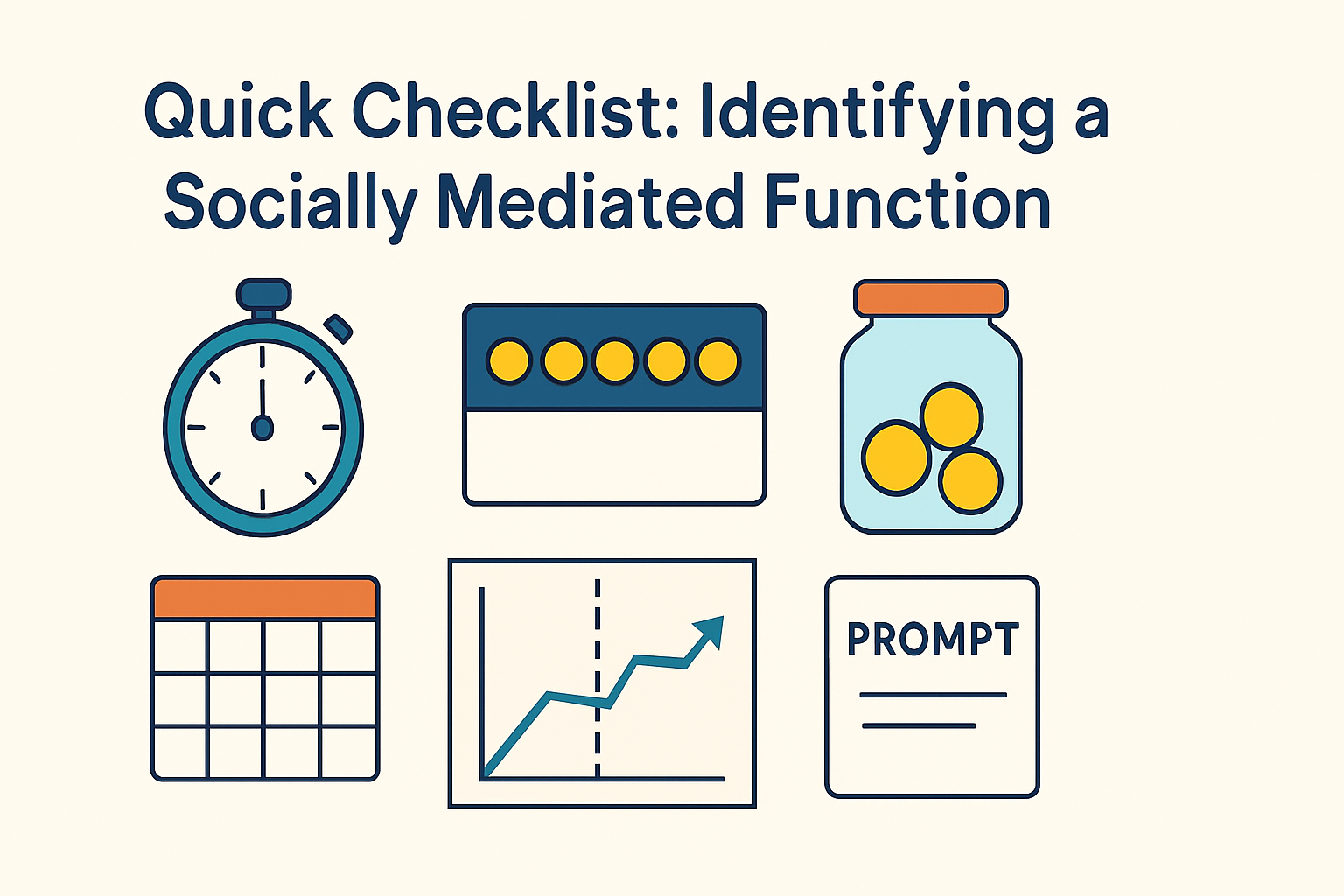
Use this practical tool when analyzing behavior or answering exam questions:
- Step 1: Identify the consequence immediately following the behavior
- Step 2: Ask: Does this consequence require another person to act?
- Step 3: If yes, determine if behavior increases (reinforcement) or decreases (punishment)
- Step 4: Identify what changes: Adding something (positive) or removing something (negative)
- Step 5: Verify the function matches the maintaining consequence
This systematic approach helps avoid common analysis errors. For more on reinforcement fundamentals, explore our comprehensive reinforcement guide.
Summary and Key Takeaways
Socially mediated contingencies are fundamental to understanding behavior in social contexts. Master these essential points:
- Always involve another person delivering the consequence
- Distinguish carefully from automatic reinforcement/punishment
- Use the ABC framework to identify the specific contingency type
- Apply the checklist systematically during functional assessment
- Consider ethical implications when designing interventions
For authoritative information on behavior analytic principles, refer to the Behavior Analyst Certification Board resources. Understanding these concepts thoroughly prepares you for both exam success and effective clinical practice. Remember that socially mediated contingencies explain much of the behavior we see in educational, therapeutic, and community settings.



