
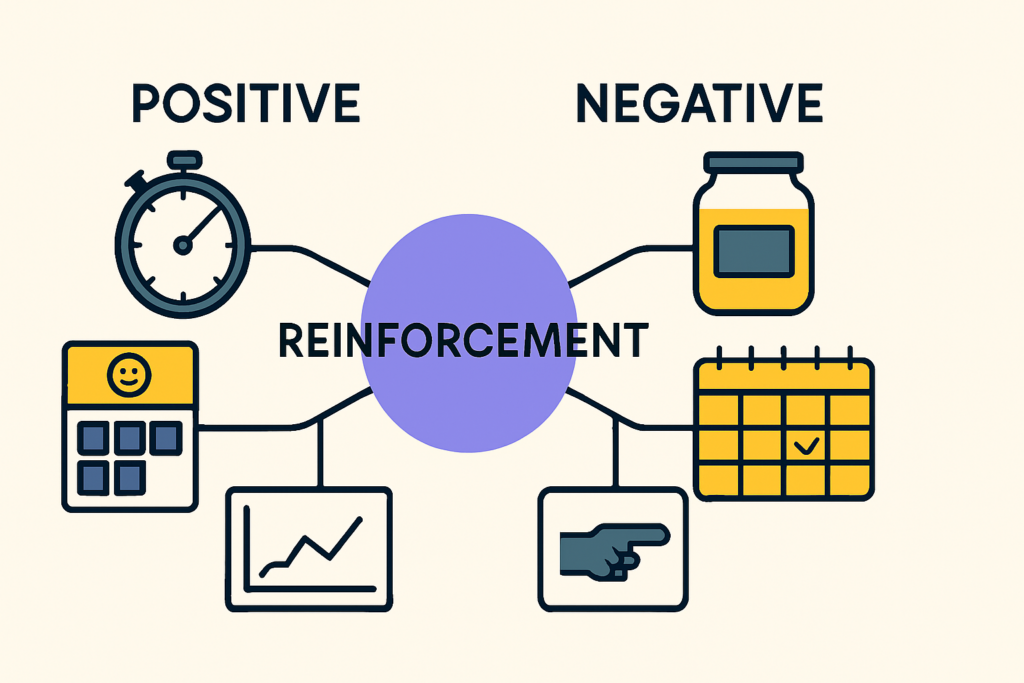
Understanding the four consequences of behavior is fundamental to applied behavior analysis and essential for BCBA certification. These concepts form the backbone of operant conditioning and directly influence how behavior analysts design interventions. This guide breaks down positive and negative reinforcement and punishment with practical examples and exam strategies.
Table of Contents
- positive and negative reinforcement and punishment: Understanding the Four Consequences of
- Positive and Negative Reinforcement in Applied Practice
- Positive and Negative Punishment in Applied Practice
- Navigating Exam Questions on Reinforcement and Punishment
- Quick-Reference Checklist and Summary
positive and negative reinforcement and punishment: Understanding the Four Consequences of
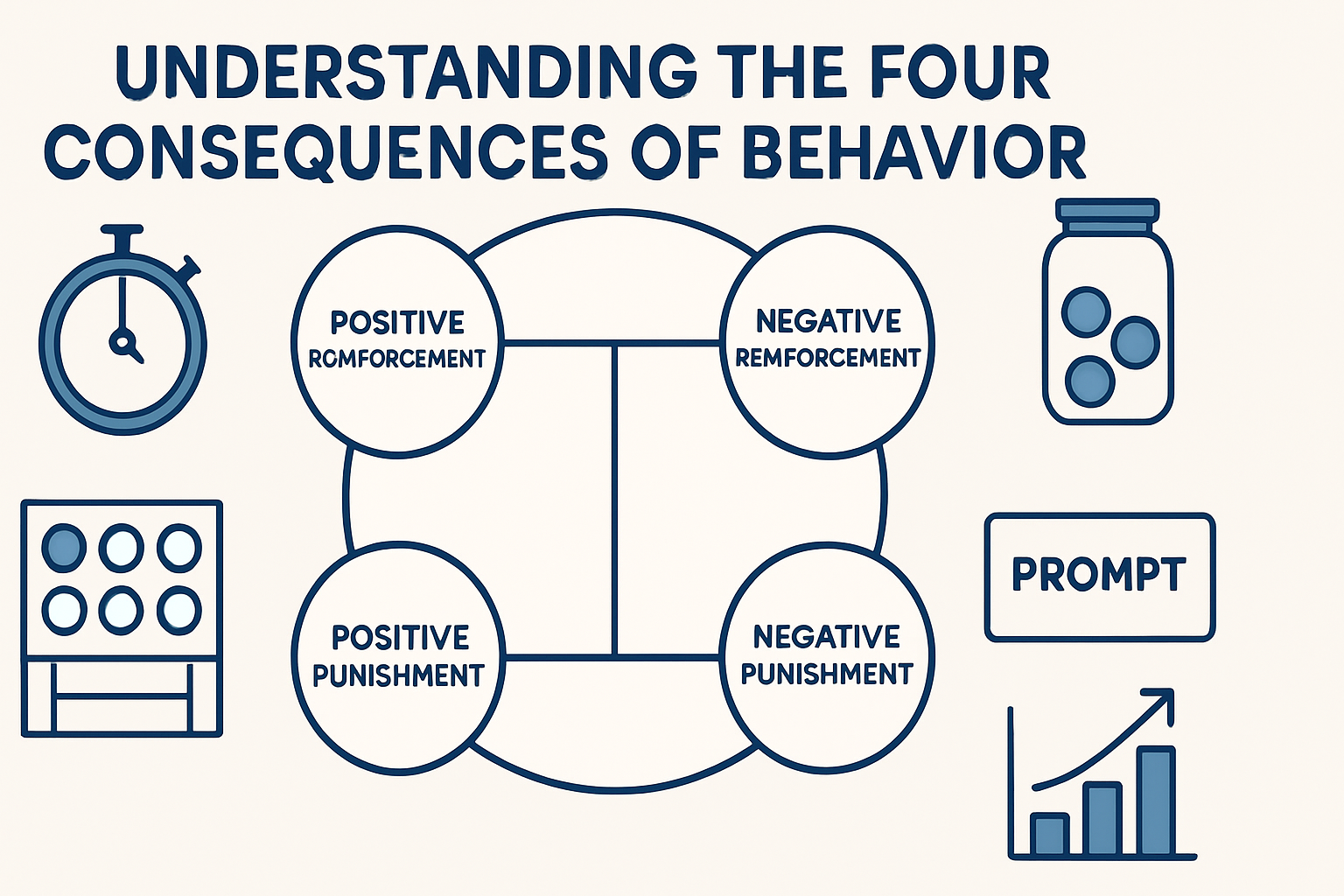
Every behavior has consequences that affect its future occurrence. The four-term contingency provides a systematic framework for analyzing these relationships. Mastery begins with two critical distinctions.
Reinforcement vs. Punishment: The Effect on Behavior
Reinforcement always increases the future probability of a behavior, while punishment always decreases it. This functional definition depends solely on the observed effect, not the practitioner’s intent. On the BCBA exam, this is your first filter for analyzing any scenario.
Positive vs. Negative: The ‘Stimulus Change’ Operation
The terms ‘positive’ and ‘negative’ refer to mathematical operations, not value judgments. Positive means adding a stimulus to the environment contingent on behavior. Negative means removing or subtracting a stimulus. Understanding this distinction prevents common exam errors.
Positive and Negative Reinforcement in Applied Practice
Reinforcement procedures strengthen behavior by making desirable outcomes contingent on specific actions. Both types follow the same principle but operate through different mechanisms.
Positive Reinforcement: Adding a Desired Stimulus
Positive reinforcement occurs when a behavior is followed by the addition of a stimulus, increasing that behavior’s future likelihood. In ABA practice, this might involve delivering praise, tokens, or preferred items immediately after a target response.
Consider this ABC example:
- Antecedent: Therapist presents a matching task
- Behavior: Client correctly matches all items
- Consequence: Therapist delivers a preferred edible
- Future effect: Client completes matching tasks more frequently
Common reinforcers include social praise, access to preferred activities, tokens exchangeable for backup reinforcers, and edible items. The effectiveness depends on individual preference and motivating operations.
Negative Reinforcement: Removing an Aversive Stimulus
Negative reinforcement involves removing an aversive stimulus following a behavior, thereby increasing that behavior. This is NOT punishment—it strengthens behavior through escape or avoidance of unpleasant conditions.
Key ABA example:
- Antecedent: Bright sunlight causes discomfort
- Behavior: Individual puts on sunglasses
- Consequence: Sunlight intensity is reduced
- Future effect: Sunglasses-wearing increases in bright conditions
Escape occurs when behavior terminates an ongoing aversive, while avoidance prevents the aversive from occurring. Both are forms of negative reinforcement. For more on reinforcement principles, see our guide on reinforcement in ABA.
Positive and Negative Punishment in Applied Practice
Punishment procedures decrease behavior by making undesirable outcomes contingent on specific actions. Ethical considerations are paramount, and reinforcement-based alternatives should always be prioritized.
Positive Punishment: Adding an Aversive Stimulus
Positive punishment occurs when behavior is followed by the addition of an aversive stimulus, decreasing that behavior’s future probability. The definition depends on effect, not intent—what matters is whether the behavior decreases.
Ethically considered example:
- Antecedent: Peer takes toy without asking
- Behavior: Child hits peer
- Consequence: Therapist delivers firm verbal reprimand
- Future effect: Hitting decreases during similar situations
Positive punishment carries significant risks including emotional side effects, aggression, and avoidance of the punishing agent. It should only be considered after reinforcement-based interventions have been exhausted and with proper oversight.
Negative Punishment: Removing a Desired Stimulus
Negative punishment involves removing a desired stimulus following behavior, thereby decreasing that behavior. Common procedures include time-out from positive reinforcement and response cost.
ABA practice example:
- Antecedent: Group activity with preferred toys
- Behavior: Child throws materials
- Consequence: Therapist removes child from activity for 2 minutes
- Future effect: Material-throwing decreases during group activities
While generally considered more ethical than positive punishment, negative punishment still requires careful implementation. The removed stimulus must truly function as a reinforcer, and the procedure should be part of a comprehensive behavior plan. Learn more about ethical considerations in our ethics guide.
Navigating Exam Questions on Reinforcement and Punishment
BCBA exam questions often present complex scenarios requiring systematic analysis. Follow this decision tree to avoid common pitfalls.
The Two-Question Decision Tree
When analyzing any behavior-consequence scenario, ask these questions in order:
- Did the behavior increase or decrease? If it increased, you’re dealing with reinforcement. If it decreased, it’s punishment.
- Was a stimulus added or removed? If added, it’s positive. If removed, it’s negative.
This systematic approach prevents emotional reactions from clouding your analysis. Remember that definitions are functional, not based on personal judgments about stimuli.
Common Traps and Misconceptions
Several recurring errors trip up exam candidates:
- Confusing negative reinforcement with punishment: Both involve aversive stimuli, but reinforcement increases behavior while punishment decreases it
- Misidentifying the target behavior: Focus on the specific behavior mentioned in the question, not what you think should be targeted
- Letting personal feelings override definitions: A reprimand can function as positive reinforcement if it increases behavior
- Forgetting the future effect: Consequences are defined by their effect on future behavior, not immediate reactions
For additional exam strategies, explore our BCBA exam prep guide.
Quick-Reference Checklist and Summary
Use this checklist to reinforce your understanding and prepare for exam questions:
- Reinforcement increases behavior; punishment decreases behavior
- Positive means adding a stimulus; negative means removing a stimulus
- Negative reinforcement is NOT punishment—it strengthens escape/avoidance behavior
- Always identify the target behavior first in scenario questions
- Apply the two-question decision tree systematically
- Remember that definitions are functional, based on observed effects
- Consider ethical implications when analyzing punishment procedures
- Practice with varied examples to build fluency
The four consequences form the foundation of behavior change procedures in ABA. Mastery requires understanding both the technical definitions and their practical applications. For authoritative definitions, refer to the BACB Task List and Cooper, Heron, and Heward’s Applied Behavior Analysis textbook.
Consistent practice with varied scenarios will build the analytical skills needed for both the exam and ethical practice. Focus on the functional relationships between behavior and consequences, and you’ll navigate even complex questions with confidence.



