
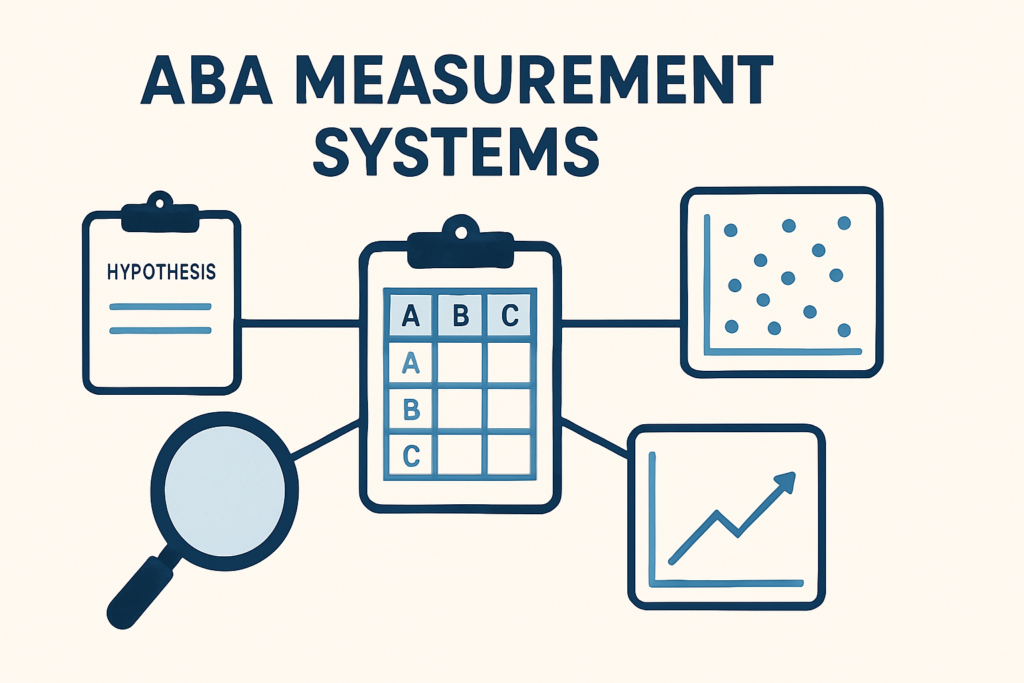
ABA measurement systems: What Are Measurement Systems in Applied Behavior Analysis?
Measurement systems in Applied Behavior Analysis provide the objective data needed to evaluate behavior change. These systems transform subjective observations into quantifiable information that drives clinical decisions.
Table of Contents
- ABA measurement systems: What Are Measurement Systems in Applied Behavior Analysis?
- Applying Measurement Systems: Worked Examples from Practice
- Measurement on the BCBA Exam: Common Traps and How to Avoid Them
- Quick-Review Checklist and Summary
- References
Without reliable measurement, practitioners cannot determine if interventions are effective or make data-based adjustments to treatment plans.
The Role of Measurement in Evidence-Based Practice
Measurement is fundamental to the scientist-practitioner model that defines ABA. It allows practitioners to test hypotheses about behavior function and intervention effectiveness.
Objective data collection ensures that treatment decisions are based on evidence rather than intuition, aligning with the seven dimensions of ABA that emphasize analytic and technological approaches.
Continuous vs. Discontinuous Measurement: A Foundational Distinction
Continuous measurement records every instance of behavior during an observation period. Common methods include frequency, duration, and latency recording.
Discontinuous measurement samples behavior at specific intervals rather than continuously. This category includes partial interval, whole interval, and momentary time sampling procedures.
The choice between these approaches depends on the behavior’s characteristics, available resources, and the specific clinical question being asked.
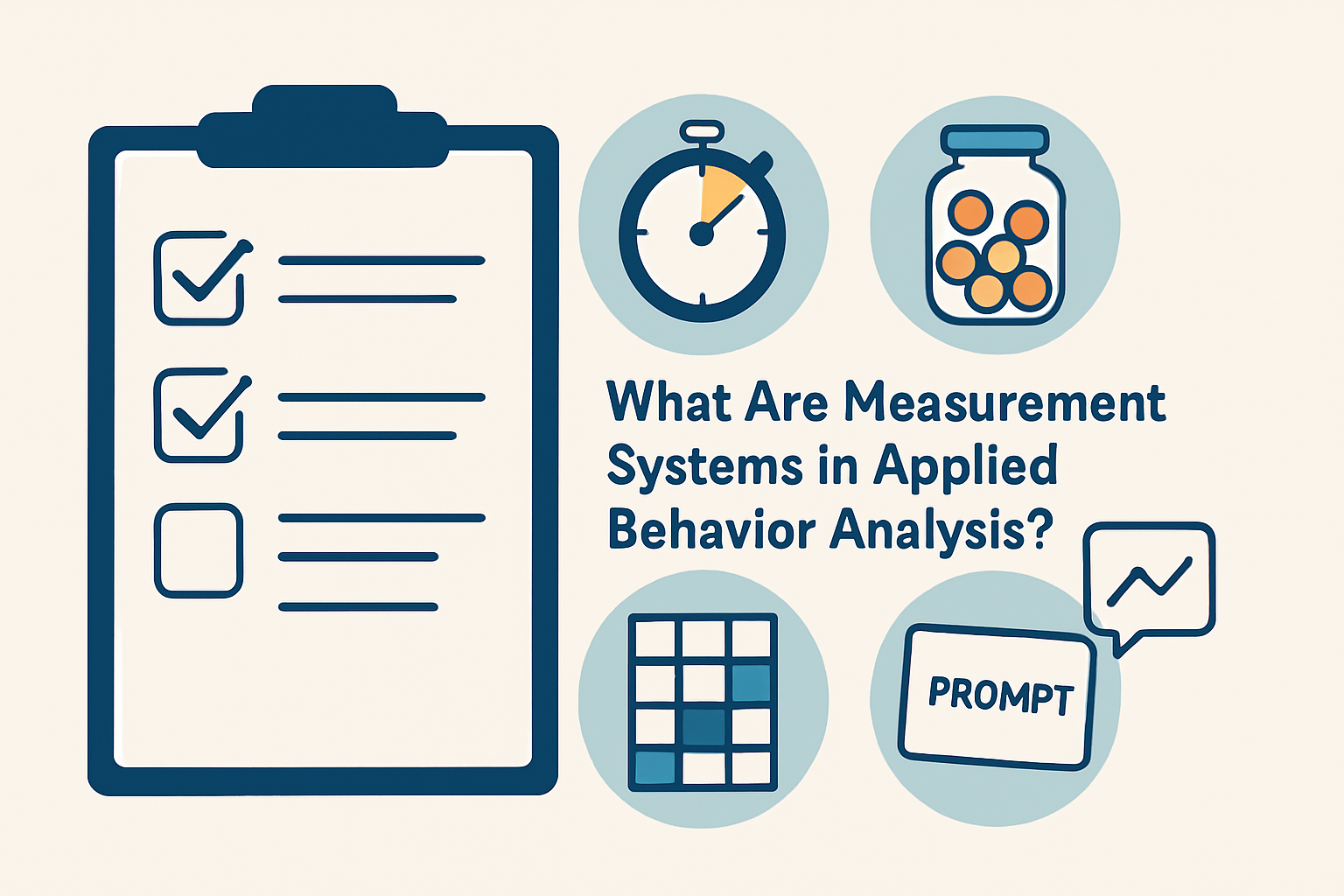
Applying Measurement Systems: Worked Examples from Practice
Understanding measurement systems requires moving from theory to application. These examples demonstrate how to select and implement appropriate procedures in clinical scenarios.
Example 1: Measuring Tantrum Duration and Identifying the Function
A child engages in tantrums when preferred toys are removed. The behavior includes crying, flopping, and screaming with clear onset and offset.
Using duration recording, the practitioner measures the total time of each tantrum episode. ABC data shows: Antecedent (toy removed), Behavior (tantrum lasting 3 minutes 15 seconds), Consequence (toy returned).
The hypothesized function is access to tangibles. Duration recording is appropriate here because the temporal dimension matters—reducing tantrum length is a treatment goal.
Example 2: Using Partial Interval Recording for Hand Mouthing
A client engages in hand mouthing throughout sessions. The behavior occurs at high rates with unclear boundaries between instances.
Using partial interval recording with 10-second intervals, the practitioner records whether hand mouthing occurs at any point during each interval. ABC data shows: Antecedent (demand presented), Behavior (hand mouthing in interval), Consequence (break provided).
The hypothesized function is escape from demands. Discontinuous measurement is chosen because the behavior occurs at high frequency, making continuous recording impractical.
Example 3: Frequency and IRT for Vocal Stereotypy
A client engages in vocal stereotypy (scripting phrases) throughout sessions. The behavior consists of discrete, countable instances.
Using frequency recording, the practitioner counts 12 instances in 10 minutes. Calculating Inter-Response Time (IRT) reveals the average time between instances is 45 seconds.
ABC data shows: Antecedent (alone, no demands), Behavior (scripting), Consequence (automatic sensory stimulation). The hypothesized function is automatic reinforcement. Using both frequency and IRT provides comprehensive temporal information.
Measurement on the BCBA Exam: Common Traps and How to Avoid Them
Exam questions about measurement systems often test your ability to select appropriate procedures and identify threats to validity. Understanding common pitfalls is essential for success.
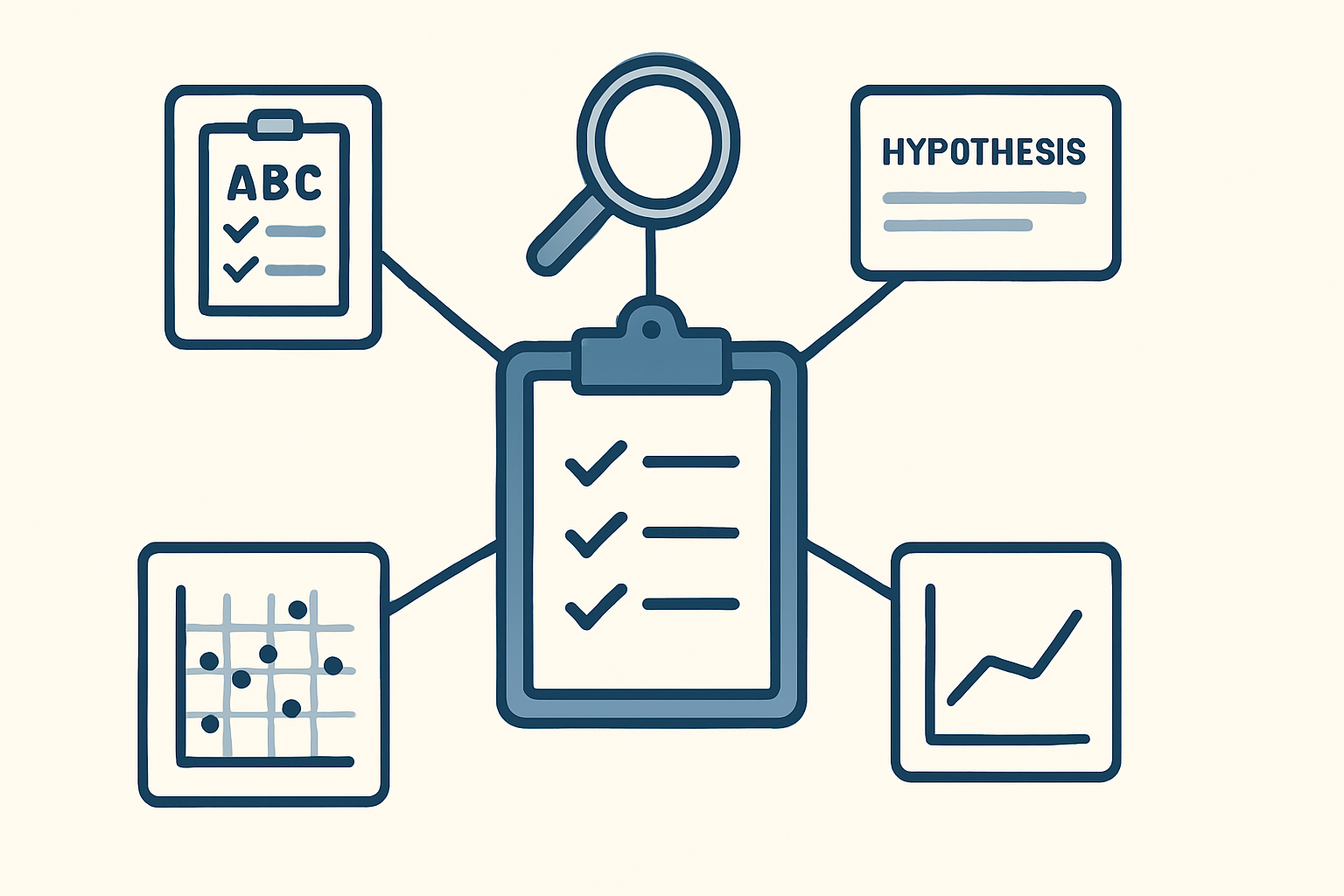
Selecting the Right System: A Decision Framework
Use this mental checklist when facing measurement questions:
- Is the behavior discrete with clear onset/offset? If yes, consider event recording.
- What dimension matters—count, time, or intensity? Choose accordingly.
- Are practical constraints mentioned? High-rate behaviors may require sampling methods.
- Is the goal to measure occurrence or non-occurrence? This determines interval type.
This framework helps eliminate incorrect options systematically, similar to approaches needed for functional analysis selection.
Artifacts and Threats to Validity You Must Know
Measurement artifacts distort data and threaten internal validity. Key threats include:
- False positives in partial interval recording (marking intervals when behavior didn’t occur)
- False negatives in whole interval recording (missing brief occurrences)
- Observer drift where recording standards change over time
- Reactivity when participants change behavior because they know they’re being observed
Mitigation procedures include calculating Interobserver Agreement (IOA), using blind observers, and providing regular observer training. These concepts are tested extensively on the exam.
Quick-Review Checklist and Summary
Consolidate your understanding with this actionable checklist and key takeaways for both exam preparation and clinical practice.
Your Measurement Systems Decision Checklist
- For low-rate behaviors with clear boundaries, use event recording (frequency)
- For behaviors where temporal dimensions matter, use duration or latency recording
- For high-rate behaviors or unclear boundaries, use interval sampling methods
- When measuring occurrence is sufficient, use partial interval recording
- When measuring non-occurrence or continuous engagement matters, use whole interval
- Always consider practical constraints and available resources
- Match the measurement system to your specific clinical question
Key Takeaways for BCBA Candidates
Mastery of ABA measurement systems is fundamental to both exam success and ethical practice. Accurate data collection enables evidence-based decision making and ensures interventions are effective.
Remember that measurement serves the larger goal of improving client outcomes. As you prepare for the exam, focus on understanding when and why to use each system, not just memorizing definitions. This aligns with the evidence-based practice principles that guide quality ABA services.
For additional study resources, explore the BACB test content outline and consider how measurement systems integrate with other exam domains.


