
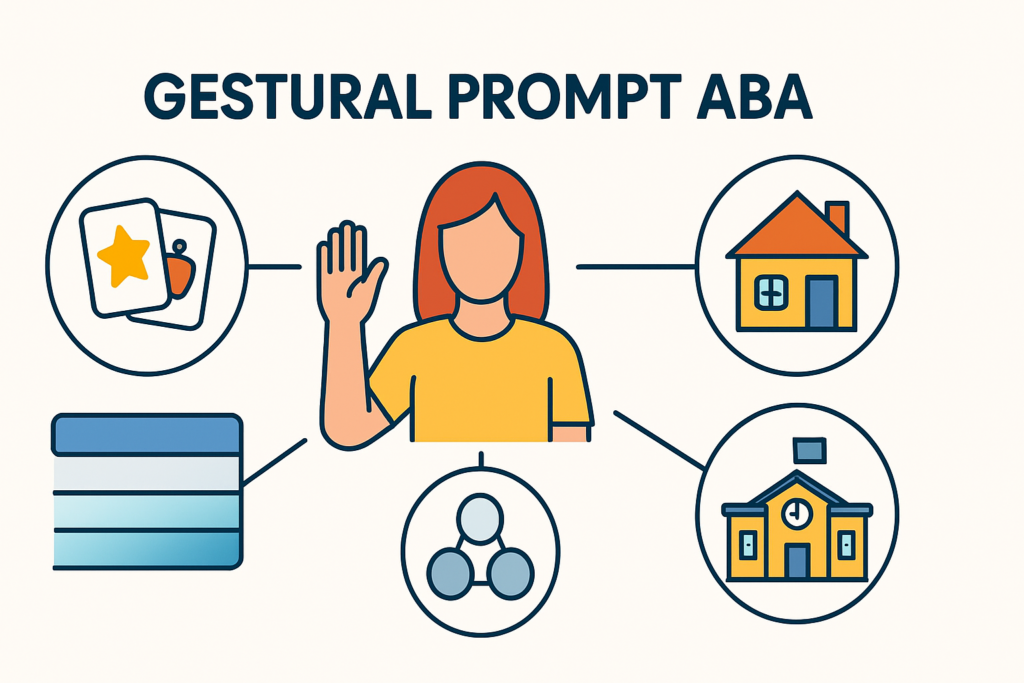
In applied behavior analysis, prompts are essential tools for teaching new skills. Among the various prompt types, the gestural prompt stands out as a subtle yet powerful teaching strategy. This guide explains what gestural prompts are, how to use them effectively, and what you need to know for the BCBA exam.
Table of Contents
- gestural prompt ABA: Defining the Gestural Prompt in ABA
- Applying Gestural Prompts: Worked Examples from Assessment to Fading
- Gestural Prompts on the BCBA Exam: What to Watch For
- Quick Implementation and Fading Checklist
gestural prompt ABA: Defining the Gestural Prompt in ABA
A gestural prompt is any body movement that provides information about the correct response. Unlike more intrusive prompts, gestures offer hints rather than full demonstrations. Understanding this distinction is crucial for both clinical practice and exam success.
The Official Definition and Key Characteristics
The BACB Task List defines gestural prompts as movements that indicate the correct response. These include pointing, nodding, glancing, or tapping. They belong to the category of response prompts, which directly influence the learner’s behavior.
Key characteristics include:
- Non-verbal cues that guide behavior
- Part of the least-to-most prompting hierarchy
- Less intrusive than physical or model prompts
- Can be easily faded over time
Gestural prompts differ from stimulus prompts, which alter the environment itself. For example, moving a target item closer is a stimulus prompt, while pointing to it is a gestural prompt.
Gestural vs. Model Prompts: A Critical Distinction
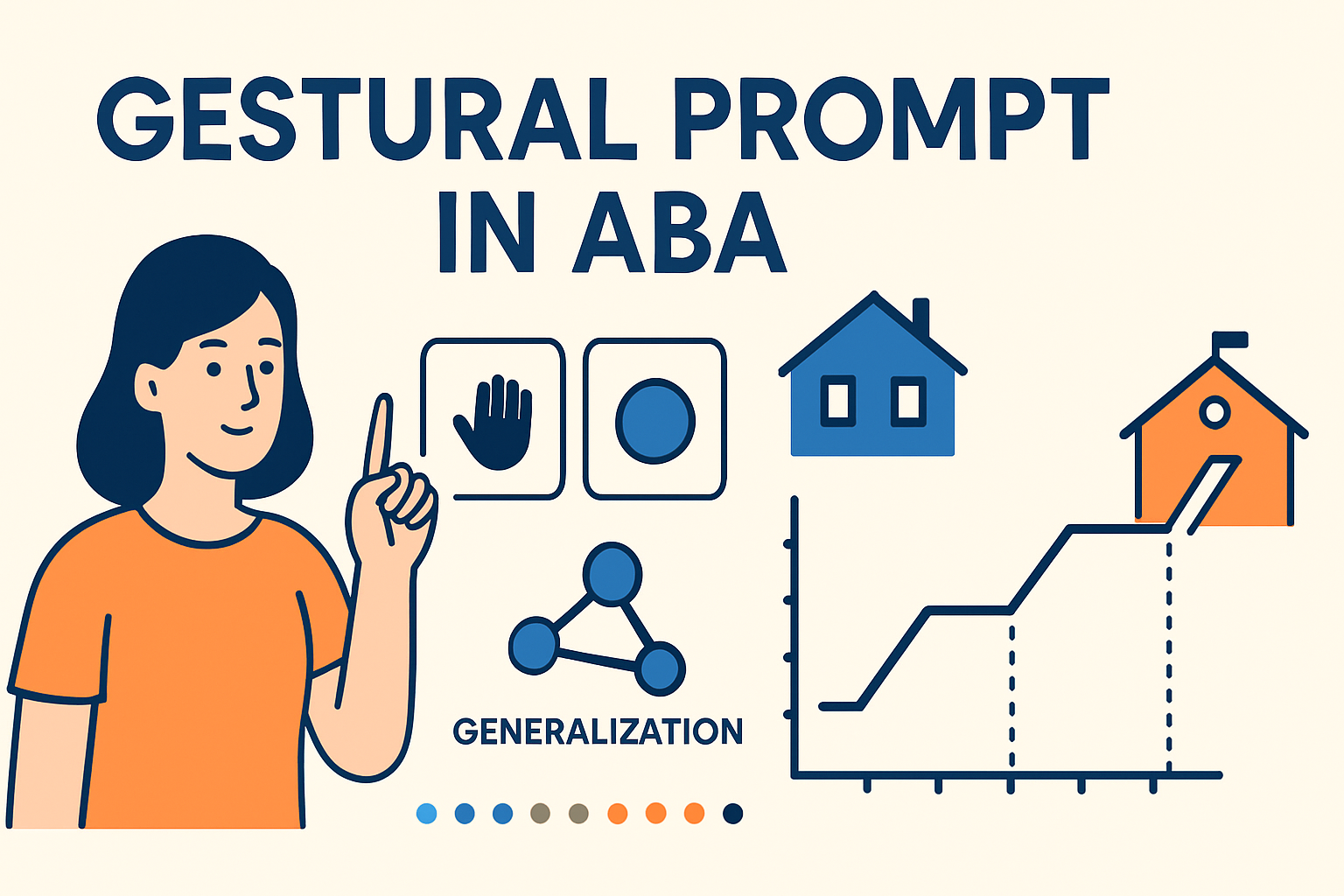
Many exam questions test your ability to distinguish between gestural and model prompts. A model prompt demonstrates the entire target behavior. In contrast, a gestural prompt only hints at or indicates part of the response.
Consider these examples:
- Model prompt: Therapist picks up a cup and drinks from it to demonstrate the action
- Gestural prompt: Therapist points to the cup on the table
- Model prompt: Therapist says ‘Hello’ to demonstrate greeting
- Gestural prompt: Therapist nods toward a person who just entered
This distinction is frequently tested on the BCBA exam. Confusing these two prompt types is a common error that can cost you points.
Applying Gestural Prompts: Worked Examples from Assessment to Fading
Effective use of gestural prompts requires careful planning and systematic fading. These examples show the complete clinical process from initial teaching to independence.
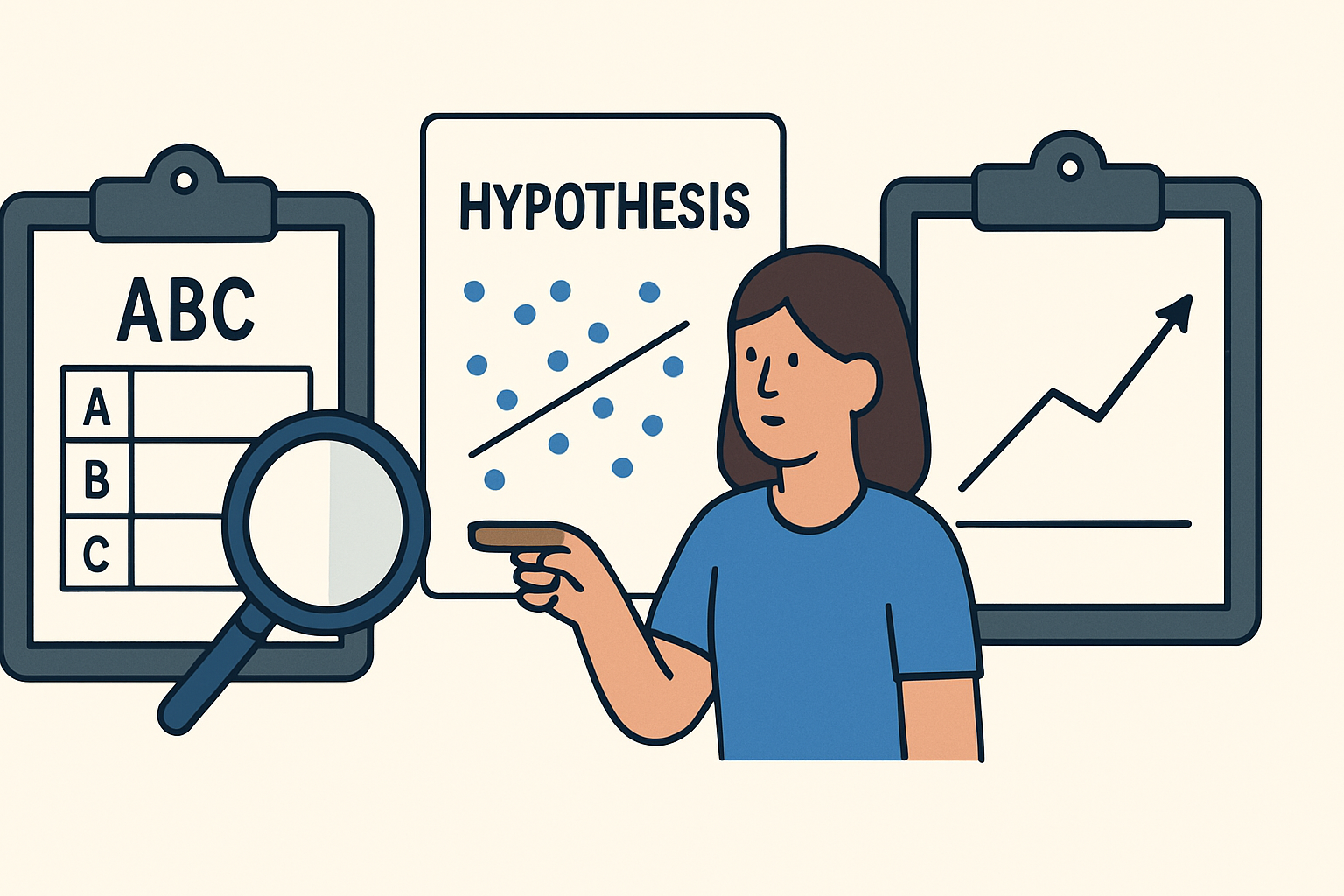
Example 1: Teaching a Child to Hang a Coat (ABC Analysis)
Let’s analyze a common teaching scenario using the ABC framework:
- Antecedent: SD ‘Hang up your coat’ presented while child stands by hook
- Behavior: Child looks at hook but doesn’t initiate action
- Consequence: BCBA points to the hook (gestural prompt)
- Result: Child hangs coat, receives praise
In this scenario, the gestural prompt serves as an establishing operation for reinforcement. The prompt increases the likelihood of compliance by making the correct response more salient. To fade this prompt effectively:
- Begin with a full, clear point toward the hook
- Gradually reduce to a partial point (hand raised halfway)
- Fade to a subtle head tilt toward the hook
- Finally, eliminate the gesture entirely
This systematic fading prevents prompt dependency and promotes independent responding. For more on preventing prompt dependency, see our guide on prompt dependency in ABA.
Example 2: Prompting a Teenager During a Vocational Task
Vocational settings often require subtle prompting to maintain dignity and independence. Consider this scenario:
- Antecedent: SD ‘Stock all items on the list’ given to teen worker
- Behavior: Teen pauses, appears unsure about next step
- Consequence: BCBA taps the checklist, then taps missing item on shelf
- Result: Teen completes task, receives natural reinforcement
This example demonstrates ethical prompting in a least-to-most hierarchy. The gestural prompt (tapping) is less intrusive than verbal directions or physical guidance. It respects the learner’s autonomy while providing necessary support.
The hypothesized function here is evoking the correct response to avoid errors. This maintains the teen’s confidence and work performance. For comprehensive exam preparation, explore our BCBA exam prep guide.
Gestural Prompts on the BCBA Exam: What to Watch For
The BCBA exam frequently tests your understanding of prompt types and hierarchies. Knowing common traps can help you avoid costly mistakes.
Common Exam Traps and Distractor Answers
Exam questions often include subtle distinctions that can trip up unprepared candidates. Watch for these common traps:
- Confusing gestural with positional prompts: A point is gestural; moving an item closer is positional/stimulus
- Selecting ‘model prompt’ when only a hint is given (gestural)
- Overlooking gestural prompts in least-to-most hierarchy questions
- Misidentifying gestures as the discriminative stimulus itself
Remember that gestural prompts are always response prompts, not stimulus modifications. They directly influence the learner’s behavior rather than changing the environment.
Practice Scenario: Identify the Prompt Type
Test your understanding with this exam-style scenario:
‘During a sorting task, the client looks at two bins labeled ‘red’ and ‘blue.’ The therapist holds up a red block, looks at the client, then shifts her gaze to the red bin. The client places the block in the correct bin.’
What type of prompt was used?
Answer: This is a gestural prompt. The therapist’s shift of gaze (looking toward the red bin) provides a non-verbal hint about the correct response. It is not a model prompt because the therapist didn’t demonstrate the entire sorting behavior.
This scenario tests your ability to recognize subtle non-verbal cues as prompts. On the exam, pay close attention to descriptions of body movements, eye gaze, or pointing.
Quick Implementation and Fading Checklist
Use this actionable checklist for both clinical practice and exam preparation:
- Define the target behavior clearly before prompting
- Select appropriate gesture based on learner’s needs
- Implement within hierarchy (least-to-most or most-to-least)
- Monitor prompt effectiveness through data collection
- Begin fading immediately after initial success
- Systematically reduce intensity of gesture over sessions
- Track independence through prompt level data
- Generalize skills across settings and people
Effective prompt fading requires consistent data collection and analysis. Monitor both the prompt level and the learner’s independent responding to ensure progress.
Mastering gestural prompts requires understanding both the theoretical definition and practical application. These subtle cues play a crucial role in teaching while maintaining learner dignity and promoting independence. For BCBA candidates, recognizing and correctly identifying gestural prompts can make the difference on exam day.



