
What is a Functional Interview Assessment?
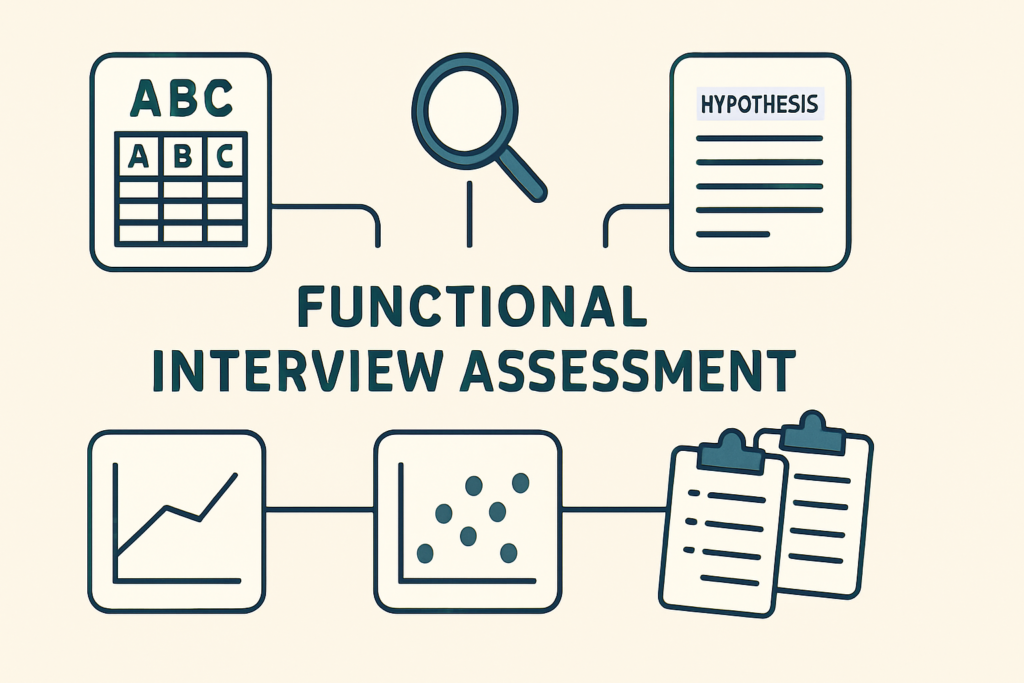
A functional interview assessment is a structured conversation method used to gather historical and descriptive information about challenging behavior. This indirect assessment approach helps behavior analysts develop initial hypotheses about why behaviors occur.
Table of Contents
- What is a Functional Interview Assessment?
- Conducting an Effective Functional Interview: A Step-by-Step Framework
- Functional Interview Examples in Practice
- BCBA Exam Focus: Common Traps and Must-Know Details
- Quick Practitioner Checklist and Summary
Unlike direct observation methods, it relies on informant reports rather than real-time data collection.
Core Definition and Purpose
The primary goal is to collect detailed information about behavior patterns, environmental factors, and historical context. Practitioners use this data to formulate initial hypotheses about behavioral function before moving to more direct assessment methods.
This approach contrasts with descriptive assessment and functional analysis, which involve direct observation and experimental manipulation.
Its Role in a Comprehensive FBA
The functional interview typically serves as the first step in a comprehensive functional behavior assessment (FBA). It guides subsequent direct observations by identifying what to look for and when to observe.
This method aligns with BACB Task List B-02, which addresses conducting assessments to identify factors that influence behavior. Remember that interviews generate hypotheses but do not confirm function.
Conducting an Effective Functional Interview: A Step-by-Step Framework
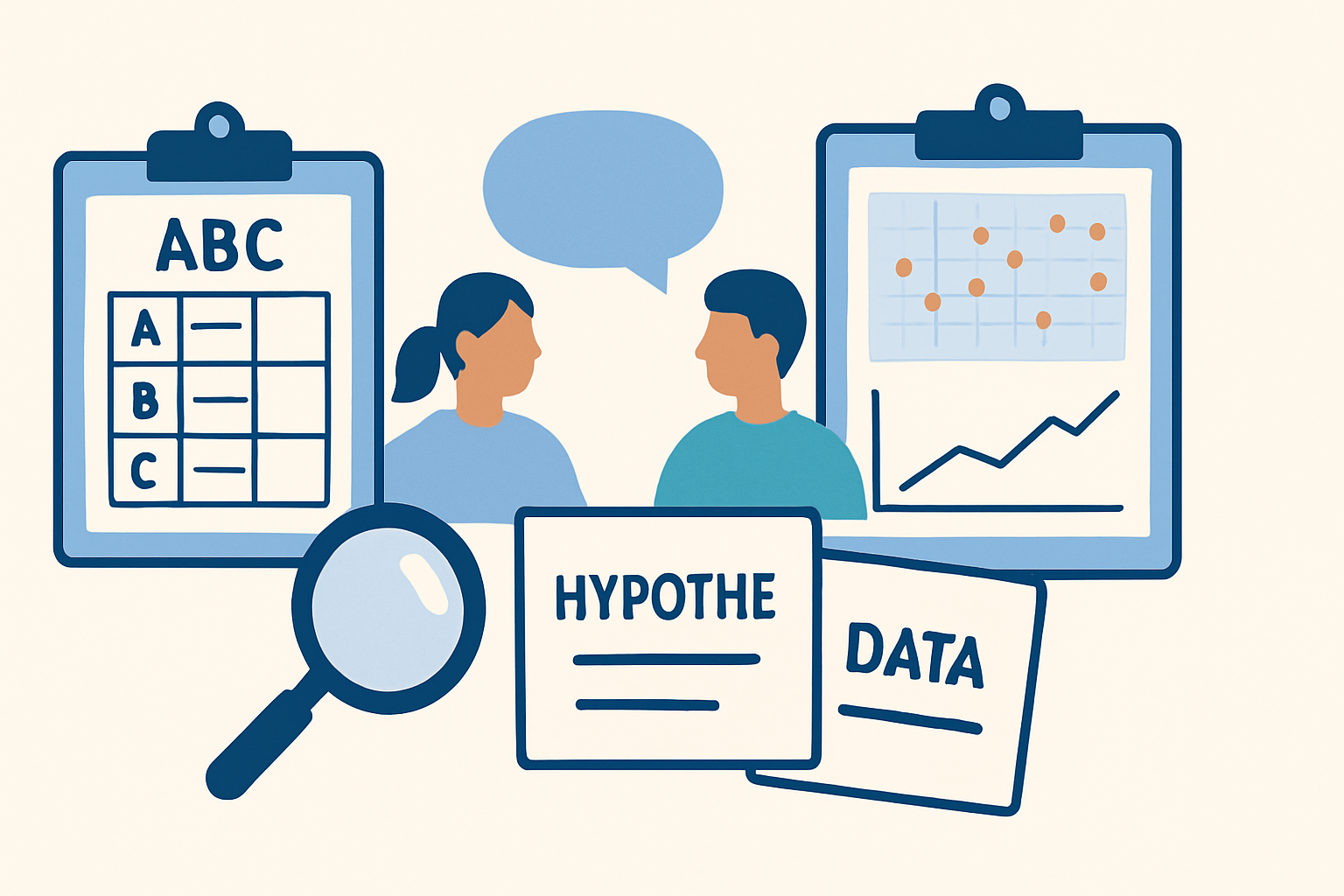
Successful interviews follow a systematic approach that balances information gathering with ethical considerations. Proper preparation ensures you collect meaningful data while maintaining professional standards.
Pre-Interview Preparation and Rapport Building
Begin by obtaining informed consent from all participants. Select appropriate informants who have regular contact with the individual, such as caregivers, teachers, or direct support staff.
Establish a collaborative tone that respects client dignity and promotes compassionate care. Choose a comfortable setting that encourages open communication.
Key Question Areas and Probing for ABCs
Structure your questions to cover essential domains systematically:
- Operational definition: What does the behavior look like?
- Setting events: What broader contextual factors might influence behavior?
- Antecedents: What typically happens right before the behavior?
- Consequences: What usually follows the behavior?
- Past interventions: What strategies have been tried before?
- Medical and ecological factors: Are there health conditions or environmental considerations?
Use open-ended questions to elicit detailed ABC sequences rather than yes/no responses.
From Notes to Hypothesis: Synthesizing the Data
After the interview, review your notes to identify consistent patterns across different situations. Look for recurring antecedents and consequences that suggest specific behavioral functions.
Formulate testable hypotheses about potential functions such as access to tangibles, escape from demands, attention-seeking, or automatic reinforcement.
Functional Interview Examples in Practice
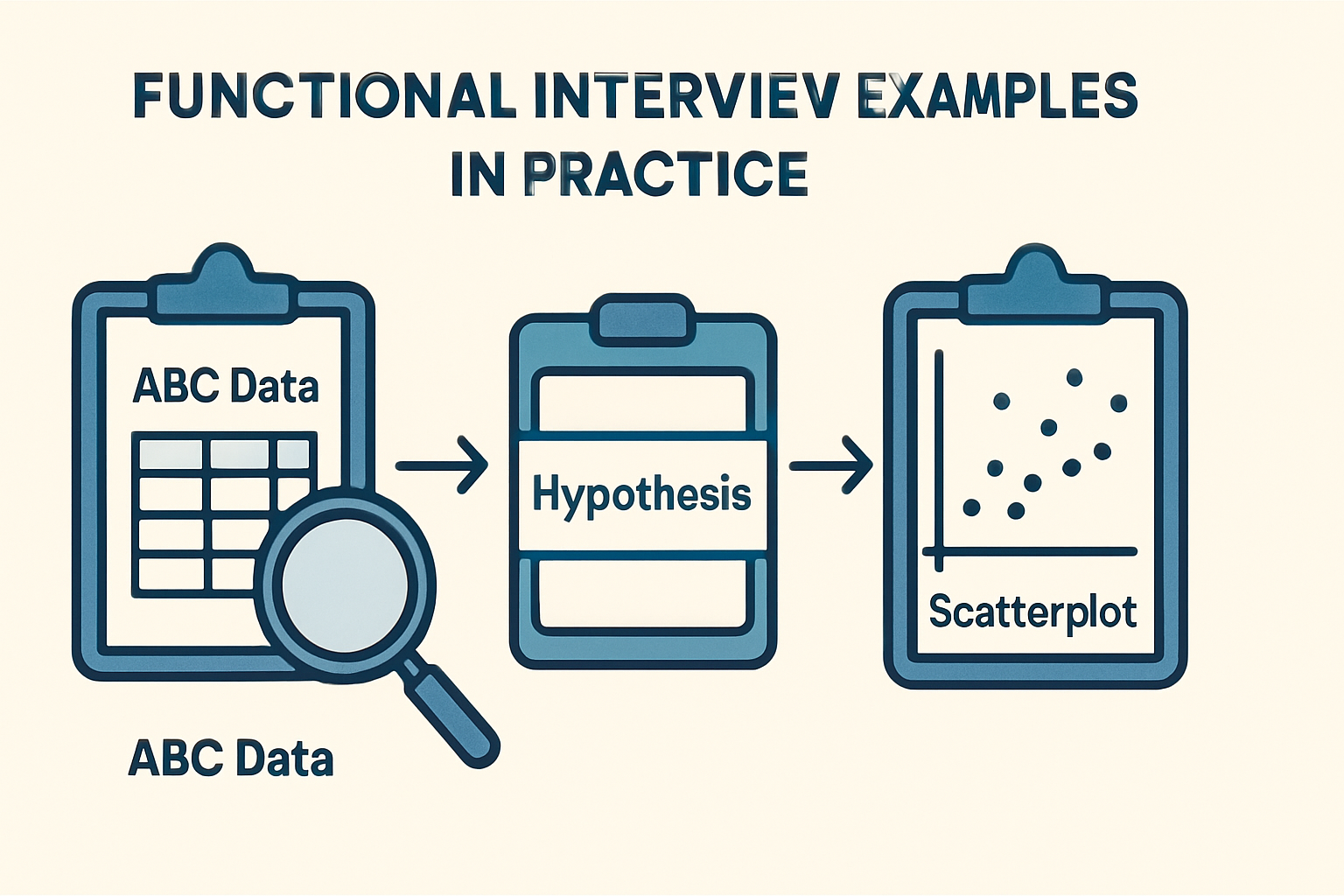
Real-world scenarios illustrate how interview data translates into actionable hypotheses. These examples demonstrate the practical application of interview techniques.
Example 1: Elopement in the Classroom
A teacher reports that a student leaves their seat during independent work time. The interview reveals consistent patterns: elopement occurs during difficult math worksheets, and the student is typically redirected back to their seat after 2-3 minutes.
ABC analysis shows: Antecedent = difficult math work, Behavior = elopement, Consequence = brief break from work. This pattern suggests an escape function.
Example 2: Property Destruction at Home
A parent describes their child throwing toys when denied access to preferred items. The behavior occurs most frequently when the child is tired or has missed their nap.
ABC analysis indicates: Antecedent = denied access to tablet, Behavior = throwing toys, Consequence = parent gives tablet to calm child. The setting event of fatigue increases the likelihood, suggesting an access to tangibles function.
BCBA Exam Focus: Common Traps and Must-Know Details
Understanding how this topic appears on the BCBA exam helps you avoid common mistakes. Focus on key limitations and connections to other task list items.
Limitations and Exam Pitfalls
The most critical limitation is reliance on memory, which introduces potential for bias and inaccuracy. Informants may recall events selectively or misinterpret behavioral sequences.
A common exam trap is selecting functional interview as the best method for confirming behavioral function. Remember that it generates hypotheses but requires direct observation for confirmation.
Other limitations include potential for informant bias and inability to establish functional relationships experimentally.
Linking to Other Task List Items
This assessment method connects to several key areas:
- B-01: Defining behavior in observable and measurable terms
- B-03: Conducting systematic direct observations
- Section 1 Ethics: Obtaining informed consent and ensuring data accuracy
- FBA procedures: As part of a comprehensive assessment approach
Understanding these connections helps you apply interview data within broader assessment frameworks like those discussed in our guide to functional behavior assessment.
Quick Practitioner Checklist and Summary
Use this checklist to ensure you conduct thorough and ethical functional interviews:
- Obtain informed consent before beginning
- Establish rapport with informants
- Ask open-ended questions about ABC sequences
- Probe for setting events and contextual factors
- Document specific examples rather than general descriptions
- Identify patterns across different situations
- Formulate testable hypotheses about function
- Plan direct observations to test hypotheses
- Maintain ethical standards throughout the process
The functional interview assessment serves as a valuable starting point for understanding challenging behavior. While it has limitations as an indirect method, it provides essential context for designing more direct assessments.
Remember that interview data should always be supplemented with direct observation and, when appropriate, experimental analysis. For more on assessment methods, explore our resources on assessment in ABA and ethical considerations in compassionate care and client dignity.
For authoritative guidance on assessment standards, refer to the BACB Ethics Code and research on functional assessment methods.



